"You don't bring more clothes because you're travelling longer — you just wash more often. The key is the versatility of every single item."
✅ QUICK ANSWER
What is the most important thing when packing for a long motorcycle trip?
The key is functional minimalism: less is more. Prioritize low, centered weight, carry only what you will use daily, and remember that every extra kilo is the enemy of handling and stamina.
TABLE OF CONTENTS
Learn how to optimize your luggage for long motorcycle trips. Discover what is truly essential, what to leave at home, and how to organize your load for a minimalist, safe, mistake-free adventure.
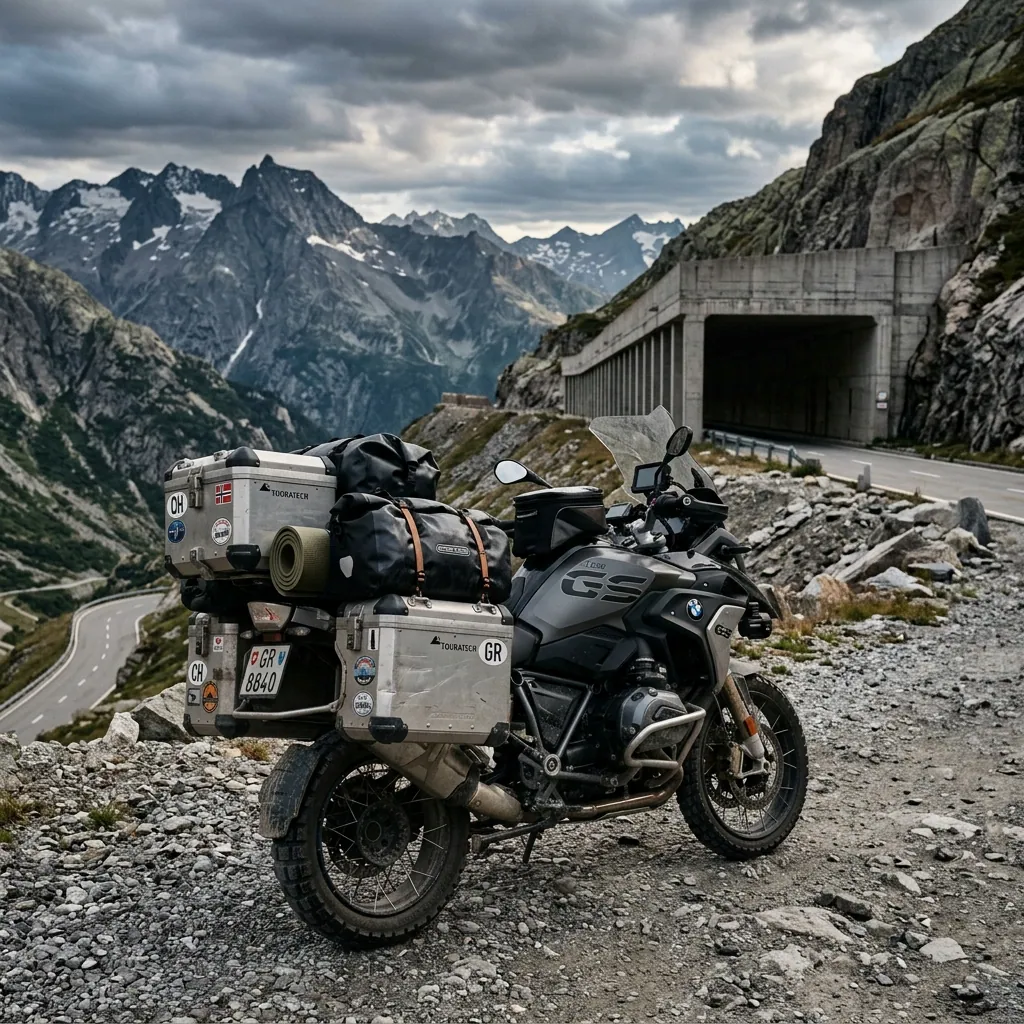
1. What to pack for a long motorcycle trip
Packing for a months-long trip is, paradoxically, no different from packing for a week. You don't bring more clothes because you're travelling longer; you simply wash more often. The secret lies in the versatility of each item and in solid motorcycle trip preparation from the ground up.
2. Essential gear for motorcycle travel
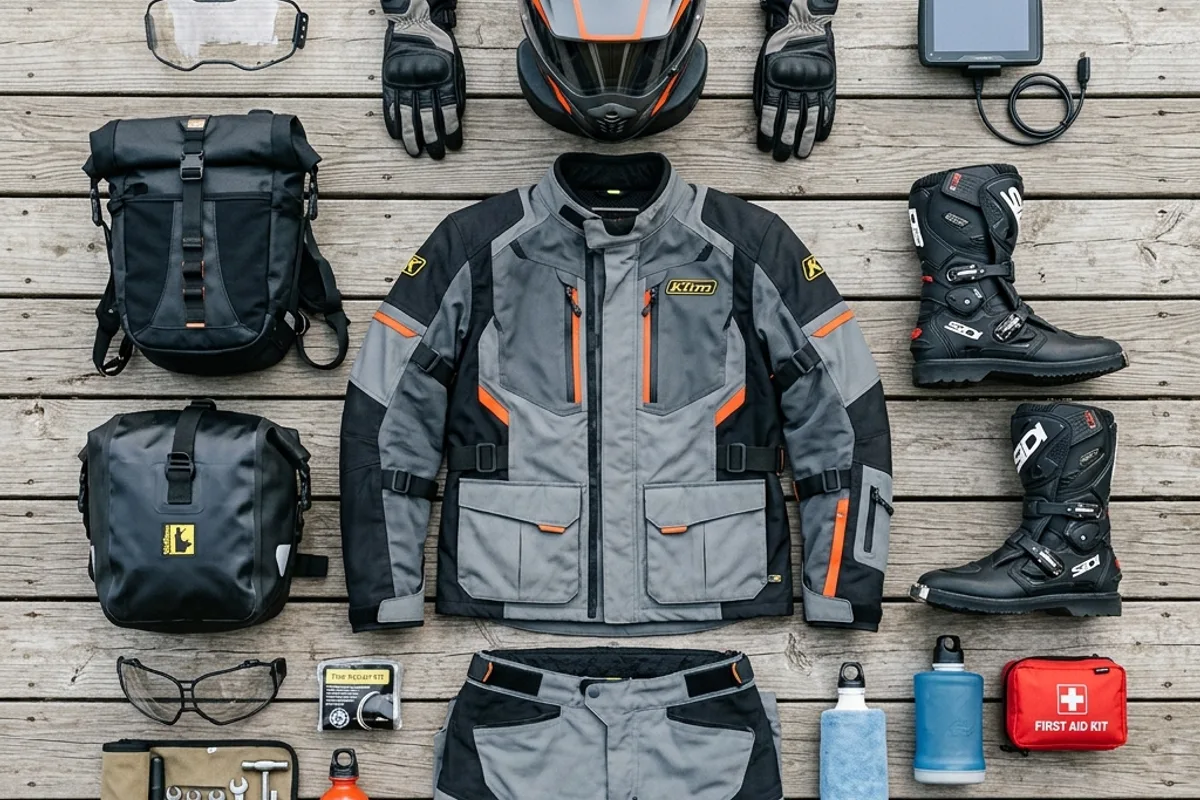
Your list should be broken into logical categories. If something doesn't fit this framework, you probably don't need it:
- ▶Documents & Money: Passport, international driving licence, bike papers, insurance and digital copies stored in the cloud.
- ▶Technical Clothing: Layering system (thermal base, windproof mid, waterproof shell). Avoid cotton — it takes up a lot of space and takes forever to dry.
- ▶Tools & Spares: Only what is specific to your bike. Duct tape, zip ties and a puncture repair kit are the kings of the road.
3. What NOT to bring on a motorcycle trip
The "no" list is more important than the "yes" list. Get rid of the "just in case" items. If you won't use it at least three times a week (first-aid kit and tools aside), leave it at home. The world is full of shops where you can buy whatever you actually end up needing.
4. How to organize luggage on your motorcycle
Organization is hierarchy. Daily-use items (camera, spare gloves, water) need to be within easy reach (tank bag). Overnight items (camping gear, casual clothes) can sit at the bottom of the panniers.
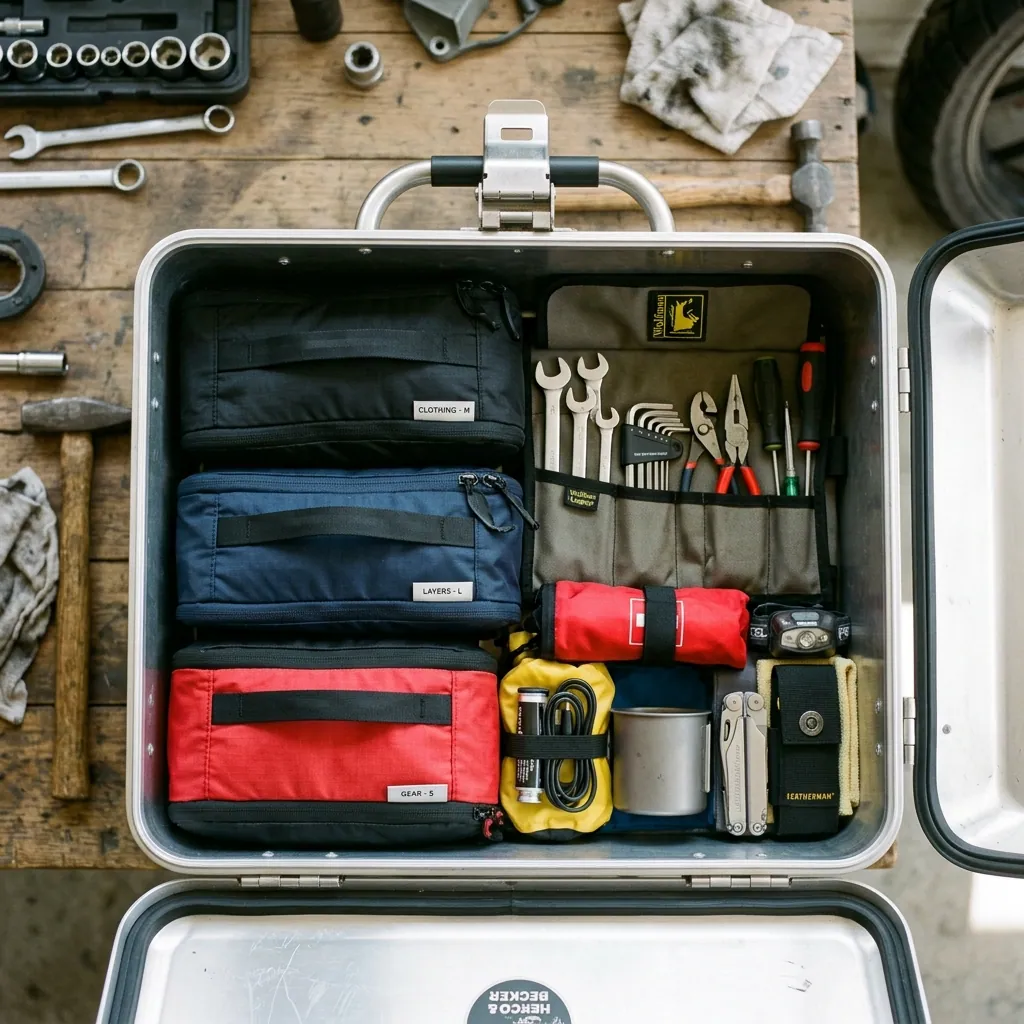
5. Minimalist packing for motorcycle travel
Travelling minimalist doesn't mean going without — it means going with an excess of freedom. Look for dual-purpose items: a buff that doubles as a towel, a biodegradable soap that does everything, a multi-tool that replaces three separate items. Less bulk means less time packing every morning and more time riding.
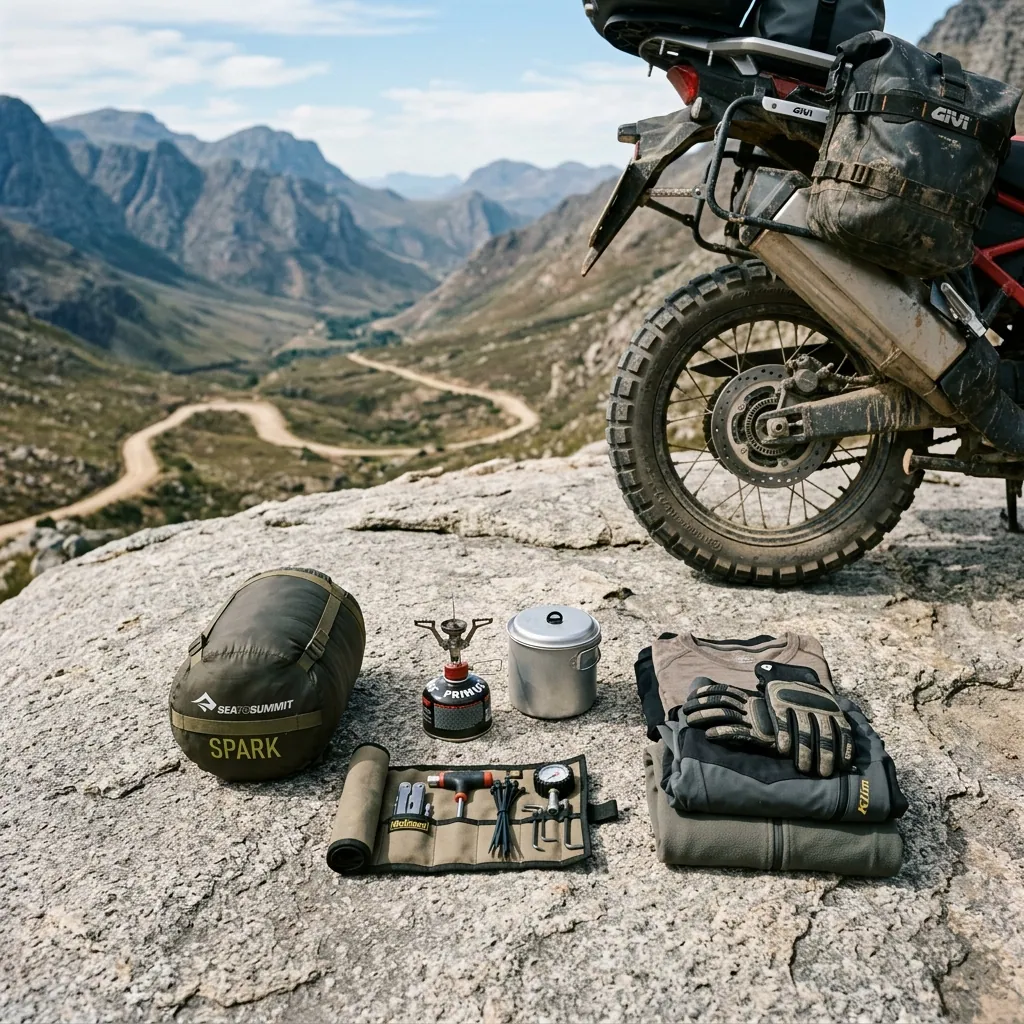
6. How much weight to carry on a motorcycle trip
Total loaded weight should not exceed 20% of the bike's dry weight. Distribute it roughly 60% in the panniers and 40% in bags on the pillion seat or tank. Never overload the top-case — it creates a lever effect that can trigger dangerous handlebar wobble (shimmy).
7. Common mistakes when packing for a motorcycle trip
The most common mistake is not balancing weight between both sides. An unbalanced bike is physically exhausting after 500 km. Another serious error is not securing your straps properly — a loose strap can wrap around the chain or brake disc with fatal consequences.
Remember that before loading the bike, you need to have worked on your mental preparation for the trip, because physical luggage is often a reflection of your inner fears.
8. How to choose gear for motorcycle travel
Investing in quality gear is saving money in the long run. Look for waterproof dry bags or hard cases with solid closures. Durability is everything: I would rather spend twice as much on kit that survives three crashes and fifty rainstorms without blinking.
9. My experience: The day I threw clothes in the trash
On my first ride through South America I set off with three full bags. I was carrying jeans, a hair dryer (yes, I admit it) and obscenely heavy paperback books. Ten days in, exhausted from loading and unloading 40 kg every night, I pulled into a petrol station in the Andes.
I packed everything I hadn't used into a box and shipped it home. Whatever didn't fit in the box went in the bin. I was left with the basics. That day the bike started flying and I started truly enjoying myself. Physical lightness became mental lightness.
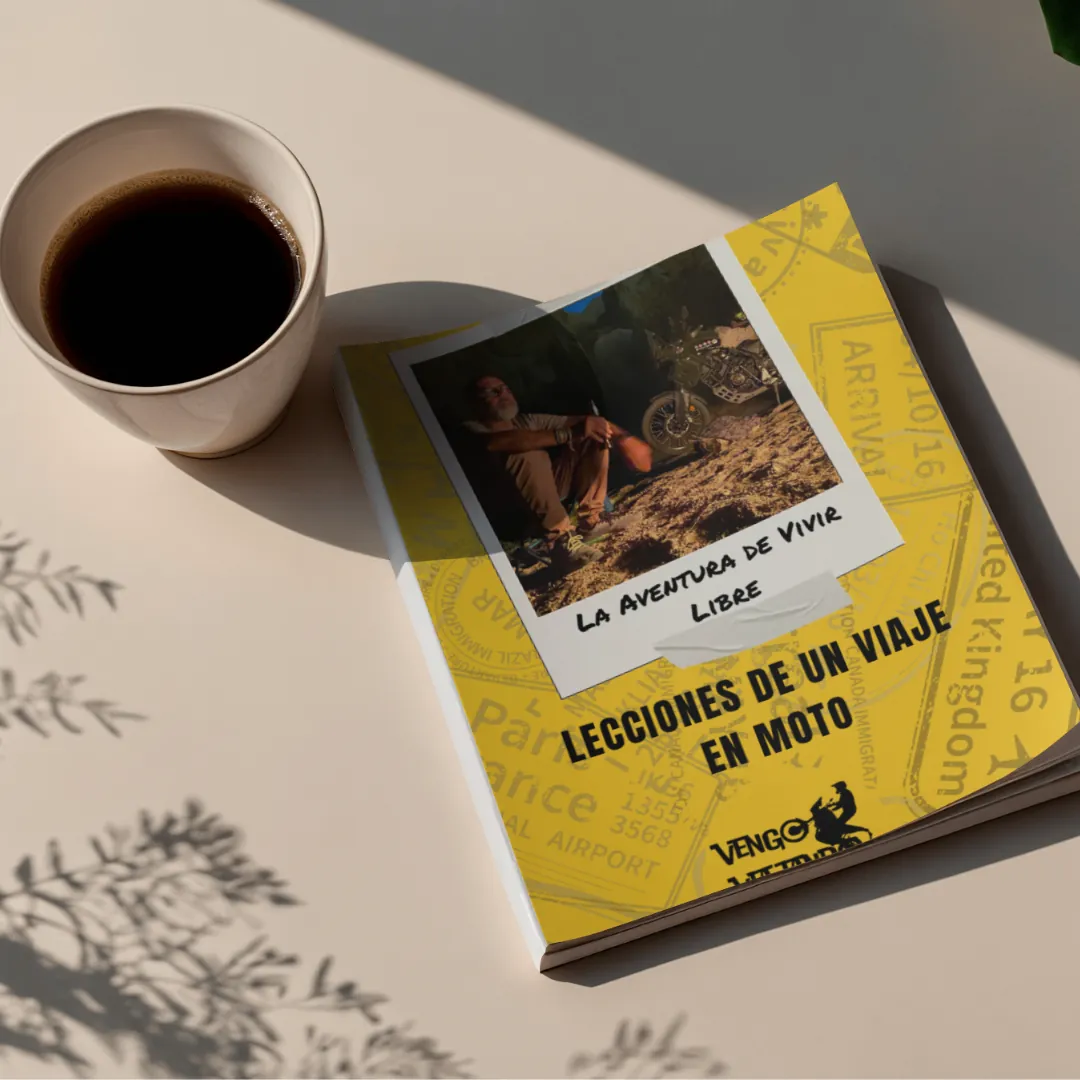
If you want to learn to shed ballast — physical and mental — and live the real adventure, I am waiting for you in the pages of my book "The Adventure of Living Free".
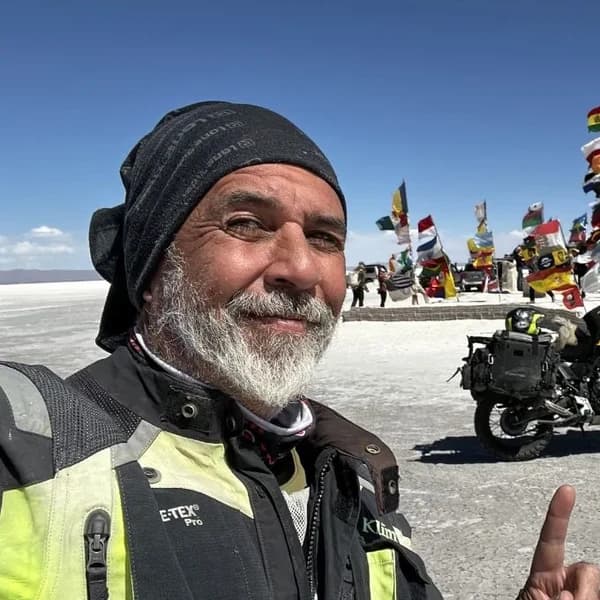
Gustavo Correa
Moto traveler, author and motorcycle travel consultant. 110,000+ km across 4 continents with Gloria, my motorcycle. Everything you read here has been tested on the road, not in an office.
Read my story →FAQ — FREQUENTLY ASKED QUESTIONS
How much luggage should I carry on a motorcycle?
The ideal is no more than 25–30 kg total (including bags). More than that will seriously compromise the bike's dynamics and your safety on rough terrain.
What is truly essential?
Basic tools, a puncture repair kit, documents, layered technical clothing (onion system) and a first-aid kit. Everything else is negotiable.
Is it better to travel light?
Always. A light bike is easier to pick up, burns less fuel, wears tyres less and is far more fun to ride through corners or on dirt tracks.
How should I distribute weight on the motorcycle?
The heaviest items should go as low and as far forward as possible (near the centre of gravity). Avoid loading too much weight in the top-case or behind the rear axle.
What mistakes do riders make when packing?
Packing "just-in-case" items, using bags that are too large (which invite over-packing), and not testing the waterproofing of your bags before the rain hits.
What happens if you carry too much weight?
Braking distances increase, the suspension bottoms out, the sidestand can sink and the bike becomes unstable in crosswinds or at higher speeds.