"La mecánica en ruta no es saber reconstruir un motor en medio de la nada. Es entender que tu moto te habla, y aprender a escucharla antes de que el silencio se adueñe del camino."
✅ RESPUESTA RÁPIDA
Qué es lo esencial de la mecánica de moto en un viaje largo?
Prevención sistemática, un kit de herramientas mínimas probado y mantener la calma para diagnosticar antes de actuar. La mecánica en ruta no es saber arreglarlo todo, sino saber evitar que se rompa.
TABLA DE CONTENIDOS
La mecánica en ruta no es saber reconstruir un motor en medio de la nada, sino entender que tu moto es una máquina que te habla. El miedo no es a la avería, sino a la impotencia de no saber por dónde empezar a mirar cuando el silencio se adueña del camino.
Seamos honestos: no hace falta ser ingeniero para dar la vuelta al mundo. Lo que sí hace falta es dejar de tratar a la moto como una caja negra mágica y empezar a usar el sentido común.
En la ruta, tu mejor herramienta no es una llave inglesa de titanio, es tu capacidad de no entrar en pánico cuando el motor se apaga.

1. La mentalidad del mecánico de emergencia
Olvidate de los manuales de taller de 500 páginas. En medio de un desierto o en una selva tropical, solo te importan tres cosas: aire, combustible y chispa. Si la moto no arranca, una de esas tres está fallando. Punto.
El mecánico de emergencia no busca la perfección técnica, busca la autonomía logarítmica. Su objetivo es que la moto ruede lo suficiente para llegar a un lugar civilizado.
- ▶Escuchar el síntoma: Antes de tocar nada, analizá qué pasó. Se apagó de golpe (eléctrico)? Empezó a fallar a rachas (combustible)? El diagnóstico ahorra más tiempo que la fuerza bruta.
- ▶Saber tus límites: Tocar lo que no sabés arreglar es la forma más rápida de convertir un problema pequeño en uno terminal. Si no sabés qué es esa pieza, no la desarmes.
2. Chequeo preventivo diario: La rutina del 1 minuto
La mecánica preventiva es la que te salva la vida. La mayoría de las averías graves en ruta empezaron como algo flojo que nadie vió a tiempo.
Instaurá la "Regla del Antes del Café": cada mañana, antes de subirte, hacé este recorrido visual de 60 segundos:
| Elemento | Qué mirar | Tiempo |
|---|---|---|
| Cadena | Tensión y lubricación (que no parezca un alambre seco) | 10s |
| Neumáticos | Presión visual y que no haya clavos o cortes | 10s |
| Niveles | Aceite y refrigerante (si aplica) | 15s |
| Tornillería | Un vistazo rápido a los tornillos de las maletas y ejes | 15s |
| Frenos | Grosor de pastillas y tacto de la maneta | 10s |
Parece una tontería, pero detectar una cadena destensada o un tornillo de maleta flojo a las 8 de la mañana te ahorra cuatro horas de drama a mediodía.

3. El kit de herramientas mínimo viable (y el que sobra)
He visto viajeros que llevan más herramientas que un equipo de MotoGP. El resultado? 10 kilos extra que cansan el motor y rompen el subchasis. No lleves nada que no sepas usar.
Basate en las herramientas que vienen de fábrica y sumales calidad donde importa:
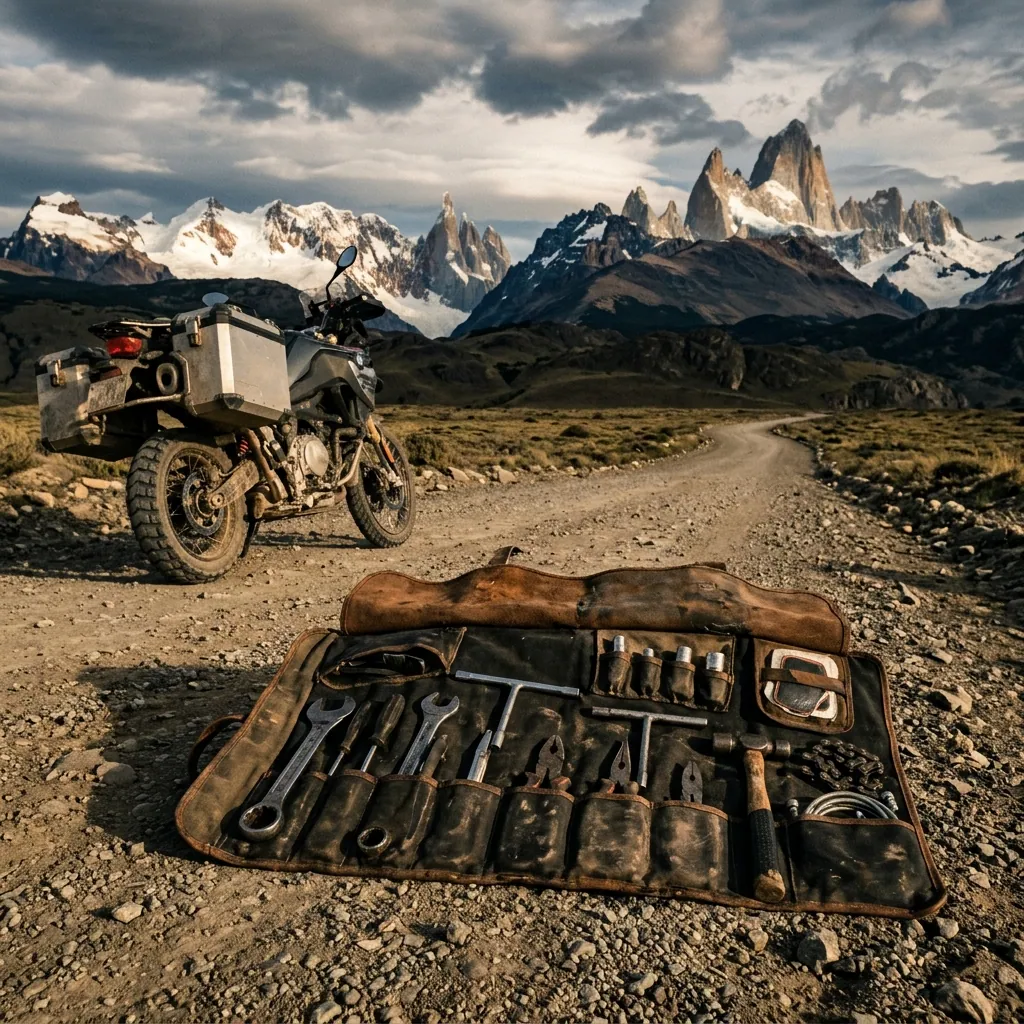
- El Kit de Rescate: Llaves de vaso/fijas para tus ejes, llaves Allen para plásticos, un destornillador reversible y una pinza de punta fina.
- Consumibles de Guerra: Precintos plásticos (muchos), WD-40 pequeño, cinta americana de la buena, alambre dulce y soldadura en frío (tipo Poxipol).
- El Dios de los Caminos: El kit de pinchazos. Si no sabés parchar una rueda, no sabés viajar en moto. Es la avería más probable y la más fácil de solucionar.
Un metro de cinta americana y un puñado de precintos han salvado más viajes que todos los seguros de asistencia del mundo.
4. Averías comunes en ruta y diagnósticos de supervivencia
Cuando la moto falla, el instinto te dice que es el motor. Casi nunca lo es.
Pinchazos: El pan de cada día
Si notás que la moto flamea o que la dirección se pone pesada, frená. No intentes llegar a la próxima estación de servicio, podés destalonar la cubierta y arruinar la llanta. Poné la moto en el caballete central (o buscad una piedra para apoyarla) y buscá el objeto. Marcá la zona antes de sacarlo.
Batería muerta: El silencio asesino
Si al dar contacto las luces son débiles o el motor de arranque hace un "clac-clac", es la batería. Antes de desesperar, revisá que los bornes no estén flojos por la vibración (clásico en tramos de grava). Si están firmes, te toca empujar o buscar cables.
Cadena cortada o salida
Suele pasar por falta de mantenimiento. Si se sale, revisá que no haya roto el cárter. Si se corta, necesitás un eslabón de unión (deberías llevar uno en el kit). No es difícil de poner, pero exige paciencia y manos sucias.
5. Arreglarlo o pedir ayuda? La frontera del riesgo
Hay un ego peligroso en el motoviajero que cree que debe resolverlo todo solo. Error.
Si estás en una ruta principal, pedir ayuda es una decisión logística inteligente. Si estás en medio de la estepa, arreglarlo es una necesidad de supervivencia. La pregunta clave es: puedo dejar la moto peor de lo que está?
Conectá este conocimiento con la preparación integral antes de salir. Cuanto mejor conozcas tu moto en el garage de casa, más fácil será decidir cuándo rendirte en la ruta.
Y recordá: a veces, pagar una grúa es más barato que arruinar un motor. Calculá bien tus recursos financieros y dominá la logística de tu gran viaje para que una avería no sentencie tu aventura.
6. Mi bautismo de grasa: El día que entendí que no sabía nada
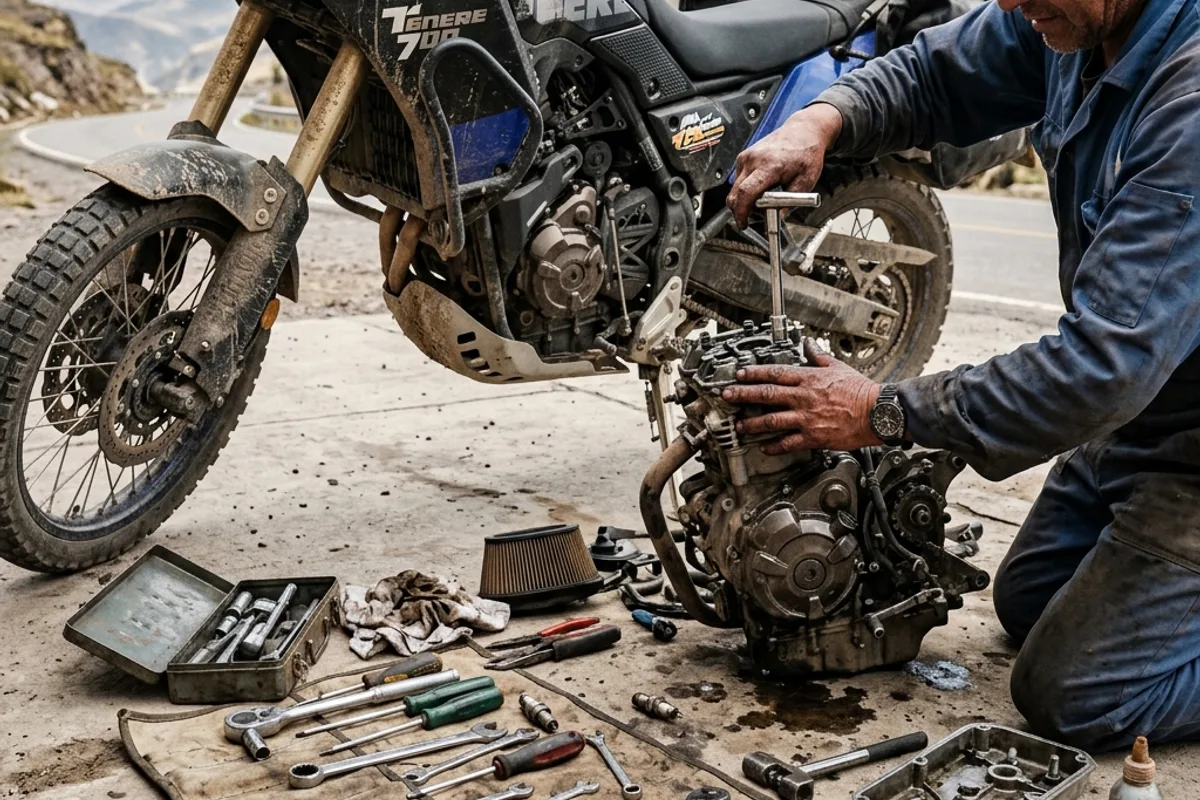
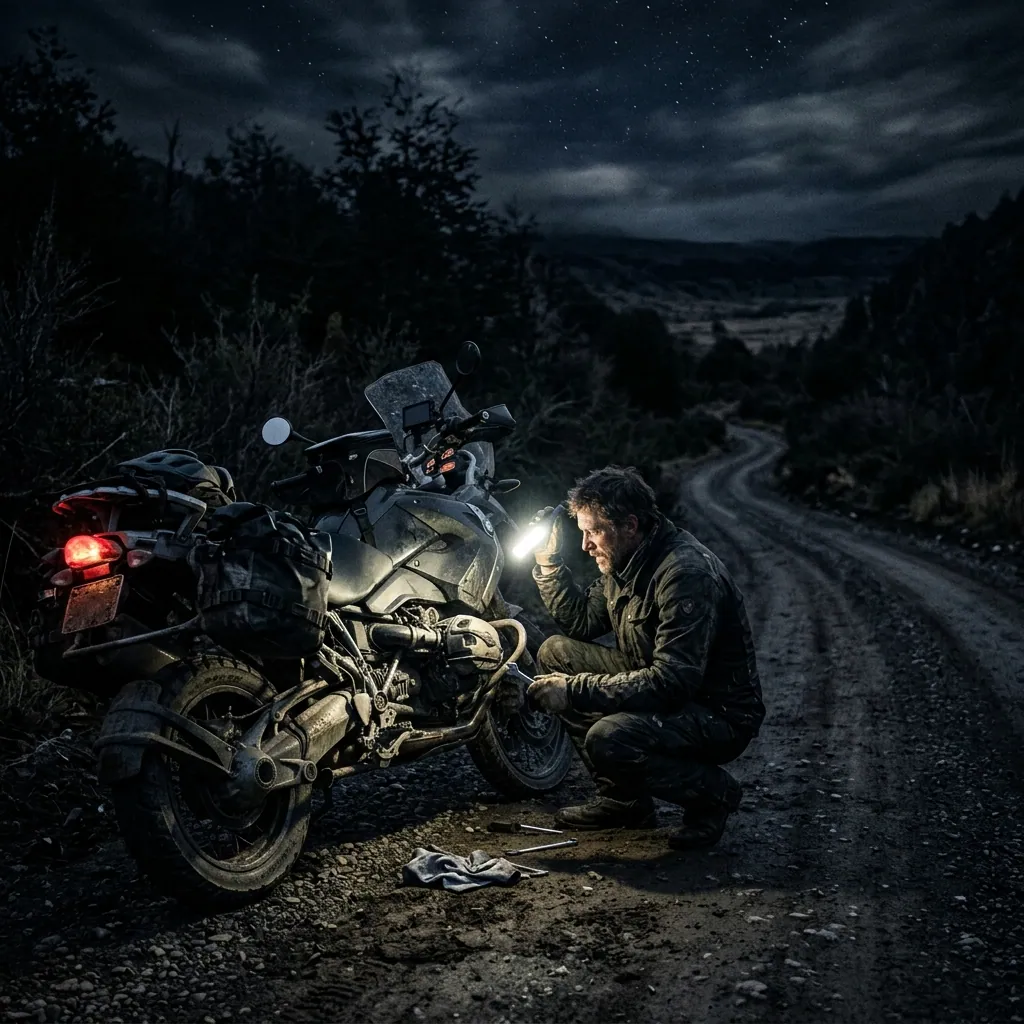
Fue en el norte de Perú. La moto se apagó subiendo un puerto a 4.000 metros. No había señal, hacía un frío de mil demonios y yo estaba convencido de que se había roto el motor. Desarmé medio carburador en el suelo, me llené de gasolina, perdí un tornillo...
Saben qué era? El cable de bujía se había soltado por la vibración de la grava. Dos segundos de trabajo. Pero el pánico me hizo perder tres horas y casi arruinar la moto por desarmarla sin lógica.
Ese día aprendí que la mecánica de moto para viajes largos es un juego mental. Si perdés la calma, perdés el viaje. Respirá, mirá lo obvio y después, solo después, buscá la llave inglesa.
Si tu ruta también sube a los 4.000 metros por el norte de Perú, la guía de viajar en moto por Perú tiene el detalle de disponibilidad de talleres y repuestos por región, para que ese silencio en la ruta no te agarre sin plan.

Gustavo Correa
Motoviajero, autor y consultor de viajes en moto. +110.000 km por 4 continentes con Gloria, mi moto. Todo lo que lees aquí está probado en la carretera, no en un despacho.
Conoce mi historia →FAQ — PREGUNTAS FRECUENTES
Es necesario ser mecánico profesional para viajar en moto?
No. Solo necesitas entender los sistemas críticos de tu moto: cómo frena, cómo arranca y cómo transmite potencia. El 90% de los problemas en ruta se resuelven con lógica básica y herramientas simples. Lo profundo lo hará un taller si llegas a la ciudad.
Qué repuestos son obligatorios llevar?
Un kit de parches/mechas, cables de embrague/acelerador (o sus reparadores), precintos (zip-ties), alambre y un fusible de repuesto. Todo lo demás suele ser peso muerto que puedes comprar en el camino si no es una pieza ultra específica.
Cómo sé si un ruido en el motor es grave?
Regla de oro: si el ruido cambia con las revoluciones o desaparece al apretar el embrague, es interno. Si es constante y rítmico, puede ser algo suelto. Si escuchas metal contra metal, apaga el motor inmediatamente. El resto suele ser paranoia del viajero.
Vale la pena llevar un inflador eléctrico?
Solo si es pequeño y robusto. Si no, un inflador de pie de bicicleta de calidad o cartuchos de CO2 ocupan menos y nunca fallan por falta de batería. La simplicidad en ruta es tu mejor aliada.
Qué hago si se rompe algo que no sé arreglar?
Respiras. Evalúas si la moto es segura para rodar lento. Si no, buscas el pueblo más cercano. La gente local suele ser ingeniosa y tiene herramientas que ni imaginas. Nunca estás tan solo como crees.