HOW TO PREPARE FOR A
MOTORCYCLE TRIP
👉 Everything you need to know before you leave. From luggage engineering to survival mechanics.
GLOBAL PREPARATION STRATEGY.
Preparing your big motorcycle trip is a process of unlearning. Here I'll guide you so you can also prepare your journey from real knowledge — 68,000+ miles across the world. Welcome to the radical autonomy process.
Preparing a motorcycle trip isn't simply filling the tank and pulling away. It's an act of architecture: you're building your home on two wheels. Most travellers fail because of poor preparation that makes them dependent on others.
"THE DIFFERENCE BETWEEN AN ADVENTURE AND A NIGHTMARE IS YOUR ABILITY TO SOLVE PROBLEMS ON THE SHOULDER OF A REMOTE ROAD."
PHASE 0: THE FREEDOM TIMELINE
The trip doesn't start when you pull away — it starts when you commit to a departure date. Chaotic preparation breeds anxiety and unexpected costs. Use this timeline to build your autonomy in a structured way.
6 MONTHS OUTTHE MAP & THE BODY
- ➜Bureaucracy: Check passport and international driving licence. Some visas take months to process.
- ➜Health: Consult international vaccination requirements. Specific lead times apply.
- ➜Emergency Fund: Ring-fence money so nothing stops your return if something goes wrong.
3 MONTHS OUTTECHNICAL ARCHITECTURE
- ➜Bike Audit: Replace bearings and reinforce known weak points on your model.
- ➜Loading: Install panniers and practice mounting and dismounting without weight.
- ➜Training: Time to pick up basic mechanics or join my Off-Tarmac Bootcamp.
1 MONTH OUTSTRESS TEST
- ➜Loaded Shakedown: Weekend ride at 100% load to dial in suspension settings.
- ➜Digital: Scan everything and upload to the cloud with an offline copy on your phone.
- ➜Logistics: Roadside assistance insurance with vehicle repatriation cover.
PHASE 1: THE HUMAN FACTOR (YOUR BODY & MIND)
Freedom isn't a state of mind — it's a capacity for endurance. If your body collapses after three hours of riding or you can't manage your frustration in the rain, a brand-new motorcycle won't save you. The real journey happens inside your helmet.
1. YOUR PHYSICAL CONDITION
The bike doesn't do all the work. Hours of fighting wind, rain, and rough terrain bring brutal physical wear. If your body isn't trained to absorb the daily punishment, your dream trip will become an ordeal.
LOWER BACK & CORE
Why: Your lumbar spine is your natural suspension. A weak core is a guaranteed recipe for back pain on the road.
Training: Planks, crunches and back work at least 3 times a week, starting months before departure.
CARDIOVASCULAR ENDURANCE
Why: Riding 8 hours in sun or altitude drains you. Cardiovascular fatigue clouds your reflexes in emergencies.
Training: Cycling, swimming or running. Train your body to sustain a prolonged effort rhythm.
FLEXIBILITY & MOBILITY
Why: Sustained riding posture calcifies joints. Tight hips and a tense neck destroy your comfort.
Training: Basic yoga or daily joint mobility routines. Prepare your muscles to release tension.
2. MENTAL PREPARATION (THE REAL BATTLE)
Mental endurance is just as critical as physical fitness on a long motorcycle trip. The road will test you with solitude, fear of the unknown, and moments of frustration. Being mentally prepared is the key to not breaking down.
EXPECTATIONS VS. REALITY
Not everything will be epic or Instagram-worthy. There'll be days of torrential rain, punctures in the middle of nowhere, boring roads, questionable food, and moments of deep loneliness or doubt. And that's fine. A real journey includes setbacks and challenges. The key is staying flexible, keeping a positive attitude, and understanding that problems become the best stories. Let yourself feel frustrated — just don't stay there.
TECHNIQUES TO KEEP YOUR HEAD CLEAR
Mindfulness: While riding, focus on the here and now. The sound of the engine, the feel of the wind. If negative thoughts appear, notice them and return your focus to riding.
Emotional Anchors: Have something that connects you to happiness or calm (a playlist, a photo, a morning coffee ritual). These pull you out of a negative headspace quickly.
Travel Journal: Writing your experiences at the end of each day helps enormously with processing emotions, reducing accumulated anxiety, and fighting loneliness.
Minimum Daily Plan: Knowing where you'll sleep or having a realistic mileage goal reduces uncertainty. Improvisation is great, but a minimum of structure is reassuring.
FEAR, DOUBT & SOLITUDE
- Fear shrinks when you move: Inaction feeds fear. Having a minimum contingency plan reduces anxiety.
- Connect: A nod to another rider or a chat at a petrol station are antidotes to loneliness.
- Accept solitude: It's not isolation — it's an opportunity for introspection and reconnecting with yourself.
WARNING SIGNS
- Irritability: You lose your temper easily at traffic or weather.
- Riding Errors: You're missing turns, braking late.
- Loss of Enjoyment: You hate being on the bike.
- Decision Paralysis: You can't choose a route.
If you experience this, stop. Your life is worth more than a few extra miles.
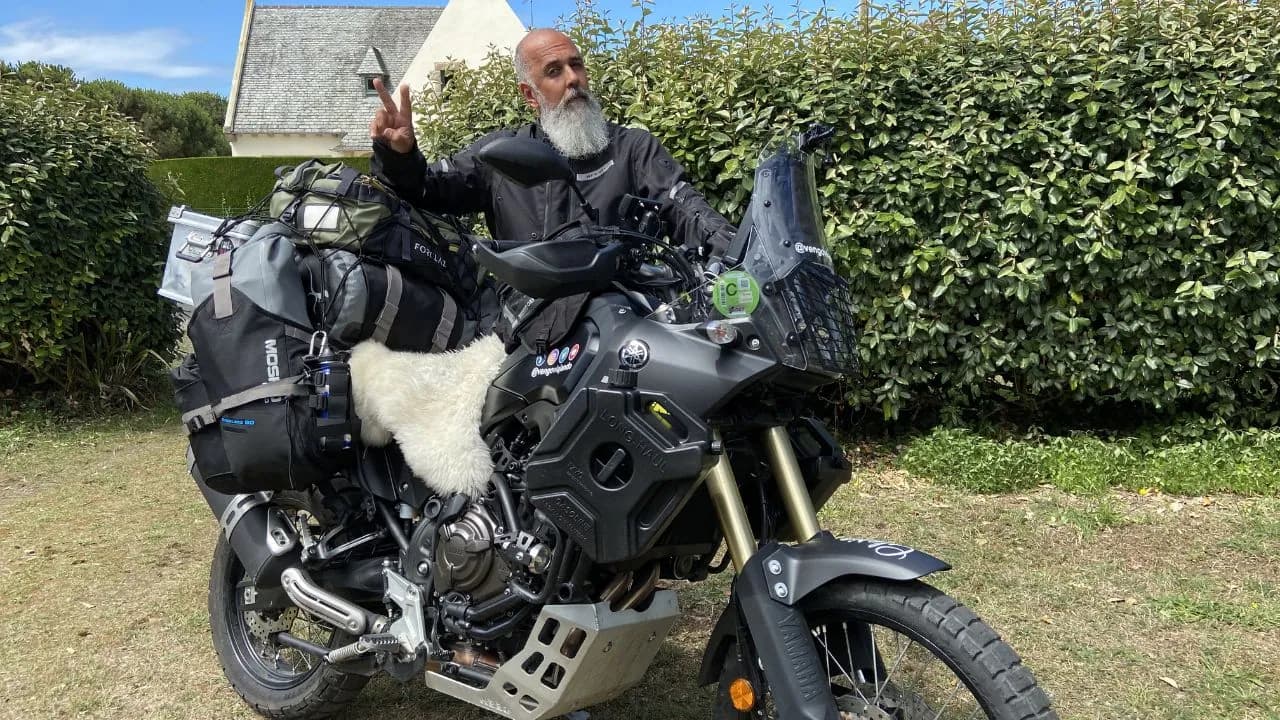
Preparing the long trip is, above all, a process of unlearning. We've been taught to seek comfort — but on the road, the only constant is change.
FEAR MANAGEMENT (THE FEAR FACTOR)
Fear doesn't disappear — it gets channelled. In this phase you'll learn to distinguish between real danger and mental uncertainty. Without that distinction, every border will feel like an impassable wall.
EMOTIONAL AUTONOMY
Travelling isn't going on holiday. It's managing fatigue, solitude, and constant uncertainty. The success of your expedition depends on your capacity to find joy in adversity.
THE CULT OF MINIMALISM
The more you carry, the less free you are. Learning to live with what's on the bike is the first step to understanding that we only take with us what we're truly capable of living.
PHASE 2: MECHANICS & MAINTENANCE
Most travellers depend on luck. You're going to depend on preparation. On a long trip, the motorcycle endures 300% more mechanical stress than daily use.
DO IT YOURSELF BEFORE YOU LEAVE
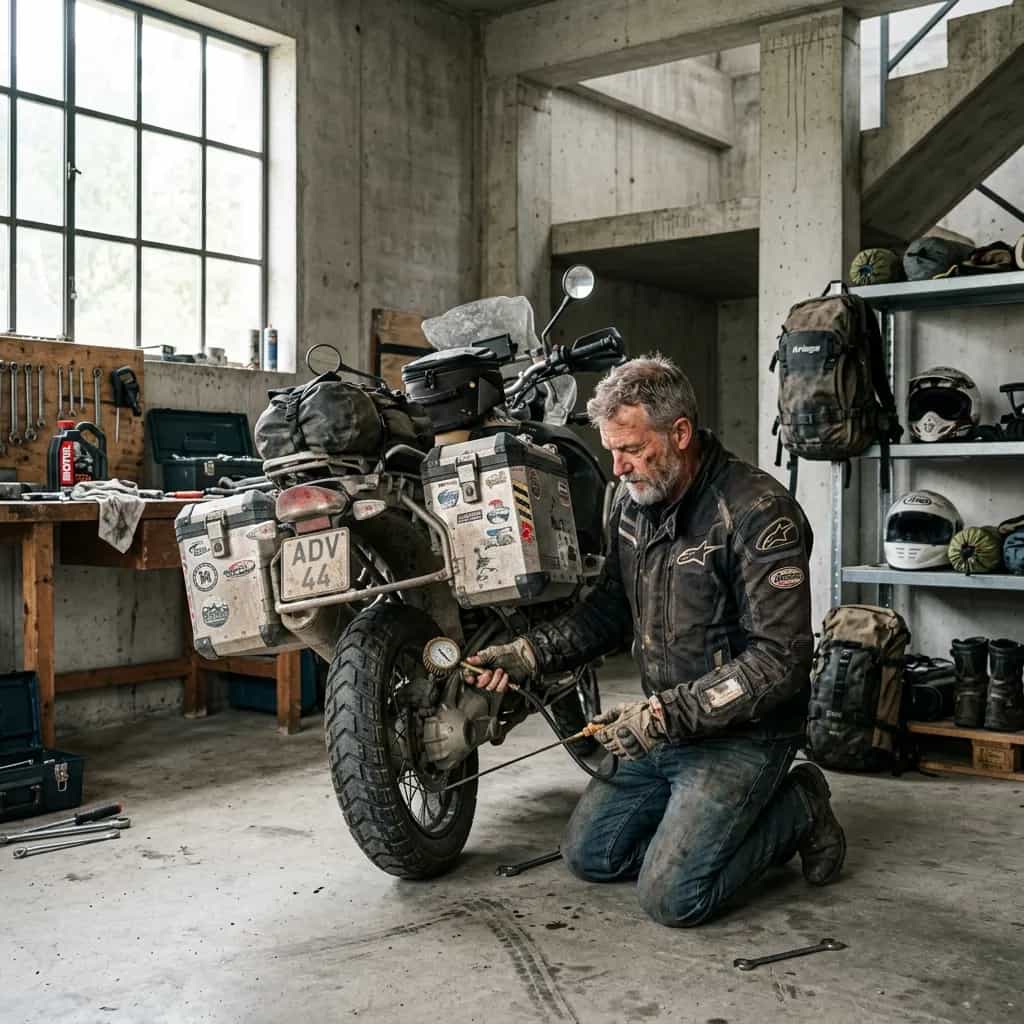
If you don't know how to change the oil or tighten the chain in your garage, you won't know how to do it at 4,000 metres. Practise every basic operation. Know your bike better than your own home. It's your survival passport.
MECHANICAL CONDITION
Don't leave with half-worn parts. New tyres, new chain and sprockets, full suspension service. A loaded bike takes triple the beating.
ELECTRICAL SETUP
Cigarette-lighter/USB socket, robust phone mount and auxiliary lights if you ride at night. Everything on a separate fuse.
ERGONOMICS
Comfortable seat (or gel pad), handlebar risers if you ride standing, wide footpegs. If you're riding 8 hours a day, comfort is safety.
PHASE 3: LUGGAGE ENGINEERING
"EVERY GRAM YOU SAVE AT HOME IS ONE MORE KILOMETRE OF FREEDOM ON THE ROAD."
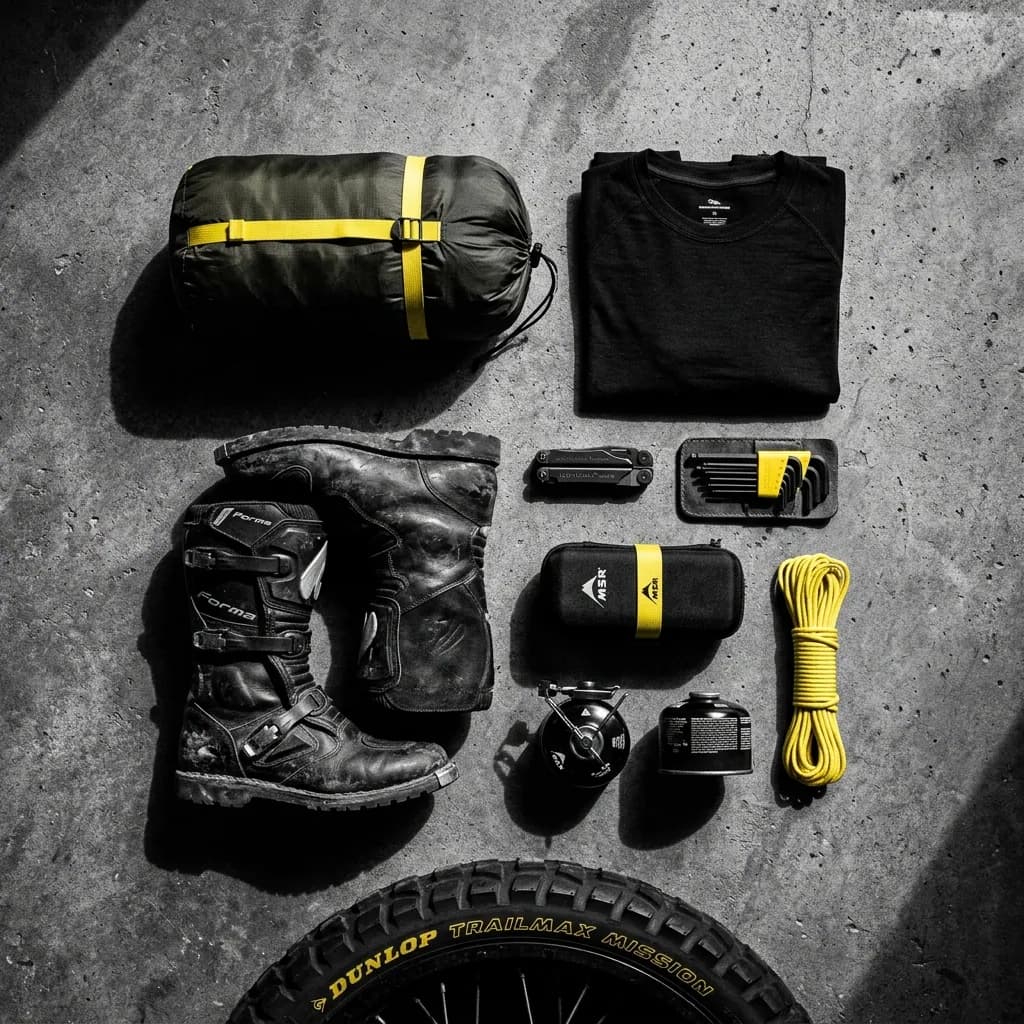
Loading your bike to cross the world is an engineering exercise. It's not about how much you can fit in — it's about how little you need to be self-sufficient. An overloaded motorcycle is an unrideable motorcycle.
THE TRIANGLE RULE
Heavy items (tools, liquids, spares) go at the base and close to the engine. Light items (clothing, camping gear) go on top. If the centre of gravity rises, your safety drops.
TRANSPORT SYSTEMS
Don't buy by brand — buy by purpose. Evaluate whether you need the security of hard cases or the flexibility and weight saving of soft luggage.
If your trip is TARMAC ONLY, go hard cases (Aluminium/Plastic). If it includes OFF-ROAD sections, go soft: they won't deform or crack in a drop.
THE 'JUST IN CASE' FILTER
If you're unsure whether to pack something, the answer is DON'T PACK IT. In my 68,000+ miles of experience, what you'll use most isn't a titanium gadget from the internet — it's your ingenuity.
Frequently asked questions about preparation
01How long do I need to prepare for a long motorcycle trip?
+
How long do I need to prepare for a long motorcycle trip?
About 6 months, working in phases. 6 months out: passport, international driving permit, visas and vaccinations (some procedures take months). 3 months out: mechanical prep, bearings and luggage racks. The final month: a fully-loaded test ride to adjust suspension, digitize your documents and buy insurance that covers vehicle repatriation.
02What physical training do I need for motorcycle travel?
+
What physical training do I need for motorcycle travel?
Three fronts: lumbar core (planks and ab work 3 times a week — your lower back is your natural suspension), cardiovascular endurance (cycling, swimming or running, because riding 8 hours drains you and fatigue clouds your reflexes) and joint mobility (yoga or daily stretching to counter the sustained riding posture).
03Do I need mechanical skills for a long motorcycle trip?
+
Do I need mechanical skills for a long motorcycle trip?
You need to master the basics: changing oil, tensioning the chain and fixing punctures. If you can't do it in your garage, you won't be able to do it at 4,000 meters altitude. On a long trip the bike takes far more mechanical stress than daily use, so practice every operation before you leave.
04How do I manage fear before a big motorcycle trip?
+
How do I manage fear before a big motorcycle trip?
Fear isn't eliminated, it's channeled. The key is learning to distinguish real danger from mental uncertainty. Inaction feeds fear: having a minimal contingency plan reduces anxiety. On the road, simple techniques like focusing on the ride, keeping a journal and setting a realistic daily distance goal make all the difference.
05What is the most common mistake when loading the motorcycle?
+
What is the most common mistake when loading the motorcycle?
Carrying too much. An overloaded motorcycle is an unmanageable motorcycle. Heavy luggage goes low and close to the engine; light items go on top. And the golden rule after 110,000+ km: if you're unsure whether to bring something, don't. What you'll use most is your resourcefulness, not the gadget you bought online.
See this preparation checklist applied to a real destination in the Peru or Spain country guides — papers, insurance, safety and a real budget for each.
Friend to friend...
Look, you could spend years reading blogs and buying the latest titanium gadget, but the truth is all you need to leave is a reliable motorcycle and the will to not give up.
Don't search for the perfect trip from your living room. Prepare just enough to not break down in the first week, but leave room for the journey to surprise you. In the end, what you'll use most isn't that hundred-euro tool — it's your ability to adapt and enjoy things as they come.
Put the preparation in gear and I'll see you on the road!
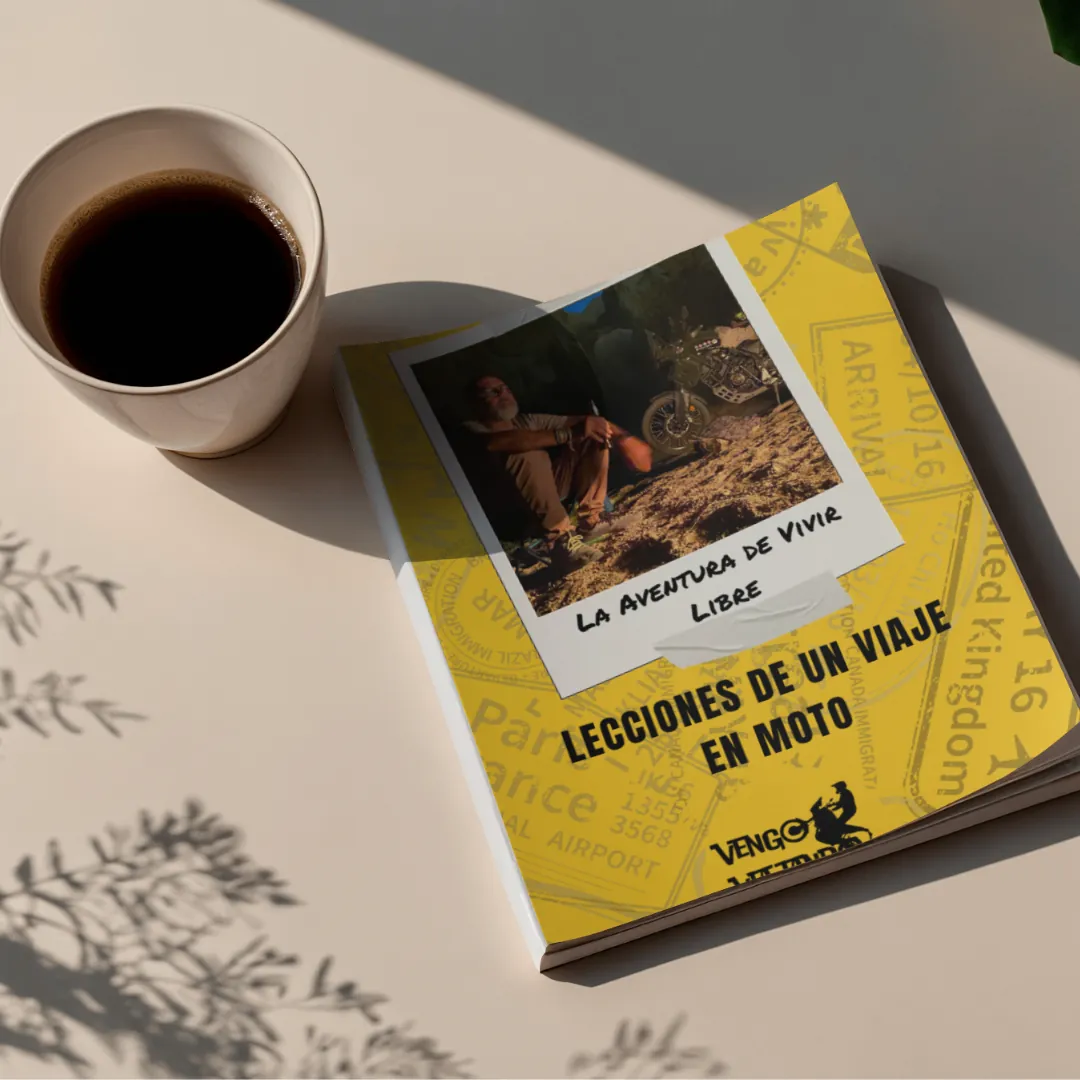
A GIFT FOR BEING HERETHE ADVENTURE OF LIVING FREE
Do fear or doubt paralyze you before starting any project? You're not alone — every one of us has been there.
As a thank-you for visiting my site, I'm giving you my book "The Adventure of Living Free". A manual built to bring some light through the shadows and show you the philosophy that has let me ride the world for years.
* PDF STRAIGHT TO YOUR INBOX. NO SPAM.