VIAJAR EN MOTO POR Tayikistán
RESPUESTA RÁPIDA
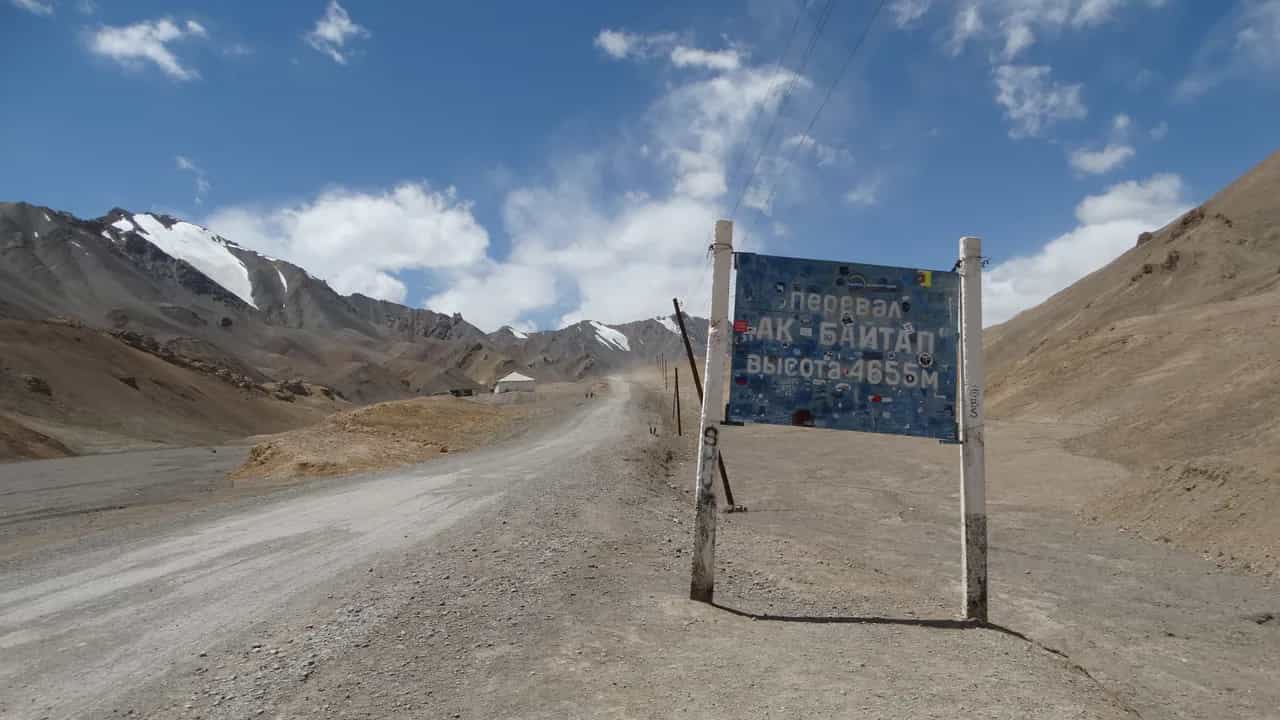
Viajar en moto por Tayikistán significa, en la práctica, rodar la Carretera del Pamir (M41): la ruta de altura que conecta Osh (Kirguistán) con Dushanbe a través del Ak-Baital, el paso a 4.655 metros, el segundo más alto del mundo en una carretera internacional. La moto entra sin carnet de passage — solo un impuesto de importación temporal de 10 dólares y, aparte, un permiso GBAO (20 dólares) para circular por la región autónoma del Pamir. El reto real no es el papeleo, es el terreno: pistas de grava, combustible de calidad irregular y tramos enteros sin electricidad ni cobertura.
LO QUE NECESITAS SABER
El país al que piensas entrar tiene particularidades que tienes que conocer.
Antes de cruzar la frontera hay cuatro cosas que tienes que tener resueltas: qué tan seguro es el país, qué seguro es obligatorio para tu moto, dónde vas a encontrar combustible y cuándo conviene ir. Ninguna es opcional.
SEGURIDAD: RIESGO MODERADO (3/5)
Es seguro Tayikistán para entrar en moto? Sí, en general — el riesgo real está concentrado en franjas fronterizas específicas, no en la Carretera del Pamir en sí.
ZONAS A EVITAR
- Franja de 10 km junto a la frontera con Afganistán: Canadá recomienda evitar todo viaje a menos de 10 km de la frontera: incursiones armadas nocturnas de grupos criminales o terroristas y campos minados, señalizados y no señalizados, documentados por el Reino Unido y Canadá.
- Khorog y la región GBAO (Pamir): Disturbios civiles violentos en 2021 y 2022 con muertos, según Reino Unido y Canadá; la situación puede cambiar de un día para otro y hay presencia militar reforzada en la ciudad.
- Enclave de Vorukh e Isfara (frontera con Kirguistán): Choques armados por disputa territorial en septiembre de 2022, con civiles muertos, según el gobierno de Canadá. El paso mejoró desde entonces, pero conviene verificar su estado antes de acercarte.
- Tavildara: Campos minados que datan de la guerra civil de los años 90 en las montañas de la zona, según Reino Unido, sumado a servicios médicos y de rescate muy limitados.
DÓNDE DEJAR LA MOTO
- Parking: En Dushanbe y Khorog, busca hoteles u hostales con patio cerrado de noche. En los pueblos del Pamir, la moto se guarda directamente en el patio de la familia anfitriona del homestay.
- Alarma: No es prioridad — el robo de motos no aparece como un patrón entre los reportes de motoviajeros que hacen el Pamir. Un candado de disco alcanza como precaución de rutina.
- Equipaje: Lleva contigo lo de valor (cámara, electrónica, documentos) al entrar al homestay. El resto del equipaje rara vez desaparece en las comunidades pequeñas del Pamir.
- Visión: En Dushanbe, estaciona donde haya movimiento de gente. Fuera de la capital, el problema habitual no es el robo, sino dejar la moto expuesta al polvo y al viento del altiplano.
CONSEJOS
- ➜No te acerques a la franja de 10 km junto a la frontera afgana, aunque el GPS marque una pista más corta.
- ➜Evita rodar de noche en el Pamir: no hay iluminación, los precipicios no tienen baranda y el ganado suelto es un riesgo real en la ruta.
- ➜Verifica el estado del paso Kyzylart-Bor Dobo y de la región GBAO en el foro de Caravanistan antes de salir — la situación cambia con la temporada y con la política local.
Fuera de esas franjas puntuales, motoviajeros ruedan la Carretera del Pamir todos los veranos sin incidentes — la clave es informarte del estado de cada paso antes de salir, no evitar el país entero.
SEGURO OBLIGATORIO: SEGURO LOCAL (NO OBLIGATORIO)
A diferencia de Sudamérica o Europa, Tayikistán no exige un seguro de responsabilidad civil para motos extranjeras — ni la Carta Verde ni ningún sistema regional aplican aquí. Según Caravanistan, la mayoría de motoviajeros independientes cruza sin contratar nada. Si prefieres cubrirte, hay aseguradoras locales en Dushanbe, Khujand y Khorog que emiten pólizas a conductores extranjeros en el momento.
COMBUSTIBLE: CALIDAD IRREGULAR
La gasolina en la Carretera del Pamir es de calidad irregular — lleva aditivo o un filtro extra para proteger el motor. En Dushanbe, Khujand e Isfara, las estaciones Gazprom son las más confiables. Fuera de las ciudades grandes conviene revisar el estado de cada tramo en el foro de Caravanistan antes de salir, porque la disponibilidad cambia con la temporada.
MEJOR ÉPOCA: JUN → SEP
De junio a septiembre, con septiembre como el mes más recomendado por los propios motoviajeros: el calor de las llanuras baja, los pasos de montaña siguen abiertos y hay menos tráfico turístico que en julio y agosto. La Carretera del Pamir se mantiene técnicamente abierta todo el año, pero en invierno el frío en el altiplano puede llegar a -45°C y varios pasos secundarios cierran por nieve.
ENTRAR A TAYIKISTÁN EN MOTO
Cruzar a Tayikistán con la moto es, según los relatos reunidos en Caravanistan (la referencia obligada de todo overlander en Asia Central) y en el foro de Horizons Unlimited, un trámite más simple de lo que la fama post-soviética del país sugiere. El punto de entrada más usado por motoviajeros que arrancan la Carretera del Pamir es Kyzylart-Bor Dobo, viniendo de Sary-Tash (Kirguistán); desde Uzbekistán, el cruce de Oybek (Tashkent-Khujand) es el más ordenado.
El trámite tiene dos pasos:
Migraciones: Sella tu pasaporte de entrada y entrega la tarjeta de inmigración si te la piden — consérvala, la vuelven a pedir al salir.
Aduana: Paga el impuesto de importación temporal (10 dólares para una moto) y recibe el registro del vehículo, válido por 16 días.
El sello de entrada en el pasaporte es gratuito — no tiene costo según ningún reporte de motoviajeros en Caravanistan, aunque conviene pedir igual la tarjeta de inmigración: sin ella, algunos guardias fronterizos piden una coima al salir con la excusa de 'reponerla'.
Punto de fricción real:no está en el trámite en sí, sino en el paso de Kyzylart-Bor Dobo, la puerta de entrada natural a la Carretera del Pamir desde Kirguistán. Ahí los guardias tayikos inventan tasas que no existen — de desinfección, de carretera, de seguro obligatorio — todas falsas. El único cargo real es el impuesto de importación del vehículo.
Conviene llevar el monto exacto en dólares en efectivo y no ceder a la presión por 'tasas adicionales', según coinciden los reportes de Caravanistan.
DOCUMENTACIÓN NECESARIA
Pasaporte: Vigente durante toda tu estadía en Tayikistán.
Carnet de conducir: El de tu país alcanza en la práctica; un permiso internacional ayuda en los controles de carretera.
Título de propiedad de la moto: Si no eres el titular, lleva una autorización del dueño.
Visa o registro visa-free: Según tu nacionalidad: e-visa de 30 dólares (60 días, vía evisa.tj) o entrada sin visa de 30 días. Si te quedas más de 10 días, hay que registrarte en la OVIR.
Permiso GBAO: Obligatorio y aparte de la visa para circular por la región autónoma del Pamir (20 dólares junto con la e-visa, o trámite propio en la OVIR). Sin él, te paran en los controles militares de la Carretera del Pamir.
Registro de importación temporal del vehículo: Se tramita en el mismo puesto fronterizo; válido 16 días, extendible en las aduanas de las ciudades grandes (hay una en Khorog).
Con estos papeles resueltos, entrar a Tayikistán con la moto es, según los relatos que se repiten en Horizons Unlimited y Caravanistan, más simple de lo que su fama post-soviética sugiere. La recomendación que más se repite: pedir el permiso GBAO junto con la e-visa antes de viajar, así te ahorras una vuelta extra a la OVIR en Dushanbe.
PRESUPUESTO DIARIO
Este rango de precios combina alojamientos económicos, cocina propia y mantenimiento básico de la moto — los tres rubros que más pesan en el presupuesto diario de cualquier motoviajero.
El verdadero presupuesto diario lo armas tú, de acuerdo a tus necesidades y tus límites, pero si quieres tener una idea de cómo armar el tuyo, elige tu categoría para ver la guía completa:
Desglose completo por rubro en la guía de presupuesto
LAS 10 MEJORES RUTAS EN MOTO POR TAYIKISTÁN
Tayikistán no tiene una sola ruta mítica como la Ruta 40 argentina — tiene una región entera, el Pamir, donde conviven tres formas distintas de cruzar la misma cordillera. El orden de este Top 10 está armado por fama real: arriba están las rutas que aparecen primero en cualquier búsqueda de "motorcycle route Tajikistan", las que mencionan con más frecuencia Horizons Unlimited, ADVrider y los blogs de motoviaje especializados en Asia Central; abajo, rutas igual de reales y documentadas, pero bastante menos transitadas.
Casi todo artículo especializado reduce el cruce del Pamir a tres opciones: la Carretera del Pamir (M41), la más asfaltada y transitada, elegida por quienes cruzan por primera vez o van en moto de carretera; el Corredor de Wakhan, la alternativa más escénica, pegada al río Panj y a la frontera afgana, la que más eligen los motoviajeros con experiencia en pistas de montaña; y el Valle de Bartang, la más dura y menos transitada de las tres, sin señal, casi sin población y con cruces de río, reservada para quien busca el aislamiento real. Esas tres encabezan la lista, en ese orden, antes de pasar a los pasos y valles menos citados pero igual de reales.
Para cualquiera de estas 10 rutas hace falta el permiso GBAO (Gorno-Badajshán), que se tramita junto con la e-visa tayika por unos 50 dólares y es obligatorio en cada puesto de control de la región — sin él, te hacen dar la vuelta.
Antes de tramitar el permiso GBAO y la e-visa, conviene repasarla guía de documentos para viajar en moto internacionalmente, porque en Tayikistán un papel faltante en un retén militar te puede cortar el día.
Y antes de salir hacia cualquiera de estos pasos por encima de los 4.000 metros, revisala guía de mecánica para viajes largos en moto, porque en el Pamir el taller más cercano puede estar a dos días de camino.
Si esta es tu primera gran travesía por Asia Central, empieza porla guía para preparar un viaje largo en moto, que cubre desde la altitud hasta la logística de combustible que vas a necesitar aquí.
La Carretera del Pamir (M41):Khorog a Murgab
Khorog a Murgab, Gorno-Badajshán (GBAO)Cruzar el tramo Khorog-Murgab de la Carretera del Pamir en moto es recorrer el corazón físico del M41, la segunda carretera internacional más alta del mundo: el camino trepa hasta los 4.655 metros del paso Ak-Baital, su punto más elevado, construido a pico y pala por el Ejército Rojo en la década de 1930.
A mitad de camino aparece el lago Karakul, un espejo de agua de 380 km² que ocupa un cráter de impacto de meteorito de 52 km de diámetro, formado hace entre 5 y 25 millones de años según distintos estudios geológicos — entre 2014 y 2017 sus aguas albergaron la regata de vela más alta del planeta.
El asfalto soviético, cuarteado por terremotos y aludes, se alterna con largos tramos de grava suelta a más de 4.000 metros de altura constante, donde la falta de oxígeno le resta potencia real a cualquier motor.
ADVERTENCIAS DE ESTA RUTA
Esto es lo que necesitas tener en cuenta antes de meterte en esta ruta.
- 01Autonomía de combustible
Escasa. Estaciones confiables solo en Khorog y Murgab; en el tramo intermedio (Alichur, Karakul) el combustible es informal y de calidad dudosa.
- 02Camino dañado por sismos y aludes
Según reportes de la propia ruta, el M41 está fuertemente deteriorado por erosión, terremotos, aludes y avalanchas en casi toda su extensión, salvo cerca de Dushanbé y del lado kirguís.
El Corredor de Wakhan:Ishkashim a Langar
Ishkashim a Langar, GBAOAvanzar por el Corredor de Wakhan en moto es rodar a metros de Afganistán: el camino sigue el cañón del río Panj, y del otro lado del agua —a veces a menos de 100 metros— se ven las aldeas afganas de la provincia de Badajshán, sin un solo puente entre ambos países en cientos de kilómetros.
El valle fue parte de la Ruta de la Seda durante más de mil años, y todavía se puede subir hasta la fortaleza de Yamchun, construida hace unos 2.000 años sobre un acantilado que domina el valle, a pocos minutos en moto de los baños termales de Bibi Fatima.
Es el tramo que guías especializadas en motoviaje como Mad or Nomad describen directamente como el más espectacular e increíble para recorrer en moto de todo Tayikistán.
ADVERTENCIAS DE ESTA RUTA
Esto es lo que necesitas tener en cuenta antes de meterte en esta ruta.
- 01Autonomía de combustible
Regular. Hay combustible en Ishkashim y un depósito a 5 km de Langar; fuera de esos dos puntos no hay estaciones.
- 02Zona fronteriza bajo alerta
Viajeros que recorrieron este tramo reportaron haber escuchado explosiones y comentarios sobre movimiento talibán cerca de Langar, del lado afgano — infórmate del estado de la frontera antes de salir.
El Valle de Bartang:la ruta salvaje del Pamir
Rushón al lago Karakul, GBAOMeterse en el Valle de Bartang en moto es elegir, a propósito, la ruta más dura y menos transitada de las tres opciones clásicas para cruzar el Pamir — la alternativa que motoviajeros de RTW Riders describieron directamente como 'uno de los mejores recorridos del mundo'.
No hay señal, casi no hay tránsito ni población, y el camino desaparece en cruces de río, arena profunda y paredes de roca con caídas verticales sobre el cañón del río Bartang.
El premio es un paisaje que casi ningún turista ve: aldeas de adobe pegadas a la montaña, glaciares colgantes y un aislamiento real que ya casi no existe en ningún otro rincón de Asia Central.
ADVERTENCIAS DE ESTA RUTA
Esto es lo que necesitas tener en cuenta antes de meterte en esta ruta.
- 01Autonomía de combustible
Crítica. Sin estaciones en todo el valle — hay que cargar en Rushón o Khorog para cubrir al menos 400 km sin reabastecimiento.
- 02Aislamiento total, sin cobertura ni auxilio
Motoviajeros que documentaron este valle lo describen sin señal, sin tránsito, casi sin población y expuesto a clima impredecible, aludes e inundaciones — cualquier imprevisto lo tienes que resolver solo.
La Carretera del Pamir (M41):Dushanbé a Khorog
Dushanbé a Khorog, vía KalaikhumEl primer tramo de la Carretera del Pamir en moto, entre Dushanbé y Khorog, es la puerta de entrada obligada al M41 y el momento en que el río Panj se convierte en la frontera más literal del viaje: Afganistán queda al alcance de la vista, del otro lado del agua, durante cientos de kilómetros seguidos.
El camino serpentea pegado al cañón, con la traza soviética original todavía visible junto a los tramos que China ha repavimentado como parte de su expansión de infraestructura en la región.
Los motoviajeros que ya hicieron este tramo coinciden en que las obras activas entre Kalaikhum y Khorog son el verdadero desafío: convoyes de camiones, ventanas horarias de paso y tramos de un solo carril sobre precipicios.
ADVERTENCIAS DE ESTA RUTA
Esto es lo que necesitas tener en cuenta antes de meterte en esta ruta.
- 01Autonomía de combustible
Buena. Estaciones regulares hasta Kulob; entre Kalaikhum y Khorog conviene estirar el tanque por los tramos de obra.
- 02Obras activas y camiones en tramos de un solo carril
Motoviajeros que cruzaron este tramo reportan convoyes de camiones, ventanas horarias de paso y sectores de un solo carril sobre el precipicio, con demoras de más de 4 horas en algunos puntos.
Las Montañas Fann y el Lago Iskanderkul
Montañas Fann, región de SughdSubir hasta el lago Iskanderkul en moto por el viejo paso de Anzob es la escapada de montaña más accesible desde Dushanbé, y la razón por la que casi ningún motoviajero que pasa por Tayikistán se la salta.
El lago, de un intenso color turquesa y forma triangular, formado por un desprendimiento que represó el río Sáratag, está a 2.195 metros de altura y debe su nombre a la pronunciación persa de Alejandro (Iskandar) — la leyenda local cuenta que aquí murió ahogado Bucéfalo, el caballo de batalla de Alejandro Magno.
El camino de asfalto de montaña que trepa el paso Anzob, hoy en gran parte reemplazado por el túnel más abajo, sigue siendo la ruta que eligen quienes prefieren la curva a la velocidad.
ADVERTENCIAS DE ESTA RUTA
Esto es lo que necesitas tener en cuenta antes de meterte en esta ruta.
- 01Autonomía de combustible
Buena. Última carga confiable en la autopista principal antes del desvío; no hay estación junto al lago.
El Túnel de Anzob:el paso hacia Jujand
Cordillera de Guisar, autopista Dushanbé-JujandCruzar el túnel de Anzob en moto es atravesar uno de los símbolos más discutidos de la infraestructura postsoviética de Asia Central: 5.040 metros perforados en la cordillera de Guisar, inaugurados en 2006 con financiamiento e ingeniería iraní.
Durante casi una década, motoviajeros y ciclistas que lo cruzaron lo bautizaron el túnel del miedo — sin iluminación, sin ventilación y con el piso inundado por filtraciones, mientras camiones de carbón circulaban en ambos sentidos por un espacio pensado para dos carriles.
Después de un cierre por reformas en 2015 y una reapertura oficial en 2017 con iluminación y drenaje nuevos, el cruce que antes era una prueba de resistencia hoy se hace en minutos — y sigue ahorrando más de 4 horas de manejo frente a la única alternativa, que implica salir del país.
ADVERTENCIAS DE ESTA RUTA
Esto es lo que necesitas tener en cuenta antes de meterte en esta ruta.
- 01Autonomía de combustible
Buena. Estaciones en Ayní antes del túnel y en Jujand del otro lado.
- 02Aire pesado por el tránsito de camiones
A pesar de la reforma de 2017, el túnel arrastra una larga historia de ventilación insuficiente y el aire se satura de humo diésel cuando hay fila de camiones — no te quedes detenido con el motor en punto muerto más de lo necesario.
El Paso Kyzyl-Art:la puerta a Kirguistán
Murgab a Sary-Tash, frontera con KirguistánCoronar el paso Kyzyl-Art en moto es el cierre simbólico de cualquier travesía por el Pamir tayiko: a 4.280 metros de altura, es el punto donde el M41 deja Tayikistán y entra en Kirguistán, cerca de donde a fines del siglo XIX los exploradores rusos cartografiaron por primera vez el altiplano del Pamir.
Del lado tayiko el paisaje es puro altiplano seco color óxido, con yaks pastando sueltos junto al camino; apenas se cruza al lado kirguís, el valle de Alay se abre de golpe hacia el sur, con el pico Lenin (7.134 m) dominando el horizonte.
Es, junto con el Ak-Baital, uno de los dos pasos que todo motoviajero que hace el M41 completo menciona como el verdadero techo físico y simbólico del viaje.
ADVERTENCIAS DE ESTA RUTA
Esto es lo que necesitas tener en cuenta antes de meterte en esta ruta.
- 01Autonomía de combustible
Escasa del lado tayiko. Carga completa obligatoria en Murgab; del otro lado, Sary-Tash tiene estaciones normales.
Los Siete Lagos de Penjikent
Valle de Shing, distrito de PanjakentSubir el valle de Shing hasta los Siete Lagos en moto es entrar en la cara más fotografiada de las montañas Fann, en el extremo occidental del sistema Pamir-Alay: siete lagos represados de forma natural, escalonados entre los 1.598 y los 2.400 metros de altura, cada uno con un tono de agua distinto por su mineralización.
Los propios lugareños los apodan las siete bellezas de Shing, y el sexto —Marguzor— es el más grande y el más visitado; el séptimo, Hazorchashma ('mil manantiales'), corona la subida alimentado por decenas de vertientes.
A diferencia del resto del Top 10, esta ruta no exige permiso GBAO ni altitudes extremas — es la manera más simple de llevarse una postal de los Fann sin salir de la región de Sughd.
ADVERTENCIAS DE ESTA RUTA
Esto es lo que necesitas tener en cuenta antes de meterte en esta ruta.
- 01Autonomía de combustible
Regular. Última carga confiable en Penjikent antes de entrar al valle de Shing.
El Paso Kulma:la frontera con China
Murgab a la frontera con ChinaLlegar hasta el paso Kulma en moto es tocar el único cruce terrestre habilitado entre Tayikistán y China en 450 kilómetros de frontera compartida, a 4.363 metros de altura — el eslabón que conecta, en teoría, la Carretera del Pamir con la mítica Carretera del Karakórum del lado chino.
Cerrado durante décadas por la tensión chino-soviética y la guerra civil tayika, el paso recién se habilitó al tránsito comercial en 1997 y a los primeros cruces regulares de viajeros extranjeros recién desde 2017.
Pocos motoviajeros llegan hasta aquí por lo complejo del papeleo para entrar a Xinjiang con moto propia, lo que convierte este tramo final de grava tayika, con el puesto chino de Kalasu ya a la vista, en uno de los cierres de ruta más exclusivos de todo el continente.
ADVERTENCIAS DE ESTA RUTA
Esto es lo que necesitas tener en cuenta antes de meterte en esta ruta.
- 01Autonomía de combustible
Crítica. Sin estaciones entre Murgab y la frontera — cargar el tanque lleno y llevar reserva.
El Lago Zorkul:el fin del Corredor de Wakhan
Sur del Corredor de Wakhan, frontera con AfganistánLlegar hasta el lago Zorkul en moto es rodar hasta uno de los rincones más remotos del planeta: a 4.130 metros de altura, sus 25 kilómetros de espejo de agua marcan la frontera entre Tayikistán y Afganistán y son, según distintas fuentes históricas, uno de los posibles nacimientos del río Amu Darya, ya mencionado por Marco Polo en sus crónicas del siglo XIII.
Los exploradores británicos del siglo XIX lo rebautizaron lago Victoria en honor a su reina, aunque los registros chinos antiguos ya lo llamaban el Gran Estanque del Dragón siglos antes. El tratado ruso-afgano de 1895 trazó aquí la frontera que todavía separa a los dos países; ya en la era soviética la zona pasó a ser reserva natural, prohibida para asentamientos y presencia militar, condición que se mantiene hoy como humedal protegido Ramsar.
Es el punto donde el Corredor de Wakhan se termina de verdad: después de Zorkul no hay ningún camino, solo la Carretera del Pamir esperando de vuelta hacia el norte.
ADVERTENCIAS DE ESTA RUTA
Esto es lo que necesitas tener en cuenta antes de meterte en esta ruta.
- 01Autonomía de combustible
Inexistente. Hay que cargar el tanque lleno en Langar — no hay ningún punto de reabastecimiento en el camino de ida y vuelta.
PAÍSES VECINOS
Vas a cruzar la frontera? Haz clic en un país para ver sus 10 mejores rutas en moto.
PREGUNTAS FRECUENTES
01Necesito el permiso GBAO para toda Tayikistán o solo para el Pamir?
+
Necesito el permiso GBAO para toda Tayikistán o solo para el Pamir?
Solo para el Pamir. El GBAO permit (Gorno-Badakhshan Autonomous Oblast) es obligatorio para circular por toda la región del Pamir Highway, no para el resto de Tayikistán. Se pide junto a la e-visa (20 dólares) o por separado en la OVIR de Dushanbe o Khujand. Sin él, te paran en los controles militares de la ruta.
02Puedo entrar a Tayikistán con la moto sin carnet de passage?
+
Puedo entrar a Tayikistán con la moto sin carnet de passage?
Sí. A diferencia de India, Pakistán o varios países de Asia Central, Tayikistán no exige carnet de passage en douane para motos extranjeras. En el puesto fronterizo se paga un impuesto de importación temporal de 10 dólares y el vehículo queda registrado por 16 días, extendibles en las aduanas de las ciudades grandes.
03Cuál es la mejor época para rodar la Carretera del Pamir en moto?
+
Cuál es la mejor época para rodar la Carretera del Pamir en moto?
De junio a septiembre, con septiembre como el mes más recomendado por los propios motoviajeros: el calor de las llanuras ya bajó, los pasos siguen abiertos sin nieve y hay menos tráfico que en pleno verano. La M41 se mantiene técnicamente abierta todo el año, pero el invierno en el altiplano del Pamir es extremo.
04Es obligatorio el seguro de moto en Tayikistán?
+
Es obligatorio el seguro de moto en Tayikistán?
No hay obligación legal de contratar un seguro para motos extranjeras. La mayoría de motoviajeros independientes circula sin ninguna póliza. Si prefieres cubrirte, hay aseguradoras locales en Dushanbe, Khujand y Khorog que emiten pólizas a conductores extranjeros en el momento.
05Por qué paso fronterizo entra la mayoría de los motoviajeros a Tayikistán?
+
Por qué paso fronterizo entra la mayoría de los motoviajeros a Tayikistán?
El más usado para arrancar la Carretera del Pamir es Kyzylart-Bor Dobo, viniendo de Sary-Tash (Kirguistán) — es también el paso donde más se reportan cobros inventados por los guardias tayikos. Desde Uzbekistán, el cruce de Oybek (Tashkent-Khujand) es el más directo y ordenado.
06Hay gasolineras en toda la Carretera del Pamir?
+
Hay gasolineras en toda la Carretera del Pamir?
No de forma continua ni pareja. La calidad de la gasolina es irregular fuera de Dushanbe, Khujand e Isfara —donde están las estaciones Gazprom, las más confiables. En el tramo del Pamir conviene llevar un margen extra y proteger el motor con aditivo o un filtro adicional.
07Es seguro rodar por el valle del Wakhan, junto a la frontera con Afganistán?
+
Es seguro rodar por el valle del Wakhan, junto a la frontera con Afganistán?
La ruta del valle del Wakhan bordea Afganistán a lo largo de decenas de kilómetros y es un tramo habitual entre motoviajeros, pero gobiernos como el de Canadá y Reino Unido piden evitar acercarse a menos de 10 km de la frontera por incursiones armadas esporádicas y minas señalizadas y no señalizadas. Mantente en la ruta principal y no te desvíes hacia senderos sin marcar.
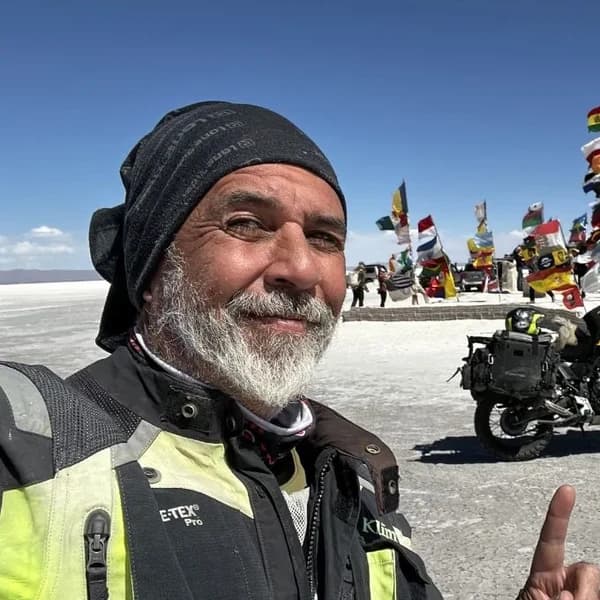
Gustavo Correa
Motoviajero, autor y consultor de viajes en moto. +110.000 km por 4 continentes con Gloria, mi moto. Todo lo que lees aquí está probado en la carretera, no en un despacho.
Conoce mi historia →Última verificación: 2026-08-30
UN REGALO POR ESTAR AQUÍLA AVENTURA DE VIVIR LIBRE
Sientes que el miedo o la duda te paralizan antes de arrancar cualquier proyecto? No estás solo, a todos nos ha pasado.
Como agradecimiento por visitar mi página, te regalo mi libro "La Aventura de Vivir Libre". Un manual diseñado para darte un poco de luz entre tantas sombras y mostrarte la filosofía que me ha permitido recorrer el mundo durante años.
* PDF DIRECTO A TU BANDEJA. SIN SPAM.