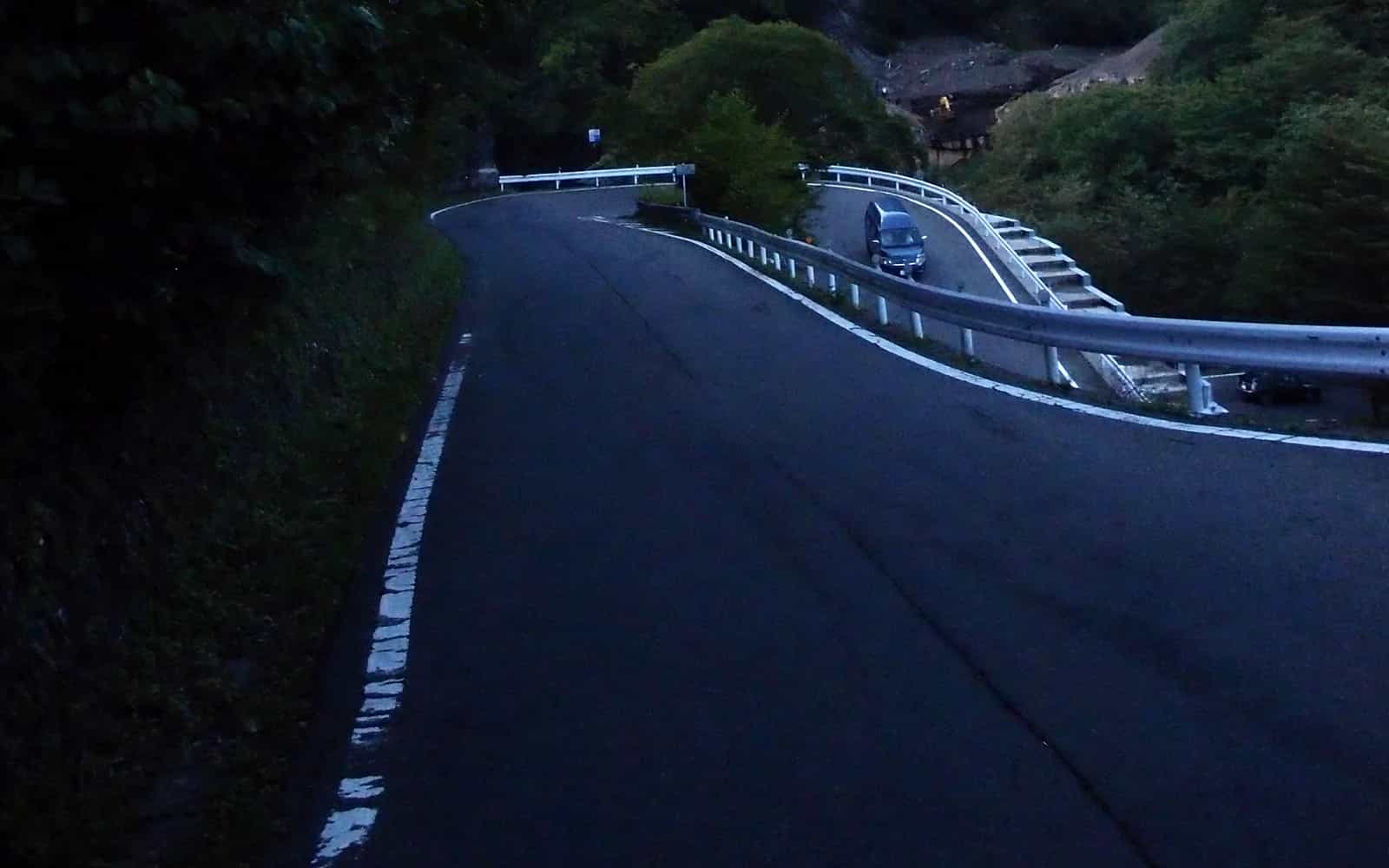
MOTORCYCLE TRAVEL IN Japan
QUICK ANSWER
Riding through Japan is unlike any other country in this guide: as an archipelago with no land borders, there's no border post to hand over paperwork — the bike arrives by sea (a ferry with a vehicle deck, like the Camellia Line between Busan and Fukuoka) or you fly in and rent, which is fairly restricted for tourists. If you bring your own bike, the key requirement is the Carnet de Passage en Douane, demanded by Japanese customs under the international system for temporary vehicle imports. In exchange, the mountain roads — starting with the 48 hairpin bends of Irohazaka in Nikko — are among the best paved and best signed in the world.
WHAT YOU NEED TO KNOW
The country you're about to enter has particularities you need to know.
Before you cross the border there are four things you need locked down: how safe the country is, what insurance is mandatory for your motorcycle, where you'll actually find fuel, and when to go. None of these are optional.
SAFETY: VERY LOW RISK (1/5)
Is Japan safe to enter by motorcycle? Yes — one of the safest countries in the world to travel, with violent crime barely a factor for a motorcycle traveler.
AREAS TO AVOID
- Tokyo's nightlife districts: Kabukicho, Roppongi, Shibuya and Ikebukuro see theft, card scams and documented cases of spiked drinks targeting tourists at night, according to the UK and Canadian foreign ministries. Outside those neighborhoods and after dark, the risk drops sharply.
- Mountain and coastal roads during typhoon season: Between August and October, mountain routes in Kyushu, Shikoku and western Honshu can close due to landslides and flash flooding — the UK government specifically flags this as a real risk for motorcyclists, not just car drivers.
WHERE TO PARK
- Parking: In cities, almost all street parking is banned and ticketed — use the coin-parking lots on almost every block. In rural areas and michi-no-eki (roadside rest stops) it's free and hassle-free.
- Alarm: Recommended but not essential: motorcycle theft is very rare in Japan. A disc lock covers most cases.
- Luggage: You can leave panniers mounted almost anywhere without issue — one of the pleasant surprises for riders coming from other countries in this guide.
- Visibility: Not a deciding factor like in other countries: park wherever is convenient, near a konbini (convenience store) if you'd rather have people around.
TIPS
- ➜Check the Japan Meteorological Agency (JMA) forecast before any mountain route between August and October — typhoon season can shut down passes overnight.
- ➜Always carry the Carnet de Passage original and the 1949 permit on you, not packed away — a check without them on hand is far more complicated than elsewhere in Asia.
Outside those two specific situations, Japan is probably the calmest country in this whole guide to ride through — the real challenge isn't the people, it's the paperwork and the weather.
MANDATORY INSURANCE: CALI / Jibaiseki Hoken
Mandatory for any vehicle riding in Japan, including foreign-plated motorcycles under a carnet de passage. It's arranged with a Japanese insurer at the port of entry or through a local agent — foreign insurance or a Green Card isn't valid inside the country. It only covers third-party injury with low limits, so most motorcycle travelers add voluntary insurance (nin'i hoken) for property damage and full liability.
FUEL: PLENTIFUL, PRICIER
Japan has one of the densest, most reliable fuel station networks in Asia — you'll find a station in small towns and on mountain roads alike, unlike the scarcity seen in other countries in this guide. A liter runs around 172 yen (about USD 1.15), notably pricier than South America. Watch the labels: regyuraa is the regular grade most bikes use, haioku is the high-octane grade some Japanese sport bikes require, and keiyu is diesel — putting that in a gasoline bike by mistake is a real problem.
BEST SEASON: APR-MAY · OCT-NOV
Spring (April-May, cherry blossom season) and autumn (October-November, koyo foliage season) are the mildest, driest months to ride. Avoid tsuyu, the rainy season that runs from mid-June to mid-July across most of the country, and watch out for typhoon season, which Japan's climate records place between early August and early October. In Hokkaido, the highest mountain passes stay snow-closed for much of the winter, so plan that region for the northern summer.
ENTERING JAPAN BY MOTORCYCLE
Japan has no land border with any other country on this list, so forget the "cross with the bike and keep going" logic that works in South America or Southeast Asia. It's one of the countries that requires a Carnet de Passage en Douane (CPD) for any foreign vehicle entering through its ports, with no exception by plate origin — public documentation on the carnet system flags it as a reference case.
In practice, most motorcycle travelers arrive one of two ways: by a ferry with a vehicle deck (the most stable route today is the Camellia Line between Busan, South Korea, and Fukuoka; the historic Vladivostok-Sakaiminato route has been suspended at times in recent years, so it's worth confirming its status before planning around it), or by shipping the bike as separate cargo and flying in themselves. Once the bike touches a Japanese port, the process has two steps:
Port customs: You present the Carnet de Passage en Douane — Japanese customs stamps the temporary import and sets the deadline to re-export the bike.
Compulsory insurance (CALI): Before leaving the port you have to buy Japan's compulsory liability insurance (Jibaiseki Hoken) — foreign insurance or a Green Card isn't valid inside Japan.
For most Latin American and European passports —including Argentina, Chile, Mexico, Brazil and Spain— tourist entry into Japan doesn't require a visa in advance: a passport is enough, and immigration grants up to 90 days at no cost.
Real friction point:the Carnet de Passage isn't a quick procedure like Chile's TITV or Argentina's equivalent. The motoring club that issues it in your home country will ask for a security deposit (cash, bank guarantee or insurance policy) calculated on your bike's value, and since Japan sees far fewer carnet vehicles than Europe does, many clubs treat it as a high-risk destination and ask for the largest deposit on their scale.
On top of that, the International Driving Permit has to be the 1949 Geneva Convention format — Japan is a party to that convention but never ratified the 1968 Vienna Convention, so IDPs issued under the newer format aren't recognized. If your country only issues the 1968 Vienna format (the more common one worldwide today), that permit doesn't work to ride a motorcycle in Japan, and you need to arrange a specific one before you travel.
REQUIRED DOCUMENTATION
Valid passport: Valid for the whole length of your stay; tourist visa exemption of up to 90 days for most Latin American and European nationalities.
Carnet de Passage en Douane (CPD): Arranged with your home country's motoring club before you travel; includes a security deposit based on the bike's value.
International Driving Permit: Must be the 1949 Geneva Convention format, along with your valid national license.
Motorcycle title/registration: If you're not the owner, you need notarized power of attorney from them.
Japanese compulsory insurance (CALI / Jibaiseki Hoken): Arranged at the port of entry or through a local agent — foreign insurance doesn't cover you inside Japan.
Ferry booking with vehicle space: Operators ask for the bike's dimensions and weight weeks in advance.
With the Carnet de Passage arranged, the 1949 permit in your bag and the Japanese insurance ready to buy on arrival, entering Japan with your own bike is an orderly process — it just starts months before the trip, not at the customs counter. For most motorcycle travelers on a tighter schedule, the real alternative is renting a bike once already in Japan through one of the few agencies that specialize in foreign tourists, booking well ahead.
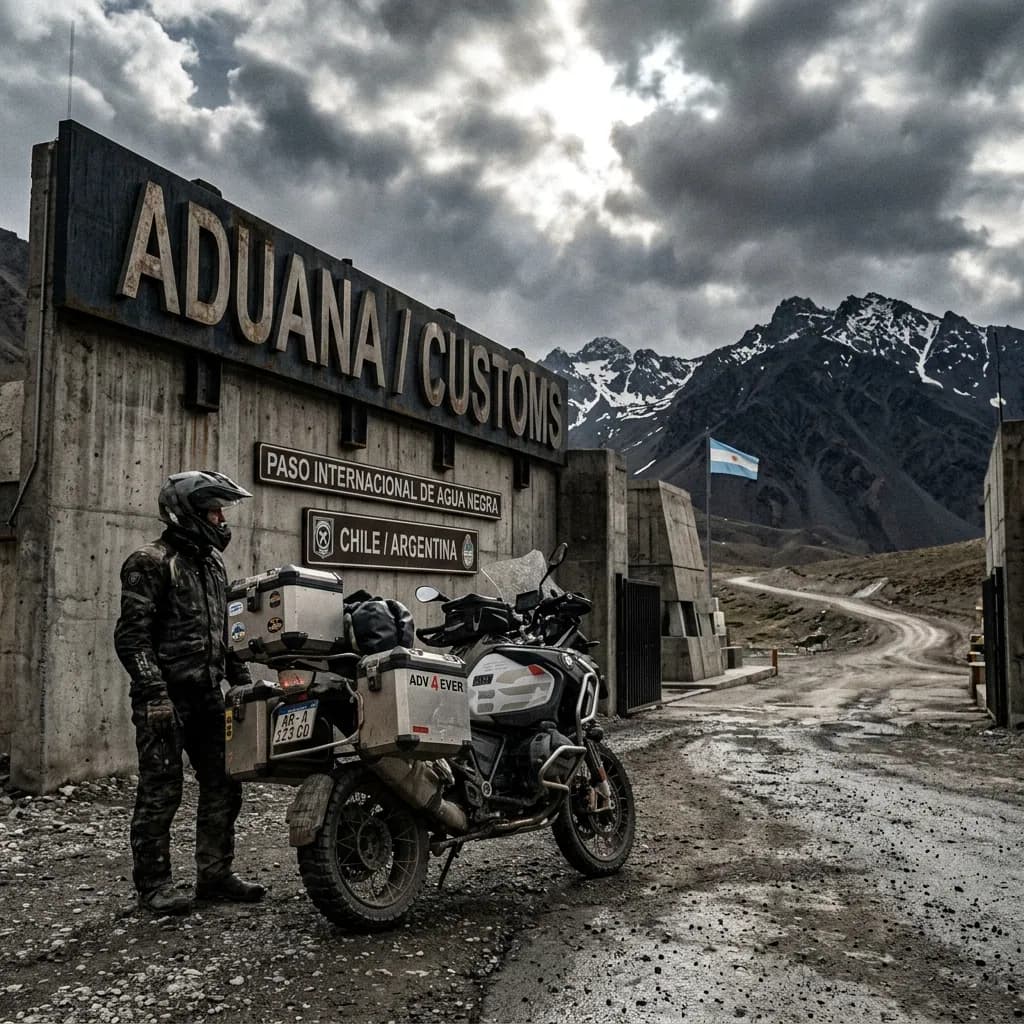
DAILY BUDGET
This price range combines cheap lodging, cooking your own meals, and basic bike maintenance — the three categories that weigh most on any moto traveler's daily budget.
Your real daily budget is something you build yourself, based on your own needs and limits — but if you want an idea of how to build yours, pick a category to see the full guide:
Full cost breakdown in the budget guide
THE 10 BEST MOTORCYCLE ROUTES IN JAPAN
This ranking is not ordered by difficulty or distance, but by real fame: position 1 is the route any international motorcycle traveler finds first when searching "best motorcycle routes in Japan" — the one most cited in specialized touring guides, forums and travel blogs — and the following positions drop in recognition while remaining genuinely well-known roads, never obscure paths only one isolated traveler happened to ride.
Japan demands different logistics than South America: renting or temporarily importing a bike, specific insurance, and paperwork that's best sorted out before getting on any of these routes. Reviewhow to prepare a long motorcycle tripbefore building the itinerary, so you don't lose riding days sorting out paperwork.
Stretches like the Tsurugi Super Rindo or the Shiretoko Pass don't have a repair shop around the corner. Before heading out, it's worth reviewingthe mechanics guide for long motorcycle trips, especially if you're going to cross any of this top 10's gravel sections.
One detail worth planning around: riding season shifts a lot from north to south. The Shiretoko Pass, in Hokkaido, is closed by snow for much of the year and only opens from May to October, while the Izu Skyline, much further south, can be ridden all twelve months. It's worth building the route north to south (or the reverse) based on the time of year of the trip.
Izu Skyline:the road that tops the ranking in Japan
Shizuoka, Izu PeninsulaRiding the Izu Skyline by motorcycle is, for a large share of riders searching for routes in Japan, the first name that comes up: it's the 40-kilometer toll road running along the volcanic ridge of the Izu Peninsula, in Shizuoka Prefecture, a little over two hours southwest of Tokyo.
The road connects the Atami-toge pass with Amagi-kogen and stays almost entirely above the treeline, with simultaneous views of the Pacific Ocean, Suruga Bay and, on clear days, Mount Fuji rising across the gulf.
It's a toll road (around 580 yen for a motorcycle), paved end to end with well-banked curves — the kind of fast, technical road that made generations of Japanese riders choose it as their favorite weekend escape, long before it showed up in international travel forums and videos.
WARNINGS FOR THIS ROUTE
This is what you need to sort out before riding this route.
- 01Fuel range
Good. There are gas stations at both ends of the route, in Atami and Ito.
Venus Line:Nagano's mountain balcony
Nagano, Kirigamine and Utsukushigahara highlandsClimbing the Venus Line by motorcycle means entering Nagano's most photographed mountain balcony: 76 kilometers of pavement that climb from Chino city up to the Utsukushigahara plateau, reaching 1,954 meters.
The name, according to local tourism tradition, comes from the almost celestial beauty of the landscape the road opens onto — mountain meadows, the Yatsugatake volcano in the background and, on clear days, even Mount Fuji outlined on the horizon.
It's a toll-free route less than three hours from Tokyo, which made it the favorite weekend escape for riders from the capital long before it appeared on any international list of Japan's routes.
WARNINGS FOR THIS ROUTE
This is what you need to sort out before riding this route.
- 01Fuel range
Good. There are stations in Chino, at the foot of the route, and in Kamisuwa; there's no fuel on the plateau itself.
Yamanami Highway:Kyushu's legendary crossing
Oita to Kumamoto, KyushuCrossing Kyushu on the Yamanami Highway by motorcycle means linking two of Japan's most contrasting landscapes in a single day: the hot-spring resort town of Beppu, with more active thermal springs than anywhere else in the country, and the caldera of Mount Aso, one of the largest in the world.
The route, officially Route 11, climbs the Makinoto Pass and crosses the Yufuin plateau before opening onto the grasslands surrounding the still-active Aso volcano, permanently monitored by authorities.
Along with the Milk Road that continues it inside the caldera, it's the route combination most recommended by Kyushu touring agencies for any rider visiting the island for the first time.
WARNINGS FOR THIS ROUTE
This is what you need to sort out before riding this route.
- 01Fuel range
Good. There are stations in Yufuin, halfway along, and at both ends, Beppu and the Aso area.
Milk Road:the rim of the Aso caldera
Kumamoto, Mount Aso calderaThe Milk Road by motorcycle traces the northern rim of the Mount Aso caldera, a volcanic basin about 25 kilometers north to south and 18 kilometers east to west — one of the largest on the planet, formed by successive massive eruptions tens of thousands of years ago.
The name isn't a coincidence: the route crosses the Kusasenri grasslands, where dairy cows have grazed for generations, with the five peaks of the Aso Gogaku silhouetted against the sky and, on active days, the steam column of the still-active Nakadake crater visible in the distance.
It's one of the most repeated postcards of motorcycle touring through Kyushu — a wide road, sweeping curves and kilometers of green grassland without a single building in sight.
WARNINGS FOR THIS ROUTE
This is what you need to sort out before riding this route.
- 01Fuel range
Good. Stations in Aso town and in the villages of Oguni and Takamori, at each end of the route.
Irohazaka:Nikko's 48 curves
Nikko, TochigiClimbing Irohazaka by motorcycle means chaining together 48 hairpin curves on two one-way roads that climb from Nikko town, at about 600 meters, up to the shore of Lake Chuzenji, at 1,269 meters.
Each of the 48 curves carries a sign with a character from the iroha, the classical Japanese poem that uses every character of the hiragana syllabary exactly once — the first curve is named "i", the last one "su", following the poem from bottom to top.
The road became known worldwide outside Japan thanks to the manga and anime Initial D, which set several of its night drift races there, and today it remains one of the most-ridden touge — winding mountain roads — in the country, by motorcycles and sports cars alike.
WARNINGS FOR THIS ROUTE
This is what you need to sort out before riding this route.
- 01Fuel range
Good. There are stations in Nikko town, at the foot of the climb.
UFO Line:the roof of Shikoku
Ehime, Ishizuchi mountain rangeRiding the UFO Line by motorcycle means taking Shikoku's highest paved road, along the ridge of the Ishizuchi mountain range, with the peak of the same name — the highest in western Japan, at 1,982 meters — always in view.
The nickname was coined by riders themselves for the feeling of riding suspended above a sea of clouds, the horizon curving on both sides as if piloting something not of this world; officially the route is Route 494.
It's narrow, without guardrails on several stretches, and without a single gas station along its 26 kilometers, which keeps it less traveled than other routes of similar fame — part of what made it a cult favorite among riders who already know Honshu's most famous roads and are looking for something less crowded.
WARNINGS FOR THIS ROUTE
This is what you need to sort out before riding this route.
- 01Fuel range
Limited. There are no stations along the route; fill up in Kuma or Saijo before climbing.
Bandai-Azuma Skyline:the road above the clouds
Fukushima, TohokuRiding the Bandai-Azuma Skyline by motorcycle means crossing 28 kilometers of toll road inside Bandai-Asahi National Park, in the volcanic heart of Tohoku, reaching 1,622 meters at its highest point.
Japanese riders themselves nicknamed it "the road that runs above the clouds" for the views that open up on low-fog days, when the pavement sits above the cloud cover and only the neighboring volcanic peaks poke through.
A mandatory stop is the crater of Azuma-kofuji, an almost-perfect volcanic cone reached by a roughly fifteen-minute walk from the route's parking lot, with the crater still visible from the rim.
WARNINGS FOR THIS ROUTE
This is what you need to sort out before riding this route.
- 01Fuel range
Good. There are stations in Fukushima city and the hot-spring town of Takayu, at each end.
Shiretoko Pass:the end of the world in Hokkaido
Hokkaido, Shiretoko PeninsulaCrossing the Shiretoko Pass by motorcycle means entering the peninsula UNESCO declared a World Heritage Site in 2005 for being one of the few places in the northern hemisphere where sea ice still reaches a temperate zone, sustaining a full food chain from plankton to orcas.
The route climbs from the fishing town of Utoro, crosses the pass through conifer forests at mid-altitude, and descends toward Rausu on the other side of the peninsula, with the Sea of Okhotsk on one side and the Pacific Ocean on the other.
It's also one of the areas with the highest density of brown bears — Ussuri brown bears — in Hokkaido, and national park authorities explicitly recommend against stopping on foot along the route or camping outside designated areas.
WARNINGS FOR THIS ROUTE
This is what you need to sort out before riding this route.
- 01Fuel range
Limited. There are no stations between Utoro and Rausu; fill up completely before crossing the pass.
- 02High density of brown bears
The peninsula has one of the highest concentrations of brown bears in Hokkaido; the national park itself recommends against stopping on foot outside designated areas or camping without the precautions indicated by park rangers.
Tsurugi Super Rindo:Japan's longest gravel road
Tokushima, Mount Tsurugi range, ShikokuThe Tsurugi Super Rindo by motorcycle is, according to several specialized touring guides, the longest continuous gravel road in all of Japan: 88 kilometers of rindo — forest road — winding through the mountains of Tokushima, in the interior of Shikoku.
The route skirts the slopes of Mount Tsurugi, at 1,955 meters the second-highest peak in Shikoku and a Shinto pilgrimage site for centuries, cutting through dense forest where another vehicle is rarely seen.
Unlike the paved skyline roads that dominate the rest of the country, here the challenge is genuinely off-road: loose surface, blind curves between trees, and after heavy rain, sections that get closed by landslides until the prefecture reopens them.
WARNINGS FOR THIS ROUTE
This is what you need to sort out before riding this route.
- 01Fuel range
Critical. There are no stations along the route; fill up in Mima or Kamikatsu before entering.
- 02Landslide closures
It's a forest mountain road subject to occasional closures from landslides after heavy rain; it's worth confirming the section's status with Tokushima Prefecture before setting out.
Shimanami Kaido:six islands and seven bridges over the Inland Sea
from Onomichi (Hiroshima) to Imabari (Ehime)Crossing the Shimanami Kaido by motorcycle means linking Honshu with Shikoku over the Seto Inland Sea, passing through six islands — Mukaishima, Innoshima, Ikuchijima, Omishima, Hakatajima and Oshima — connected by seven bridges, opened in 1999.
The final stretch, the Kurushima-Kaikyo Bridge between Oshima and Imabari, was the world's first triple suspension bridge when completed, with a total length of about 4,105 meters across its three spans.
Almost every bridge has a dedicated lane for motorcycles and bicycles, separate from car traffic — the exception is the Shin-Onomichi Bridge, the first on the route, which has no such dedicated lane: there, the official cycling route crosses by a small local ferry between Onomichi and Mukaishima Island, though motorcycles can simply continue on the general roadway without needing the ferry.
WARNINGS FOR THIS ROUTE
This is what you need to sort out before riding this route.
- 01Fuel range
Good. There are stations on several of the islands and at both ends, Onomichi and Imabari.
- 02The first bridge has no dedicated motorcycle lane
The Shin-Onomichi Bridge, at the start of the route from Onomichi, doesn't have a dedicated lane for motorcycles or bicycles like the rest of the bridges — motorcycles can still cross it via the general roadway, without needing the ferry that cyclists use.
FREQUENTLY ASKED QUESTIONS
01Do I need a Carnet de Passage to enter Japan with my motorcycle?
+
Do I need a Carnet de Passage to enter Japan with my motorcycle?
Yes. Japan requires a Carnet de Passage en Douane for any foreign vehicle entering through its ports, with no exception by plate origin. It's arranged before you travel through your home country's motoring club, which will also require a security deposit based on your bike's value.
02What insurance do I need to ride a motorcycle in Japan?
+
What insurance do I need to ride a motorcycle in Japan?
Japan's compulsory insurance (CALI, or Jibaiseki Hoken), arranged with a local insurer at the port of entry or through an agent — foreign insurance or a Green Card isn't valid inside the country. Since CALI only covers third-party injury with low limits, most motorcycle travelers also add voluntary insurance for property damage.
03Can I cross into Japan overland from a neighboring country?
+
Can I cross into Japan overland from a neighboring country?
No. Japan is an archipelago with no land border with any country — you can only enter by sea or air. The most practical way to bring your own bike today is by a ferry with a vehicle deck, such as the Camellia Line between Busan (South Korea) and Fukuoka.
04Does any International Driving Permit work to ride a motorcycle in Japan?
+
Does any International Driving Permit work to ride a motorcycle in Japan?
No. Japan only recognizes the International Driving Permit issued under the 1949 Geneva Convention format, since it never ratified the 1968 Vienna Convention. If your country issues the 1968 Vienna format — the more common one today — that permit isn't valid to drive in Japan, and you need to arrange the 1949 one before you travel.
05Is it safe to travel by motorcycle in Japan?
+
Is it safe to travel by motorcycle in Japan?
Yes, it's one of the safest countries in the world for a motorcycle traveler — violent crime is barely a factor. The two real risks are specific: Tokyo's nightlife districts (theft and scams at night) and mountain roads during typhoon season (August-October), which can close due to landslides.
06What's the best time to ride a motorcycle in Japan?
+
What's the best time to ride a motorcycle in Japan?
Spring (April-May) and autumn (October-November), when the weather is mild and dry. Avoid tsuyu (rainy season, mid-June to mid-July) and watch typhoon season (August to early October). Hokkaido's mountain passes close for snow through much of the winter.
07Can I rent a motorcycle in Japan as a tourist?
+
Can I rent a motorcycle in Japan as a tourist?
It's possible but far more restricted than renting a car: there are few agencies that specialize in foreign tourists, they typically require the 1949 International Driving Permit, and it's worth booking months ahead, especially during cherry blossom or autumn foliage season.
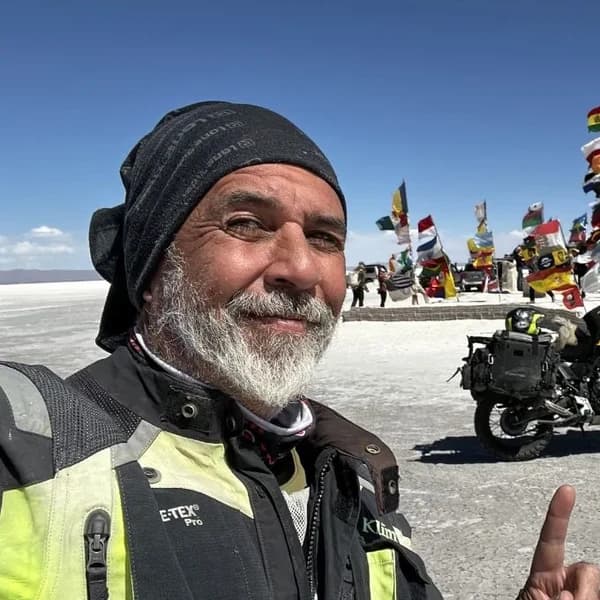
Gustavo Correa
Moto traveler, author and motorcycle travel consultant. 110,000+ km across 4 continents with Gloria, my motorcycle. Everything you read here has been tested on the road, not in an office.
Read my story →Last verified: 2026-08-30
A GIFT FOR BEING HERETHE ADVENTURE OF LIVING FREE
Do fear or doubt paralyze you before starting any project? You're not alone — every one of us has been there.
As a thank-you for visiting my site, I'm giving you my book "The Adventure of Living Free". A manual built to bring some light through the shadows and show you the philosophy that has let me ride the world for years.
* PDF STRAIGHT TO YOUR INBOX. NO SPAM.