MOTORCYCLE TRAVEL IN Morocco
QUICK ANSWER
Morocco is the closest gateway to Africa for a motorcycle traveler: you cross by ferry from Spain in under an hour, and within a few kilometers go from the Costa del Sol to the souks of Tangier. Entry is straightforward if your paperwork is in order — no Carnet de Passage required, just the D16 ter (temporary admission declaration), which you can fill out online before you travel, and third-party liability insurance (Green Card or Frontier Insurance) valid for Morocco.
WHAT YOU NEED TO KNOW
The country you're about to enter has particularities you need to know.
Before you cross the border there are four things you need locked down: how safe the country is, what insurance is mandatory for your motorcycle, where you'll actually find fuel, and when to go. None of these are optional.
SAFETY: LOW RISK (2/5)
Is Morocco safe to enter by motorcycle? Yes, with caveats — the real risk is hassle from informal fixers and fake guides, not violence toward travelers.
AREAS TO AVOID
- Western Sahara and the Algeria border strip: The US State Department and the Canadian government advise against the 30 km strip along the Western Sahara Berm due to unexploded landmines, and the 20 km strip along the Algerian border (closed since 1994) due to military presence and the difficulty of locating the exact line.
- Outer alleys of the Marrakech medina: Traveler accounts report bag-snatching from a moving motorbike and stolen motorcycles in the alleys around Avenue Mohammed V. Leave the bike in a guarded lot, never on the street at night.
- Rif mountain roads near Ketama, after dark: A cannabis-growing region with an active informal economy; by day it's a spectacular, well-traveled motorcycling road, but after dark it's best not to ride its curves or camp roadside.
WHERE TO PARK
- Parking: On the street: fine by day in busy areas. After dark, use a guarded lot (40 dh/day is typical in the big medinas) or your riad's garage/courtyard — almost all accept bikes.
- Alarm: Recommended: yes, especially in Marrakech, Fez, and Tangier. In Atlas and Sahara towns the risk drops a lot.
- Luggage: Take off soft panniers and anything loose when parking, even in a guarded lot — don't leave anything visible inside the top box.
- Visibility: Park where there's foot traffic and good lighting — never in an empty medina alley or a vacant lot on the outskirts.
TIPS
- ➜Avoid riding into Marrakech, Fez, or Tangier at night on your first time in the country — during daylight it's much easier to get your bearings and spot a fake-guide approach.
- ➜Cross via Tangier Med instead of Ceuta if you want to avoid the crowd of informal fixers who approach travelers right off the ferry.
- ➜Don't accept help with the D16 ter form at the border from anyone outside customs — it's free, and the customs officer fills it in for you directly.
Morocco is one of the calmer countries in North Africa to travel through by motorcycle — the real risk is concentrated in the harassment from touts and fake guides in the medinas, not violence toward travelers.
MANDATORY INSURANCE: Green Card / Frontier Insurance
Mandatory, no exceptions, for any foreign-plated motorcycle. If your home insurer extends Green Card coverage to Morocco, presenting it at Customs is enough. If not, buy it at the border crossing or at CAT Assurance offices in major cities — it only covers third-party liability, nothing for your own damage or theft.
FUEL: SCARCE IN THE ATLAS AND SAHARA
Good availability in cities and along the main road network (both gasoline and diesel). On remote mountain passes and stretches of the Sahara, stations are scarce — fill up before you head in and carry a reserve can on the longer routes.
BEST SEASON: MAR-MAY & SEP-NOV
March to May and September to November, with mild temperatures (18-28°C / 64-82°F) and the landscape at its best. Summer (June to August) tops 45°C (113°F) in the Sahara and the interior; winter (December to February) can close the High Atlas passes with snow, including the Tizi n'Tichka.
ENTERING MOROCCO BY MOTORCYCLE
Crossing into Morocco with a bike through the main ports (Tangier Med, Ceuta, Melilla) is, according to traveler accounts on Horizons Unlimited and Adventure Bike Rider, a well-defined process if your paperwork is sorted in advance — but it can turn into chaos with informal fixers if you arrive with nothing prepared.
The process has two steps:
Immigration: Stamps your passport on entry — it must be valid for at least 6 months from your entry date.
Customs: Issues the D16 ter (temporary admission declaration) for the motorcycle, valid up to 6 months; you can fill it out online on the Moroccan Customs website before you travel to speed up the crossing.
The D16 ter is free — there is no charge, according to Morocco's own customs authority (Douane).
Real friction point:it isn't the paperwork itself but the disembarkation. In Ceuta, right off the ferry, informal fixers commonly approach offering "help" with the D16 ter for a tip, sometimes pushing the form into travelers' hands before they even reach the official window.
At Tangier Med the whole process happens inside the port compound itself, without that hassle — several motorcycle travelers on Horizons Unlimited recommend that route for a first entry.
REQUIRED DOCUMENTATION
Passport: Valid for at least 6 months from your entry date.
Driving license: Your home country's license is enough; an international driving permit is recommended but not always required.
Motorcycle title/registration: If you're not the owner, you need notarized authorization from them.
D16 ter form: Temporary Admission Declaration — can be filled out online on the Moroccan Customs website (e-Douane) or in person at the border.
Green Card or Frontier Insurance: Mandatory third-party liability insurance. If your home policy doesn't cover Morocco with a Green Card, buy it at the border crossing or at CAT Assurance offices in major cities.
With these five documents sorted, entering Morocco with a bike through a main port is routine. The advice that comes up most often among motorcycle travelers: fill out the D16 ter online before you travel, and cross via Tangier Med instead of Ceuta if it's your first time in the country.
DAILY BUDGET
This price range combines cheap lodging, cooking your own meals, and basic bike maintenance — the three categories that weigh most on any moto traveler's daily budget.
Your real daily budget is something you build yourself, based on your own needs and limits — but if you want an idea of how to build yours, pick a category to see the full guide:
Full cost breakdown in the budget guide
THE 10 BEST MOTORCYCLE ROUTES IN MOROCCO
Along with India and Argentina, Morocco is one of the destinations that shows up most often in motorcycle travelers' trip reports worldwide, and almost everyone ends up riding some variation of the same classic loop: Marrakech, the High Atlas, the Sahara, and back. That's why this Top 10 is ordered from most to least famous: first the routes that make up that signature loop, ridden both by motorcycle tour operators (GlobeBusters, Compass Expeditions, MotoQuest, among others) and by independent riders building their own itinerary, and then the less-traveled roads that are still well recognized among those who already know the country well.
Before climbing Tizi n'Tichka or crossing the Sahara to Merzouga, it helps to have the rest of the trip sorted out: checkhow to prepare a long motorcycle tripso nothing is left to the last minute.
On roads like the Draa Valley or the Erg Chebbi dunes there is no repair shop around the corner, so before heading out it's worth readingthe mechanics guide for long motorcycle trips, especially if your bike has never left the pavement.
Tizi n'Tichka Pass:the Gateway to the Sahara
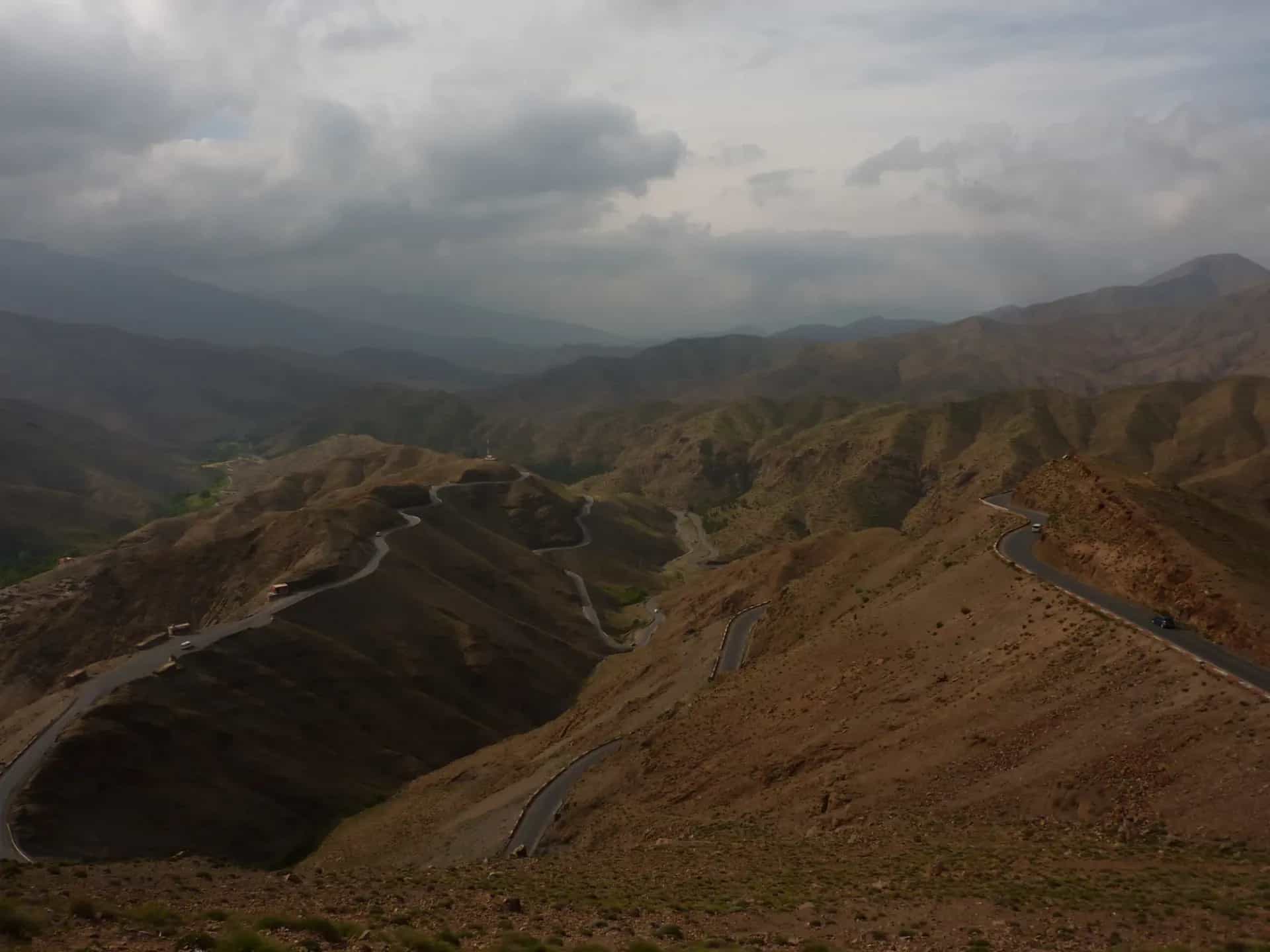
Marrakech to Ouarzazate, High AtlasFor the vast majority of riders who arrive in Morocco, crossing Tizi n'Tichka by motorcycle is the first great rite of passage: the highest paved pass in North Africa, at 2,205 meters above sea level (the official height corrected by 2022 GPS surveys, after decades of being listed as 2,260 m).
Today's road follows an old caravan route that crossed the High Atlas loaded with salt and gold on the way to Marrakech; the French army turned it into a proper road in 1936.
Heading south, the route passes within meters of Aït Benhaddou, the mud-brick ksar declared a UNESCO World Heritage Site in 1987, where Lawrence of Arabia, Gladiator and Game of Thrones were filmed — a few-minute detour almost no rider skips.
In 1942, the last known wild Barbary lion was shot near the pass, a fact local guides still tell at the roadside stops.
WARNINGS FOR THIS ROUTE
This is what you need to sort out before riding this route.
- 01Fuel range
Good. Stations in Marrakech, Taddert (halfway) and Ouarzazate.
- 02Snow and ice from November to March
Near the summit, snow can fall between November and March, even when Marrakech and Ouarzazate stay mild — check the forecast before climbing during those months.
Dades Gorge:the Road of a Thousand Kasbahs
Boumalne Dadès to Msemrir, High AtlasClimbing the Dades Gorge by motorcycle means facing the most repeated postcard in every Morocco guide: a dozen tight switchbacks carved into a canyon whose walls reach 500 meters high.
The Dadès River runs about 350 km before joining the Draa, and over millions of years it carved these gorges by eroding layers of sedimentary rock that were once under the sea.
Among riders, the stretch is known as the Road of a Thousand Kasbahs for the number of mud-brick fortresses that appear around every bend of the valley, many of them still inhabited.
Past the main viewpoint, the road narrows into a gravel track toward Msemrir — the point where most rental bikes turn around, leaving the crossing to Todra only for those riding properly equipped.
WARNINGS FOR THIS ROUTE
This is what you need to sort out before riding this route.
- 01Fuel range
Fair. Last reliable fuel in Boumalne Dadès; no stations until Msemrir.
Erg Chebbi Dunes:the End of the Road at Merzouga
Merzouga, Errachidia ProvinceReaching Erg Chebbi by motorcycle is the final goal of the vast majority of motorcycle trips through Morocco: the country's largest sand sea, rising up to 150 meters above the stony hamada that surrounds it.
The erg stretches about 28 km north to south and 5 to 7 km east to west, right against the Algerian border, built up over centuries by Saharan wind depositing sand over the flat desert rock.
Merzouga, the village at the foot of the dunes, lives almost entirely off motorcycle tourism and camel trekking, and on full-moon nights the orange sand turns silver — the image that shows up on most cover photos of any motorcycle trip through the country.
The wind reshuffles sand across the N13 pavement almost daily, so the final kilometers before Merzouga often have sand-covered stretches that call for slowing down and anticipating the slide.
WARNINGS FOR THIS ROUTE
This is what you need to sort out before riding this route.
- 01Fuel range
Good as far as Rissani; Merzouga has a station, the last one before heading into desert tracks.
Todra Gorge:Tinghir's Narrow Canyon
Tinghir, High AtlasEntering the Todra Gorge by motorcycle means riding the final 600-meter stretch where the canyon narrows to just 10 meters wide, with limestone walls reaching 160 meters high on each side.
The Todra and Dadès rivers carved this 24 km gorge system in their final kilometers through the mountains, eroding limestone layers that were once under the sea.
In the dry season, the canyon floor is a firm, rideable track between the vertical walls; local records warn that during the rainy season the river's flow can rise massively and cover the canyon floor with a strong torrent, so it's worth checking the water level before riding in.
WARNINGS FOR THIS ROUTE
This is what you need to sort out before riding this route.
- 01Fuel range
Good in Tinghir; no stations inside the canyon.
- 02Sudden river floods
During the rainy season, the Todra's flow can rise massively and completely cover the canyon floor with a strong torrent — check the river's condition before riding in.
Tizi n'Test Pass:the Other Face of the High Atlas
Marrakech to Taroudant, High AtlasCrossing Tizi n'Test by motorcycle is the choice of riders who already did Tichka and want a bigger challenge: a narrower, lonelier pass with pavement that deteriorates year after year from rockslides.
The road connects Marrakech with Taroudant and the Souss valley through the heart of the High Atlas, passing near the fortified Tin Mal mosque, built in the 12th century by the Almohad dynasty.
Unlike Tichka, there's almost no truck traffic here and no guardrail along the drop-offs, which made it a cult classic among those looking for the less touristy version of the High Atlas crossing.
WARNINGS FOR THIS ROUTE
This is what you need to sort out before riding this route.
- 01Fuel range
Fair. There's a station in Ijoukak, halfway; the rest of the route has no fuel supply.
Draa Valley:from Agdz to M'Hamid, the Last Palm Grove Before the Sahara
Agdz to M'Hamid el Ghizlane, Draa ValleyRiding down the Draa Valley by motorcycle means following Morocco's longest river, a 1,100 km course that rises in the High Atlas and, when it still holds water, ends in the Atlantic near Tan-Tan.
The stretch between Agdz and Zagora crosses six historic oases (Mezguita, Tinzuline, Ternata, Fezouata, Ktaoua and Mhamid el Ghuzlan), with over 55 earthen kasbahs documented in the Ktaoua section alone.
Past Zagora, the pavement literally ends at M'Hamid el Ghizlane: the last town before the Sahara swallows the road, and the classic starting point for those willing to ride the sand track toward the Erg Chegaga dunes.
The area also hides a little-known geological treasure: the Fezouata formations, Lower Ordovician fossil deposits that paleontologists compare to Canada's famous Burgess Shale.
WARNINGS FOR THIS ROUTE
This is what you need to sort out before riding this route.
- 01Fuel range
Good in Agdz and Zagora; from M'Hamid on there are no more stations heading south.
Chefchaouen and the Rif Curves:the Blue City by Motorcycle
Rif Mountains, northern MoroccoRiding up to Chefchaouen by motorcycle through the tight Rif curves is the classic finale of Morocco's northern loop, before crossing the Strait back to Spain.
The city was founded in 1471 by Ali ibn Rashid al-Alami as a defensive fortress against Portuguese attacks, and today it's famous for its medina walls painted in every shade of blue, a visual signature that made it one of the most photographed cities in the country.
The origin of the color is still debated among locals: some say it keeps mosquitoes away and carries a spiritual meaning, others that it was a decision by local authorities in the 1970s to attract tourism — what's certain is that the contrast between the blue walls and the Rif stone is the postcard every rider comes looking for.
The approach from Tetouan is pure Rif: tight curves, terraced hillsides and frequent fog in the higher stretches, a landscape very different from the arid south of the country.
WARNINGS FOR THIS ROUTE
This is what you need to sort out before riding this route.
- 01Fuel range
Good. Stations in Tetouan, Chefchaouen and Ouezzane.
The Ifrane and Azrou Cedar Forest:Middle Atlas Monkeys
Middle Atlas, between Azrou and IfraneCrossing the Ifrane Cedar Forest by motorcycle is the climate surprise of any trip through Morocco: a town of pitched roofs and alpine architecture, founded in 1929 by the French protectorate as a hill station to escape the heat of the plains.
Ifrane sits at 1,665 meters in the Middle Atlas and is known as Morocco's Switzerland for its harsh winters — in fact, in 1935 it recorded the lowest temperature ever measured on the African continent, -23.9°C.
The cedar forest surrounding the road between Azrou and Ifrane is one of the last refuges of the Barbary macaque, an endangered species that approaches the road and the riders who stop to photograph it without fear.
WARNINGS FOR THIS ROUTE
This is what you need to sort out before riding this route.
- 01Fuel range
Good. Stations in Azrou, Ifrane and Fez.
Tafraoute and the Ameln Valley:the Painted Rocks of the Anti-Atlas
Tiznit Province, Anti-AtlasArriving in Tafraoute by motorcycle means entering the landscape least like the rest of Morocco: a valley surrounded by Djebel Lekest, a pink granite mountain sculpted by erosion over millions of years.
The town, home to barely 6,000 people, is surrounded by olive, almond, argan and fig groves, and serves as a base for visiting the Painted Rocks of Aguerd Oudad, a group of boulders that Belgian artist Jean Vérame painted blue, red and purple in 1984.
The Ameln Valley, at the foot of Djebel Lekest, hides dozens of stone Berber villages built into the mountainside, a terrain of tight curves and dirt tracks that draws riders looking for the least touristy face of the Anti-Atlas.
WARNINGS FOR THIS ROUTE
This is what you need to sort out before riding this route.
- 01Fuel range
Fair. Last reliable station in Aït Baha; Tafraoute has fuel, but limited.
Legzira and Sidi Ifni Coast:the Atlantic's Orange Arch
Atlantic coast, Sidi Ifni ProvinceRiding down the Legzira coast by motorcycle completely changes Morocco's landscape: sand-colored cliffs, Atlantic waves and fishing villages instead of deserts and mountains.
Legzira is famous for its orange rock arches, carved by the surf over centuries, though in September 2016 the southern arch, the more photographed of the two, collapsed from natural erosion — today only the northern arch remains standing, increasingly battered by the sea.
A little further south, Sidi Ifni still shows the art deco layout left by colonial Spain: the town, named Santa Cruz de la Mar Pequeña in 1476, stayed under Spanish control until Morocco got it back only in 1969, more than a decade after the rest of the country's 1956 independence.
It's the preferred route for riders continuing down toward Western Sahara and Mauritania, the last easy stretch before the landscape turns definitively desert.
WARNINGS FOR THIS ROUTE
This is what you need to sort out before riding this route.
- 01Fuel range
Good. Stations in Tiznit, Mirleft and Sidi Ifni.
- 02Active erosion on the remaining arch
Legzira's southern arch collapsed in September 2016 due to wave erosion. The remaining northern arch is exposed to the same process — avoid standing underneath it right as the tide comes in.
FREQUENTLY ASKED QUESTIONS
01Do I need a Carnet de Passage to enter Morocco by motorcycle?
+
Do I need a Carnet de Passage to enter Morocco by motorcycle?
No. Morocco does not require a Carnet de Passage — it uses its own local form, the D16 ter (Temporary Admission Declaration), valid for up to 6 months and free of charge.
02What insurance do I need to enter Morocco by motorcycle?
+
What insurance do I need to enter Morocco by motorcycle?
Third-party liability insurance with a Green Card valid for Morocco, or, if your policy doesn't extend there, Frontier Insurance (Assurance Frontière), which you buy right at the border crossing or at CAT Assurance offices in major cities.
03How long can I stay in Morocco with my foreign motorcycle?
+
How long can I stay in Morocco with my foreign motorcycle?
The D16 ter is granted for a maximum of 6 months per year. After that, the motorcycle must leave the country.
04Is it better to cross via Ceuta or Tangier Med?
+
Is it better to cross via Ceuta or Tangier Med?
Tangier Med, according to motorcycle traveler accounts on Horizons Unlimited — the paperwork happens inside the port compound itself, without the informal fixers who approach travelers getting off the ferry at Ceuta.
05What is the best season to ride through Morocco by motorcycle?
+
What is the best season to ride through Morocco by motorcycle?
March to May and September to November. Summer tops 45°C (113°F) in the Sahara, and winter can close the High Atlas passes with snow, including the Tizi n'Tichka.
06Are there gas stations on the Sahara and Atlas routes?
+
Are there gas stations on the Sahara and Atlas routes?
On the main road network, yes, with good availability. On remote Atlas passes and stretches of the Sahara, stations are scarce — fill up before you head in and carry a reserve can.
07Is it safe to ride near Western Sahara by motorcycle?
+
Is it safe to ride near Western Sahara by motorcycle?
It's not recommended. The US State Department and the Canadian government advise avoiding the strip along the military Berm wall due to unexploded landmines, on top of the area's instability.
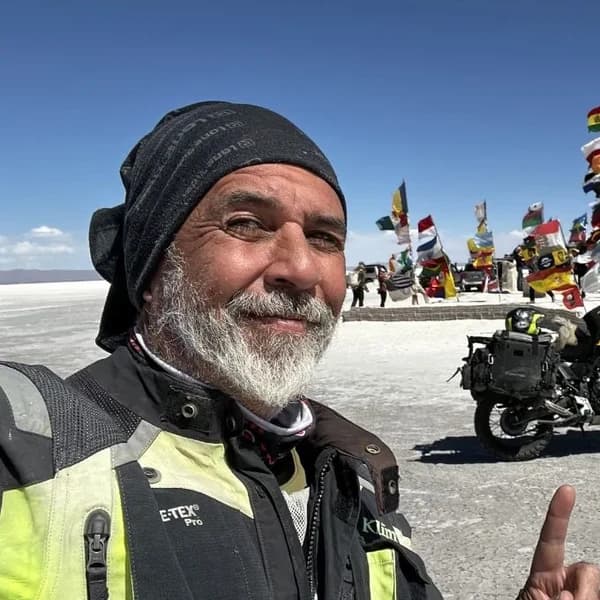
Gustavo Correa
Moto traveler, author and motorcycle travel consultant. 110,000+ km across 4 continents with Gloria, my motorcycle. Everything you read here has been tested on the road, not in an office.
Read my story →Last verified: 2026-08-29
A GIFT FOR BEING HERETHE ADVENTURE OF LIVING FREE
Do fear or doubt paralyze you before starting any project? You're not alone — every one of us has been there.
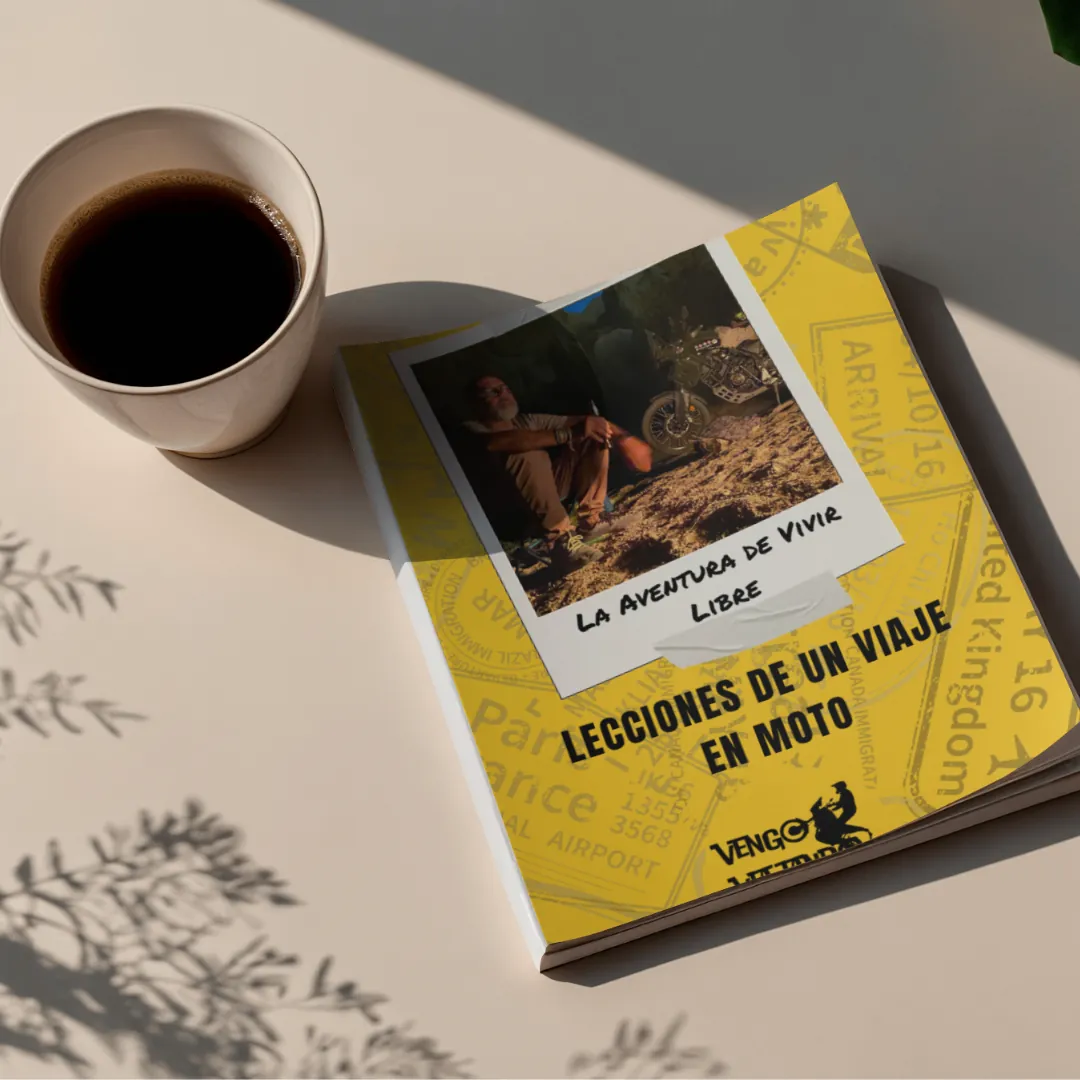
As a thank-you for visiting my site, I'm giving you my book "The Adventure of Living Free". A manual built to bring some light through the shadows and show you the philosophy that has let me ride the world for years.
* PDF STRAIGHT TO YOUR INBOX. NO SPAM.