MOTORCYCLE TRAVEL IN Vietnam
QUICK ANSWER
Vietnam is the country where the "buy a bike and ride the country" trip really was born: the overwhelming majority of motorcycle travelers don't enter with their own bike, they buy a used one on arrival (usually in Hanoi) and resell it before leaving. Bringing your own foreign-registered motorcycle is legal, but requires an expensive temporary import permit arranged through a licensed tour operator — which is why almost nobody does it. From the Ha Giang Loop in the far north to the central coast, it's one of the most spectacular motorcycle destinations in Southeast Asia.
WHAT YOU NEED TO KNOW
The country you're about to enter has particularities you need to know.
Before you cross the border there are four things you need locked down: how safe the country is, what insurance is mandatory for your motorcycle, where you'll actually find fuel, and when to go. None of these are optional.
SAFETY: LOW RISK (2/5)
Is Vietnam safe to enter by motorcycle? Yes — it's one of the calmest countries in Southeast Asia in terms of crime; the real risk for a motorcycle traveler isn't crime, it's traffic.
AREAS TO AVOID
- District 1, Ho Chi Minh City (Bui Vien, Dong Khoi, Nguyen Hue): Bag-snatching ('cướp giật') by pairs on motorbikes, documented across multiple expat guides and forums — keep backpacks and tank bags secured away from the street side.
- Quang Tri, Quang Binh, and Thua Thien Hue provinces (former Demilitarized Zone): Real landmine and unexploded-ordnance contamination from the war, according to RENEW and the US Embassy. Never leave the road or stop in fields or unmarked terrain.
- Ma Pi Leng Pass and the Ha Giang Loop in rainy season (May-September): Tight hairpin turns with no guardrail above sheer drops, sudden fog, and rain that have caused documented fatal accidents among foreign tourists — avoid riding it at night or in fog.
- District 4 and District 8, Ho Chi Minh City: Higher crime and less tourist infrastructure according to local safety guides — they aren't part of any typical motorcycle traveler route, so there's no reason to detour there.
WHERE TO PARK
- Parking: Almost every hotel and guesthouse, even budget ones, offers watched parking free or for a small tip — it's the local norm, use it instead of leaving the bike on the street overnight.
- Alarm: Not common on rented or locally bought bikes. If you're leaving the bike for several days (for a trek, say), add a disc lock on top of the steering lock.
- Luggage: Big cities see bag-snatching ('cướp giật') by pairs riding motorbikes — never leave anything loose on visible luggage racks when parking on the street.
- Visibility: Park where there's light and foot traffic; avoid empty alleys, especially in Ho Chi Minh City at night.
TIPS
- ➜Traffic is the real risk, not crime: in the cities almost nobody respects traffic lights or right of way, so ride defensively at all times.
- ➜In the former Demilitarized Zone (Quang Tri, Quang Binh, Thua Thien Hue) never leave the road or pick up buried metal objects — the landmine contamination is real, not folklore.
- ➜Avoid riding at night outside the cities: signage is scarce and trucks and buses cross into the oncoming lane without warning.
Outside of chaotic city traffic and the specific mine-contaminated zone in the center, Vietnam is one of the safest countries in Southeast Asia for a motorcycle traveler — the US State Department's alert level is the lowest possible (Level 1).
MANDATORY INSURANCE: TNDS
Mandatory for anyone riding a motorcycle in Vietnam, local or foreign. The real problem for a motorcycle traveler: Vietnamese insurers (Bao Viet, BIC, and similar) require a license valid in the country — a Vietnamese license or an International Driving Permit under the 1968 Vienna Convention — to issue the policy. Without that, many refuse to sell it or to pay out on a claim. Bao Viet is the only insurer authorized to issue the blue card recognized if you cross into another ASEAN country with the bike. There is no international liability policy that covers you inside Vietnam — it's always bought in the country.
FUEL: WIDE NETWORK, ETHANOL ONLY
Vietnam has one of the densest fuel networks in Southeast Asia — you will find gasoline in almost any town. Since 2018, pure gasoline is no longer sold: only E5 RON92 (ethanol blend, fine for scooters and small bikes) and RON95 (recommended for larger-displacement motorcycles). Prices run around 1 USD per liter. In the northern mountains (Ha Giang, Dong Van) stations are more spaced out — riding 30-40 km between them is normal, though running out completely is rare.
BEST SEASON: SEP-NOV & MAR-APR (NORTH)
Vietnam is long enough (over 1,600 km north to south) that no single season works for the whole country. In the north (Ha Giang, Sapa), March-April and September-November are best, with drier roads and less fog. Avoid May-September there: it's rainy and extremely hot. In the center (Hue, Quang Tri, Da Nang) avoid October-November, typhoon and flood season. The south has its own dry season from November to April, ideal for the coast.
ENTERING VIETNAM BY MOTORCYCLE
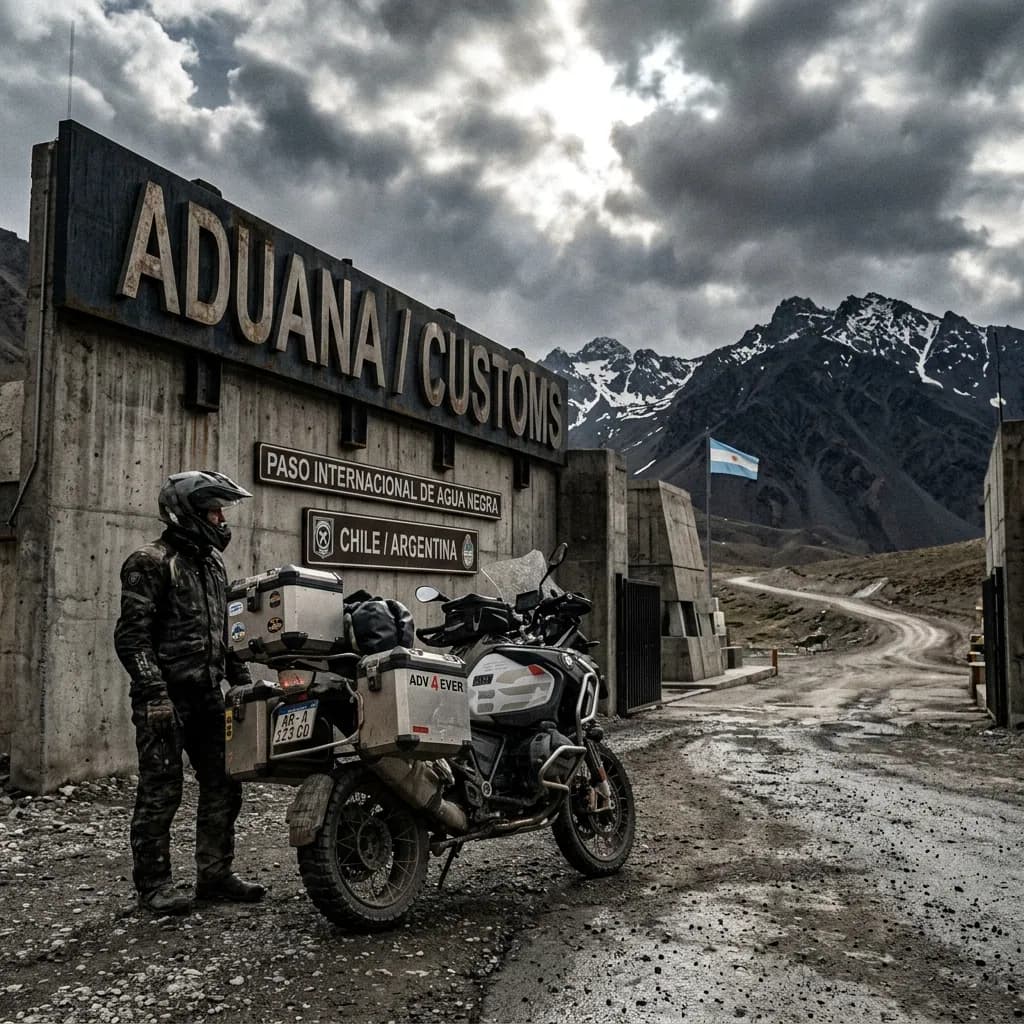
Vietnam is different from every other country in this guide: the overwhelming majority of motorcycle travelers do not enter on their own bike — they buy a used one on arrival (usually in Hanoi) and resell it before leaving (usually in Ho Chi Minh City), according to matching accounts on GT-Rider, Wikivoyage, and Mad or Nomad. Bringing your own foreign-registered motorcycle is legal only on paper: a temporary import permit exists, but it's slow, expensive, and only works through 7 approved border crossings.
The process has two steps:
Immigration: Stamps your passport on entry, once your e-visa or visa-on-arrival is already valid.
Customs (temporary import, only if bringing your own bike): Requires the Ministry of Public Security approval letter, arranged beforehand by a licensed tour operator — not something you can sort out on the spot.
The entry stamp at immigration carries no extra cost beyond the e-visa itself — it's the simplest step in the whole process, whether or not you buy a bike on arrival. Transferring the cà vẹt (blue card) into your name, if you buy locally, is also just a small fee at the traffic registration office.
Real friction point:bringing your own foreign-registered motorcycle is, according to matching accounts on GT-Rider and Horizons Unlimited, one of the most expensive and least guaranteed procedures in Southeast Asia. You need a Ministry of Public Security approval letter arranged by a licensed tour operator (you cannot do this yourself, and not on the spot), at least 1 month in advance, and the permit only covers 7 border crossings staffed to process it — the rest are expected to turn you away. Processing costs run around 1,100 USD (dropping to about 180 USD per person in a group of 6), plus the mandatory package tour (lodging, meals, guide) the rules require. The maximum authorized stay is 30 days.
That's why the vast majority of motorcycle travelers touring Vietnam don't bring their own bike: they buy a used one on arrival (typically a semi-automatic Honda Win or Honda Blade in Hanoi) and resell it before leaving, usually in Ho Chi Minh City. It's the real alternative recommended by Wikivoyage and practically every traveler account out there.
REQUIRED DOCUMENTATION
Passport and valid visa: E-visa for up to 90 days or visa-on-arrival — needed before you cross, not something you can arrange at the border.
International Driving Permit (IDP): Valid only under the 1968 Vienna Convention. The US, Canada, Australia, and New Zealand don't issue IDPs under this convention — their licenses don't work in Vietnam.
Cà vẹt (blue card), if you buy your bike locally: This is the ownership title. It can be transferred to your name at the local traffic registration office for a small fee, though many passing travelers ride without doing it.
TNDS insurance (mandatory third-party liability): Requires a license valid in the country (Vietnamese or a 1968 IDP) for the insurer to issue it — without one, many refuse to sell it.
If bringing your own bike: Ministry of Public Security approval letter: Arranged only through a licensed tour operator, at least 1 month in advance, with photos of the bike (front, back, both sides).
Of every country in this guide, Vietnam is the one where bringing your own foreign-registered motorcycle makes the least sense. The process exists, but it's built for tour operators running organized groups, not for the independent motorcycle traveler.
The advice that repeats across forums like GT-Rider and Wikivoyage: buy a used bike on arrival (Hanoi is the cheapest place to buy) and resell it before you leave. With your passport, a valid visa, a 1968 IDP, and TNDS insurance sorted, the rest of the process is practically the same as for any local rider.
DAILY BUDGET
This price range combines cheap lodging, cooking your own meals, and basic bike maintenance — the three categories that weigh most on any moto traveler's daily budget.
Your real daily budget is something you build yourself, based on your own needs and limits — but if you want an idea of how to build yours, pick a category to see the full guide:
Full cost breakdown in the budget guide
THE 10 BEST MOTORCYCLE ROUTES IN VIETNAM
The order of this Top 10 isn't a personal preference: it follows each route's real fame among international motorcycle travelers, measured by how often it comes up in motorcycle travel blogs, forums like ADVrider and Horizons Unlimited, and video content — from most mentioned to least, though all ten are genuinely recognized routes, not personal discoveries.
Before heading out to cross Mã Pí Lèng in the rain or climb Ô Quy Hồ in high-altitude cold, it's worth reviewingthe gear guide for long motorcycle trips, because Vietnam swings from 35-degree coastal heat to near-freezing temperatures on the northern passes within the same week.
And on stretches like the Ho Chi Minh Trail or Khau Phạ, where there's no repair shop in sight, it's worth reviewing beforehandthe mechanics guide for long motorcycle trips, so the bike — your own or a rental — can handle several days of gravel.
The Ha Giang Loop:Mã Pí Lèng Pass and the Happiness Road
Hà Giang Province, far north VietnamRiding the Ha Giang Loop by motorcycle became, in barely over a decade, the near-automatic answer to any search about motorcycle travel in Vietnam — Hà Giang city used to see only a handful of tourists until word of mouth among backpackers and travel videos turned it into the country's most-ridden circuit.
The heart of the loop is Mã Pí Lèng by motorcycle, a stretch of just 20 km hand-carved between 1959 and 1965 into a cliff face 1,500 meters up, above the Nho Quế River canyon. The work was part of the so-called Đường Hạnh Phúc — the Happiness Road — a name Ho Chi Minh himself gave it in 1961, built by more than 2,300 workers from 16 different ethnic groups, many suspended by ropes to chisel the rock.
Below, the Nho Quế canyon — known locally as Tú Sản — is considered one of the deepest river gorges in Southeast Asia, and the whole Đồng Văn karst plateau holds UNESCO Global Geopark status.
WARNINGS FOR THIS ROUTE
This is what you need to sort out before riding this route.
- 01Fuel range
Generally good — Hà Giang, Yên Minh, Đồng Văn and Mèo Vạc all have stations — but there are stretches of more than 50 km with no pump between towns.
Hải Vân Pass:the coastal road Top Gear called the best in the world
Between Huế and Đà Nẵng, central VietnamRiding Hải Vân Pass by motorcycle means covering the stretch of road Jeremy Clarkson described in Top Gear's 2008 Vietnam Special as "a deserted ribbon of perfection" and one of the best coast roads in the world — the line that cemented this route on every international rider's map.
For centuries, the pass marked a real border between two kingdoms: it separated Champa from Đại Việt from 1306 until the Vietnamese conquest of 1471, and a 17th-century poem went so far as to call it Vietnam's most dangerous mountain.
Today it climbs to just 496 meters above sea level, but from the summit the whole Đà Nẵng bay opens up in a single view. Since the Hải Vân Tunnel — the longest in Southeast Asia — absorbed nearly all truck and bus traffic, the old road has emptied out, left almost entirely to motorcycles and cyclists.
WARNINGS FOR THIS ROUTE
This is what you need to sort out before riding this route.
- 01Fuel range
No risk — the pass connects two large cities directly, with stations at both ends.
The Ho Chi Minh Trail:the wartime route that is now a haven for long-distance riders
Trường Sơn mountains, central Vietnam (Phong Nha - Khe Sanh stretch)Riding the Ho Chi Minh Trail by motorcycle means following, on modern, nearly traffic-free pavement, the corridor the U.S. National Security Agency once called "one of the great achievements of military engineering of the 20th century."
The original network — built starting in 1959 by the 559th Transportation Group under Colonel Võ Bẩm — crossed mountains between 500 and 2,400 meters high, under triple-canopy jungle, and eventually stretched over 2,000 km across Vietnam, Laos and Cambodia to supply the Viet Cong and North Vietnamese army. Over Laos alone, more than 433,000 tonnes of bombs fell in 1969 as Allied forces tried to cut it.
Today's Ho Chi Minh Road retraces much of that path as a nearly empty development highway, running through Phong Nha-Kẻ Bàng National Park — a UNESCO World Heritage Site since 2003, home to Sơn Đoòng, the largest cave in the world — and passing near the former Khe Sanh Combat Base, in the demilitarized zone that once split North from South Vietnam.
WARNINGS FOR THIS ROUTE
This is what you need to sort out before riding this route.
- 01Fuel range
Scarce. Outside Phong Nha and Khe Sanh there are no reliable stations — leave with a full tank and plan for over 100 km with no pump.
Ô Quy Hồ Pass:the king of passes, at the foot of Fansipan
Between Sa Pa (Lào Cai) and Tam Đường (Lai Châu)Climbing Ô Quy Hồ Pass by motorcycle means riding Vietnam's longest mountain pass: nearly 50 km along National Route 4D, climbing the Hoàng Liên Sơn range to 1,991 meters, at a point Vietnamese themselves call Cổng Trời — Heaven's Gate.
It sits just a few kilometers from Fansipan, the highest peak in all of Indochina at 3,143 meters, and from the summit you can see both the Sa Pa valley on the Lào Cai side and the mountains of Lai Châu on the other — two-thirds of the pass falls within Lai Châu, the rest in Sa Pa.
Locals nickname it the "king of passes" of the northwest, and legend has it the name imitates the mournful cry of a bird searching for its lost mate in the fog. It's also the only spot in Vietnam where, deep in winter, frost or even snow can appear on the pavement.
WARNINGS FOR THIS ROUTE
This is what you need to sort out before riding this route.
- 01Fuel range
Fine at both ends — Sa Pa and Tam Đường both have stations — but the high stretch near Cổng Trời has none.
Khau Phạ Pass:the Mù Cang Chải rice terraces by motorcycle
Yên Bái Province, northwest VietnamRiding Khau Phạ Pass by motorcycle means crossing, between 1,200 and 1,500 meters of altitude, one of the four peaks Vietnamese themselves group together as Tứ Đại Đỉnh Đèo — the country's four great passes.
The road links the villages of La Pán Tẩn, Chế Cù Nha, Nậm Có and Tú Lệ, all part of Mù Cang Chải, Vietnam's most photographed rice-terrace region, carved over generations by the H'Mông and Thái communities.
Two-thirds of the road remains unpaved, on a red basaltic soil that crumbles easily and causes frequent landslides; before 1945, Vietnamese guerrilla fighters used the area's constant fog to ambush French military columns.
WARNINGS FOR THIS ROUTE
This is what you need to sort out before riding this route.
- 01Fuel range
Scarce. Mù Cang Chải and La Pán Tẩn have pumps, but the rest of the road has none.
Pha Đin Pass:where sky meets earth, on the way to Điện Biên Phủ
Between Sơn La and Điện Biên, northwest VietnamClimbing Pha Đin Pass by motorcycle means riding to 1,648 meters between Sơn La and Điện Biên provinces, on a road whose Thai-language name — Pha (sky) and Đin (earth) — sums up exactly what it feels like at the summit.
During the 1954 Điện Biên Phủ campaign, around 8,000 volunteers crossed this pass on foot and by bicycle carrying weapons and supplies for Vietnamese troops, while French general de Castries bombed it for 48 straight days trying to cut the supply line — without success.
Since a lower bypass was built between 2006 and 2009, some 200 to 400 meters below the original road, the old route has emptied out of trucks and buses, left today almost entirely to riders chasing the tight curves and the view over the valley.
WARNINGS FOR THIS ROUTE
This is what you need to sort out before riding this route.
- 01Fuel range
Fine — Thuận Châu and Tuần Giáo, at either end, both have service stations.
The Mai Châu - Mộc Châu - Pu Luông Loop:the classic weekend ride from Hanoi
Hòa Bình, Sơn La and Thanh Hóa provincesLeaving Hanoi on the Mai Châu - Mộc Châu loop by motorcycle is the classic weekend trip for any rider based in the capital: it climbs National Route 6 over the Thung Khê Pass — locals also call it "heaven's gate" — before dropping into the Mai Châu valley.
There, the White Thai community lives in wood-and-bamboo stilt houses — Bản Lác village is the most visited — surrounded by rice paddies farmed the same way for generations.
Further on, the Mộc Châu plateau climbs to around 1,050 meters, where the cool climate allowed for tea plantations and Vietnam's first modern dairy farm, and where plum and peach trees both bloom every December. Anyone who adds the Pu Luông Nature Reserve on the way back finds the same rice terraces and karst formations of the north, just a day's ride from Hanoi.
WARNINGS FOR THIS ROUTE
This is what you need to sort out before riding this route.
- 01Fuel range
No issues — Mai Châu, Mộc Châu and the towns in between all have regular service stations.
Đà Lạt and the Central Highlands:the road of pines and French villas
Lâm Viên Plateau, Vietnam's Central HighlandsClimbing up to Đà Lạt by motorcycle on National Route 20 means leaving the tropical heat of southern Vietnam behind to enter, within a few hours, a city that stays cool year-round at 1,500 meters above sea level, on the Lâm Viên Plateau.
Swiss-French doctor Alexandre Yersin discovered the area in 1893 while surveying the highlands for the Pasteur Institute, and from 1907 the French turned it into a hill station to escape Saigon's heat, with an Alpine-style urban plan of villas and boulevards designed by architect Ernest Hébrard.
The final stretch enters the city over Prenn Pass, through pine forest and waterfalls, and that steady climate — between 14 and 23 degrees year-round — earned it the nickname "the city of eternal spring."
WARNINGS FOR THIS ROUTE
This is what you need to sort out before riding this route.
- 01Fuel range
No issues — National Route 20 is a main corridor with frequent stations along its whole length.
Ngoạn Mục Pass:the French switchbacks between the highlands and the coast
Between Ninh Thuận and Lâm Đồng, southern VietnamDescending Ngoạn Mục Pass by motorcycle — its name literally means "spectacular" in Vietnamese — means dropping nearly 800 meters of altitude in just 18 km, on the steepest grade of any pass in southern Vietnam: over 9 degrees on average, resolved in four tight zigzagging hairpins.
The road follows the same route French captain Thouars mapped in 1897, four years after Yersin discovered Đà Lạt, when the pass was still called Bellevue. In 1917 the French built a cog railway up those same slopes to reach the highlands, one of only a few of its kind in the world at the time.
Today pavement has replaced most of the old track bed, but the landscape hasn't changed: it starts among palm trees and coastal heat near Phan Rang, and ends among pines and cool fog at the gates of D'Ran, on the way to Đà Lạt.
WARNINGS FOR THIS ROUTE
This is what you need to sort out before riding this route.
- 01Fuel range
No issues — Phan Rang and D'Ran, at either end, both have stations.
The Quy Nhơn - Phú Yên Coast Road:the road to Gành Đá Đĩa
Bình Định and Phú Yên provinces, south-central coast of VietnamRiding the Quy Nhơn to Phú Yên coast by motorcycle means following the least-traveled shoreline of south-central Vietnam all the way to Gành Đá Đĩa, an outcrop of hexagonal basalt columns stacked like discs — hence its name, literally "reef of stone plates."
The formation dates back millions of years, when volcanic lava cooled and cracked into nearly uniform columns that the surf later carved into horizontal layers; geologically it's a close cousin of the Giant's Causeway in Northern Ireland and the Jusangjeolli cliffs on South Korea's Jeju Island.
The site was recognized as a national scenic landscape in 1997 and became a Special National Heritage site on December 31, 2020. In the nearby fishing village, a shrine to Nam Hải, the whale god, still stands, built in the mid-19th century during the reign of Tự Đức.
WARNINGS FOR THIS ROUTE
This is what you need to sort out before riding this route.
- 01Fuel range
No issues — the fishing towns along the coast have regularly spaced stations.
FREQUENTLY ASKED QUESTIONS
01Can I enter Vietnam with my own foreign-registered motorcycle?
+
Can I enter Vietnam with my own foreign-registered motorcycle?
Yes, but it is one of the most expensive and restrictive procedures in Southeast Asia: you need a Ministry of Public Security approval letter arranged by a licensed tour operator, at least 1 month in advance, and the permit is only issued at 7 approved border crossings. The processing cost runs around 1,100 USD (drops significantly if you travel as a group) and the maximum authorized stay is 30 days. That's why most motorcycle travelers choose to buy a used bike on arrival instead.
02Do I need a Carnet de Passage en Douane (CPD) to bring my motorcycle into Vietnam?
+
Do I need a Carnet de Passage en Douane (CPD) to bring my motorcycle into Vietnam?
Not the way India or Nepal require one. In practice, Vietnam's temporary import permit runs through a Ministry of Public Security approval letter instead of a traditional carnet, and only through a registered tour operator — it is not something you can arrange yourself at the border.
03Is it better to buy a motorcycle in Vietnam than to bring my own?
+
Is it better to buy a motorcycle in Vietnam than to bring my own?
For the vast majority of travelers, yes. Buying a used motorcycle (typically a Honda Win, Honda Blade, or Yamaha Sirius) on arrival and reselling it at the end of the trip is cheaper, simpler, and avoids the temporary import process entirely. It's best to buy in Hanoi and sell in the south — doing it the other way around usually means losing money on resale, according to traveler accounts on Wikivoyage.
04What license do I need to ride a motorcycle in Vietnam?
+
What license do I need to ride a motorcycle in Vietnam?
An International Driving Permit (IDP) issued under the 1968 Vienna Convention. Note: the US, Canada, Australia, and New Zealand do not issue IDPs under that convention, so their driving licenses aren't valid in Vietnam even paired with an IDP. Without a recognized license, riding is illegal and the mandatory TNDS insurance won't cover you.
05Is the Ha Giang Loop dangerous by motorcycle?
+
Is the Ha Giang Loop dangerous by motorcycle?
The real risk isn't crime, it's the road: tight hairpin turns with no guardrail above sheer drops, sudden fog, and rain that have caused documented fatal accidents among foreign tourists, especially along the Ma Pi Leng Pass section. It's best avoided at night, in fog, or during rainy season (May-September), and not attempted without prior riding experience.
06Are there landmines or unexploded ordnance along Vietnam's motorcycle routes?
+
Are there landmines or unexploded ordnance along Vietnam's motorcycle routes?
Yes, in Quang Tri, Quang Binh, and Thua Thien Hue provinces — the former Demilitarized Zone. Landmine and unexploded-ordnance contamination from the war is still real decades later, according to RENEW and the US Embassy in Hanoi. Never leave the road or pick up buried metal objects in those areas.
07How much does mandatory motorcycle insurance cost in Vietnam?
+
How much does mandatory motorcycle insurance cost in Vietnam?
It depends on engine size, but it's cheap — a few dollars a year for a small bike. The real problem isn't the price: you need a license valid in the country (Vietnamese or a 1968 IDP) for an insurer to issue it, and without one many refuse to sell it to you.
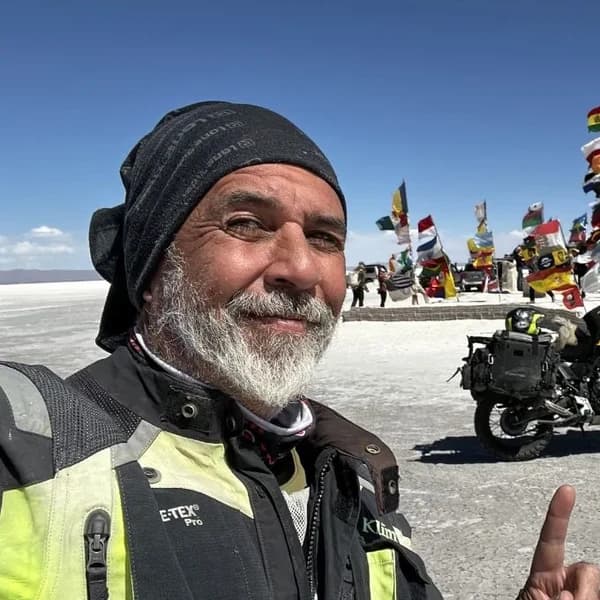
Gustavo Correa
Moto traveler, author and motorcycle travel consultant. 110,000+ km across 4 continents with Gloria, my motorcycle. Everything you read here has been tested on the road, not in an office.
Read my story →Last verified: 2026-08-30
A GIFT FOR BEING HERETHE ADVENTURE OF LIVING FREE
Do fear or doubt paralyze you before starting any project? You're not alone — every one of us has been there.
As a thank-you for visiting my site, I'm giving you my book "The Adventure of Living Free". A manual built to bring some light through the shadows and show you the philosophy that has let me ride the world for years.
* PDF STRAIGHT TO YOUR INBOX. NO SPAM.