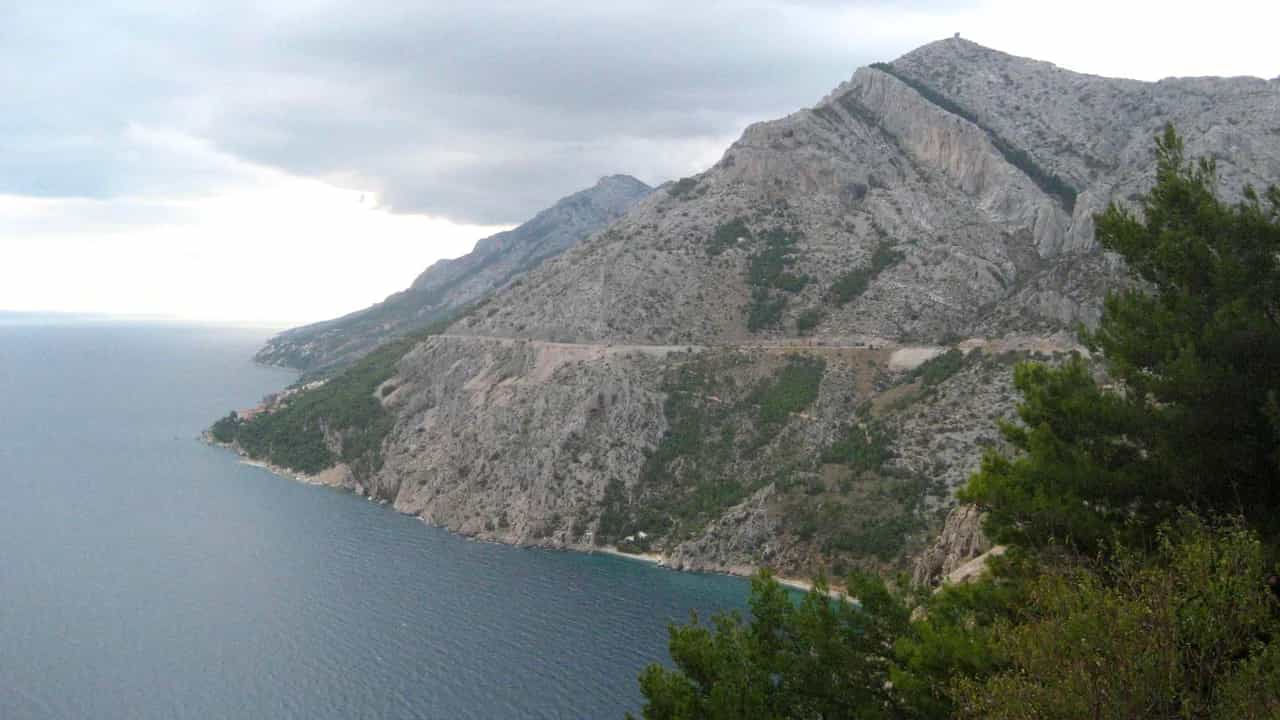
MOTORCYCLE TRAVEL IN Croatia
QUICK ANSWER
Croatia is an EU and Schengen member, so if you're entering from another Schengen country (Slovenia, Italy by ferry, Hungary) there's no border checkpoint at all — you just ride through. The one real land crossing is with Montenegro, where passport and customs control does apply. Insurance depends entirely on your plate: an EU/EEA-registered motorcycle is already covered in Croatia automatically under the EU insurance directive, no Green Card needed; anything registered outside that system (US, Canadian, or any Latin American plate) needs a Green Card or frontier insurance, buyable online or right at the crossing. The big draw once you're in is the Jadranska Magistrala, the Adriatic coastal highway that runs nearly 650 km end to end along the sea.
WHAT YOU NEED TO KNOW
The country you're about to enter has particularities you need to know.
Before you cross the border there are four things you need locked down: how safe the country is, what insurance is mandatory for your motorcycle, where you'll actually find fuel, and when to go. None of these are optional.
SAFETY: VERY LOW RISK (1/5)
Is Croatia safe to enter by motorcycle? Yes — it's one of the calmest countries in Europe to travel through.
AREAS TO AVOID
- Senj-Karlobag corridor (D8, Velebit slope): Not a crime zone, but a real weather risk for riders: the bura, a cold wind dropping off the Velebit range, can top 250 km/h in gusts near Senj. On a bike, on bridges or exposed stretches, it can push you off line — under strong warnings the road closes specifically to motorcycles and other high-profile vehicles.
- A3 motorway rest areas (eastern stretch, toward Slavonia): During 2025 several thefts were reported at the Bošnjaci, Sava, and Gračenica rest areas, on the eastern stretch of the A3 toward Slavonia — personal items, documents, and cash taken from unlocked vehicles overnight. Lock the bike and don't leave anything visible if you stop to rest overnight along that stretch.
WHERE TO PARK
- Parking: Street parking is generally relaxed — many locals don't even lock their bikes. In the historic centers of Split and Dubrovnik, closed to traffic, use the paid parking lot right outside the pedestrian zone.
- Alarm: Not essential given the country's low motorcycle-theft rate. A disc lock is a reasonable extra in Zagreb, Split, and Dubrovnik during peak tourist season (July-August).
- Luggage: Take what you can carry (tank bag, backpack) with you when parking; leave the rest in locked hard cases.
- Visibility: Park where there's foot traffic, near the entrance to the pedestrian zone or main square — never on an empty side street of the old town.
TIPS
- ➜Before riding the Senj-Karlobag stretch of the D8 (Velebit), check the road's status — during strong bura warnings it closes to motorcycles and other high-profile vehicles.
- ➜Don't leave luggage in view at A3 motorway rest areas, especially the eastern stretch toward Slavonia (Bošnjaci, Sava, Gračenica), where several overnight thefts from unlocked vehicles were reported during 2025.
Outside those two specific points, Croatia is one of the calmest, most predictable countries in Europe to ride through. As a bonus data point: in March 2026 Croatia was officially declared free of landmines, closing three decades of clearance work following the 1991-95 war — the old caution about staying on paved roads through the former front-line interior no longer applies.
MANDATORY INSURANCE: Home-country insurance or Green Card
There's no single insurance product to buy the way SOAT or SOAPEX work elsewhere — it depends entirely on where the motorcycle is registered. EU/EEA plates and any plate from a Green Card System country are automatically covered in Croatia by the third-party liability policy from home, no green card needed since August 2021. Everything else — US, Canadian, and every Latin American plate — needs a Green Card or frontier insurance from the Croatian Insurance Bureau (HUO), buyable online in advance or at the border crossing itself.
FUEL: GOOD, THIN ON ISLANDS
Very good coverage on the mainland and along the Adriatic Highway — stations are frequent through every coastal town, most take card, and many on main roads run 24h. The gaps show up on the smaller islands (Cres has only 2 stations, for example) and in the Velebit interior, where stations are rare and close early — keep the tank above a third when heading into those stretches, and plan around reduced weekend hours in quiet rural areas.
BEST SEASON: MAY-JUN & SEP-OCT
Late spring (May-June) and early autumn (September-October) are the sweet spot: mild temperatures, excellent road conditions, and light traffic on the Adriatic Highway. July and August bring the best weather but also heavy coastal traffic and jammed parking in Split and Dubrovnik, though the inland and mountain routes stay quiet even then. The riding season runs comfortably from March to the end of October; outside that window temperatures drop and winter storms bring bura warnings and road closures on the exposed coastal stretches.
ENTERING CROATIA BY MOTORCYCLE
Croatia has been an EU member since 2013 and joined Schengen on January 1, 2023, which changes the whole picture compared to most countries in this guide: if you're entering from another Schengen country (Slovenia, Italy by ferry, Hungary), there's no border checkpoint at all — you just ride through. The one land border where a real crossing happens is with Montenegro, the only country outside Schengen that Croatia borders within this site's country list.
The process at that crossing has two parts:
Passport control: Stamps or logs your entry. Since October 2025, non-EU citizens get fingerprinted and photographed once under the EES (Entry/Exit System), fully operational in Croatia since April 10, 2026.
Customs check for the motorcycle: They check the motorcycle's paperwork (title/registration) and valid insurance. No import permit is issued — with a foreign plate you can ride for up to 90 days from entry.
There's no temporary import permit to process or pay for — entering with the motorcycle itself costs nothing. The only real expense is insurance, and only if your plate isn't already covered automatically.
Real friction point:it isn't the border crossing itself — it's figuring out which insurance rule applies to your specific plate before you get there. EU/EEA and Green Card System plates are covered automatically by the EU insurance directive; anything else (US, Canadian, or any Latin American plate) needs a Green Card or frontier insurance sorted out in advance, since not every crossing sells it on the spot during rush hours.
The other real friction is at the Debeli Brijeg-Karasovići crossing with Montenegro — the only land border Croatia shares with a country outside Schengen on this list. Since October 2025 non-EU citizens go through EES biometric registration there, and in July-August the same crossing already reports waits over 3 hours from summer traffic alone, before adding the extra minutes per vehicle that biometric registration takes.
REQUIRED DOCUMENTATION
Passport or national ID: Valid for the whole stay; if you're not an EU citizen, it's recommended to have at least 3 months of validity past your planned departure date.
Driving license: Your home country's license is enough if it's EU/EEA. If it's from outside that bloc (all of Latin America included), you also need an International Driving Permit (IDP), which only covers the categories your home license already authorizes.
Motorcycle title / registration document: Police or customs may check the VIN and engine number against this document at the crossing. If you're not the registered owner, it's worth carrying notarized authorization from the owner.
Valid insurance (home country, Green Card, or frontier insurance): If your plate is EU/EEA or from a Green Card System country, your home policy already covers Croatia. If not, buy a Green Card or the frontier insurance from the Croatian Insurance Bureau (HUO) before crossing or right at the border.
Approved helmet: Mandatory for both rider and passenger, no exceptions — it's one of the few equipment items Croatian law actually requires specifically for motorcycles (unlike the warning triangle or fire extinguisher, which apply only to cars).
If your motorcycle carries an EU/EEA plate, entering Croatia is close to a non-event: your home insurance already covers you, there's no import permit to process, and if you're coming from another Schengen country you won't even see a checkpoint. The real friction shows up on two specific groups: riders with a non-Green-Card plate (frontier insurance to sort out) and non-EU citizens crossing at Debeli Brijeg-Karasovići from Montenegro in July or August, where EES registration and summer traffic can mean hours at the booth — plan that crossing outside peak midday hours if you can.
DAILY BUDGET
This price range combines cheap lodging, cooking your own meals, and basic bike maintenance — the three categories that weigh most on any moto traveler's daily budget.
Your real daily budget is something you build yourself, based on your own needs and limits — but if you want an idea of how to build yours, pick a category to see the full guide:
Full cost breakdown in the budget guide
THE 10 BEST MOTORCYCLE ROUTES IN CROATIA
This ranking is ordered by real fame, not personal preference: first place goes to the route that shows up first in the vast majority of international articles about motorcycling in Croatia, the one most foreign riders cover every season, and the one with the most trip reports, videos and mentions on specialized forums. From there, the order goes down in real recognition, but all ten are still routes that any rider researching Croatia will run into sooner or later — none of these is something only we happen to know about.
Unlike other destinations in this guide, almost every route in Croatia is fully paved: the appeal isn't mud or gravel, but precision curves along cliffsides, mountain passes gaining huge elevation over just a few kilometers, and the contrast between the turquoise Adriatic and the bare limestone interior.
Before heading out on any of these routes, it's worth reviewingthe mechanics guide for long motorcycle trips, because on the Velebit or the climb up to Sveti Jure there isn't always a repair shop nearby.
The climate contrast between the warm coast and Biokovo's 1,700 meters makes it worth reviewingthe gear guide for long motorcycle tripsbefore packing the bags.
The Adriatic Highway (D8):Rijeka to Dubrovnik
Full coast, from Rijeka to DubrovnikRiding the Adriatic Highway by motorcycle —the D8's real name, the Jadranska Magistrala— is the reason most motorcycle travelers cross Croatia end to end: 600 km of pavement winding between mountains that drop straight into the sea and over a thousand scattered islands offshore.
The road was built in stages between the 1960s and 1980s, when former Yugoslavia decided to link the entire Dalmatian coast under one tourist axis; half a century later, it's still the only continuous route connecting Rijeka to Dubrovnik without cutting inland.
The stretch between Karlobag and Tribanj, where the Velebit range plunges almost vertically into the Adriatic over 40 km of perfect medium-speed curves, is the one most often singled out as the best section of the entire route in reviews from international riders.
The real challenge isn't technical but meteorological: the bura, the katabatic wind pouring down from the Velebit mountains, can exceed 200 km/h in gusts and forces full closures of sections several times each season.
WARNINGS FOR THIS ROUTE
This is what you need to sort out before riding this route.
- 01Fuel range
Excellent along the whole main route; the only real precaution is planning ahead before detouring to the islands, where some gas stations close outside the season.
- 02Bura wind and road closures
Croatian authorities close sections of the D8 —especially near the Maslenica bridge and the Senj pass— whenever the bura exceeds a certain speed; check the road status before crossing those points.
The Biokovo Road:Makarska to Sveti Jure
Makarska, Split-Dalmatia CountyClimbing the Biokovo by motorcycle up to Sveti Jure means reaching 1,762 meters, Croatia's highest paved road, at the country's third-highest point, just behind two Velebit peaks.
European riders nicknamed it 'the Croatian Stelvio' for its single-lane hairpins, where meeting another vehicle means one of you has to reverse to the nearest pull-out.
In 2020, the Biokovo Skywalk opened — a glass platform suspended 1,228 meters above the Makarska valley, just minutes by bike from the main road — today it's the obligatory photo reward at the top.
The toll for motorcycles runs around 5 euros and grants access to Biokovo Nature Park, declared a UNESCO biosphere reserve in 1981.
WARNINGS FOR THIS ROUTE
This is what you need to sort out before riding this route.
- 01Fuel range
No fuel on the mountain. Fill up in Makarska before climbing.
- 02Single-lane hairpins with no shoulder
Several stretches near the summit are only 3 to 4 meters wide, with no room to pass an oncoming vehicle — be ready to reverse to the nearest pull-out.
Pag Island:the moonscape road
Pag Island, Zadar CountyCrossing Pag Island by motorcycle means entering a landscape unlike any other stretch of the Adriatic: bare, white, cracked limestone hills without a single tree in sight for kilometers.
The cause is both geological and climatic — centuries of salt-laden bura winds blowing off the Velebit range stripped away the vegetation until the bare karst was exposed, something the local tourism board itself nicknamed 'the island of the moon'.
You enter over a bridge barely 300 meters long connecting to the mainland; cross it, and the landscape changes instantly, with no transition, as if you'd entered a different country.
Beyond the lunar scenery, Pag is also the birthplace of Paški sir cheese, air-cured thanks to that same salty bura that sculpted the terrain.
WARNINGS FOR THIS ROUTE
This is what you need to sort out before riding this route.
- 01Fuel range
Good in Pag town; scarce toward the north of the island — leave with a full tank.
- 02Extreme bura gusts
Pag is one of the spots in Croatia where the bura hits hardest — there are reports of gusts strong enough to destabilize moving motorcycles near the bridge. Avoid crossing when wind alerts are active.
The Velebit:Karlobag to Zadar through the mountain interior
Velebit massif, Lika-Senj CountyCrossing the Velebit by motorcycle through the interior, away from the traffic-choked coast, means discovering Croatia's longest mountain range: nearly 145 km of ridgeline declared a UNESCO Biosphere Reserve since 1978.
The road climbs from Karlobag at sea level, crossing near Vaganski vrh (1,757 masl, the Velebit's highest point) before descending toward the Lika plateau and Zadar.
Unlike the D8, there's almost no traffic: it's the route riders choose once they've already done the coast and want mountain curves without tourist convoys.
The park includes Paklenica, with limestone canyons over 400 meters deep, visible from several viewpoints along the way.
WARNINGS FOR THIS ROUTE
This is what you need to sort out before riding this route.
- 01Fuel range
Fair. There are stations in Karlobag, Gospić and Gračac; long unserved stretches in between.
The Plominka:Mošćenička Draga to Plomin
Istria, Kvarner coastRiding the Plominka by motorcycle is barely 20 km, but among riders who know Croatia in depth it circulates as one of the country's five best roads — a short stretch enjoyed more for its layout than its scenery, though the Kvarner Gulf and Cres island stay in view through every curve.
The name comes from Plomin, a town of ancient origin (Roman Flanona) perched on a cliff at the entrance to the bay that shares its name.
Unlike the mountain routes further south, there are no extreme hairpins here: constant-radius, well-cambered curves that reward smooth, precise riding over raw adventure.
WARNINGS FOR THIS ROUTE
This is what you need to sort out before riding this route.
- 01Fuel range
Good. There are stations in Mošćenička Draga and nearby Opatija.
Poklon Pass:the old Učka road
Učka Nature Park, IstriaClimbing Poklon Pass by motorcycle means crossing the natural border between the Adriatic and Istria's interior, at 922 meters, where the Učka and Ćićarija ranges split apart.
The old road from Vranja climbs grades of up to 21%, with barely a flat stretch to rest, up to the visitor center the Opatija Mountaineering Society built in 1965 and that's still standing today.
From the pass, a side road leads to Vojak, Istria's highest peak at 1,401 meters, with a lookout tower offering a view of the entire Kvarner Bay in a single glance on clear days.
WARNINGS FOR THIS ROUTE
This is what you need to sort out before riding this route.
- 01Fuel range
Good. There are stations in Opatija and Lovran, at the foot of the mountain.
- 02Grades of up to 21%
The stretch from Vranja is among the steepest in continental Croatia — it demands constant braking and traction, and gets slippery with rain or early frost.
Inland Istria:Motovun, Grožnjan and Buzet
Inland IstriaRiding inland Istria by motorcycle means a complete change of scenery: in under an hour you go from Adriatic cliffs to vineyard hills the international press never stops comparing to Tuscany.
Motovun, the region's most photographed medieval town, crowns a hill at 277 meters and still keeps its 14th-century Venetian wall.
A few kilometers away, Grožnjan —nicknamed 'the town of artists'— was nearly emptied after World War II and repopulated in the 1960s by artists who moved into the abandoned houses, turning nearly every door into a studio or gallery.
In 2014, near Livade —at the foot of Motovun— a 1.31 kg white truffle was found and confirmed by Guinness World Records as the largest recorded up to that point: the area remains one of Europe's most prized truffle regions.
WARNINGS FOR THIS ROUTE
This is what you need to sort out before riding this route.
- 01Fuel range
Good in Buzet and Motovun; fill up before the rest of the loop.
The Road to Plitvice:the D1 between Zagreb and the lakes
Lika region, interiorReaching Plitvice by motorcycle via the D1 means crossing the forested Lika plateau to 16 terraced lakes connected by limestone waterfalls, inside southeastern Europe's oldest national park, founded in 1949.
UNESCO declared it a World Heritage Site in 1979 —the first natural site in Croatia to receive that distinction— for the unique travertine-forming process that keeps building new barriers and waterfalls every year.
Since 2021, swimming in the lakes has been banned to protect the ecosystem, so the visit after riding in is experienced entirely on foot, along the wooden walkways that trace the turquoise water.
WARNINGS FOR THIS ROUTE
This is what you need to sort out before riding this route.
- 01Fuel range
Excellent. It's the main route between the capital and the coast, with stations in every town along the way.
- 02Saturated tourist traffic in season
In July and August the park's parking lots overflow and the D1 fills with tour buses — it's best to arrive early morning or avoid midday.
The Pelješac Peninsula:Ston to Orebić
Pelješac Peninsula, Dubrovnik-Neretva CountyEntering Pelješac by motorcycle starts in Ston, where the 5.5 km defensive wall —the second-longest in the world after the Great Wall of China, built by the Republic of Ragusa starting in the 14th century— still climbs the hill separating the peninsula from the mainland.
Since July 2022, the Pelješac Bridge —2,404 meters, funded by the European Union— connects the area directly to Dubrovnik without crossing the Bosnian corridor at Neum, something riders had documented as a border-crossing headache for decades.
The road follows the peninsula's spine through the Dingač and Postup vineyards, two of Croatia's oldest designations of origin, with constant views across the channel separating Pelješac from Korčula island.
WARNINGS FOR THIS ROUTE
This is what you need to sort out before riding this route.
- 01Fuel range
Good in Ston and Orebić; scarce along the middle vineyard stretch.
Krka National Park:Šibenik to Skradin
Šibenik-Knin CountyRiding to Krka by motorcycle from Šibenik is a short detour to one of the easiest national parks to combine with the coastal route, declared a protected area in 1985.
The main attraction is Skradinski buk, a stepped travertine waterfall dropping nearly 46 meters across several cascades — for decades it was possible to swim beneath the falls, until the park banned swimming in 2021 to curb erosion of the ecosystem.
The town of Skradin, at the river's mouth, keeps its medieval layout almost intact and serves as the park's entry point for riders who'd rather park the bike and walk the boardwalks.
WARNINGS FOR THIS ROUTE
This is what you need to sort out before riding this route.
- 01Fuel range
Good. There are stations in Šibenik, Skradin and Knin.
NEIGHBORING COUNTRIES
Crossing the border next? Click a country to see its 10 best motorcycle routes.
FREQUENTLY ASKED QUESTIONS
01Do I need an International Driving Permit to ride into Croatia?
+
Do I need an International Driving Permit to ride into Croatia?
No, if your license was issued by an EU or EEA country — it's recognized directly. If your license comes from outside that bloc (all of Latin America included), you need an International Driving Permit in addition to your national license, and the IDP only covers the vehicle categories your home license already authorizes.
02Do I need a Green Card to ride into Croatia?
+
Do I need a Green Card to ride into Croatia?
It depends on where the motorcycle is registered. If it carries an EU/EEA plate or a plate from another Green Card System member, your third-party liability insurance already covers Croatia automatically under the EU insurance directive, no extra paperwork needed. If the plate is from a country outside that system (the US, Canada, or any Latin American plate), you need a Green Card or the official frontier insurance sold by the Croatian Insurance Bureau (HUO), buyable online or right at the crossing.
03How long can I ride in Croatia on a foreign-plated motorcycle?
+
How long can I ride in Croatia on a foreign-plated motorcycle?
Up to a maximum of three months (90 days) from your entry date. There's no temporary import permit to process or pay for — the motorcycle simply rides on its home-country paperwork as long as insurance stays valid and you don't go past that window.
04Are there tolls for motorcycles on Croatian motorways?
+
Are there tolls for motorcycles on Croatian motorways?
Yes. Motorcycles pay tolls on the motorways (autoceste) under their own category (IA) — the Zagreb-Split stretch, for example, runs around 15.80 euros. You pay cash or card at each booth; the Adriatic Highway (D8), the scenic coastal route, is a free national road, not a toll motorway.
05Is the bura wind dangerous for riding along the Croatian coast?
+
Is the bura wind dangerous for riding along the Croatian coast?
Yes, it's a real, localized risk, not tourist exaggeration. The bura is a cold, gusting wind that drops off the Velebit range toward the coast and near Senj can top 250 km/h in its strongest gusts — on a bike, on bridges or exposed stretches, it can push you off line or knock you over. During strong warnings, sections of the D8 between Senj and Sveti Marija Magdalena close, along with bridges like Krk and Pag, specifically to motorcycles and other high-profile vehicles. Worth checking the road's status before riding that stretch.
06Can I wild camp on a motorcycle trip through Croatia?
+
Can I wild camp on a motorcycle trip through Croatia?
Not legally. Wild camping is banned nationwide, with fines reported between 200 and 1,300 euros depending on the area, and enforcement is strict along the coast, in tourist zones, and in national parks during high season. Croatia has 300+ official campsites, many right on the coast, with motorcycle pitches from around 22 euros a night — that's the real option.
07Do I need to carry a warning triangle and fire extinguisher on a motorcycle in Croatia?
+
Do I need to carry a warning triangle and fire extinguisher on a motorcycle in Croatia?
No. The Croatian Ministry of Interior (MUP) regulation requiring a warning triangle, fire extinguisher, first-aid kit, and reflective vest applies to categories M and N — cars, vans, and trucks — and motorcycles are explicitly excluded from that requirement. What is mandatory for motorcycles is an approved helmet, for both rider and passenger.
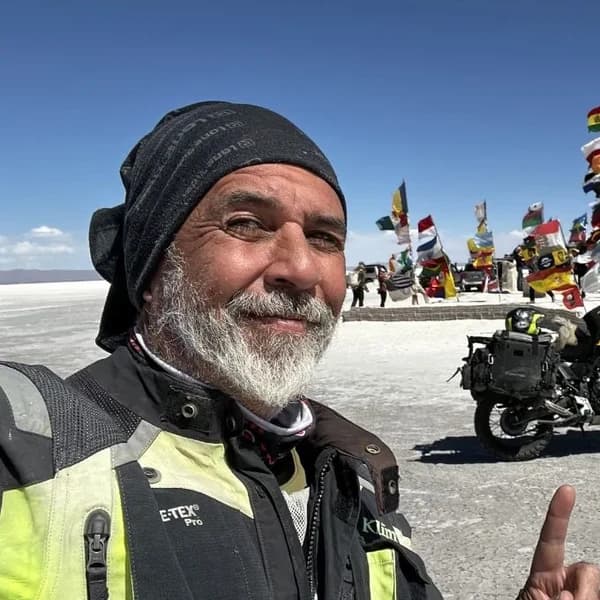
Gustavo Correa
Moto traveler, author and motorcycle travel consultant. 110,000+ km across 4 continents with Gloria, my motorcycle. Everything you read here has been tested on the road, not in an office.
Read my story →Last verified: 2026-08-29
Sources consulted (35)+
- huo.hr
- frontier-insurance.huo.hr
- mup.gov.hr
- mup.gov.hr
- rac.co.uk
- expatincroatia.com
- blackcircles.com
- drivinginternationalassociation.com
- tolls.eu
- ontheroadcroatia.com
- croatiaweek.com
- inspiredbycroatia.com
- total-croatia-news.com
- en.wikipedia.org
- alltrafficcams.com
- adriaticvacationrentals.com
- en.wikipedia.org
- vanever.com
- myvanture.com
- theworldwasherefirst.com
- neverendingfootsteps.com
- backpackingislife.com
- osijekexpress.com
- apminebanconvention.org
- croatiaweek.com
- icblcmc.org
- home-affairs.ec.europa.eu
- croatiaweek.com
- my-sea.com
- novaljalocal.com
- tripadvisor.com
- motogsrental.com
- horizonsunlimited.com
- eeas.europa.eu
- commons.wikimedia.org
A GIFT FOR BEING HERETHE ADVENTURE OF LIVING FREE
Do fear or doubt paralyze you before starting any project? You're not alone — every one of us has been there.
As a thank-you for visiting my site, I'm giving you my book "The Adventure of Living Free". A manual built to bring some light through the shadows and show you the philosophy that has let me ride the world for years.
* PDF STRAIGHT TO YOUR INBOX. NO SPAM.