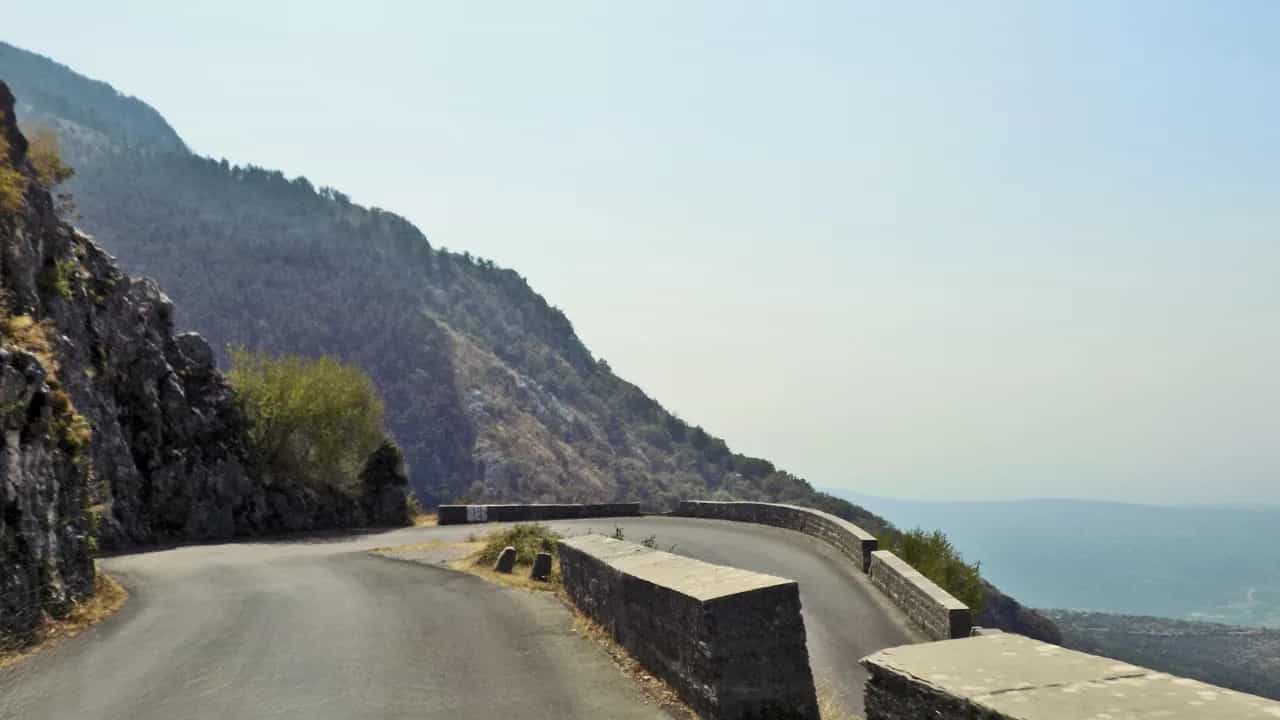
MOTORCYCLE TRAVEL IN Montenegro
QUICK ANSWER
Montenegro is one of the most direct gateways into the Balkans on two wheels: in a country of barely 13,000 km², you get the 25-hairpin serpentine climbing from the Bay of Kotor to Lovćen, the canyons of Durmitor National Park, and Sedlo Pass, the country's highest mountain road. Entry is quick once your insurance is sorted: Montenegro has been a Green Card member since 2012, so most motorcycles registered in Europe — Spain included — already ride in covered, with nothing extra to arrange at the border.
WHAT YOU NEED TO KNOW
The country you're about to enter has particularities you need to know.
Before you cross the border there are four things you need locked down: how safe the country is, what insurance is mandatory for your motorcycle, where you'll actually find fuel, and when to go. None of these are optional.
SAFETY: LOW RISK (2/5)
Is Montenegro safe to enter by motorcycle? Yes — it's one of the calmest countries in the Balkans, with very little vehicle theft.
AREAS TO AVOID
- Budva's nightlife scene: Budva is the country's party epicenter. Violent crime is rare, but opportunistic pickpockets target tourists leaving bars and clubs in the early hours — secure the bike well and don't leave anything loose if you're heading back at night.
- Crowded streets and beaches of Kotor and Budva in high season: In July and August, the crowds of tourists in Kotor's old town and Budva's promenade are classic pickpocket territory — not a road-safety issue, just standard crowd theft.
WHERE TO PARK
- Parking: Vehicle theft is practically nonexistent in Montenegro, so street parking by day is calm almost everywhere. At night, in Budva and Kotor during party season, a gated or well-lit lot is a better bet.
- Alarm: Not essential given the low vehicle theft rate, but it adds peace of mind if you're leaving the bike parked for several days on the coast during July-August.
- Luggage: Take off panniers or loose bags when parking in crowded tourist areas (Kotor's old town, Budva's promenade) — the real risk there is pickpocketing, not vehicle theft.
- Visibility: Park where there's foot traffic and good lighting, especially at night around Budva's bar district.
TIPS
- ➜Avoid small, little-known petrol station brands — there have been reports of short-pouring or being charged for a different octane than requested; pay only once the pump counter has stopped.
- ➜Local driving can be aggressive and reckless, especially at intersections and roundabouts — take extra care on mountain roads with blind curves like Sedlo Pass or the Kotor serpentine.
- ➜The drink-driving limit is just 0.03% — essentially zero tolerance, and roadside checks are common.
Outside Budva's nightlife scene, Montenegro is one of the calmest countries in the Balkans to ride through — vehicle theft is practically nonexistent, and border and traffic police are visible and organized.
MANDATORY INSURANCE: Green Card (International Motor Insurance)
Montenegro has been part of the Green Card system since 2012. If your motorcycle is registered in a member country — most of Europe, including Spain, the UK and Switzerland — your third-party liability insurance already covers you in Montenegro with no physical card required, though it's worth carrying your policy or asking your insurer for the card as backup. If your country isn't a system member, you'll need to buy border insurance right at the crossing or online before you travel, with coverage starting from around 15 days.
FUEL: GOOD COVERAGE
Wide network of stations along the coast and the main roads — the country is small, you can cross it end to end in under a day, so there are no long stretches without fuel like on other routes. Prices are set by the government and revised every week. Fill up at recognized brands (EKO, INA, Petrol): smaller local chains have reported cases of short-pouring or billing a different octane than requested — pay only once the pump counter has stopped.
BEST SEASON: MAY TO OCTOBER
May to October is the ideal window to ride Montenegro. Sedlo Pass, the highest and most spectacular mountain road in the country inside Durmitor National Park, stays closed with snow from mid-November until the end of May. June and September offer the best balance: stable weather on the coast with far less tourist traffic than July and August.
ENTERING MONTENEGRO BY MOTORCYCLE
Crossing into Montenegro with a bike through the main posts — Debeli Brijeg from Croatia, Šćepan Polje or Vilusi from Bosnia — is, according to the traveler guides and border-crossing resources consulted, one of the more straightforward procedures in the Balkans: no technical inspection of the motorcycle, no complex customs paperwork, just passport control and insurance.
The process has two steps:
Immigration: Stamps your passport on entry.
Customs: Registers the motorcycle's temporary entry — no technical inspection, just a documentation check.
The temporary import stamp at the border crossing is free — it's simply a control procedure at the customs post itself, with no extra charge.
Real friction point:it's not the paperwork itself, it's the insurance. Montenegro has been a Green Card member since 2012, but not every European insurer automatically includes the country in its standard coverage — worth confirming with your insurer before you leave, because in practice some motorcycle travelers have been asked by border police to buy border insurance even while carrying a valid green card.
The other real friction point is the queue at the main crossing from Croatia (Debeli Brijeg), which in high season (July-August) can run over an hour — the Kobila or Vitaljina crossings, further inland, usually move faster.
REQUIRED DOCUMENTATION
Passport or national ID: Valid for at least 3 months beyond your planned departure date.
Driving license: Your home license is enough if it's from the EU. Outside the EU or in a non-Latin alphabet, add an International Driving Permit (IDP).
Motorcycle title/registration: If you're not the owner, you need notarized power of attorney from them.
Green Card or border insurance: Depends on where your motorcycle is registered — see the mandatory insurance section.
Accommodation registration ("white card"): Within the first 24 hours of arrival. Hotels handle it at reception; in private accommodation you have to self-register.
With your passport, motorcycle title and insurance sorted — Green Card or border insurance bought on the spot — crossing into Montenegro is a routine procedure that shouldn't take more than 15-20 minutes at a main crossing outside high season.
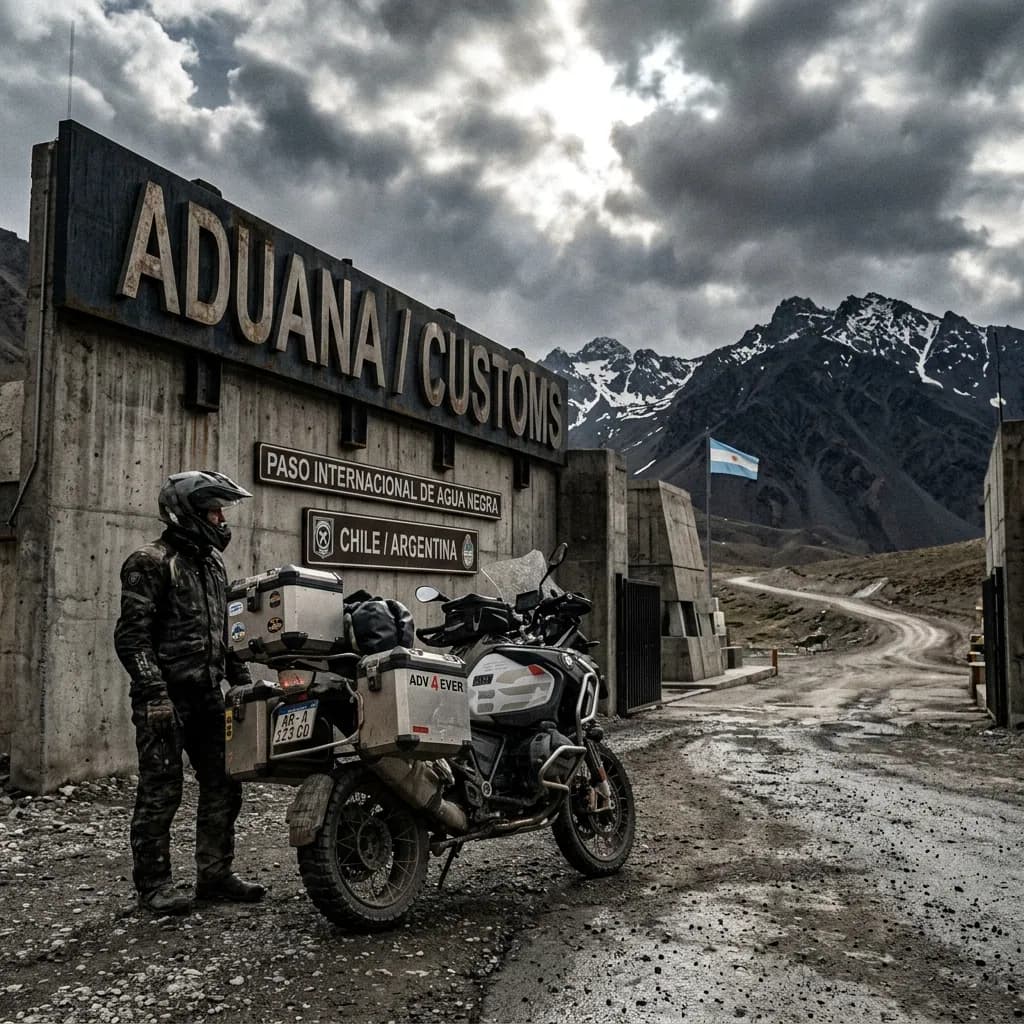
DAILY BUDGET
This price range combines cheap lodging, cooking your own meals, and basic bike maintenance — the three categories that weigh most on any moto traveler's daily budget.
Your real daily budget is something you build yourself, based on your own needs and limits — but if you want an idea of how to build yours, pick a category to see the full guide:
Full cost breakdown in the budget guide
THE 10 BEST MOTORCYCLE ROUTES IN MONTENEGRO
To order this Top 10 we didn't rely on personal opinion: we compared which routes show up first and most often across specialized motorcycle-travel guides (Montenegro Ride, Mad or Nomad, ADVrider), scenic-road sites, and the accounts of riders who already crossed the country on two wheels. The Kotor Serpentine leads the list because, without exception, it's the route that comes up first in every one of those rankings — from there down, real fame decreases, but all ten are recognized routes, not personal discoveries.
Montenegro is tiny compared to Argentina or Chile — end to end it fits inside a country the size of Puerto Rico — but it packs a fjord-like coastline, canyons nearly 1,300 meters deep, a mountain pass at almost 1,900 masl, and a lake shared with Albania into less than 300 km. That means, unlike other countries in this guide, the whole Top 10 can be ridden in a single 7-to-10-day loop without repeating a road.
With unguarded hairpins like those on Sedlo Pass or the Piva Canyon, and unlit tunnels on several stretches, it's worth checkingthe gear guide for long motorcycle tripsbeforehand and heading out with your lights and protection in order.
Outside the coastal towns, a flat tire on the Piva Canyon or Sedlo Pass can mean hours without seeing a repair shop — that's why it's worth reviewingthe mechanics guide for long motorcycle tripsbefore you leave the familiar pavement.
And if Montenegro is one stop within a longer loop through the Balkans, now's the time to checkthe guide to documents for traveling internationally by motorcycle, because every border in the region has its own insurance and paperwork rules for the bike.
The Kotor Serpentine:the old Austro-Hungarian road
Kotor to Njeguši, Bay of KotorClimbing the Kotor Serpentine by motorcycle means tackling 25 hairpins cut into the rock over just 25 km, gaining more than 900 meters above the Bay of Kotor, cited in much of the region's geographic literature as the only fjord in southern Europe.
The road was completed in 1884 as a joint project between the newly independent state of Montenegro and the Austro-Hungarian Empire, which ruled the coast at the time: before that, the only way between Kotor and the old capital Cetinje was a mule trail along the same line, still visible alongside it as the Ladder of Kotor.
Each curve, numbered by local rally drivers themselves, offers a different angle on the bay, until the road disappears into the forests around Njeguši, the village that lends its name to Montenegro's most famous prosciutto and cheese.
Climbing before 9 a.m. is almost the only way to avoid the tour buses coming up from the cruise ships — the road's average width is just 5 meters, with no shoulder on most of the curves.
WARNINGS FOR THIS ROUTE
This is what you need to sort out before riding this route.
- 01Fuel range
Good. Full-service stations in Kotor; Njeguši only has small shops, with no guaranteed fuel — start the climb with a full tank.
- 02Cruise-ship and coach traffic in high season
Between June and September, dozens of tour buses climb from the cruise ships docked in Kotor along the same narrow 5-meter-wide road, with no shoulder on most curves — ride it before 9 a.m. or after 6 p.m. to avoid them.
Tara Canyon:the Đurđevića bridge
Žabljak to Mojkovac, northern MontenegroCrossing Tara Canyon by motorcycle means riding along the edge of Europe's deepest gorge and the second deepest on the planet after the Grand Canyon: up to 1,300 meters deep in places, within a basin UNESCO declared a Biosphere Reserve in 1976.
The star of the route is the Đurđevića Tara bridge: 365 meters long and 172 meters above the water, built between 1937 and 1940 by engineer Mijat Trojanović. When it was finished, it was the largest single-arch concrete bridge in Europe.
It has a history few bridges can claim: in 1942, in the middle of World War II, the very engineer who designed it blew up one of its arches to slow the Axis advance — an act that later cost him his life and inspired the Yugoslav film Most (The Bridge, 1969).
The road that descends from Žabljak to the bridge and continues to Mojkovac has stretches of narrow, unlit tunnels carved directly into the canyon rock, and turns slippery after rain.
WARNINGS FOR THIS ROUTE
This is what you need to sort out before riding this route.
- 01Fuel range
Fair. Stations are available in Žabljak and Mojkovac; there's no fuel along the canyon stretch — fill up before descending to the bridge.
- 02Narrow unlit tunnels
The canyon stretch has several short tunnels carved into the rock, with no artificial lighting and a narrow roadway — slow down and turn on your lights before entering, especially coming out of the canyon's direct sunlight.
Sedlo Pass:Montenegro's highest road
Žabljak to Plužine, Durmitor National ParkCrossing Sedlo Pass by motorcycle means reaching 1,904 meters above sea level, the highest paved road in all of Montenegro, cutting across the Durmitor massif inside a park that UNESCO has listed as a World Heritage Site since 1980.
It's 46 km with 40 bends — 16 of them hairpins — and grades of up to 11%, skirting Bobotov Kuk, the massif's highest peak, and the small Valovito lake, visible from the Priješpa viewpoint.
Several specialized European guides rank it among the most beautiful motorcycle roads on the continent: it's not the longest or the most technical in the Balkans, but it's the one that best combines altitude, isolation and alpine scenery in a single stretch of asphalt.
The road has long stretches with no guardrail above the drop-off, and there's practically no traffic outside high season — bring tools and don't rely on your phone, since coverage is patchy along most of the crossing.
WARNINGS FOR THIS ROUTE
This is what you need to sort out before riding this route.
- 01Fuel range
Scarce. Only in Žabljak and Plužine, at either end of the route — no stations along the crossing itself.
- 02Unguarded stretches above the drop-off
Several kilometers of the crossing have no guardrail along the drop-off, with a narrow roadway for passing oncoming vehicles — slow down on the hairpins, especially if the pavement is wet.
Piva Canyon:56 tunnels beside turquoise water
Plužine to the Bosnia and Herzegovina borderRiding Piva Canyon by motorcycle means hugging the cliff for 31 km, crossing 56 short tunnels carved directly into the limestone, alongside the turquoise waters of the Piva reservoir.
That reservoir was born in 1975 with the construction of the Mratinje Dam, 220 meters tall — one of the highest in Europe — sitting at 675 meters above sea level, which makes it the highest artificial reservoir in the world.
Some riders who've done both of northern Montenegro's canyons describe this one as wilder and less traveled than the neighboring Tara Canyon, with the same profile of curves hugging the rock but far less tourist traffic.
The tunnels have no artificial lighting and several are so narrow a single car barely fits through — slowing down and switching on your lights before each one isn't a suggestion, it's mandatory.
WARNINGS FOR THIS ROUTE
This is what you need to sort out before riding this route.
- 01Fuel range
Scarce. Last reliable fuel stop is Plužine before entering the canyon; no stations until crossing into Bosnia.
- 02Rockfall risk and unlit tunnels
The road runs hugging the cliff with a documented risk of rockfall, especially after rain, and crosses 56 short tunnels with no artificial lighting — slow down and use your lights before entering each one.
The Loop Around the Bay of Kotor:southern Europe's only fjord
Tivat–Kotor–Perast–Herceg NoviRiding the loop around the Bay of Kotor by motorcycle means tracing 50 to 60 km around southern Europe's only fjord, according to much of the geographic literature — a sea reaching kilometers inland between mountains that drop almost vertically into the water.
The route passes through Risan, the bay's oldest town, with Roman mosaics over 2,000 years old, through Perast, a village that turns pedestrian-only in summer so you'll have to walk instead of ride, and through Kotor, whose old town is a UNESCO World Heritage Site.
An almost mandatory shortcut is the ferry between Kamenari and Lepetani, which crosses the Verige Strait in about 15 minutes and lets motorcycles skip the car line — saving over an hour compared to riding all the way around the bottom of the bay.
Outside peak season (July-August), this is probably the most relaxed route in the Top 10: smooth pavement, almost no elevation change, and water views on every curve.
WARNINGS FOR THIS ROUTE
This is what you need to sort out before riding this route.
- 01Fuel range
Excellent. Stations in Tivat, Kotor, Risan and Herceg Novi — never more than 15 km apart.
The Road to Ostrog:the sanctuary carved into the rock
Nikšić to OstrogRiding up to Ostrog Monastery by motorcycle means reaching one of the most visited sanctuaries in the entire Orthodox Church: between 1 and 1.2 million pilgrims arrive every year at a temple built literally into the vertical rock of the Ostroška Greda.
It was founded by Saint Basil of Ostrog in the 17th century; he died there in 1671, and his tomb, next to a vine growing straight out of the stone, still draws Orthodox, Catholic and Muslim visitors alike.
The road ends at the Lower Monastery; from there, tradition calls for walking the final 3 km to the Upper Monastery barefoot, so it's best to leave the bike parked and bring comfortable shoes for the rest.
It's a short stop compared to the mountain routes up north, but its religious fame makes it one of the most searched destinations in all of Montenegro — many riders add it as a stop on the way to Durmitor or back to the coast.
WARNINGS FOR THIS ROUTE
This is what you need to sort out before riding this route.
- 01Fuel range
Excellent. Full-service stations in Nikšić, 15 km from the monastery.
Lake Skadar:the largest lake in the Balkans
Podgorica to Virpazar and Rijeka CrnojevićaRiding out to Lake Skadar by motorcycle means reaching the largest lake in the Balkans, with a surface area that varies between 370 and 530 km² depending on the season, roughly 65% of it on the Montenegrin side and the rest in Albania.
The Montenegrin section has been a National Park since 1983 and is recognized as an Important Bird Area by BirdLife International, with more than 270 recorded species, including the Dalmatian pelican.
Virpazar is the gateway, a village on the Belgrade-Bar rail line surrounded by vranac grape vineyards, and the road follows the western shore to Rijeka Crnojevića, where the wreck of the steamboat Skanderbeg, sunk by partisans in 1942, still rests 11 meters below the surface.
It's the flattest, most accessible route in the Top 10 — a perfect way to close out a trip that began in the mountains up north, with the lake's still water replacing the canyons' vertigo.
WARNINGS FOR THIS ROUTE
This is what you need to sort out before riding this route.
- 01Fuel range
Good. Stations in Podgorica and Virpazar; Rijeka Crnojevića has no guaranteed stock.
The Adriatic Coast:from Budva to Ulcinj
Budva, Petrovac, Bar and UlcinjRiding Montenegro's Adriatic coast by motorcycle, from Budva to Ulcinj, means taking the M-1, the only road connecting every coastal town in the country — two lanes from start to finish, with no motorway project planned to replace it.
The road passes Sveti Stefan, the Adriatic's most photographed island-hotel, crosses Petrovac and reaches Bar, before ending in Ulcinj, a town inhabited since the Bronze Age that fell to the Ottomans in 1571 with the help of North African corsairs and earned a reputation as a pirate stronghold for centuries.
Just south of Ulcinj lies Velika Plaža, with 12 km of unbroken sand — Montenegro's longest beach — and the river island of Ada Bojana, a gathering point for kitesurfers and naturists from across Europe.
It's the easiest route in the Top 10, ideal for the first or last day of a trip through Montenegro, though in high season the two-lane traffic turns slow between Budva and Bar.
WARNINGS FOR THIS ROUTE
This is what you need to sort out before riding this route.
- 01Fuel range
Excellent. Stations in every coastal town — never more than 20 km apart.
Grebaje Valley:the heart of the Accursed Mountains
Plav and Gusinje, on the Albanian borderRiding into Grebaje Valley by motorcycle means entering the Prokletije, the Accursed Mountains that Montenegro shares with Albania and Kosovo — the country's newest national park, created only in 2009, almost six decades after Durmitor, Biogradska Gora and Lovćen, the three original parks from 1952.
Just 16,630 protected hectares lie on the Montenegrin side, but they hold some of the most rugged peaks in the Balkans, with vertical limestone walls enclosing the valley like an amphitheater.
It's the least-traveled region in this whole Top 10: the towns of Plav and Gusinje, with a strong Muslim and Albanian population, still see very little organized tourism, and the pavement runs out before reaching the head of the valley.
For anyone who's already ridden the better-known routes in the north and south of the country, Grebaje is the reward: silence, raw mountains, and not a single tour bus in sight.
WARNINGS FOR THIS ROUTE
This is what you need to sort out before riding this route.
- 01Fuel range
Scarce. Last reliable station is in Plav or Gusinje before entering the valley.
Morača Canyon:from Podgorica to Kolašin
Podgorica to Kolašin, along the Morača riverRiding down Morača Canyon by motorcycle means following the 70 km gorge the river carved between Podgorica and Kolašin, the old E65 that for decades was the only way across the country's north.
Since the new parallel motorway opened, this stretch lost its heavy truck traffic and became a much quieter secondary road for riders — the same phenomenon that has cleared out other cult routes elsewhere in the world.
Halfway along, a side road leads to Morača Monastery, founded in 1252 by the Serbian prince Stefan Vukanović, with 14th-century frescoes still visible in its main church — a worthwhile stop for anyone after more than just curves.
It's not the most spectacular route in northern Montenegro, but it is the most practical: it connects the capital to the gateway to Durmitor and Kolašin in a single stretch.
WARNINGS FOR THIS ROUTE
This is what you need to sort out before riding this route.
- 01Fuel range
Good. Stations in Podgorica and Kolašin; only the odd isolated stop in the middle of the canyon.
NEIGHBORING COUNTRIES
Crossing the border next? Click a country to see its 10 best motorcycle routes.
FREQUENTLY ASKED QUESTIONS
01Do I need a Green Card to enter Montenegro by motorcycle?
+
Do I need a Green Card to enter Montenegro by motorcycle?
It depends on where your motorcycle is registered. Montenegro has been a Green Card member since 2012: if your bike is from a member country (most of Europe, including Spain, the UK and Switzerland), your existing insurance already covers you with no physical card needed. If your country isn't a member, you'll need to buy border insurance right at the crossing.
02How much does border insurance cost in Montenegro if my country isn't in the Green Card system?
+
How much does border insurance cost in Montenegro if my country isn't in the Green Card system?
For vehicles in general, reference prices run around 15 euros for 15 days, 28 euros for a month, or 80 euros for three months — for a motorcycle it's usually the same or a bit cheaper. You can buy it at the kiosks in major border crossings or, with more lead time, online before you travel.
03Do I need an International Driving Permit (IDP) to enter Montenegro by motorcycle?
+
Do I need an International Driving Permit (IDP) to enter Montenegro by motorcycle?
Not if your license was issued in the EU. If your license is from outside the EU or isn't written in the Latin alphabet, you should carry an IDP along with your original license — it doesn't replace it, it always travels alongside it.
04Is the Sedlo Pass closed in winter?
+
Is the Sedlo Pass closed in winter?
Yes. Sedlo, Montenegro's highest and most spectacular mountain road inside Durmitor National Park, typically closes for snow from mid-November until the end of May. The best window to ride it runs from late May through early October.
05What are the most dangerous areas of Montenegro for a motorcycle traveler?
+
What are the most dangerous areas of Montenegro for a motorcycle traveler?
There are no real risk zones comparable to other destinations — vehicle theft is practically nonexistent in the country. The one practical point is Budva's nightlife scene, where opportunistic pickpockets target tourists leaving bars in the early hours.
06How long can I stay in Montenegro with my foreign-registered motorcycle?
+
How long can I stay in Montenegro with my foreign-registered motorcycle?
Up to six months, continuous or accumulated within a 12-month period, under the current temporary vehicle import rules. If you need more time, check with Montenegrin customs before the period runs out.
07Are there enough gas stations across Montenegro, or are there remote stretches with no fuel?
+
Are there enough gas stations across Montenegro, or are there remote stretches with no fuel?
The country is small and the station network is good along the whole coast and main routes — there are no long fuel-less stretches like in bigger destinations. The real risk isn't running out of gas, it's smaller, lesser-known station brands, where short-pouring has been reported.
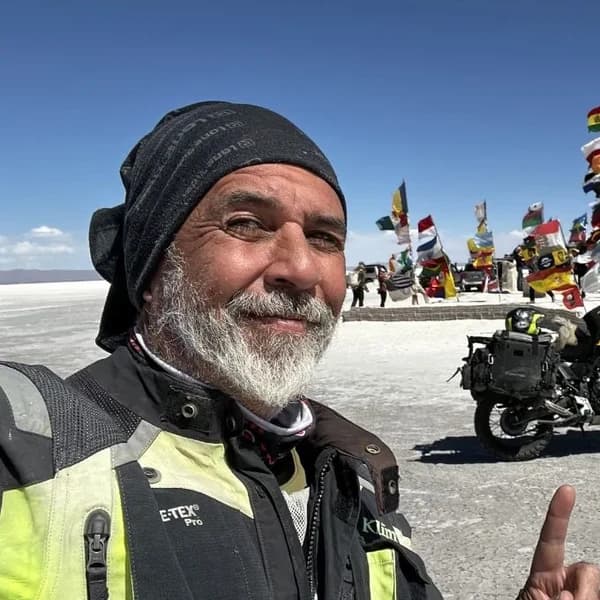
Gustavo Correa
Moto traveler, author and motorcycle travel consultant. 110,000+ km across 4 continents with Gloria, my motorcycle. Everything you read here has been tested on the road, not in an office.
Read my story →Last verified: 2026-08-29
A GIFT FOR BEING HERETHE ADVENTURE OF LIVING FREE
Do fear or doubt paralyze you before starting any project? You're not alone — every one of us has been there.
As a thank-you for visiting my site, I'm giving you my book "The Adventure of Living Free". A manual built to bring some light through the shadows and show you the philosophy that has let me ride the world for years.
* PDF STRAIGHT TO YOUR INBOX. NO SPAM.