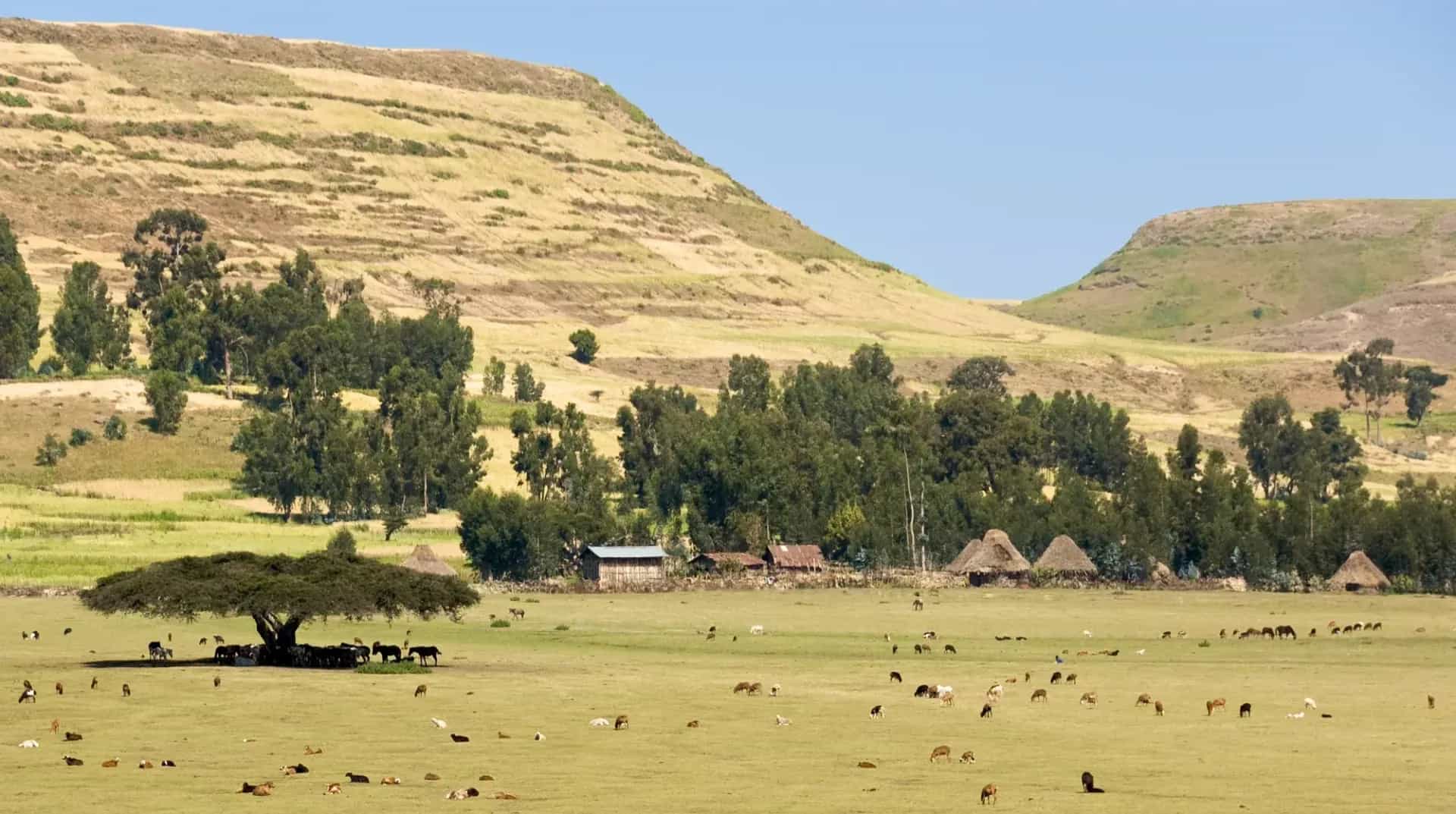
MOTORCYCLE TRAVEL IN Ethiopia
QUICK ANSWER
Ethiopia is the gateway to routes like the Simien highlands and the Danakil depression, but it's also the country in this guide with the heaviest paperwork for a temporary motorcycle import: today the real mechanism isn't a simple carnet, it's partnering with a licensed Ethiopian tour operator who sponsors you before Customs, plus letters from the Ministry of Tourism and the Ethiopian Embassy before you even reach the border. On top of that, large parts of the country — Tigray, Amhara (Gondar, Lalibela, and the Simien Mountains included), most of Oromia, and Gambela — are currently under do-not-travel warnings for active armed conflict, with no exception for that historic corridor: Lalibela still receives visitors, but only ones who fly in, not ones riding overland. The realistic route for anyone entering by motorcycle today concentrates on Addis Ababa, the Sanetti Plateau, the Omo Valley, and the Moyale crossing to and from Kenya.
WHAT YOU NEED TO KNOW
The country you're about to enter has particularities you need to know.
Before you cross the border there are four things you need locked down: how safe the country is, what insurance is mandatory for your motorcycle, where you'll actually find fuel, and when to go. None of these are optional.
SAFETY: HIGH RISK (4/5)
Is Ethiopia safe to enter by motorcycle? Depends entirely on the route and on how you get there: the northern tourist corridor still receives travelers who fly straight into Lalibela, while those same regions — Amhara and Tigray — sit under an official do-not-travel warning for active armed conflict, with no exception for the overland routes this guide covers.
AREAS TO AVOID
- Tigray region: Do-not-travel warning from the US State Department, the FCDO and Australia for active armed conflict, including the 2026 Ethiopia–TPLF clashes. Since January 29, 2026, civilian flights to and from Tigray have been suspended — the region, including the Mekele and Gheralta area, is effectively isolated, and no serious tour operator currently runs circuits there.
- Amhara region: The UK's FCDO, the US State Department, Australia and Canada advise against all travel due to active armed conflict — with no geographic exception, unlike Oromia. Fano rebels themselves closed and blocked routes B22, B30, B31 and C34 at several points during 2026, including the roads connecting Gondar, Bahir Dar and Weldiya. Lalibela still receives tourists, but only by air from Addis Ababa, Gondar or Bahir Dar: riding there overland by motorcycle means crossing exactly those same roads under warning.
- Oromia region (except Bishoftu and Bale Mountains National Park): Do-not-travel warning for armed conflict and ethnically motivated violence, per the US State Department. Bishoftu and Bale Mountains National Park are explicitly excepted from the warning.
- Gambela region: The FCDO advises against all travel to this southwestern region.
- Border strips with Somalia, Kenya, and Eritrea: The FCDO advises against travel within 100 km of the Somalia and Kenya border in the Somali region (except Wajale and the Jijiga–Wajale road), and within 10 km of the Eritrea border in Afar, due to landmines and kidnapping risk.
WHERE TO PARK
- Parking: Prioritize guesthouses or hotels with a walled compound — that's the standard in Ethiopia, not the exception. Avoid leaving the bike on the street overnight, especially in Addis Ababa.
- Alarm: Recommended, especially in Addis Ababa. Less necessary on rural northern stretches, where the concern is different (conflict, not vehicle theft).
- Luggage: Take off what you can carry when parking, particularly in Piazza, Mercato, and Bole — Addis Ababa areas with documented distraction theft.
- Visibility: Park where a guard or lodging staff is in sight — avoid alleys and low foot traffic, day or night.
TIPS
- ➜Don't ride at night outside cities — poor lighting, trucks without working taillights, and it's flagged by governments (FCDO) as the country's top road risk.
- ➜If you reach an unattended roadblock, turn around — don't try to get past it. If police or army are present, follow their instructions without arguing.
- ➜Always carry printed copies of your operator's letter and the TIP within reach — traffic checkpoints outside Addis Ababa ask for them often.
Ethiopia isn't a single security zone but a patchwork, and it needs to be read carefully: Lalibela still receives tourists who fly in, while Amhara and Tigray — the very regions the roads in this Top 10 run through — sit under an official do-not-travel warning for active armed conflict, with no documented exception like the one that does exist for Bishoftu and Bale Mountains National Park in Oromia. The real rule for a motorcyclist is to check the status route by route with a local operator before setting out — not to judge the whole country by its worst region, nor to assume riding in overland is as calm as flying into Lalibela.
MANDATORY INSURANCE: COMESA Yellow Card
Third-party liability insurance is mandatory by Ethiopian law for any vehicle circulating in the country. Ethiopia is a founding member of the COMESA Yellow Card scheme, whose protocol was actually signed in Addis Ababa in 1986, so a valid Yellow Card from any member country covers you here. If you don't carry one, you'll need to buy local third-party insurance at the border or in Addis Ababa — and its coverage doesn't extend beyond Ethiopian territory.
FUEL: FUEL CRISIS
Ethiopia has been in an active fuel crisis since early 2026, triggered by the closure of the Strait of Hormuz during the Middle East war, which cut off a fifth of the country's fuel imports. Daily diesel supply dropped from roughly 9.2 to 4.5 million liters, and stations in Addis Ababa have shown queues stretching more than 5 km, with drivers waiting overnight. Official prices are rationed, but black-market benzene sells for roughly double the official rate and diesel up to four times higher. For a motorcycle this means: fill up whenever you find a station with stock even if your tank isn't empty, carry a spare fuel canister on long stretches, keep small cash on hand, and expect queues in cities — the situation is fluid, so check current conditions before you ride.
BEST SEASON: OCT → MAR
October to March is the dry season and the best window for riding — clear skies and passable roads. Avoid June through September, when heavy daily rain can make roads in the Simien Mountains and the Omo Valley impassable. The South Omo region has its own rainy season between March and June, so if you're heading that way, check regional conditions separately rather than going by the national calendar alone.
ENTERING ETHIOPIA BY MOTORCYCLE
Entering Ethiopia with your own motorcycle is, according to rider accounts on Horizons Unlimited and specialized guides from Ethiopian operators, one of the heaviest procedures in Africa — considerably more than crossing between South American countries.
The real process today has three stages:
Tour operator and Ministry of Tourism: You sign a contract with a licensed Ethiopian operator, who arranges the Ministry of Tourism authorization letter.
Ethiopian Embassy: You present that letter at the embassy (Nairobi or Djibouti) to get the entry letter, which you forward to your operator.
Immigration and Customs at the border: With everything notified from Addis Ababa, Customs inspects the bike at the crossing and issues the TIP.
Unlike other countries in this guide, there's no part of the process you can resolve for free on your own: both the Ministry of Tourism letter and the TIP depend on a licensed tour operator, who does charge a fee for managing the whole procedure on your behalf.
Real friction point:unlike Chile or Argentina, here the process doesn't run through migraciones/aduana alone — it runs through a licensed Ethiopian tour operator who acts as your sponsor before Customs. The Overlanding Association itself describes Ethiopia's policy as fluid: in 2017 it briefly required cash deposits of up to 300% of the vehicle's value with no clear refund mechanism, before going back to "normal" months later.
The account that comes up on rider forums and specialized guides today: contact the operator, get the Ministry of Tourism letter, present it at the Ethiopian Embassy (Nairobi or Djibouti) for the entry letter, send that letter back to the operator, and only then does Customs in Addis Ababa notify the border to issue the TIP. Skip any of those steps and you'll be stuck at Moyale or Metema with a bike that can't legally enter.
REQUIRED DOCUMENTATION
Passport and e-visa: Valid for the whole length of your stay. Arrange it online in advance — there's no visa on arrival at land crossings, only at airports.
Driving license + International Driving Permit: The international permit is required alongside your home country's license.
Motorcycle title/registration: If you're not the owner, you need notarized power of attorney from them.
Ministry of Tourism authorization letter: Arranged by the licensed Ethiopian tour operator acting as your sponsor — this is the step that kicks off the whole process.
Ethiopian Embassy letter: Collected at the embassy (Nairobi or Djibouti, depending on your entry point) by presenting the Ministry of Tourism letter.
TIP — Temporary Import Permit: Issued by Customs right at the border post, once your operator has notified everything in advance from Addis Ababa.
Valid insurance: COMESA Yellow Card or a local Ethiopian third-party policy — mandatory under Ethiopian law.
With these seven items sorted weeks ahead of time, entering Ethiopia with your motorcycle through Moyale or Metema stops being a gamble.
The difference from South America is real:showing up at the border with your bike's paperwork isn't enough here — you need the contract with the tour operator, the Ministry of Tourism letter, and the embassy letter closed out before you head for the crossing. The advice that comes up most often among riders who've already crossed: start the process with the operator at least two or three weeks ahead, and don't assume "it'll get sorted at the border," because in Ethiopia that's rarely true.
Before heading for the border, it's worth having sorted out how you'll get the bike there in the first place too, with the guide to documents for traveling internationally by motorcycle, and if at some point in the trip you need to transport it instead of riding it, the step-by-step border crossing guide covers the rest of the logistics.
DAILY BUDGET
This price range combines cheap lodging, cooking your own meals, and basic bike maintenance — the three categories that weigh most on any moto traveler's daily budget.
Your real daily budget is something you build yourself, based on your own needs and limits — but if you want an idea of how to build yours, pick a category to see the full guide:
Full cost breakdown in the budget guide
THE 10 BEST MOTORCYCLE ROUTES IN ETHIOPIA
This Top 10 is ranked by real-world fame, from highest to lowest: we researched which routes get mentioned most often on motorcycle traveler forums like Horizons Unlimited and ADVrider, on motorcycle travel blogs, and on sites specialized in extreme roads, and where those sources rank them. The one that opens the list is the one any motorcycle traveler researching "motorcycle route Ethiopia" finds first; the ones that follow drop in real fame, but they're still genuinely recognized routes, not ones we simply decided to include.
Ethiopia combines extreme altitude, scarce fuel and entire stretches without a repair shop in sight. Before heading out on any of these 10 routes, it's worth reviewingthe mechanics guide for long motorcycle trips, because in the Danakil Desert or on the Sanetti Plateau there's no tow truck coming to save you.
Ethiopia was never colonized, and its border, insurance and paperwork rules follow their own logic. Checkthe guide to documents for traveling by motorcycle internationallybefore planning any of these 10 routes.
If on any of these stretches you need to transport the bike instead of riding it — say, to skip a difficult border crossing —, thestep-by-step guide to crossing a border by motorcyclecovers the rest of the logistics.
Simien Mountains:Debark to Chennek
Amhara RegionRiding the Simien Mountains by motorcycle means covering Ethiopia's first UNESCO World Heritage Site, declared in 1978, and one of the most photographed landscapes in East Africa.
The gravel track leaves Debark, climbs the northern escarpment through more than 1,500 meters of elevation gain and crosses colonies of gelada monkeys -the only primates in the world that feed almost exclusively on grass- before reaching the Chennek viewpoint, with direct views of basalt cliffs formed by volcanic eruptions roughly 30 million years ago.
Further on, the gravel track continues to Bwahit Pass, at 4,430 meters: the highest point reachable by motorcycle in the entire park, a short trek away from Ras Dashen (4,550 masl), the roof of Ethiopia and Africa's fourth-highest peak.
WARNINGS FOR THIS ROUTE
This is what you need to sort out before riding this route.
- 01Fuel range
Limited. Only in Debark, before entering the park; there are no stations inside the national park.
- 02Active conflict zone nearby
Debark and the entire park access sit within the Amhara Region, under an official do-not-travel warning for active armed conflict between Fano militias and the federal government, with no exception for this area. Confirm the route's real status with the park office in Debark or a local operator before heading out, and don't stray from the established tourist track.
Blue Nile Gorge:Debre Markos to Gohatsion
Amhara–Oromia borderDescending the Blue Nile Gorge by motorcycle means riding one of the deepest canyons in Africa, with more than 1,500 meters of elevation change between the highland rim and the river, as measured along the very A3 road that crosses it.
The road drops in tight switchbacks carved into granite, with pavement cracked and rippled by constant truck traffic: several riders who documented the crossing describe the descent as a permanent construction zone, with loose gravel right on the tightest curves.
The route is part of the A3, the road Ethiopia significantly upgraded between 1936 and 1940 during the Italian occupation, and that today connects Addis Ababa with Bahir Dar and Gondar: the historic corridor most motorcycle travelers follow heading north.
WARNINGS FOR THIS ROUTE
This is what you need to sort out before riding this route.
- 01Fuel range
Good at both ends. There are stations in Debre Markos and Dejen; none inside the gorge itself.
- 02Active conflict zone nearby
This stretch of the A3 crosses the Amhara Region, under an official do-not-travel warning for active armed conflict, with no documented exception. Check the road's status with a local operator before descending into the gorge — checkpoints can appear or close the road without notice.
The Danakil Depression and Erta Ale Volcano
Afar RegionCrossing the Danakil Depression by motorcycle means riding through one of the lowest, hottest points on the planet, more than 100 meters below sea level, over the exact spot where the Nubian and Danakil tectonic plates have been pulling apart for roughly 11 million years.
The final destination is Erta Ale, an active 613-meter volcano holding one of only six permanent lava lakes on Earth. At night, the crater glows orange over the black desert, visible from base camp.
This is the only route in this entire Top 10 that requires traveling in a convoy with a mandatory armed escort: in January 2012, an armed attack near Erta Ale killed five foreign tourists, and since then the Ethiopian government has not allowed access without an authorized guide and escort.
WARNINGS FOR THIS ROUTE
This is what you need to sort out before riding this route.
- 01Fuel range
Critical. There are no stations in the desert; extra fuel is loaded before leaving Berahile or Semera.
- 02Mandatory armed escort
After the January 2012 armed attack that killed five foreign tourists near Erta Ale, the Ethiopian government requires a local guide and authorized armed escort to enter the area. Independent access is not permitted.
Sanetti Plateau:Africa's Highest Road
Bale Mountains National Park, OromiaRiding the Sanetti Plateau by motorcycle means climbing the highest paved, rideable road in all of Africa, up to Tullu Dimtu, one of Ethiopia's highest peaks, at 4,377 meters above sea level.
Up there, the landscape changes completely: treeless Afro-alpine grasslands, with below-freezing temperatures almost every night of the year.
This plateau protects the world's largest population of Ethiopian wolf (*Canis simensis*), the most endangered canid on the planet. It's common to cross paths with packs hunting rodents in the fog, just feet from the pavement.
WARNINGS FOR THIS ROUTE
This is what you need to sort out before riding this route.
- 01Fuel range
Limited. Last fill-up in Goba or Dinsho; nothing available up on the plateau.
The Climb to Lalibela:the Last Dirt Stretch
Amhara RegionClimbing to Lalibela by motorcycle on the last dirt stretch of the northern corridor is the direct approach to one of the most venerated sites in Orthodox Christianity: eleven churches carved out of a single block of solid volcanic rock, commissioned by King Lalibela in the late 12th century to build a new Jerusalem on Ethiopian soil.
The road climbs the escarpment above 2,500 meters of altitude through tight dirt switchbacks, while the rest of the Addis Ababa–Lalibela corridor is now almost entirely paved.
According to travelers who have documented the northern corridor, this stretch is the last unpaved section between the main historic cities of northern Ethiopia, which, paradoxically, makes it one of the most sought-after by motorcycle travelers looking for real dirt before it gets paved over too.
WARNINGS FOR THIS ROUTE
This is what you need to sort out before riding this route.
- 01Fuel range
Good. There is a station in Lalibela; a full tank is recommended in Gashena or Woldia.
- 02Active conflict zone nearby
The Amhara Region sits under an official do-not-travel warning for armed conflict, with no exception for this stretch. The safest way to reach Lalibela today is by air from Addis Ababa, Gondar or Bahir Dar: the dirt stretch between Gashena and Lalibela itself, along with the roads connecting to it, are part of the routes Fano militias blocked at several points during 2026. Confirm the real situation with a local operator before attempting it by motorcycle.
Omo Valley:Konso to Turmi
Southern Nations RegionRiding through the Omo Valley by motorcycle means entering one of the most ethnically diverse regions on the planet: 16 distinct indigenous groups -Hamer, Karo, Mursi, Arbore, Dorze- who have kept ways of life largely unchanged, because Ethiopia is the only African country never colonized.
The route leaves Konso, a World Heritage Site known for centuries-old stone agricultural terraces, and drops into the Omo river valley on gravel tracks down to Turmi, the base town for visiting the Hamer.
Every village requires hiring a local guide before entering. It's not just tourist protocol: it's the actual condition for being allowed to photograph or even walk among the houses.
WARNINGS FOR THIS ROUTE
This is what you need to sort out before riding this route.
- 01Fuel range
Fair. There are stations in Konso and Jinka; no fuel supply between villages.
Gheralta Mountains:Rock-Hewn Churches of Tigray
Tigray RegionRiding the Gheralta Mountains by motorcycle brings you close to one of the largest concentrations of stone-carved churches in the entire Tigray region, gathered in this red sandstone massif, near the town of Hawzien.
The most famous, Abuna Yemata Guh, is carved into the top of a vertical sandstone pinnacle and can only be reached by climbing barefoot along a bare rock ledge with no ropes or harnesses, with drops of over 200 meters on either side.
The motorcycle road connects Mekele to the base of each church over dirt tracks between rock formations tens of millions of years old, through one of the least visited -and most authentic- corners of the northern historical circuit.
WARNINGS FOR THIS ROUTE
This is what you need to sort out before riding this route.
- 01Fuel range
Good. There are stations in Mekele and Hawzien; none on the access tracks to the churches.
- 02The climb to Abuna Yemata Guh has no ropes
Access to Gheralta's most famous church is done barefoot, along a vertical rock ledge with no ropes or harness and drops of over 200 meters. Not suitable for anyone with vertigo or balance issues.
- 03Active conflict zone, region effectively cut off
The entire Tigray Region is under an official do-not-travel warning for active armed conflict. Since January 29, 2026, flights to Mekele have been suspended and the region is effectively cut off — no serious tour operator currently runs circuits in Gheralta. This route stays documented here because it's genuinely well-known among motorcycle travelers, but it isn't a realistic ride while the warning stands: check official sources (US State Department, FCDO) for any change before considering it.
The Great Rift Valley:Addis Ababa to Arba Minch
Oromia and Southern Nations RegionsRiding the Great Rift Valley by motorcycle south from Addis Ababa means following the geological fault that runs through Ethiopia from north to south and that, according to the most accepted theory, will eventually split the African continent in two, millions of years from now.
The highway skirts a chain of volcanic lakes -Ziway, Langano, Awasa, Abaya- each with its own color and wildlife, down to Arba Minch, the gateway to Nech Sar National Park, where hippos and Nile crocodiles share Lake Chamo.
This is the connecting route most motorcycle travelers use to head south from the capital toward the Omo Valley, which also makes it one of the most traveled and best documented in the country.
WARNINGS FOR THIS ROUTE
This is what you need to sort out before riding this route.
- 01Fuel range
Excellent. Frequent stations in every town along the corridor.
The China Road:Weldiya to Wereta
Amhara RegionCrossing the China Road by motorcycle -the name Ethiopians themselves gave the B22 because of the Chinese engineering firms that built it- means riding 294 km of highlands up to 3,551 meters, between Weldiya and the Lake Tana basin.
The original pavement cracked and disappeared in several stretches, leaving gravel, loose volcanic dust and sand that washes out with every rainy season. Naturally aspirated engines lose up to 35% of their power at the route's highest point, according to those who have documented the crossing.
It's the route that connects northern trucking logistics with the Lake Tana basin, and for the motorcycle traveler it works as a technical shortcut between the historical corridor and the Simien highlands.
WARNINGS FOR THIS ROUTE
This is what you need to sort out before riding this route.
- 01Fuel range
Scarce in the middle stretch. Carry extra fuel for the 294 km between Weldiya and Wereta.
- 02Active conflict zone nearby
This route is, literally, the B22: Fano militias named it explicitly among the roads they blocked at several points during 2026, along with the B30, B31 and C34. It runs end to end through the Amhara Region, under an official do-not-travel warning. Confirm the road's real status with a local operator before setting out — this isn't a generic regional note, it's the specific route that was closed.
Wolkefit Pass:Gondar to Axum
Amhara and Tigray RegionsCrossing Wolkefit Pass by motorcycle, at 2,905 meters, means riding the historical corridor that connects Gondar -the former imperial capital, with its 17th-century castles- with Axum, the city where, according to Ethiopian Orthodox tradition, the Ark of the Covenant rests.
The road climbs in tight switchbacks carved into the mountain, with open views over the valleys of northern Amhara, before descending toward the Tigray plateau.
It's the route most northern Ethiopia historical circuits follow -the one connecting Gondar, Axum and Lalibela- which also makes it one of the most traveled and best signposted stretches in the country.
WARNINGS FOR THIS ROUTE
This is what you need to sort out before riding this route.
- 01Fuel range
Good. There are stations in Gondar, Debark and Axum; none up on the pass itself.
- 02Active conflict zone nearby
This pass connects two regions under an official do-not-travel warning for armed conflict: Amhara and Tigray. The northern end at Axum also depends on a Tigray that is currently effectively cut off, with flights suspended since January 2026. Confirm the status on both sides with a local operator before crossing — good pavement doesn't mean the area is calm.
NEIGHBORING COUNTRIES
Crossing the border next? Click a country to see its 10 best motorcycle routes.
FREQUENTLY ASKED QUESTIONS
01Do I need a Carnet de Passage to enter Ethiopia by motorcycle?
+
Do I need a Carnet de Passage to enter Ethiopia by motorcycle?
It depends on when you travel — Ethiopia's temporary vehicle import policy has been described as fluid and changeable by the Overlanding Association itself, which at one point reported the carnet not being accepted and cash deposits of up to 300% of the vehicle's value being demanded instead. According to more recent accounts and local operator guides, the real mechanism for a motorcycle today isn't the classic carnet but partnering with a licensed Ethiopian tour operator who acts as your customs sponsor. Even so, many riders still carry a carnet as backup. Confirm the current status with an operator or on forums like the HUBB before you cross.
02What's the most-used border crossing to enter Ethiopia by motorcycle from Kenya?
+
What's the most-used border crossing to enter Ethiopia by motorcycle from Kenya?
Moyale, on the southern border with Kenya, is the busiest crossing for riders doing the East African route. You need to arrive with printed copies of the Ministry of Tourism letter, the Embassy letter, and the customs paperwork already arranged in advance — it's not a crossing where you sort everything out on the spot.
03Is it safe to travel through Ethiopia by motorcycle in 2026?
+
Is it safe to travel through Ethiopia by motorcycle in 2026?
It depends entirely on the region. The US State Department, the UK's FCDO, Australia and Canada all maintain do-not-travel warnings for Tigray, Amhara, most of Oromia, and Gambela due to active armed conflict, plus border strips with Somalia, Kenya, and Eritrea — with no exception for Bahir Dar, Gondar, Lalibela, or the Simien Mountains, which sit inside Amhara. In practice, Lalibela still receives tourists, but only those who fly in: the very roads connecting those towns overland — including the route known as the China Road — were blocked by Fano rebels at several points during 2026. Outside those regions, the Moyale crossing remains used by travelers, with occasional roadblocks and an explicit recommendation against night driving.
04Is there a fuel shortage in Ethiopia?
+
Is there a fuel shortage in Ethiopia?
Yes, and it's an active crisis since early 2026 caused by disrupted imports after the Strait of Hormuz closure. There are multi-kilometer queues in Addis Ababa and black-market prices well above the official rate. Always carry an extra safety margin of range and spare fuel.
05What insurance do I need to ride a motorcycle in Ethiopia?
+
What insurance do I need to ride a motorcycle in Ethiopia?
Third-party liability insurance is legally mandatory (Proclamation 559/2008 and its updates). You can use the COMESA Yellow Card — Ethiopia is a founding member of the scheme, signed in Addis Ababa in 1986 — or take out local coverage if you don't have a valid Yellow Card. Note: Ethiopian insurance coverage doesn't apply outside Ethiopia.
06Can I get a visa on arrival at the land border?
+
Can I get a visa on arrival at the land border?
No. Ethiopia's visa on arrival is only available at international airports. If you're entering through a land crossing like Moyale or Metema, you need to arrange the Ethiopian e-visa in advance — showing up without it means getting stuck at the border post.
07How much does it cost to travel through Ethiopia by motorcycle per day?
+
How much does it cost to travel through Ethiopia by motorcycle per day?
Between 30 and 60 USD a day covers simple lodging, local Ethiopian food, and fuel on a normal day — though it's worth budgeting extra given how volatile fuel prices are during the current crisis. On top of that, factor in the separate one-time cost of the tour operator's fee for managing your TIP.
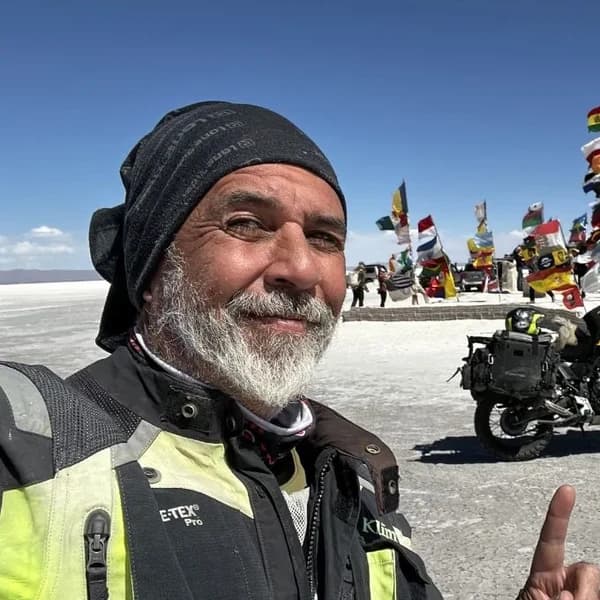
Gustavo Correa
Moto traveler, author and motorcycle travel consultant. 110,000+ km across 4 continents with Gloria, my motorcycle. Everything you read here has been tested on the road, not in an office.
Read my story →Last verified: 2026-09-01
Sources consulted (18)+
- et.usembassy.gov
- travel.state.gov
- gov.uk
- greatethiopiantours.com
- greatethiopiantours.com
- overlandingassociation.org
- horizonsunlimited.com
- ycmis.comesa.int
- citizen.digital
- thereporterethiopia.com
- roughguides.com
- safarigo.com
- tripadvisor.com
- ke.mayfairinsurance.africa
- commons.wikimedia.org
- fsc.gov.et
- borkena.com
- addisstandard.com
A GIFT FOR BEING HERETHE ADVENTURE OF LIVING FREE
Do fear or doubt paralyze you before starting any project? You're not alone — every one of us has been there.
As a thank-you for visiting my site, I'm giving you my book "The Adventure of Living Free". A manual built to bring some light through the shadows and show you the philosophy that has let me ride the world for years.
* PDF STRAIGHT TO YOUR INBOX. NO SPAM.