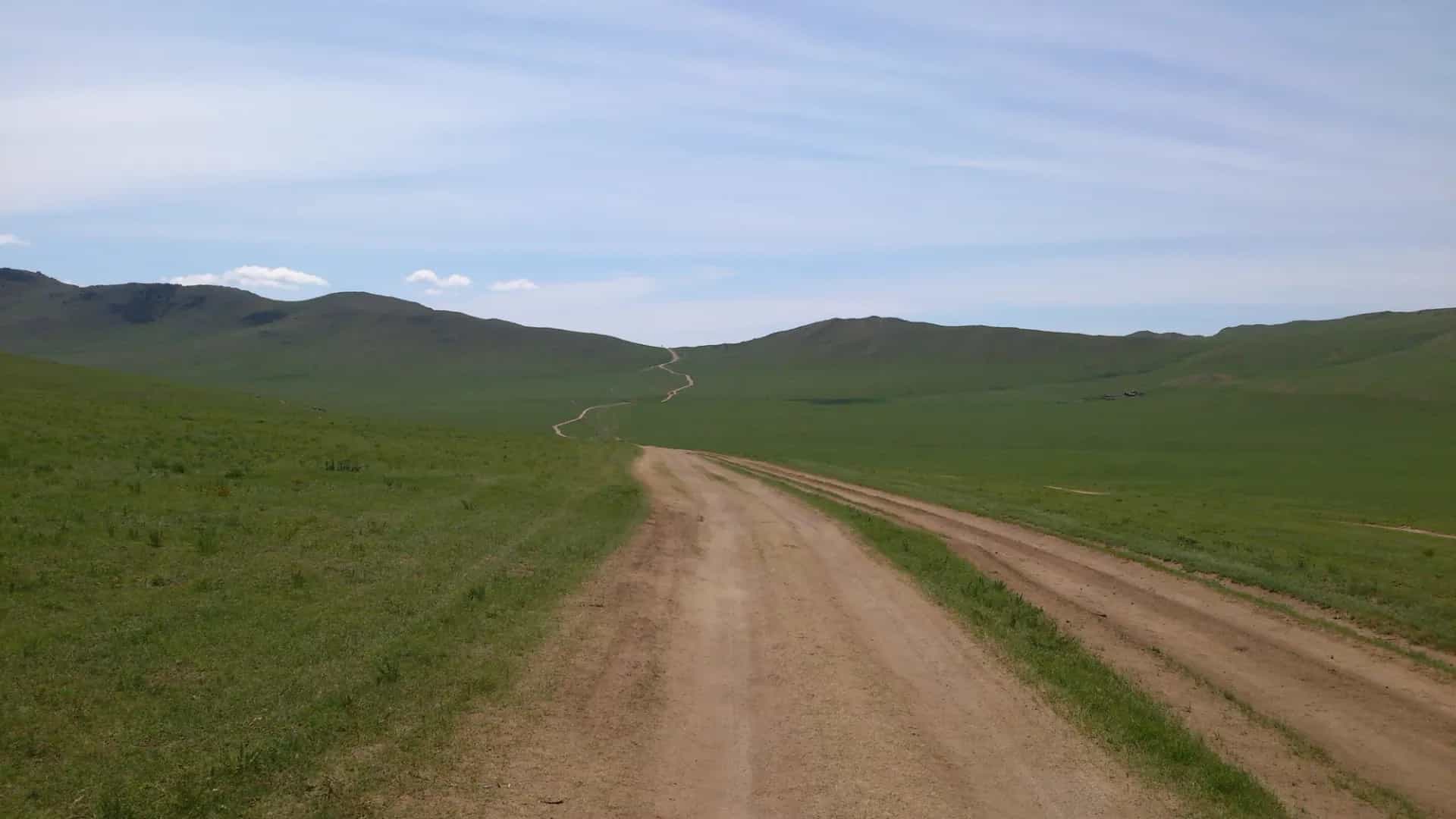
MOTORCYCLE TRAVEL IN Mongolia
QUICK ANSWER
Mongolia is one of the most demanding and rewarding destinations for riding a motorcycle in Asia: no Carnet de Passage is needed, the temporary import permit is sorted right at the border and lasts as long as your visa, and the mandatory insurance is bought on the spot for about 15 to 20 dollars. The hard part isn't the paperwork — it's riding unmarked dirt tracks across open steppe, judging river crossings by eye, and planning fuel range carefully, especially in August 2026, with the country rationing gasoline amid a shortage hitting Ulaanbaatar.
WHAT YOU NEED TO KNOW
The country you're about to enter has particularities you need to know.
Before you cross the border there are four things you need locked down: how safe the country is, what insurance is mandatory for your motorcycle, where you'll actually find fuel, and when to go. None of these are optional.
SAFETY: LOW RISK (2/5)
Is Mongolia safe to enter by motorcycle? Yes — the whole country sits at the lowest alert level from the US State Department (Level 1, exercise normal precautions), though Ulaanbaatar concentrates specific pickpocketing and scam spots worth knowing about.
AREAS TO AVOID
- Narantuul Market ("Black Market"), Ulaanbaatar: Documented pickpockets working in groups: one distracts while another steals. The most cited theft spot in the capital's safety guides.
- Railway station area, Ulaanbaatar: Transport hubs attract opportunistic theft and unofficial drivers who approach new arrivals — avoid getting into any taxi without an official sign in this area.
- Outer ger districts, Ulaanbaatar: Less lighting, slower emergency response and rougher streets than downtown — avoid riding through these neighborhoods at night if you don't know the area well.
- Seoul Street bar district at night: A hotspot for robbing lone individuals after midnight; avoid unlicensed taxis in this area.
WHERE TO PARK
- Parking: In small towns and out on the steppe there's no issue leaving it on the street or next to the ger. In Ulaanbaatar, at night, look for a gated lot or your guesthouse.
- Alarm: Uncommon among motorcyclists in Mongolia, but worth having for several nights in Ulaanbaatar. Barely necessary out in the countryside.
- Luggage: Take off what you can carry (tank bag, backpack) when you park. In rural gers and guesthouses it can stay in the room; in the capital, never leave it in plain sight.
- Visibility: Park where there's foot traffic and good lighting — avoid alleys and dark corners in Ulaanbaatar at night.
TIPS
- ➜If someone offers you an unmarked taxi near the railway station, turn it down and look for one with visible identification — it's the area where unofficial drivers most often approach new arrivals.
- ➜Avoid unmarked taxis near the Seoul Street bar district after midnight.
- ➜Always carry the insurance slip and the temporary import permit with you — road checkpoints outside Ulaanbaatar ask for them often.
Outside those specific spots in Ulaanbaatar, Mongolia is one of the calmest countries in Asia to cross by motorcycle — the real risk is in the terrain and the weather, not the people.
MANDATORY INSURANCE: Mandatory Border Insurance
Mongolia is not part of the European Green Card system, so no foreign policy covers you inside the country. At the border you must buy mandatory third-party liability insurance, under Mongolia's 2011 Driver's Liability Insurance Law, handed over as a paper slip valid for 30 days at a cost of roughly 15 to 20 dollars for a motorcycle. If your stay runs longer than that, it has to be renewed in Ulaanbaatar.
FUEL: RATIONED IN 2026
Generally good availability — a bike with a 15-liter tank covers about 250 km and there is a station in nearly every town, with nomadic families keeping reserve jerry cans for remote stretches of the Gobi. But since August 2026 the country has been in a real crisis: Russia supplies up to 97% of Mongolia's fuel and shipments dropped, so the government rationed sales by license plate (alternating days) with a cap of 50,000 tugriks (about 14 liters) per fill-up and banned topping up external jerry cans at stations. The US Embassy asked citizens to defer non-essential travel while it lasts. Check the current state of the shortage before you set out and keep the tank topped up whenever you can.
BEST SEASON: JUN → SEP
June to September, with July and August as the months most recommended by specialized guides like Mad or Nomad and Big Bike Tours. August is the real sweet spot: rivers drop to their most manageable level of the summer and the Gobi's extreme heat starts to ease, while June-July bring more rain and trickier river crossings. Mid-July also hosts Naadam, the national festival — worth planning around since it fills Ulaanbaatar and raises prices.
ENTERING MONGOLIA BY MOTORCYCLE
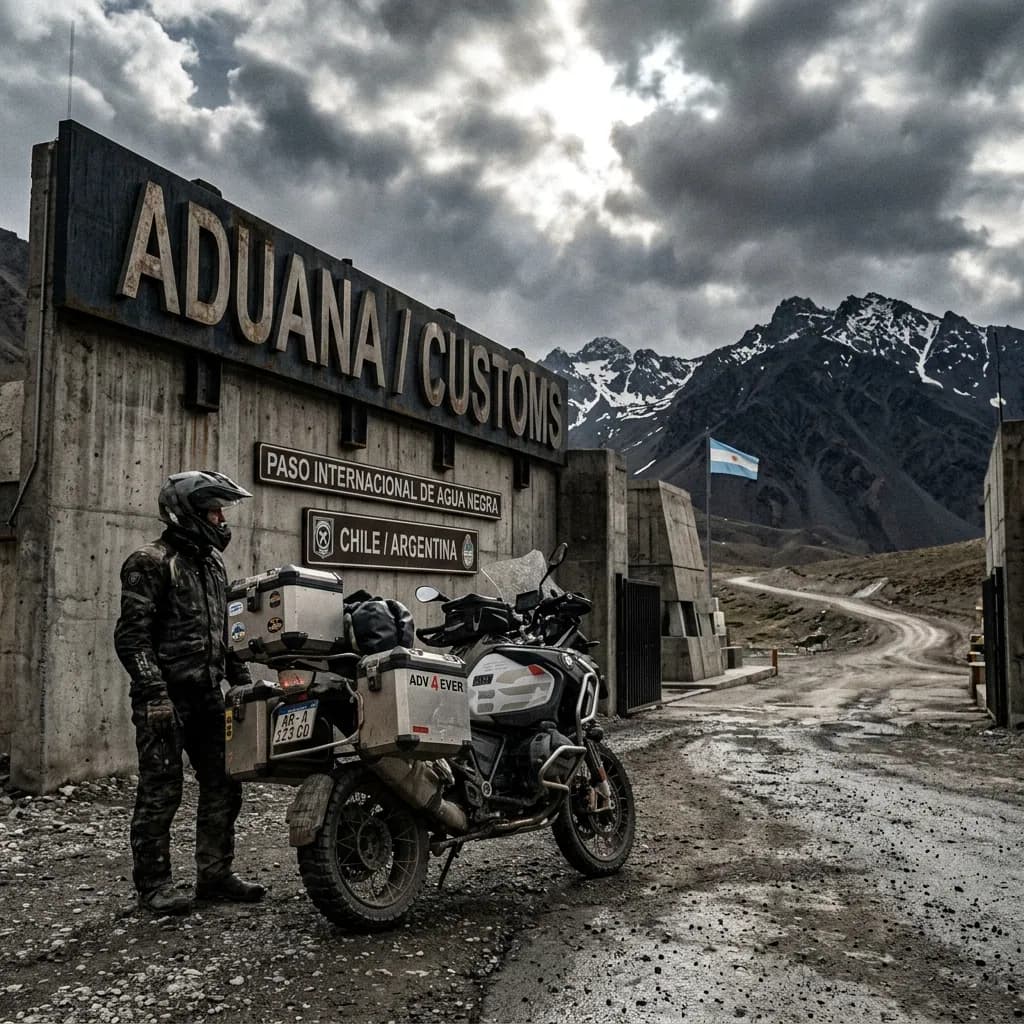
Crossing into Mongolia with a bike is, according to traveler accounts on Horizons Unlimited, ADVrider and guides like Mad or Nomad, one of the least bureaucratic procedures in Asia: no Carnet de Passage en Douane required, which is unusual for the continent.
The process has two steps:
Immigration: Stamps your passport on entry; most Western nationalities don't need a visa in advance for stays of up to 30 days.
Customs: Fill out the motorcycle's temporary import form and buy the mandatory insurance at the same post — you get a slip that must be returned when you exit through the same crossing.
The temporary import form is free and does not require a Carnet de Passage en Douane — a rarity in Asia, according to Horizons Unlimited and Mad or Nomad.
Real friction point:not every border post is open to third-country nationals. On the Russian side, only a handful of crossings are multilateral (open to any nationality) — the rest are bilateral, reserved for Russian and Mongolian citizens only. Something similar happens with China, where several posts require a specific Mongolian visa type rather than a plain tourist or transit visa.
The full-service crossings already proven by motorcyclists are Altanbulag/Kyakhta on the Russian border and Zamyn-Uud/Erlian on the Chinese border — worth building your route around these two instead of gambling on a minor post.
REQUIRED DOCUMENTATION
Valid passport: Most G7, EU and UK nationalities enter visa-free for 30 days; check the official list before you travel.
Driving license: Your home country's license is enough for the border process, though it's worth carrying an International Driving Permit (IDP) as backup.
Motorcycle title/registration: If you're not the registered owner, you need notarized authorization from them.
Temporary import form: Filled out right at the border post; the slip you're given must be handed back when you exit through the same crossing.
Mandatory border insurance: Bought at the same border post, valid for 30 days, with no exceptions for foreign-plated vehicles.
With your passport, the motorcycle's title and about $20 for the border insurance, entering Mongolia is a routine procedure at the main crossings. The advice that comes up most often among motorcyclists: plan your route around Altanbulag/Kyakhta or Zamyn-Uud/Erlian and don't risk a minor crossing without first confirming it's open to your nationality.
DAILY BUDGET
This price range combines cheap lodging, cooking your own meals, and basic bike maintenance — the three categories that weigh most on any moto traveler's daily budget.
Your real daily budget is something you build yourself, based on your own needs and limits — but if you want an idea of how to build yours, pick a category to see the full guide:
Full cost breakdown in the budget guide
THE 10 BEST MOTORCYCLE ROUTES IN MONGOLIA
Mongolia does not have a single mythical "national route" the way other countries do: it has a handful of huge, remote regions that are radically different from one another. That is why this Top 10 is ordered by how recognized and searched each one is among motorcycle travelers worldwide — from the Gobi Desert, which shows up in the vast majority of commercial itineraries and international travel accounts, to the eastern steppe, which almost no foreign motorcycle traveler has ridden yet.
None of these routes are ridden in passing, either: Mongolia is pure mixed terrain, and the distance between fuel stations can top 200 km, so every entry in this Top 10 includes the real fuel range you will need before heading out.
Before heading out on any of these 10 routes, it is worth reviewingthe mechanics guide for long motorcycle trips, because in the Gobi or the Altai there is no repair shop for hundreds of kilometers in any direction.
Mongolia's extreme temperature swings (desert heat by day, mountain frost by night) make it worth reviewingthe gear guide for long motorcycle tripsbefore packing.
Crossing the Gobi Desert:Khongoryn Els Dunes and Bayanzag Cliffs
Ömnögovi (South Gobi)Crossing the Gobi Desert by motorcycle is the trip that comes to mind first for any motorcycle traveler thinking about Mongolia, and that is no coincidence: it is the country's most repeated image in video, photo and travel writing.
The Khongoryn Els dunes, nicknamed "the singing dunes" for the sound the wind makes as it slides the sand, rise up to 300 meters above the steppe.
A few hours away, the red cliffs of Bayanzag, known as the Flaming Cliffs, are where American explorer Roy Chapman Andrews unearthed, in the 1920s, the first fossilized dinosaur eggs ever documented by science, a discovery that changed paleontology worldwide.
Between dunes and cliffs, the track forces you to alternate hard gravel with deep sand where the bike sinks in and demands constant traction and forward weight.
WARNINGS FOR THIS ROUTE
This is what you need to sort out before riding this route.
- 01Fuel range
Critical. Stretches of 200 to 250 km without a single station are normal here; carrying extra jerry cans is mandatory, not optional.
Lake Khövsgöl:the Western Shore from Khatgal to Khankh
Khövsgöl (northern Mongolia)Riding the western shore of Lake Khövsgöl by motorcycle has a reputation as one of the toughest roads in Asia: just 170 km between Khatgal and Khankh, but scattered with logs, loose rock, mud and river fords deep enough to reach the seat.
The lake holds close to 70% of all of Mongolia's freshwater across 136 km of length, which is why Mongolians themselves call it the Blue Pearl.
Beyond the taiga that lines the northern shore live the Tsaatan, a nomadic reindeer-herding people who rarely cross paths with foreign motorcycle travelers.
Summer or not, some of the high passes hold ice even in the middle of the season, which demands extra caution on the final stretches before Khankh.
WARNINGS FOR THIS ROUTE
This is what you need to sort out before riding this route.
- 01Fuel range
Good in Khatgal, none for the rest of the ride. Leave with a full tank: the 170 km to Khankh have no fuel point at all.
- 02River fords and ice on the passes, even in summer
Specialist guides for this route report river crossings deep enough to reach the seat and ice patches on the high passes in the middle of summer. Always cross at walking pace and scout the ford's bottom on foot before committing the front wheel.
Orkhon Valley:from Bayanzag to the Ancient Capital of Karakorum
Övörkhangai (central Mongolia)Reaching the Orkhon Valley by motorcycle means entering the historical heart of Mongolia: this is where Genghis Khan founded Karakorum in 1220, the capital of the Mongol Empire, which his son Ögedei walled in 1236 and which ruled over much of Asia until 1260.
Almost nothing of the original city still stands, but meters from the ruins rises Erdene Zuu Monastery, built in 1585 by Avtai Khan reusing stones from Karakorum itself, today the country's oldest Buddhist complex.
The whole valley, with its steppe landscapes, rivers and monasteries, is recognized by UNESCO as the Orkhon Valley Cultural Landscape.
On a motorcycle, the route mixes pavement near the towns with long stretches of open dirt where the only real speed limit is the terrain itself.
WARNINGS FOR THIS ROUTE
This is what you need to sort out before riding this route.
- 01Fuel range
Fair. There are stations in Kharkhorin and Tsetserleg; some rural stretches between them run over 100 km without service.
Altai Tavan Bogd:from Ölgii to the Roof of Mongolia
Bayan-Ölgii (far west)Reaching Altai Tavan Bogd National Park by motorcycle means riding to Mongolia's westernmost corner, where the Altai mountains come close to touching the borders of Russia, China and Kazakhstan almost at once.
There stands Khüiten Peak, the country's highest point at 4,374 meters, feeding Mongolia's largest glacier and a basin of three glacial lakes (Khoton, Khurgan and Dayan) where the track ends.
Along the way, more than 200 Kazakh families in Bayan-Ölgii province still hunt with trained golden eagles, a tradition passed down through generations that coexists with petroglyphs up to 12,000 years old, recognized by UNESCO.
Beyond Ölgii there is no pavement: just 27 km sealed to Sagsai, then gravel, washboard and river crossings all the way to the foot of the mountains.
WARNINGS FOR THIS ROUTE
This is what you need to sort out before riding this route.
- 01Fuel range
Critical beyond Ölgii. It is the last reliable fuel point; carrying 5 to 10 extra liters in a metal jerry can is mandatory.
- 02Sudden storms on the open steppe
Local guides report that even in the middle of July, an afternoon storm can drop the temperature from 25°C to 5°C in twenty minutes and bring hail across the open plain, with no natural shelter nearby. If storm clouds build by mid-morning, expect rain between 2pm and 4pm.
The White Lake:Terkhiin Tsagaan Nuur and Khorgo Volcano
Arkhangai (Khangai Mountains)Reaching the White Lake by motorcycle, Terkhiin Tsagaan Nuur, means riding into a landscape born from a geological catastrophe: about 8,000 years ago, an eruption of Khorgo volcano dammed a river's course with its own lava flow, forming the lake that today stretches at 2,060 meters of altitude among the Khangai mountains.
Inside Khorgo's extinct crater, you can still see the "basalt yurts", bubbles of solidified lava with that unmistakable shape that gives the place its popular name.
The lake's cold, clear water, ringed by larch forests and fields of black lava, contrasts almost unreally with the green steppe surrounding it in summer.
WARNINGS FOR THIS ROUTE
This is what you need to sort out before riding this route.
- 01Fuel range
Fair. There is a station in Tsetserleg; the final stretch to the lake has no fuel.
Gorkhi-Terelj National Park:the Classic Getaway from Ulaanbaatar
Töv (70 km from Ulaanbaatar)Riding out to Gorkhi-Terelj by motorcycle is the getaway every motorcycle traveler, local or foreign, takes when passing through Ulaanbaatar, because the park starts just 70 km from the capital.
The main natural attraction is Turtle Rock (Melkhii Khad), a granite formation about 24 meters tall that genuinely looks like a giant turtle poking out of the steppe.
On the access road you pass by the Genghis Khan Equestrian Statue Complex, a 40-meter stainless-steel statue unveiled in 2008, the tallest equestrian statue in the world.
Gorkhi-Terelj was declared a national park in 1993 and today is the most accessible gateway to the mountain, river and forest landscapes that repeat, much rawer, across the rest of the country.
WARNINGS FOR THIS ROUTE
This is what you need to sort out before riding this route.
- 01Fuel range
Excellent. Full-service stations in Ulaanbaatar and at the park entrance.
Khustain Nuruu National Park:in Search of the Przewalski Horse
Töv (100 km from Ulaanbaatar)Riding a motorcycle into Khustain Nuruu means entering one of the great success stories of global conservation: the takhi, or Przewalski horse, the only truly wild horse species never to be domesticated, had gone extinct in the wild by the 1960s.
In 1992, a partnership between Mongolia and the Netherlands reintroduced the first specimens bred in European zoos into these mountains, and in 1993 the Mongolian government declared the reserve's 506 km² protected.
Today the herd has grown enough to repopulate the landscape: watching them gallop free across the Khustai hills, just 100 km from the capital, is watching up close a conservation success that almost did not happen.
WARNINGS FOR THIS ROUTE
This is what you need to sort out before riding this route.
- 01Fuel range
Good. Stations in Ulaanbaatar; the park has basic services at the entrance.
The Great Lakes Depression:from Khovd to the Uvs Nuur Reserve
Khovd to Uvs (western Mongolia)Crossing the Great Lakes Depression by motorcycle, between Khovd and Ulaangom, means riding through Central Asia's northernmost enclosed basin, a mosaic of steppe, semi-desert and taiga that UNESCO recognized in 2003 as the Uvs Nuur Biosphere Reserve.
Lake Uvs, which gives the reserve its name, is large, shallow and highly saline, a key stopover for millions of migratory birds crossing Asia every year.
It is one of the least-ridden regions by foreign motorcycle travelers, which means genuinely empty steppe, without the ready-made logistics that the Gobi or Khövsgöl already have.
WARNINGS FOR THIS ROUTE
This is what you need to sort out before riding this route.
- 01Fuel range
Fair. There are stations in Khovd and Ulaangom; the middle stretch has no official fuel supply.
The Eastern Steppe:Dariganga and the Khalkhin Gol Battlefield
Sükhbaatar (eastern Mongolia)Riding the eastern steppe by motorcycle, centered on Dariganga, means entering the region of Mongolia with the least motorcycle traffic in the entire country; it does not even appear in most commercial itineraries.
Dariganga Natural Park, created in 2004, protects the Moltsog Els sand dunes and the extinct Shiliin Bogd volcano, one of the region's sacred volcanic cones.
Farther north, near the border with China, the Khalkhin Gol river was the site in 1939 of a decisive battle between Soviet-Mongolian forces, commanded by a young general Georgy Zhukov, and the Japanese army, the clash that marked Zhukov's first major military triumph and halted Japanese expansion northward before World War II.
WARNINGS FOR THIS ROUTE
This is what you need to sort out before riding this route.
- 01Fuel range
Very limited. Towns are spaced far apart; plan every fill-up with a margin.
Middle Gobi:the Granite Formations of Baga Gazriin Chuluu
Dundgovi (Middle Gobi)Riding a motorcycle to Baga Gazriin Chuluu is the perfect introduction to the Gobi for anyone starting out from Ulaanbaatar: a granite massif that rises alone over the flat steppe, its formations carved by erosion over millions of years.
Its name literally means "the stone of the small place", but the site holds petroglyphs, ancient burial sites and the ruins of Sangiin Kherem Monastery, destroyed during the Stalinist purges of the 1930s along with the vast majority of the country's Buddhist monasteries.
It is a miniature preview of what waits farther south, in the deep Gobi: stone, silence and an endless horizon.
WARNINGS FOR THIS ROUTE
This is what you need to sort out before riding this route.
- 01Fuel range
Fair. There is a station in Mandalgovi; the final detour to the rocks has no fuel supply.
FREQUENTLY ASKED QUESTIONS
01Do I need a Carnet de Passage en Douane to bring my motorcycle into Mongolia?
+
Do I need a Carnet de Passage en Douane to bring my motorcycle into Mongolia?
No. Mongolia is one of the few exceptions in Asia: it does not require a Carnet de Passage en Douane. Filling out the temporary import form at the border post itself is enough, and it stays tied to the length of your visa.
02How much does the mandatory insurance cost at the Mongolian border?
+
How much does the mandatory insurance cost at the Mongolian border?
It runs about $15-20 for a motorcycle and is bought directly at the border post, where you get a paper slip valid for 30 days. No international Green Card-style policy covers you inside Mongolia, so this step is not optional.
03How long can I stay in Mongolia with my foreign-plated motorcycle?
+
How long can I stay in Mongolia with my foreign-plated motorcycle?
The vehicle permit lasts as long as your visa. Most Western nationalities enter visa-free for 30 days; if you need more time, you have to file an extension in Ulaanbaatar before it expires. The maximum for personal-use vehicles is 6 months, per Mongolia's customs regulations.
04Is it true that Mongolia is rationing gasoline in 2026?
+
Is it true that Mongolia is rationing gasoline in 2026?
Yes. Since August 2026 the country has faced a real fuel shortage — Russia supplies up to 97% of Mongolia's gasoline and shipments dropped — and the government caps purchases at 50,000 tugriks (about 14 liters) per plate on alternating days. The US Embassy asked citizens to defer non-essential travel while the crisis lasts; check the current status before you go.
05Can I cross into Russia or China with my motorcycle through any border post?
+
Can I cross into Russia or China with my motorcycle through any border post?
It is not worth the risk. Several posts on both the Russian and Chinese borders are bilateral, reserved for citizens of those two countries only, and do not accept third-country nationals. The full-service crossings already proven by motorcyclists are Altanbulag/Kyakhta into Russia and Zamyn-Uud/Erlian into China.
06What is the best time to ride the steppe and the Gobi by motorcycle?
+
What is the best time to ride the steppe and the Gobi by motorcycle?
June to September, with August as the most recommended month: rivers drop to their most manageable summer level and the Gobi's extreme heat starts to ease. July brings Naadam (July 11-13), the national festival, which adds color but also raises prices and fills Ulaanbaatar with tourists.
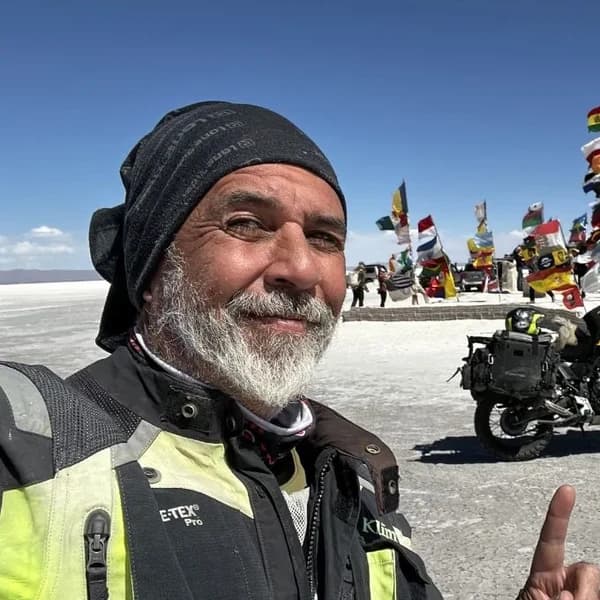
Gustavo Correa
Moto traveler, author and motorcycle travel consultant. 110,000+ km across 4 continents with Gloria, my motorcycle. Everything you read here has been tested on the road, not in an office.
Read my story →Last verified: 2026-08-30
A GIFT FOR BEING HERETHE ADVENTURE OF LIVING FREE
Do fear or doubt paralyze you before starting any project? You're not alone — every one of us has been there.
As a thank-you for visiting my site, I'm giving you my book "The Adventure of Living Free". A manual built to bring some light through the shadows and show you the philosophy that has let me ride the world for years.
* PDF STRAIGHT TO YOUR INBOX. NO SPAM.