MOTORCYCLE TRAVEL IN Nicaragua
QUICK ANSWER
Nicaragua is the heart of the Central American Pan-American route: Ometepe Island with its two volcanoes, colonial León, and the highway down to San Juan del Sur are must-stops for any motorcycle traveler. Entry is straightforward but slow — Nicaragua belongs to the CA-4 agreement (with Guatemala, El Salvador, and Honduras), so Immigration stamps a tourist card and Customs issues a free TIP (Temporary Import Permit) for the motorcycle. The one thing you have to buy right at the border, no way around it, is the mandatory insurance — about $12 USD for 30 days.
WHAT YOU NEED TO KNOW
The country you're about to enter has particularities you need to know.
Before you cross the border there are four things you need locked down: how safe the country is, what insurance is mandatory for your motorcycle, where you'll actually find fuel, and when to go. None of these are optional.
SAFETY: MODERATE RISK (3/5)
Is Nicaragua safe to enter by motorcycle? Yes, on the Pacific tourist route — the real risk isn't so much street crime as political instability, which has led the United States to keep a specific wrongful-detention alert in place since 2018.
AREAS TO AVOID
- Managua's outer neighborhoods: Mercado Oriental, Reparto Shick, Jorge Dimitrov, Ciudad Belén, Américas 1 and 2, and Camilo Ortega concentrate the capital's crime according to the Canadian government — avoid them, especially after dark.
- Caribbean Coast (RAAN and RAAS): Bluefields, Puerto Cabezas, and the rest of the Caribbean coast see drug-trafficking activity and thin police presence, according to Canada and the US. It's off the usual overland motorcycle route — skip the detour unless that coast is your actual destination.
- Working-class neighborhoods of León, Masaya, Matagalpa, and Tipitapa: The Canadian government also flags poor areas of these inland cities — a real issue in alleys away from the historic center, not on the tourist routes a motorcycle traveler actually rides.
WHERE TO PARK
- Parking: On the street: fine by day in tourist towns (Granada, León, San Juan del Sur, Ometepe). In Managua or after dark, look for a hotel with a gated lot.
- Alarm: Recommended: yes, especially in Managua and larger cities. Less critical in Ometepe or small Pacific towns.
- Luggage: Take off what you can carry (tank bag, backpack, camera) when parking. Don't leave anything loose in plain sight on the seat.
- Visibility: Park where there's foot traffic and good lighting — never in an empty alley or near a vacant lot.
TIPS
- ➜Avoid riding after dark outside the cities — secondary roads have poor lighting and inconsistent surface conditions.
- ➜If a checkpoint targets your foreign plates for an informal payment, ask for the officer's name and badge number and a receipt — that's the official US advice for this exact situation.
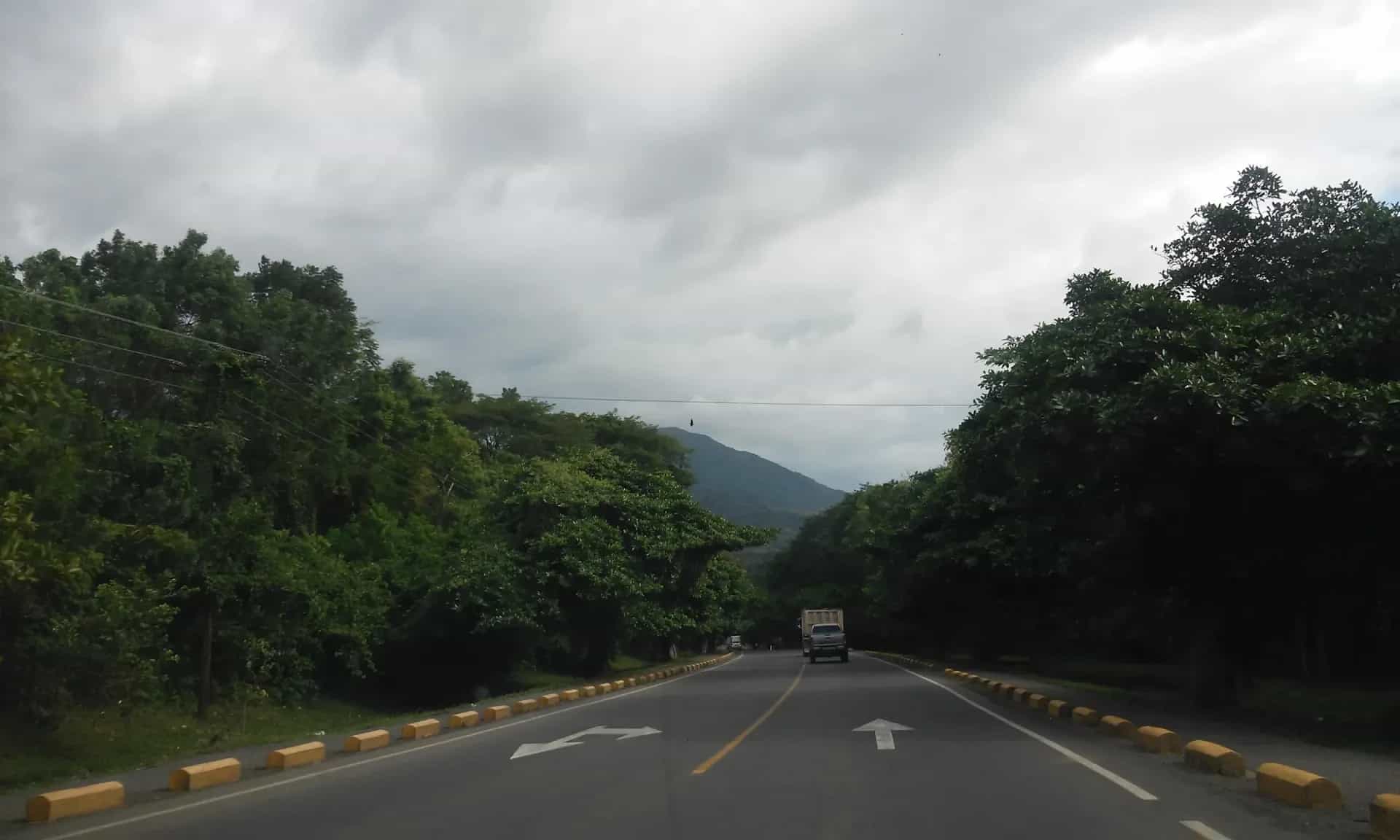
Outside those spots, the classic Pacific route (León, Granada, Ometepe, San Juan del Sur) is manageable for a rider who takes basic precautions.
MANDATORY INSURANCE: SOA (Mandatory Auto Insurance)
Mandatory for any vehicle, including foreign-plated motorcycles. You buy it at a booth next to the customs checkpoint when you cross, it costs about $12 USD for 30 days, and it covers only third-party damage, not your own bike. It has to be renewed if it expires — without it, the fine for motorcycles runs around 500 córdobas.
FUEL: SCARCE ON THE CARIBBEAN COAST
Good coverage along the Pacific route (León, Managua, Granada, Rivas) thanks to a network of about 75 DNP-Petronic and Puma Energy stations. On the Caribbean Coast (RAAN and RAAS) stations are scarce — one or two pumps per municipality — so carry reserve fuel if you detour that way.
BEST SEASON: NOV → MAY
November to May is the dry season: clear skies and roads in good condition across the country. The rainy season (June to October) brings heavy afternoon downpours, with September and October the toughest months for rural and dirt roads.
ENTERING NICARAGUA BY MOTORCYCLE
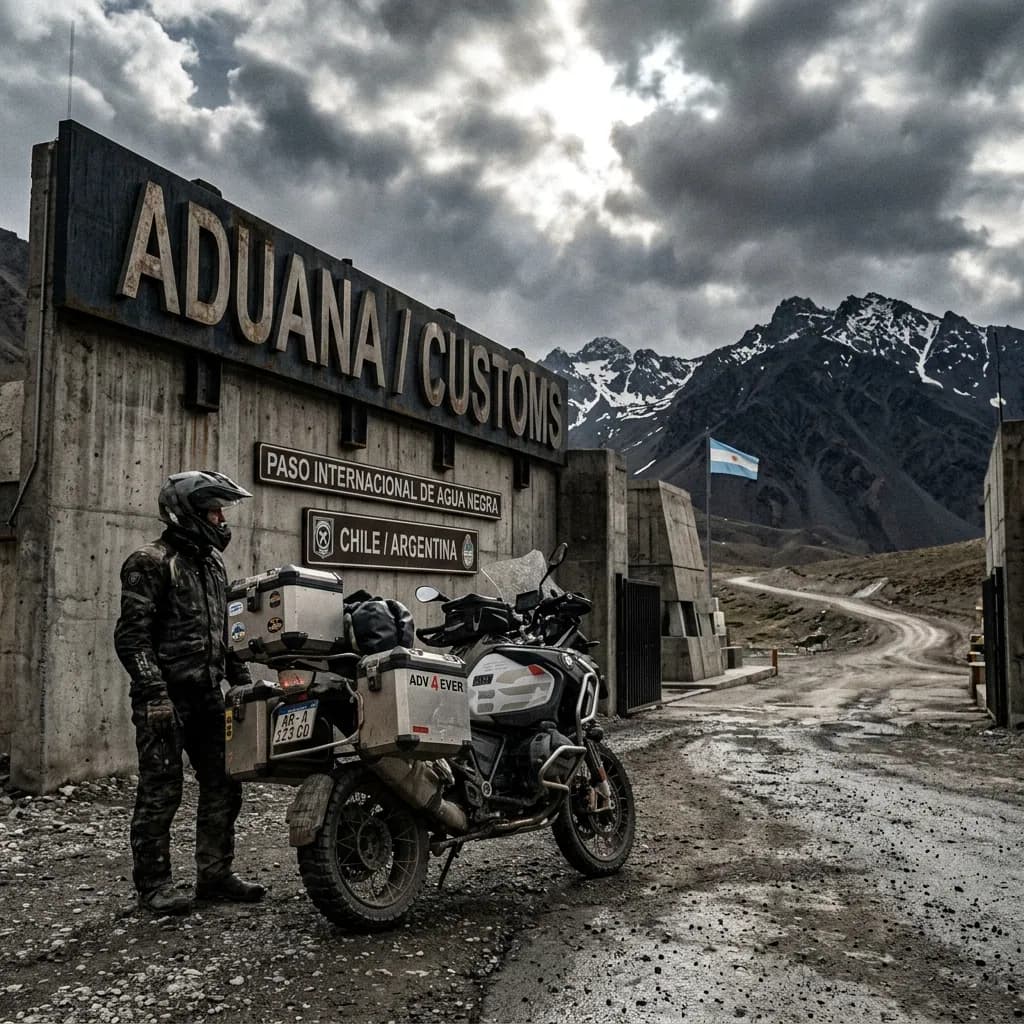
Nicaragua is part of the CA-4 agreement along with Guatemala, El Salvador, and Honduras: once you enter any of those four countries, the 90-day clock runs for the whole bloc and doesn't reset when you cross between them. The crossings most used by motorcycle travelers are Peñas Blancas (the Costa Rica border, on the Pan-American Highway) and El Guasaule or El Espino (the Honduras border). According to accounts documented on Mad or Nomad and Trans-Americas Journey, the process itself is more slow than complicated.
The process has two steps:
Immigration: Charges about $13 USD per person and issues a tourist card (not a passport stamp) — don't lose it, you'll need it again on exit.
Customs: Issues the TIP (Temporary Import Permit) for the motorcycle; in the same area you must buy the mandatory insurance before they let you through.
The TIP is free — according to travelers who document the process, the Temporary Import Permit itself carries no charge.
Real friction point:the Nicaraguan crossing has a reputation, among motorcycle travelers who document it on Horizons Unlimited and Mad or Nomad, for being one of the slowest in Central America — you pass through several windows (immigration, customs, insurance, and sometimes fumigation for about $5 USD) and should budget 1 to 3 hours.
The insurance is the non-negotiable part: you buy it at a booth right after the checkpoint, it costs about $12 USD for 30 days, and if a traffic checkpoint stops you without it, the fine for motorcycles is around 500 córdobas.
REQUIRED DOCUMENTATION
Passport or national ID: Valid for the whole length of your stay.
Driving license: Your home country's license is enough.
Motorcycle title/registration: If you're not the owner, you need notarized power of attorney from them.
Mandatory insurance (SOA): Bought right at the border post, about $12 USD for 30 days.
TIP form: Temporary Import Permit — processed at customs at the moment you cross.
With these five documents sorted, entering Nicaragua with a bike is routine, though not the fastest in the region. The advice that comes up most often among motorcycle travelers: cross early (posts open at 6 am) to beat the midday heat and tour-bus lines, and hold onto your tourist card — they ask for it again on your way out.
DAILY BUDGET
This price range combines cheap lodging, cooking your own meals, and basic bike maintenance — the three categories that weigh most on any moto traveler's daily budget.
Your real daily budget is something you build yourself, based on your own needs and limits — but if you want an idea of how to build yours, pick a category to see the full guide:
Full cost breakdown in the budget guide
THE 10 BEST MOTORCYCLE ROUTES IN NICARAGUA
This Top 10 is ordered by real-world fame, not personal preference: at the top sit the routes that any rider searching "motorcycle route Nicaragua" finds first, the ones that show up most often in international travel blogs, forums like Horizons Unlimited, and specialized roadbooks like Detecht's, while toward the end are routes that are just as genuine but ridden by a smaller circle, almost always international riders rather than locals.
Before climbing any of these volcanoes or crossing an unbridged ford on the way to Popoyo, it is worth reviewingthe mechanics guide for long motorcycle trips, because in the Cosigüina Peninsula or the northern mountains there is no repair shop around the corner.
If this is your first time organizing a border crossing by motorcycle into Central America,the step-by-step guide to crossing the border by motorcyclesaves you the typical paperwork surprises before entering Nicaragua.
And if you are still building the rest of your Central American itinerary around these 10 routes,the logistics guide for motorcycle tripshelps you plan the legs, the crossings, and the timing between one country and the next.
Isla de Ometepe:the Route of the Two Volcanoes
Rivas (Lake Nicaragua)Riding Isla de Ometepe by motorcycle means tracing the figure-eight shape drawn by its two volcanoes, joined by a narrow isthmus: Concepción, still active at 1,610 meters, and Maderas, dormant and covered in cloud forest, at 1,394 meters.
The name comes from the Nahuatl ome (two) and tepetl (mountain), "the place of the two mountains". UNESCO declared the whole island a Biosphere Reserve in 2010, and at 276 km² it is the largest volcanic island in the world inside a freshwater lake.
You reach it by ferry from San Jorge, near Rivas, on a roughly one-hour crossing over Lake Cocibolca. Once ashore, the paved road between Moyogalpa and Altagracia runs out and gives way to the loose dirt that circles Maderas, the stretch that separates the curious rider from the one who only came to see the volcano from the ferry railing.
WARNINGS FOR THIS ROUTE
This is what you need to sort out before riding this route.
- 01Fuel range
Limited. Service stations only in Moyogalpa and Altagracia; arrive on the island via the San Jorge ferry with a full tank.
León to Cerro Negro:Central America's youngest volcano
LeónRiding to Cerro Negro by motorcycle means reaching the youngest volcano in all of Central America: it was born out of nothing in 1850 and has erupted more than twenty times since, most recently in 1999.
The road leaves León heading north, passes the boiling mud pools of San Jacinto, and pushes into the Cordillera de los Maribios, the chain of volcanoes that dominates the region's landscape, before ending in a stretch of black volcanic sand at the foot of the cone.
In 2004, Australian Darryn Webb, owner of the Bigfoot hostel in León, built a wooden board mounted on a sheet of metal to ride down Cerro Negro's slope at speed, after failed attempts with a mini fridge, a mattress, and even his own front door. That's how volcano boarding was born, the sport that turned this volcano into a mandatory stop for anyone passing through León, on two wheels or not.
WARNINGS FOR THIS ROUTE
This is what you need to sort out before riding this route.
- 01Fuel range
Good as far as San Jacinto; no fuel beyond that point. Fill up completely in León before setting out.
San Juan del Sur to Popoyo:the South Beaches Route
Rivas (southern Pacific coast)Riding from San Juan del Sur to Popoyo by motorcycle means tracing part of Nicaragua's 350 km of Pacific coastline, along a strip of surf beaches that still has no paved road running end to end.
The track crosses roughly a dozen unbridged river fords before reaching Popoyo, where four world-class breaks sit within a 15-minute walk of each other; the specialist outlet ADV Pulse documented this stretch as one of the rawest "trails and waves" rides in Central America.
Expect loose cattle on the road, not signage: a cow standing in the middle of the dirt track is as much a fixture of this ride as the Pacific sunset waiting at the end of it.
WARNINGS FOR THIS ROUTE
This is what you need to sort out before riding this route.
- 01Fuel range
Scarce. Popoyo sits roughly 40 km from the last paved fuel stop; leave San Juan del Sur with a full tank.
- 02Unbridged river crossings
ADV Pulse's account of this stretch describes about a dozen unbridged river crossings between the nearest paved road and Popoyo, plus loose cattle on the track. Always cross when the ground is dry, and at a walking pace.
To the crater of Masaya Volcano:the Gate of Hell
MasayaRiding up Masaya Volcano by motorcycle is one of the few rides in the world where a paved road leaves you standing right at the edge of an active lava lake.
Spanish conquistadors named it "the Mouth of Hell": in 1529, friar Blas del Castillo planted a wooden cross on the rim of the Santiago crater, convinced the glowing lava was molten gold and that the cross would hold back the demon he believed lived below.
In 1979 it became Nicaragua's first national park, and today the Santiago crater still degasses continuously, its lava lake visible from the overlook, no hike, no harness, just the bike parked meters from the edge.
WARNINGS FOR THIS ROUTE
This is what you need to sort out before riding this route.
- 01Fuel range
Excellent. Full-service stations in Masaya and along the Pan-American Highway toward Managua.
Granada to Mombacho Volcano:the colonial city and its cloud forest
GranadaRiding from Granada to Mombacho Volcano by motorcycle links the oldest colonial city in the Americas still standing on its original site, founded in 1524 by Francisco Hernández de Córdoba, with a 1,344-meter volcano that holds its own cloud forest.
Mombacho's upper slopes host more than 700 plant species and 87 recorded orchid species, many endemic to the volcano itself, alongside coffee plantations that take advantage of the altitude and constant humidity.
From the summit lookout you can see the Isletas de Granada archipelago scattered across Lake Cocibolca, the same paved coastal road the bike follows before climbing the final dirt stretch up to the reserve.
WARNINGS FOR THIS ROUTE
This is what you need to sort out before riding this route.
- 01Fuel range
Excellent. Full-service stations in Granada; no fuel inside the reserve.
The Pueblos Blancos Circuit and Laguna de Apoyo
Meseta de los Pueblos, Masaya and GranadaRiding the Pueblos Blancos Circuit by motorcycle means crossing seven towns on the Meseta de los Pueblos, Catarina, San Juan de Oriente, Diriá, Diriomo, Niquinohomo, Nandasmo and Masatepe, named for their colonial adobe façades painted white.
From the Catarina lookout, at 620 meters above sea level, you look straight down onto Laguna de Apoyo: a caldera formed roughly 23,000 years ago when the ground collapsed after an explosive pumice eruption, 200 meters deep, making it the lowest point in all of Central America.
San Juan de Oriente keeps a Chorotega-rooted pottery tradition alive, and Niquinohomo is the town where Augusto C. Sandino was born, two stops that make this short loop the ride with the most history and craftsmanship per kilometer on the whole list.
WARNINGS FOR THIS ROUTE
This is what you need to sort out before riding this route.
- 01Fuel range
Good. Service stations in Masaya, Catarina and Diriamba, along the route.
The Matagalpa-Jinotega Highway:Nicaragua's most picturesque road
Matagalpa and JinotegaClimbing the Matagalpa-Jinotega highway by motorcycle means riding what the Nicaraguan newspaper El Nuevo Diario called "the most picturesque road in Nicaragua": just 32 km of tight curves through mountains blanketed in coffee plantations.
It was built in the early 1950s, under the government of Anastasio Somoza García, as a response to the urgent need to speed up the transport and sale of coffee to the rest of the country.
The road holds between 1,350 and 1,500 meters above sea level, the ideal altitude for the high-quality coffee this region produces, and ends in Jinotega, the "City of Mists," a nickname that explains itself the moment you see fog roll over the valley almost every morning.
WARNINGS FOR THIS ROUTE
This is what you need to sort out before riding this route.
- 01Fuel range
Very good. Full-service stations in Matagalpa and Jinotega, at both ends.
From León to Las Peñitas and Poneloya:the surfers' coast
LeónRiding from León to Las Peñitas by motorcycle is barely 20 minutes of pavement, but it connects the oldest university city on Nicaragua's Pacific side with two black volcanic-sand beaches sitting side by side: Las Peñitas and Poneloya.
From Las Peñitas you enter the Isla Juan Venado Nature Reserve, a mangrove strip over 20 km long where, between August and December, olive ridley sea turtles (Lepidochelys olivacea) come ashore to nest, a sight best seen at night, in silence.
It's the go-to beach for backpackers and surfers passing through León: steady breaks for beginners and advanced riders alike, close enough to reach by motorcycle in the afternoon and still sleep back in the city.
WARNINGS FOR THIS ROUTE
This is what you need to sort out before riding this route.
- 01Fuel range
Good. Full-service stations in León; no fuel at the beach.
To Somoto Canyon through the Northern Mountains
Madriz and EstelíReaching Somoto Canyon by motorcycle means crossing northern Nicaragua's mountains along pine-forest roads that for centuries were known only to the people of Las Sabanas and San Lucas; science only discovered the site in 2004, when Czech geologist Jaroslav Šebesta and colleagues from UNAN-Managua carried out the first formal geological survey.
Before that date, the formation already had a local name: Namancambre, "bone" in the Ulúa-Matagalpa language, for the shape of its stone walls.
The canyon formed between 5 and 13 million years ago, in the Miocene, and its walls reach 120 to 150 meters high at the point where the Comalí and Tapacalí rivers join to form the Río Coco, the longest river in Central America.
WARNINGS FOR THIS ROUTE
This is what you need to sort out before riding this route.
- 01Fuel range
Good along the Pan-American Highway. No stations on the mountain detours toward Las Sabanas and San Lucas; leave Estelí or Somoto with a full tank.
The Cosigüina Peninsula:the edge of the map
ChinandegaRiding up the Cosigüina Peninsula by motorcycle means reaching the rim of one of Nicaragua's largest craters, the site of one of the most violent eruptions ever recorded in Central America.
On January 20, 1835, the volcano erupted with a VEI 5 force: detonations were heard as far as Jamaica, ash reached Mexico City, 1,400 km away, and the event lowered the planet's average temperature by about 0.75 degrees for months.
Today the crater measures 2.5 km across with a lagoon at the bottom, and from its rim, known as the Mirador de los Tres Países, the Three Countries Lookout, you can see El Salvador, Honduras and Nicaragua in a single turn of the head, over the waters of the Gulf of Fonseca.
WARNINGS FOR THIS ROUTE
This is what you need to sort out before riding this route.
- 01Fuel range
Critical. The last reliable fuel is in Chinandega or El Viejo; there are no stations anywhere on the peninsula.
NEIGHBORING COUNTRIES
Crossing the border next? Click a country to see its 10 best motorcycle routes.

FREQUENTLY ASKED QUESTIONS
01What is the TIP and how do I get it to enter Nicaragua by motorcycle?
+
What is the TIP and how do I get it to enter Nicaragua by motorcycle?
The TIP (Temporary Import Permit) is the document that authorizes your foreign-plated motorcycle to ride in Nicaragua. You get it at the customs window of the same border post, it's free, and you need the motorcycle's title and your passport to obtain it.
02What is the CA-4 agreement and how does it affect my length of stay?
+
What is the CA-4 agreement and how does it affect my length of stay?
CA-4 links Nicaragua, Guatemala, El Salvador, and Honduras under a single 90-day allowance: the clock starts when you enter the first of those countries and doesn't reset when you cross into another one in the bloc. If you need more time, you have to leave the whole bloc (Costa Rica, for example) and re-enter.
03Is insurance mandatory for foreign motorcycles in Nicaragua?
+
Is insurance mandatory for foreign motorcycles in Nicaragua?
Yes. You buy it at a booth right by the customs checkpoint when you cross, it costs about $12 USD for 30 days, and it covers third-party damage. Riding without it risks a fine of roughly 500 córdobas if a traffic checkpoint stops you.
04Is it safe to ride at night in Nicaragua?
+
Is it safe to ride at night in Nicaragua?
It's not recommended. Secondary roads have poor lighting, pavement quality gets inconsistent outside the main routes, and both US and UK authorities note that opportunistic crime rises after dark, especially near Managua.
05How long can I stay in Nicaragua with my foreign motorcycle?
+
How long can I stay in Nicaragua with my foreign motorcycle?
The TIP is usually issued for the same number of days as your tourist card, within the CA-4 bloc's 90-day limit. If you need to extend the motorcycle's stay, check directly with customs before it expires.
06What are the best border crossings to enter Nicaragua by motorcycle?
+
What are the best border crossings to enter Nicaragua by motorcycle?
Peñas Blancas, on the Pan-American Highway with Costa Rica, is the busiest crossing and the one most motorcycle travelers use. On the Honduras side, El Guasaule and El Espino are the most common. Cross early (posts open at 6 am) to beat tour-bus lines and the midday heat.
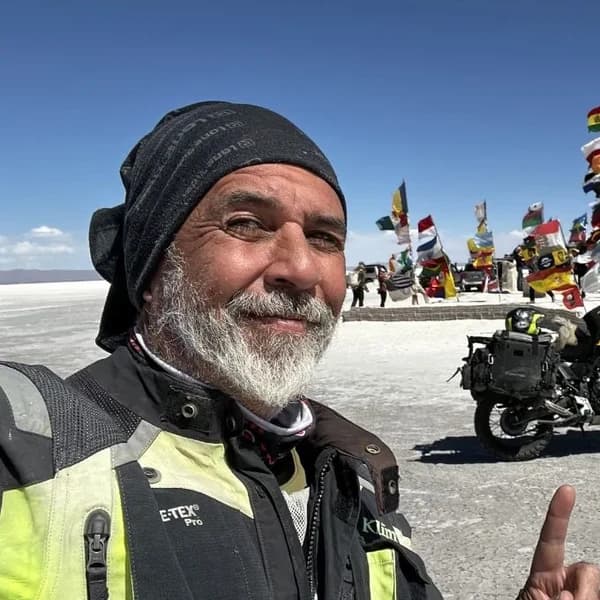
Gustavo Correa
Moto traveler, author and motorcycle travel consultant. 110,000+ km across 4 continents with Gloria, my motorcycle. Everything you read here has been tested on the road, not in an office.
Read my story →Last verified: 2026-08-29
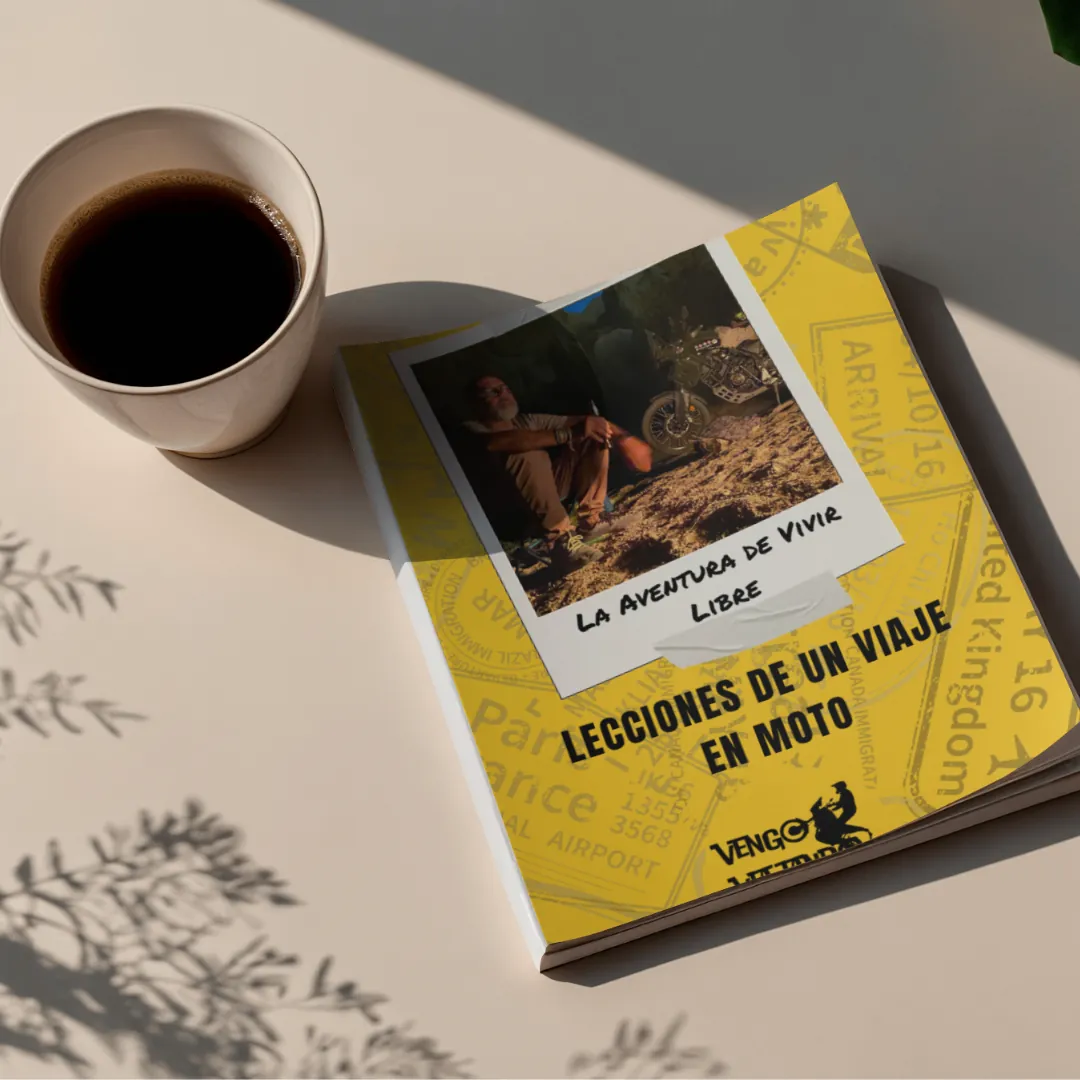
A GIFT FOR BEING HERETHE ADVENTURE OF LIVING FREE
Do fear or doubt paralyze you before starting any project? You're not alone — every one of us has been there.
As a thank-you for visiting my site, I'm giving you my book "The Adventure of Living Free". A manual built to bring some light through the shadows and show you the philosophy that has let me ride the world for years.
* PDF STRAIGHT TO YOUR INBOX. NO SPAM.