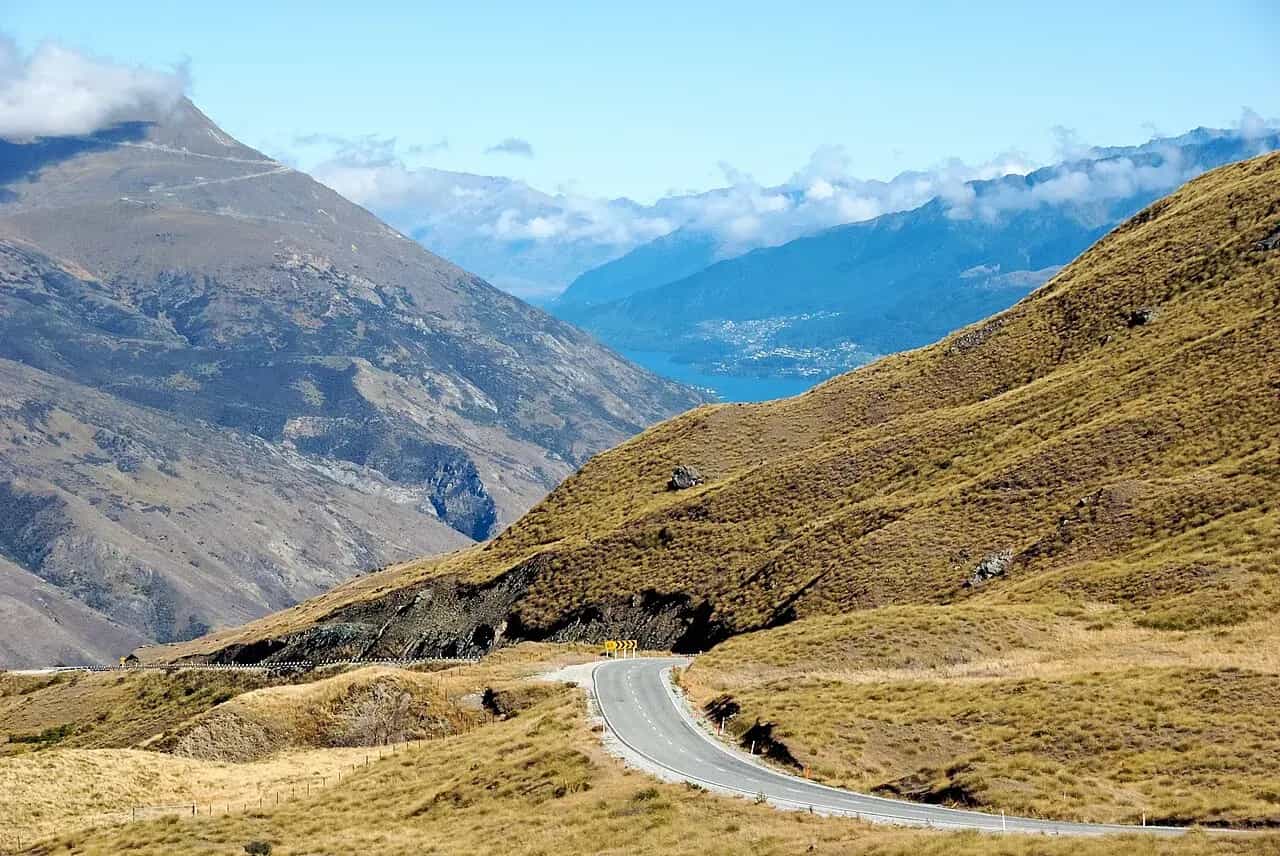
MOTORCYCLE TRAVEL IN New Zealand
QUICK ANSWER
Riding New Zealand is different from every other country in this guide: there's no land border to cross, so most motorcycle travelers fly in and rent a bike locally instead of bringing their own. If you do ship your motorcycle in, the real challenge isn't the customs paperwork — it's biosecurity: MPI (the Ministry for Primary Industries) requires it to arrive practically spotless, no mud, soil or plant matter from another country, or it gets held back for cleaning at your expense.
WHAT YOU NEED TO KNOW
The country you're about to enter has particularities you need to know.
Before you cross the border there are four things you need locked down: how safe the country is, what insurance is mandatory for your motorcycle, where you'll actually find fuel, and when to go. None of these are optional.
SAFETY: VERY LOW RISK (1/5)
Is New Zealand safe to enter by motorcycle? Yes — it is one of the safest countries in the world to travel by motorcycle, with very little violent crime.
AREAS TO AVOID
- Milford Road (SH94): The 119 km between Te Anau and Milford Sound have an injury-crash rate 65% higher than the rest of New Zealand's road network and close for up to 8 days a year for avalanche control in winter — extra caution is warranted, especially June to September.
- Scenic lookout and trailhead car parks: The UK government warns that thieves specifically target unattended rental vehicles and tourists in tourist areas — keep anything you can't carry with you out of sight, not left visible in open panniers.
WHERE TO PARK
- Parking: In cities like Auckland or Wellington, prioritize gated lots or accommodation with its own parking at night; street parking is reasonably safe by day but best avoided after dark.
- Alarm: Not essential across most of the country — motorcycle theft is uncommon — but worth having in Auckland if you'll leave the bike parked in the same spot for several days.
- Luggage: Take off anything you can carry with you when you park, especially at scenic lookout and trailhead car parks — the real target of most thefts from visitors' vehicles.
- Visibility: Park where there's foot traffic and good lighting; on the South Island's scenic routes, avoid leaving the bike alone for hours at an empty lookout.
TIPS
- ➜Remember New Zealand drives on the left — the real risk for a foreign rider isn't crime, it's a lapse back to the right after a stop.
- ➜Respect the signage at one-lane bridges, common inland on the South Island: whoever sees the long arrow pointing their way first has right of way.
- ➜Carry real cold-weather layers even in summer if you're crossing mountain passes — weather changes fast, and it can be sunny on one side of a range and pouring rain on the other, same day.
Outside those points, New Zealand is probably the calmest country in this guide to ride through: the real risk isn't crime, it's the road itself — narrow, winding, and with conditions that change fast.
MANDATORY INSURANCE: No compulsory insurance (ACC cover)
New Zealand does not require compulsory third-party liability insurance like SOAT or Carta Verde. Instead, the ACC (Accident Compensation Corporation) system covers medical costs, no-fault, for anyone injured in a traffic accident, foreign visitors included — but ACC does not cover damage to your motorcycle or to third-party property. That's why it's worth arranging private cover before you travel; Star Insure is a New Zealand insurer that covers foreign-plated motorcycles.
FUEL: GOOD, GAPS ON REMOTE ROADS
The station network is good overall — New Zealand is a compact country and the main routes on both islands have frequent service. The exception is isolated scenic stretches, like the Milford Road (119 km between Te Anau and Milford Sound with no station at all) or some backcountry access roads on the South Island: always leave with a full tank before those stretches.
BEST SEASON: DEC → MAR
December to March (southern summer) is high season: long days, more stable weather and every mountain pass open. April and November are shoulder months with fewer tourists and still-good weather. Between June and August (winter) there's snow and frequent closures on passes like the Milford Road or Lindis Pass.
ENTERING NEW ZEALAND BY MOTORCYCLE
Unlike every other country in this guide, you don't reach New Zealand through a land border crossing: it's an island, so a motorcycle enters by sea (container or Ro-Ro) into a port like Auckland, or by air as cargo. Most riders working through the Pan-American Highway or other continental routes choose to leave the bike behind and rent one in New Zealand instead, precisely because bringing your own is a more demanding process than in South America.
If you do decide to bring your bike, the real process — documented by rider guides like Mad or Nomad — has three steps:
Biosecurity (MPI): The Ministry for Primary Industries inspects the bike on arrival: it has to be virtually spotless, with no mud, soil or plant matter from any other country.
Customs: You present a Carnet de Passage en Douane (CPD) or lodge an equivalent bond/guarantee with New Zealand Customs to temporarily import the bike without paying duty.
ACC levy and Warrant of Fitness (WOF): Before you can legally ride, you pay the ACC levy (no-fault injury cover) and pass a roadworthiness inspection (WOF).
The MPI biosecurity inspection itself has no cost if the bike arrives clean — the expense only shows up if you end up paying for a professional clean or storage because it failed the check.
Real friction point:unlike South America, where crossing with your bike is usually free with just a passport and title, New Zealand requires a Carnet de Passage en Douane (CPD) or an equivalent bond to let you import the motorcycle without paying duty — paperwork most riders coming off a trip through the Americas don't already have, because it isn't needed on that continent.
On top of that comes biosecurity: riders who arrived with a bike still muddy from other countries have had to pay for a professional clean and wait extra days before they could take it out of the port, according to guides like Mad or Nomad. That's why most people visiting New Zealand as part of a wider trip choose to rent locally instead of importing their own bike.
REQUIRED DOCUMENTATION
Passport: Valid for the whole length of your stay.
Driving license: Valid if it's in English; if not, it's worth also carrying an International Driving Permit (IDP).
Motorcycle title/registration: If you're not the owner, you need notarized power of attorney from them.
Carnet de Passage en Douane (CPD) or customs bond: Guarantee required by New Zealand Customs to temporarily import the bike without paying duty.
ACC levy receipt: Covers no-fault injury; paid before you can legally ride the imported bike.
Warrant of Fitness (WOF): Roadworthiness certificate that clears the bike to legally ride in the country.
With these six points sorted, importing a motorcycle into New Zealand is doable, but it's not a routine afternoon procedure like in South America: it requires planning the Carnet de Passage ahead and arriving with a genuinely clean bike. That's why, unless the point of the trip is specifically to bring your own motorcycle, renting locally is still what most riders arriving from another continent choose.
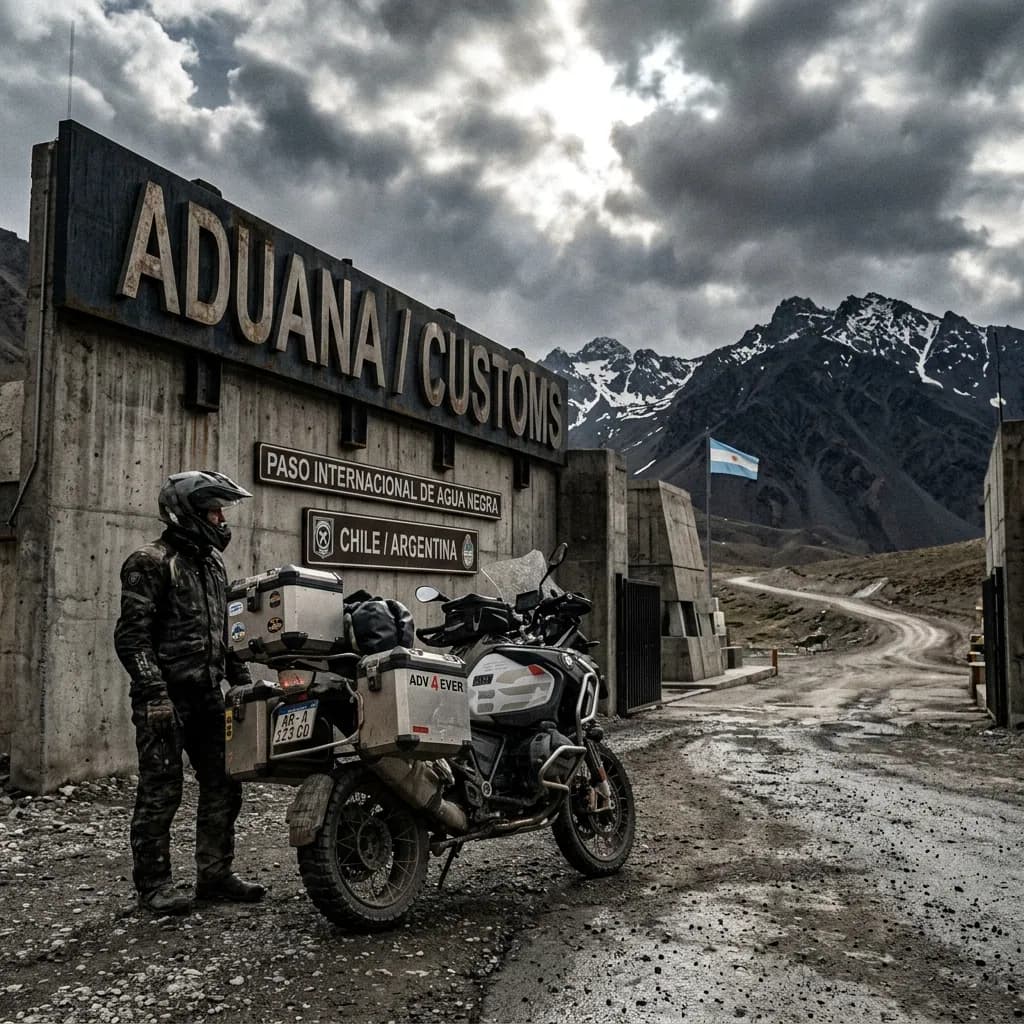
DAILY BUDGET
This price range combines cheap lodging, cooking your own meals, and basic bike maintenance — the three categories that weigh most on any moto traveler's daily budget.
Your real daily budget is something you build yourself, based on your own needs and limits — but if you want an idea of how to build yours, pick a category to see the full guide:
Full cost breakdown in the budget guide
THE 10 BEST MOTORCYCLE ROUTES IN NEW ZEALAND
Unlike Argentina, where Ruta 40 is a single giant corridor that has to be broken into sections, New Zealand has ten genuinely independent routes, each with its own name and its own reputation. This Top 10 isn't ordered alphabetically or geographically: it's ranked from most to least famous, based on how often each route shows up in specialized "best motorcycle routes in New Zealand" lists, on motorcycle-travel forums like Horizons Unlimited and ADVrider, and in the volume of documented rider accounts about each stretch.
One practical warning before you set off: several of these routes - especially Skippers Canyon and Rainbow Road - fall outside standard rental motorcycle insurance coverage in New Zealand. Before penciling any of these ten into your itinerary, confirm in writing with your rental company which roads your policy actually covers.
If you're going to face mountain passes like Arthur's or Haast's with rain, wind and even snow in the same day, it's worth reviewingthe gear guide for long motorcycle tripsbefore leaving Queenstown or Christchurch.
And since several of these roads - Skippers Canyon, Rainbow Road, the final stretch to Paradise - are loose gravel with no cell signal, it's worth reviewingthe mechanics guide for long motorcycle tripsbefore you go, because the next repair shop might be a full day's ride away.
Milford Road:State Highway 94 to Milford Sound
Fiordland, South IslandRiding Milford Road by motorcycle means covering the full 119km that many consider New Zealand's most spectacular stretch of tarmac, between the granite walls of Fiordland and dozens of waterfalls that drop almost straight onto the pavement.
The route was surveyed in 1890 by engineer Robert Holmes, but the project stalled for nearly 40 years amid policy changes. The Homer Tunnel, which bores through the mountain at almost 945 meters above sea level, wasn't finished until 1953 after WWII delayed construction for years; long stretches remained gravel-surfaced into the 1980s.
It's fully paved today, but the fame comes at a cost: this road's injury crash rate runs roughly 65% higher than the national average, so the scenery is no substitute for caution through blind curves and heavy tourist traffic.
WARNINGS FOR THIS ROUTE
This is what you need to sort out before riding this route.
- 01Fuel range
Limited. Fill up in Te Anau: it's the last reliable pump before the 119km run to the fiord.
- 02Chains mandatory outside summer
Between May 1 and November 1, carrying chains is legally required due to avalanche risk near the Homer Tunnel, per official road rules.
- 03Above-average crash rate
This stretch's injury crash rate runs roughly 65% higher than New Zealand's national average, according to traffic data cited for the route.
Crown Range Road:New Zealand's Highest Sealed Road
Otago, South IslandRiding Crown Range Road by motorcycle connects Queenstown to Wanaka, climbing to the 1,076-meter Crown Saddle, the highest point on any sealed road in New Zealand.
The road climbs a steep zigzag section from Arrowtown and crosses the Crown Terrace plateau before dropping alongside Cardrona Creek, through a tussock valley between the Crown and Criffel ranges. The final section wasn't sealed until 2001.
Halfway along sits Cardrona, an 1860s gold-rush settlement where the historic Cardrona Hotel, one of the best-preserved buildings from that era, is still standing and open.
WARNINGS FOR THIS ROUTE
This is what you need to sort out before riding this route.
- 01Fuel range
Good. There's a station in Cardrona, halfway along, plus Queenstown and Wanaka at either end.
Arthur's Pass:State Highway 73
Canterbury to West Coast, South IslandCrossing Arthur's Pass by motorcycle means retracing, on modern pavement, the route explorer Arthur Dudley Dobson found in 1864 with directions from Māori chief Tarapuhi, right as the West Coast gold rush broke out and Canterbury desperately needed a direct crossing to the Pacific.
The road climbs to 920 masl in just 5km from Arthur's Pass village, between peaks over 2,000 meters and the Devil's Punchbowl waterfall. The Otira Tunnel, built between 1908 and 1923 for the railway, runs parallel underneath the mountain.
Today the road shares its path with the TranzAlpine, one of the world's most acclaimed train journeys -CNN Travel featured it in 2022- except on a motorcycle you can stop at every lookout.
WARNINGS FOR THIS ROUTE
This is what you need to sort out before riding this route.
- 01Fuel range
Good. There's a station in Arthur's Pass village, halfway between both coasts.
Haast Pass:State Highway 6
Otago to West Coast, South IslandAt just 563 meters, Haast Pass by motorcycle is the lowest of the three great Southern Alps crossings -but also the one that runs through the wildest scenery, through native beech forest and Mount Aspiring National Park.
Long before explorer Julius von Haast led the first official crossing in January 1863, the pass was already a Māori route between Lake Wanaka and the West Coast: in 1835 a war party led by Te Pūoho-o-te-rangi even used it to launch a surprise attack. Today it's officially named Haast Pass / Tioripatea, honoring that history.
The road wasn't formed through to Haast township until 1960, wasn't fully connected to the West Coast until 1965, and didn't get smooth chipseal until 1995 -one of the last major crossings in New Zealand to be paved. There isn't a single settlement between Haast and Makarora, just the Roaring Billy, Thunder Creek and Fantail waterfalls along the way.
WARNINGS FOR THIS ROUTE
This is what you need to sort out before riding this route.
- 01Fuel range
Scarce. There are no stations between Haast and Makarora: fill up at either end.
Coromandel Loop:SH25 and the 309 Road
Waikato, North IslandRiding the Coromandel Loop by motorcycle along State Highway 25 means stringing together bays, coastal towns and tight bends just two hours from Auckland, one of the country's most-ridden weekend routes.
For over a century the peninsula lived off hard-rock gold mining and kauri logging; most of that stopped only in the 1980s, leaving old mining towns reinvented as tourist stops. Long before that, between 1300 and 1500 AD, Māori were already quarrying basalt for tools at Tahanga, near Opito Bay.
The real shortcut for riders is the 309 Road, an unsealed gravel stretch between Coromandel Town and Whitianga so demanding that several rental companies specifically exclude it from insurance coverage -worth confirming before you go. The reward at the end is Hot Water Beach, with geothermal activity right under the sand, and Cathedral Cove, the country's most photographed limestone arch.
WARNINGS FOR THIS ROUTE
This is what you need to sort out before riding this route.
- 01Fuel range
Good. Stations in Thames, Coromandel Town, Whitianga and Whangamatā.
- 02309 Road excluded from rental insurance
Several motorcycle and car rental companies specifically exclude the unsealed 309 Road from their insurance coverage. Confirm this with your rental company before riding it.
Skippers Canyon:the Road No Rental Insurance Covers
Otago, South IslandDescending into Skippers Canyon by motorcycle means entering the original mecca of the Otago gold rush: in November 1862, Thomas Arthur and Harry Redfern found about 4 ounces of gold in just 3 hours near Arthurs Point and set off one of the largest gold rushes in New Zealand's history. At Maori Point, Māori miners Dan Ellison and Hakaria Maeroa pulled out 25 pounds of gold, and the town of Charlestown grew to 1,000 residents before shrinking to 400 by 1864.
The road that now winds through the canyon wasn't surveyed until 1883 and took seven years and four different contractors to complete, carved by pick and shovel into soft rock along drops of several hundred meters -at the time, people said more money was spent building it than all the gold could ever repay.
Today it's New Zealand's most famous road where no standard rental insurance covers damage: it can only be ridden under permit and with specific policies. Skippers Bridge hangs nearly 100 meters above the Shotover River, and the whole stretch is a single gravel lane, with barely a guardrail on the curves.
WARNINGS FOR THIS ROUTE
This is what you need to sort out before riding this route.
- 01Fuel range
None inside the canyon. Leave with a full tank from Queenstown or Arthurs Point.
- 02Excluded from all standard rental insurance
Skippers Road is the New Zealand road where standard rental vehicle insurance is not honored. A permit and a specific policy are required to drive it.
- 03Drops of several hundred meters with no guardrail
The road is a single lane carved into soft rock, with drops of several hundred meters at the edge and very little guardrail on most of the curves.
Rainbow Road:New Zealand's Highest Public Road
Nelson to Canterbury, South IslandCrossing Rainbow Road by motorcycle means climbing to Island Saddle, 1,347 meters above sea level -the highest point on any public road in New Zealand, higher even than Crown Range Road.
The route was built in the 1950s as a maintenance road for the high-voltage transmission line supplying Nelson and the Buller district, and it now crosses private land on Rainbow Station: there's a toll of NZ$20 for motorcycles (NZ$40 for 4WDs).
It's only open to the public from December 26 to Easter Monday; the rest of the year, access has to be arranged directly with the station manager. Over 21 editions since 1996, the Rainbow Rage mountain bike race used this same route and drew more than 1,600 competitors at its peak.
WARNINGS FOR THIS ROUTE
This is what you need to sort out before riding this route.
- 01Fuel range
None along the route. Fill up in Saint Arnaud or Hanmer Springs before heading in.
- 02Closed most of the year
The road is only open to the public from December 26 to Easter Monday. Outside that window, access must be arranged directly with Rainbow Station.
Glenorchy and Paradise:the Middle-earth Road
Otago, South IslandThe ride to Glenorchy and Paradise by motorcycle hugs the shore of Lake Wakatipu for 45km before the pavement ends and 20km of gravel begin toward the Paradise valley.
That final stretch is, without exaggeration, one of cinema's most-used natural sets: this is where the Lothlórien scenes, the Orthanc tower, and Boromir's death were filmed for the *Lord of the Rings* trilogy, alongside scenes from *The Chronicles of Narnia: Prince Caspian* (2008) and *X-Men Origins: Wolverine* (2009).
Glenorchy, with a population of just 360, is the gateway to the Routeburn Track, one of New Zealand's Great Walks, and in February 2025 it was certified as a Dark Sky Sanctuary: at night, with not a streetlight in sight, the full Milky Way stretches over the valley.
WARNINGS FOR THIS ROUTE
This is what you need to sort out before riding this route.
- 01Fuel range
Good. Last full stop in Queenstown; there's a limited pump in Glenorchy.
Forgotten World Highway:State Highway 43
Taranaki to King Country, North IslandRiding the Forgotten World Highway by motorcycle means crossing three mountain ranges between Stratford and Taumarunui on a road that, until February 2025, held the last unsealed stretch left in New Zealand's entire state highway network; sealing it cost more than NZ$7 million according to a 2017 estimate.
14km past Whangamōmona sits the Moki Tunnel, nicknamed "the Hobbit's Hole" for its narrow, low profile, and the Tangarakau Gorge, with walls nearly 60 meters high, was until recently ranked among New Zealand's worst roads for how slick its original gravel surface got.
Halfway along, Whangamōmona declared itself an independent republic in 1989 after a boundary redistribution left it out of the Taranaki region; today the town, home to just a handful of residents, still celebrates that independence and will stamp the passport of anyone who asks for it at the local hotel.
WARNINGS FOR THIS ROUTE
This is what you need to sort out before riding this route.
- 01Fuel range
Scarce. Fill up in Stratford or Taumarunui; in between there's only a limited pump in Whangamōmona.
Desert Road:New Zealand's Highest Highway Pass
Manawatū-Whanganui, North IslandCrossing the Desert Road by motorcycle means covering the highest 50km on New Zealand's entire state highway network, with State Highway 1's peak sitting at 1,074 meters above sea level, flanked by the active volcanoes of Tongariro National Park.
The bare landscape of the Rangipo Desert formed around 20,000 years ago from violent volcanic eruptions, and despite receiving up to 2,500mm of rain a year it looks like a true desert because of poor soil quality and constant drying winds: the area logs up to 270 ground frosts a year.
In 2000, this same stretch served as the setting for the Black Gate of Mordor scenes in *The Lord of the Rings*; today the southern part of the desert remains an Army training area out of Waiouru, so it's no surprise to come across military exercises near the road.
WARNINGS FOR THIS ROUTE
This is what you need to sort out before riding this route.
- 01Fuel range
Good. There's a station in Waiouru, at the southern end of the stretch.
- 02Extreme cold and frequent frost
The area logs up to 270 frosts a year and constant winds that drive the chill factor well down, even outside the peak of winter.
FREQUENTLY ASKED QUESTIONS
01Do I need a Carnet de Passage to bring my own motorcycle to New Zealand?
+
Do I need a Carnet de Passage to bring my own motorcycle to New Zealand?
Yes, in practice. New Zealand is among the countries that require a Carnet de Passage en Douane (CPD) or an equivalent bond/guarantee with customs to temporarily bring in a foreign vehicle without paying duty — a document most riders coming from the Americas don't have, because it isn't needed there.
02Do I have to clean my motorcycle before arriving in New Zealand?
+
Do I have to clean my motorcycle before arriving in New Zealand?
Yes, and it's the part that surprises most riders. MPI (the Ministry for Primary Industries) inspects every incoming vehicle for mud, soil or plant matter from other countries; if the bike doesn't arrive practically spotless, they hold it back to clean it at your expense before releasing it.
03Is insurance mandatory to ride a motorcycle in New Zealand?
+
Is insurance mandatory to ride a motorcycle in New Zealand?
There's no compulsory third-party insurance. The ACC scheme covers medical costs, no-fault, for anyone injured in a traffic accident, visitors included, but it doesn't cover damage to your bike or to third-party property — so it's worth arranging private cover before you travel.
04Can I ride in New Zealand on my foreign driving license?
+
Can I ride in New Zealand on my foreign driving license?
Yes, if it's written in English or you carry an authorized official translation. If not, it's worth getting an International Driving Permit (IDP) before you travel — it's used alongside your original license, not instead of it.
05Is it better to rent a motorcycle in New Zealand or bring your own?
+
Is it better to rent a motorcycle in New Zealand or bring your own?
For most riders arriving from another continent, renting is the more practical choice: it skips the Carnet de Passage, biosecurity and sea freight. Bringing your own bike makes sense mainly when New Zealand is the destination itself, not one stop in a longer trip.
06What's the best season to ride New Zealand by motorcycle?
+
What's the best season to ride New Zealand by motorcycle?
December to March (southern summer), with every mountain pass open and more stable weather. In winter (June to August) routes like the Milford Road or Lindis Pass close frequently for snow and avalanche control.
07Are there gas stations along every scenic route?
+
Are there gas stations along every scenic route?
Not all of them. The Milford Road, for instance, has no station at all along its 119 km between Te Anau and Milford Sound — always leave with a full tank before the more isolated stretches inland on the South Island.
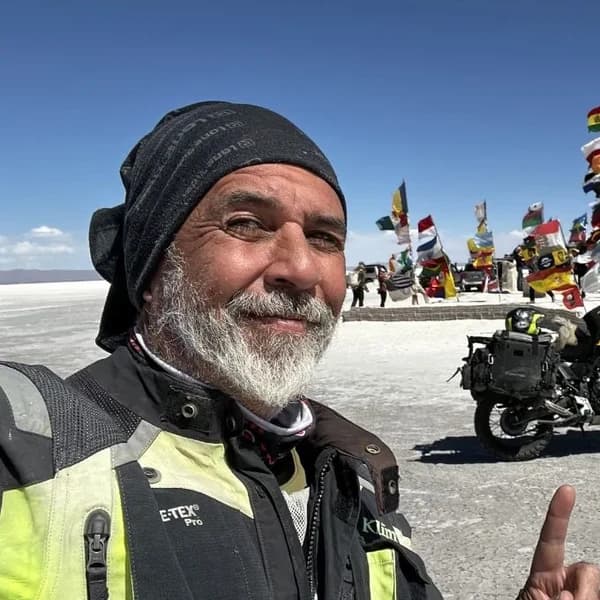
Gustavo Correa
Moto traveler, author and motorcycle travel consultant. 110,000+ km across 4 continents with Gloria, my motorcycle. Everything you read here has been tested on the road, not in an office.
Read my story →Last verified: 2026-08-29
A GIFT FOR BEING HERETHE ADVENTURE OF LIVING FREE
Do fear or doubt paralyze you before starting any project? You're not alone — every one of us has been there.
As a thank-you for visiting my site, I'm giving you my book "The Adventure of Living Free". A manual built to bring some light through the shadows and show you the philosophy that has let me ride the world for years.
* PDF STRAIGHT TO YOUR INBOX. NO SPAM.