MOTORCYCLE TRAVEL IN Portugal
QUICK ANSWER
Portugal is the calmest gateway into Europe by motorcycle: the border with Spain has no checkpoint at all, so crossing it is as simple as continuing to ride. The real paperwork happens only once, at the first point where your bike enters European Union customs territory — a port, an airport, or the first Schengen country you cross into — where the vehicle's temporary admission is declared, valid for up to 6 months. From there, the one thing worth sorting out before you cross is insurance, since most Latin American number plates aren't covered by Europe's Green Card system.
WHAT YOU NEED TO KNOW
The country you're about to enter has particularities you need to know.
Before you cross the border there are four things you need locked down: how safe the country is, what insurance is mandatory for your motorcycle, where you'll actually find fuel, and when to go. None of these are optional.
SAFETY: VERY LOW RISK (1/5)
Is Portugal safe to enter by motorcycle? Yes — it's one of the calmest countries in Europe and in the world, and the only real thing to watch is pickpocketing in touristy spots, not the roads themselves.
AREAS TO AVOID
- Lisbon's historic center (Alfama, Bairro Alto, Baixa-Chiado): Not physical danger — pickpocketing: Lisbon police reported a 22% rise in tourist-area theft complaints in 2024, with the highest concentration on tram 28 between Martim Moniz and Estrela.
- Viewpoints (miradouros) at sunset: The Santa Catarina, Senhora do Monte, and Portas do Sol viewpoints, popular for sunset views, have documented reports of phone and bag snatching.
- Tourist parking areas in the Algarve and along the coast: Foreign-plated vehicles parked near beaches and tourist spots are a frequent theft target, according to Portugal Resident and the US State Department.
WHERE TO PARK
- Parking: Use the zones marked with the motorcycle symbol in Lisbon and Porto (the EMEL app shows Lisbon's in real time). Avoid leaving it on the street overnight inside the historic center.
- Alarm: Recommended: a disc lock, ideally with an alarm — the advice that comes up most often among HU and ADVrider travelers touring Europe.
- Luggage: Remove soft panniers or your backpack when you park, especially with a foreign plate: foreign-plated vehicles are a frequent target for theft in tourist parking areas, according to local reports.
- Visibility: Park where there's foot traffic and good lighting — avoid the dead-end alleys of Alfama and Bairro Alto at night.
TIPS
- ➜Don't leave your bike loaded with panniers or a top case in plain sight overnight in the historic center of Lisbon or Porto.
- ➜On tram 28 and at the miradouros at sunset, wear your backpack or tank bag in front of your body — that's where pickpocketing targeting tourists concentrates.
Outside those tourist-crowd spots, Portugal is one of the calmest countries on Earth to ride through — 7th in the 2026 Global Peace Index and rated Level 1 (exercise normal caution) on the US State Department's travel advisory.
MANDATORY INSURANCE: EU-valid insurance (Green Card or frontier policy)
If your bike is registered in the EU or EEA, your home policy already covers you automatically anywhere in the bloc under the EU motor insurance directive — no Green Card needed. If it's registered outside the Green Card system, which covers 47 countries in Europe, North Africa, and the Middle East but almost no Latin American country, you need a separate policy with valid EU coverage arranged before you cross or right at your first port of entry.
FUEL: NO RANGE ISSUES
A wide, reliable network of stations covers the whole country, even inland — fuel range simply isn't the real concern it is in South America. Average price around EUR 1.95/L for petrol and EUR 1.85/L for diesel (August 2026). The other cost to plan for is tolls: several motorways (the former SCUT roads) are 100% electronic with no booths, and with a foreign plate you need to register with Easytoll or buy the 3-day virtual card before 11:59 PM of the day you first use the road, or a fine follows by mail.
BEST SEASON: APR-JUN / SEP-OCT
Spring (April to June) and autumn (September to October): pleasant temperatures, good visibility, and lighter tourist traffic. Summer is very hot and crowded, especially in the Algarve and along the coast. Winter stays mild in the south, but the Serra da Estrela — the country's highest range — can bring snow and ice to the mountain roads.
ENTERING PORTUGAL BY MOTORCYCLE
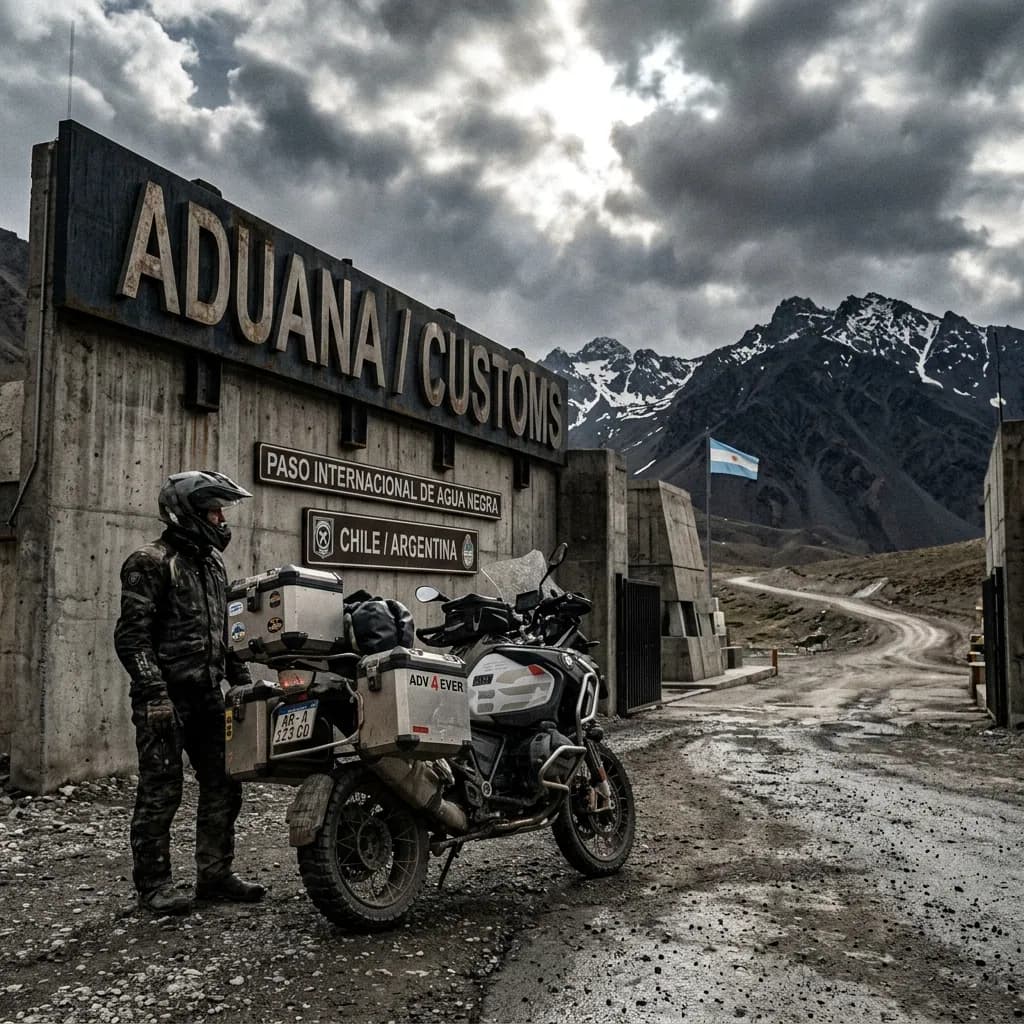
Crossing into Portugal with a motorcycle is, according to traveler accounts on Horizons Unlimited and ADVrider, one of the simplest border processes anywhere in Europe — because in practice there's barely a border at all. Portugal and Spain have both been part of the Schengen Area since 1991, so there's no checkpoint between them: no customs booth, no immigration desk, no passport stamp.
The real paperwork happens only once, at the first point where your motorcycle enters European Union customs territory — a port if you shipped it in by sea, an airport, or the first Schengen country you cross into by land. That's where the vehicle's temporary admission gets declared, and from that moment you can ride through Portugal, Spain, and the rest of the Schengen Area without stopping at another border.
Temporary admission at the first EU checkpoint: Declared simply by crossing the Schengen area's external border (port, airport, or the first EU country you enter) — valid for up to 6 months within any 12-month period, free of charge.
Spain-Portugal crossing: No border checkpoint exists: both countries have been Schengen members since 1991, with no customs or immigration booth between them.
The vehicle's temporary admission is free — it's an EU customs regime, not a paid permit.
Real friction point:it isn't at the crossing with Spain, which isn't really a checkpoint at all, but the insurance. The Green Card system covers 47 countries across Europe, North Africa, and the Middle East, but almost no Latin American country is included — so a motorcycle plated in Argentina, Mexico, or Colombia needs a policy valid in the EU before crossing, or arranged at the first port of entry, because temporary admission can be refused without proof of it.
Better to sort this out in advance than to leave it for the port counter.
REQUIRED DOCUMENTATION
Passport or national ID: Valid for the whole length of your stay; non-EU citizens need a passport.
Driving license + International Driving Permit: The IDP is required if your license isn't from an EU/EEA country, especially if it isn't in Latin script.
Motorcycle title/registration: If you're not the registered owner, you need notarized authorization from them.
Insurance with valid EU coverage: A Green Card if your country is in the system, or a frontier/temporary policy arranged before you cross if it isn't.
Proof of temporary admission: A physical document isn't always issued, but it's worth keeping your entry stamp or port/airport ticket as backup.
With those documents sorted, riding into Portugal is about as simple as an international border gets: the crossing with Spain itself demands nothing at all, because it isn't really a crossing. The advice that comes up most often among motorcycle travelers: settle your EU-valid insurance before you ever reach European soil, because that's the one piece of paper an officer can actually ask to see.
DAILY BUDGET
This price range combines cheap lodging, cooking your own meals, and basic bike maintenance — the three categories that weigh most on any moto traveler's daily budget.
Your real daily budget is something you build yourself, based on your own needs and limits — but if you want an idea of how to build yours, pick a category to see the full guide:
Full cost breakdown in the budget guide
THE 10 BEST MOTORCYCLE ROUTES IN PORTUGAL
Unlike Argentina, where a single legendary road breaks apart into sections, Portugal's fame as a motorcycle destination is spread across a handful of routes each recognized independently, several with their own awards or citations in international media. This Top 10 follows that same logic: it opens with the route most often named the best road in the world in global rankings and closes with destinations that, while still genuinely recognized among Iberian riders, get less coverage outside Portugal and Spain.
Before crossing the border toward any of these routes, it's worth having the logistics sorted out: checkhow to prepare for a long motorcycle tripso you don't leave any loose ends before setting off.
And since several of these routes mix mountain pavement with dirt stretches in Peneda-Gerês or the Serra do Açor, it's worth reviewingthe mechanics guide for long motorcycle tripsbefore heading out: in the most remote villages of Trás-os-Montes, there's no repair shop around the corner.
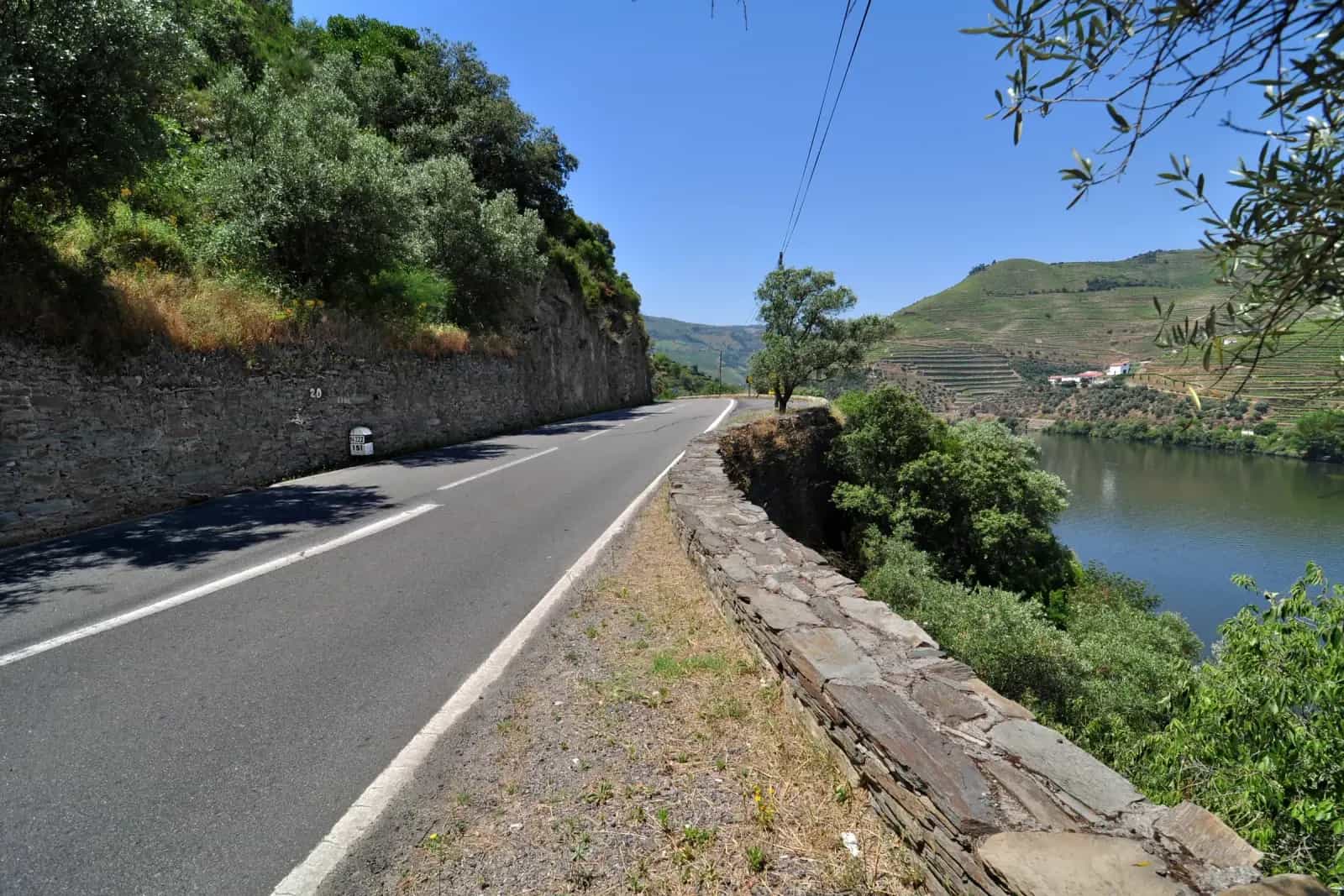
The N222:Peso da Régua to Pinhão, through the Douro Valley
Peso da Régua to Pinhão, Vila Real districtRiding the N222 by motorcycle means covering the road that Avis and a judging panel made up of a quantum physicist, a Formula 1 track designer and a professional racing driver crowned Best Road in the World in 2015.
It's just 27km between Peso da Régua and Pinhão, hugging the course of the Douro River through the Alto Douro Wine Region, the oldest demarcated wine region on the planet (since 1756) and a UNESCO World Heritage Site since 2001.
Every bend reveals a new viewpoint over vineyard terraces hand-carved into the valley's hillside: the reason riders from across Europe cross the border just to ride this stretch of barely half an hour.
WARNINGS FOR THIS ROUTE
This is what you need to sort out before riding this route.
- 01Fuel range
Good. There are stations in Peso da Régua and Pinhão, at each end of the stretch.
The N2:Portugal's Route 66, from Chaves to Faro
From Chaves (Vila Real) to Faro, crossing the entire countryCrossing all of Portugal on the N2 by motorcycle means following the 739km of the so-called Portuguese Route 66, built in 1945 under the first National Road Network Plan to connect Chaves, at the northern tip, with Faro, in the southern Algarve.
Kilometer 0 sits at a roundabout in Chaves next to the Roman bridge; kilometer 738 ends in Faro, on Avenida Calouste Gulbenkian. In between, km 364 marks the exact geodesic center of mainland Portugal, with a small museum and viewpoint.
The highest point on the whole route is Bigorne, at 987 meters above sea level (km 120), the highest village on the N2, where snow in winter is not unusual.
In 2025 the N2 was named International Route of the Year at Spain's Mototourism Awards, the recognition that cemented it as the most sought-after road trip for motorcycle travelers riding Portugal end to end.
WARNINGS FOR THIS ROUTE
This is what you need to sort out before riding this route.
- 01Fuel range
Generally good, though the more sparsely populated stretches of Trás-os-Montes and inland Alentejo space stations further apart. Always leave each town with a full tank.
The N339:the Serra da Estrela mountain pass to Torre
Covilhã to Seia, via Torre, Guarda/Castelo Branco districtClimbing the N339 by motorcycle up to Torre means reaching the highest point in all of mainland Portugal: 1,993 meters above sea level, crowning the country's only mountain range with true glacial relief.
The valleys around the road were carved by glaciers that vanished thousands of years ago, leaving cirques and moraines still visible from the curves: scenery found nowhere else in Portugal.
At the summit, a 7-meter statue of the Virgin Mary, unveiled in 1946 and sculpted by António Duarte, watches over the road in honor of the shepherds who faced this region's storms for centuries.
Among local riders, this stretch between Covilhã and Seia earned the nickname the Portuguese Stelvio for its run of tunnels, 90-degree bends and tight climbs: no need to cross the Alps to feel the same technical demand.
WARNINGS FOR THIS ROUTE
This is what you need to sort out before riding this route.
- 01Fuel range
Good. There are stations in Covilhã and Seia, on each side of the mountain crossing.
Peneda-Gerês National Park via the N304
Braga district, Portugal's only national parkEntering Peneda-Gerês National Park by motorcycle means riding through Portugal's only national park, declared in 1971, and one of the least trafficked areas on the whole Iberian Peninsula.
Riding the N304 by motorcycle means crossing granite villages barely changed in centuries, with the Arado waterfall and the Portela do Homem waterfall dropping alongside the road, and stretches that still follow the Via Nova, the Roman road built in the 1st century AD connecting Braga to Astorga (Spain), with original milestone markers still preserved inside the park.
A classic detour crosses into Spain via Lobios and re-enters the park toward the spa town of Gerês, dropping through tight bends with waterfalls on both sides of the road: the reason international motorcycle travel magazines rank it among Europe's best adventure riding destinations.
WARNINGS FOR THIS ROUTE
This is what you need to sort out before riding this route.
- 01Fuel range
Limited inside the park. Fill up in Braga, Ponte da Barca or Vila Nova de Cerveira before entering; inside the park, fuel is only available in the town of Gerês.
The Algarve coast:from Sagres to Fóia, in Monchique
Faro district, southwest coast up to the Monchique mountainsRiding the Algarve coast by motorcycle from Sagres starts at the point where, for 15th-century navigators, the known world ended: Cabo de São Vicente, crowned by one of the most powerful lighthouses in Europe, next to the fortress where tradition places Henry the Navigator's nautical school.
From there, the road gains curves heading inland, passing through Marmelete on the way to the Serra de Monchique, up to the 8km climb toward Fóia by motorcycle, the Algarve's highest point at 902 meters, with an average 7.3% gradient and simultaneous views of the south and west coasts on clear days.
It's the stretch most motorcycle rental operators recommend to international travelers landing in Faro: cliffside beaches, mountain curves, and no truly isolated stretch in under 90km of riding.
WARNINGS FOR THIS ROUTE
This is what you need to sort out before riding this route.
- 01Fuel range
Excellent. The Algarve coast has stations in nearly every town along the route, including Sagres and Monchique.
Sintra and Cascais:Cabo da Roca and Boca do Inferno
Lisbon district, 30 minutes from the capitalHalf an hour from Lisbon, riding Sintra and Cascais by motorcycle leads to the westernmost point of mainland Europe: Cabo da Roca, a 140-meter cliff over the Atlantic where a monument reproduces the verse from Luís de Camões' Os Lusíadas, where the land ends and the sea begins.
From there, the road drops along the ocean to Guincho beach, famous for winds that made it a venue for world windsurfing championships, and continues to Cascais, where Boca do Inferno opens a chasm of rock eroded by centuries of Atlantic swell.
It's the country's most accessible coastal circuit: it leaves the capital, crosses the Sintra mountains, with their fairy-tale palaces, and comes back along the coast in under an afternoon, which makes it the favorite starter route for anyone renting a motorcycle in Lisbon for the first time.
WARNINGS FOR THIS ROUTE
This is what you need to sort out before riding this route.
- 01Fuel range
Excellent. This is the highest density of stations on the whole route, minutes from Lisbon.
Costa Vicentina:from Melides to Odeceixe
Alentejo coast, Southwest Alentejo and Vicentine Coast Natural ParkRiding the Costa Vicentina by motorcycle from Melides down to Odeceixe means covering the least built-up stretch of coastline in Portugal, protected since 1995 within the Southwest Alentejo and Vicentine Coast Natural Park.
The road links fishing villages like Porto Côvo and Vila Nova de Milfontes, at the mouth of the Mira River, with cliff beaches mostly reachable only by secondary dirt tracks: the same coastline that in 2012 gave rise to the Rota Vicentina, the hiking trail that put this coast on the international map.
Unlike the touristy Algarve, these villages still live off fishing rather than rental bikes: it's the route sought by motorcycle travelers who already know southern Portugal and want the version without the crowds.
WARNINGS FOR THIS ROUTE
This is what you need to sort out before riding this route.
- 01Fuel range
Fair. There are stations in Vila Nova de Milfontes and Odeceixe, but stretches between towns inside the Natural Park can run over 40km with no service.
The International Douro canyon, in Miranda do Douro
Trás-os-Montes, on the Spanish borderRiding to Miranda do Douro by motorcycle means reaching the most isolated, least visited corner of Portugal, where the Douro River carves a border canyon with Spain inside the International Douro Natural Park.
Miranda do Douro keeps its own language, Mirandese, recognized as Portugal's second official language since 1999, the only region in the country with that status, along with its traditional stick dance, the Pauliteiros, still performed at the town's festivals.
The road tracing the canyon toward Mogadouro strings together dozens of tight bends over the gorge, with very little traffic and scarce fuel stations: the route sought by motorcycle travelers who've already covered the rest of northern Portugal and want the region almost nobody rides.
WARNINGS FOR THIS ROUTE
This is what you need to sort out before riding this route.
- 01Fuel range
Limited. Miranda do Douro is the only reliable fuel stop on this stretch; the rest of the Douro Internacional is sparsely populated countryside.
Deep Alentejo:from Évora to Monsaraz
Évora district, central AlentejoCrossing the Alentejo by motorcycle between Évora and Monsaraz means riding through plains of holm oaks and cork oaks (Portugal produces roughly half the world's cork, almost all from these trees) on straight roads with practically no traffic.
Évora, its historic center declared a UNESCO World Heritage Site in 1986, holds the Roman Temple of Diana and the Chapel of Bones, built with the remains of thousands of people by 16th-century Franciscan monks.
The road ends at Monsaraz, a walled medieval hilltop village overlooking the Alqueva reservoir, completed in 2002 and the largest artificial lake by surface area in Western Europe: a finish that contrasts historic Portugal with a modern feat of engineering.
WARNINGS FOR THIS ROUTE
This is what you need to sort out before riding this route.
- 01Fuel range
Good. Évora and Reguengos de Monsaraz have full-service stations at each end of the route.
Serra do Açor and the schist village of Piódão
Coimbra district, central PortugalWinding through the Serra do Açor by motorcycle to Piódão means entering the Serra do Açor Protected Landscape, declared in 1982, on narrow mountain roads between Góis and Lousã whose layout has barely changed in decades.
Piódão is the country's most photographed schist village: dark slate houses with doors and windows painted blue, built up a steep slope, that had no electricity until well into the 1980s because of how remote the place is.
It's one of more than 25 Aldeias do Xisto (Schist Villages) the Portuguese government began restoring as a tourism network starting in 2001, and the one that draws the most riders: tight bends, steep grades, and almost never another vehicle in sight.
WARNINGS FOR THIS ROUTE
This is what you need to sort out before riding this route.
- 01Fuel range
Limited. The only station near Piódão is in Arganil; the village itself has no fuel.
NEIGHBORING COUNTRIES
Crossing the border next? Click a country to see its 10 best motorcycle routes.
FREQUENTLY ASKED QUESTIONS
01Do I need a Green Card to enter Portugal by motorcycle?
+
Do I need a Green Card to enter Portugal by motorcycle?
It depends on where the bike is registered. If it's plated in an EU or EEA country, your home insurance already covers you automatically in Portugal under the EU's motor insurance directive. If it's registered outside the Green Card system — and most Latin American countries are — you need a policy with valid EU coverage before you cross, or arranged right at your first port of entry.
02Do I need a Carnet de Passages en Douane to bring my motorcycle into Portugal?
+
Do I need a Carnet de Passages en Douane to bring my motorcycle into Portugal?
No. For private touring use, the EU grants temporary admission for up to 6 months within any 12-month period, declared simply by crossing the Schengen area's external border — no carnet or paperwork required at most crossings. A carnet only comes up in specific edge cases; it isn't the standard procedure for a touring motorcyclist.
03How long can I stay in Portugal with a motorcycle registered outside the EU?
+
How long can I stay in Portugal with a motorcycle registered outside the EU?
The vehicle gets temporary admission for up to 6 months within any 12-month period. Note that this is a separate clock from your own stay as a person: if you're from a country without a long-stay agreement with the EU, your own visit is capped at 90 days within any 180-day period under Schengen rules — worth tracking both limits independently.
04Can I wild camp with a tent in Portugal?
+
Can I wild camp with a tent in Portugal?
No. Wild camping (camping outside an authorized site) is banned in Portugal, with fines of 120 to 600 euros in Natura 2000 and coastal protection zones. The alternative is the country's wide network of campgrounds, generally 8 to 15 euros a night.
05Do I need an International Driving Permit to ride into Portugal?
+
Do I need an International Driving Permit to ride into Portugal?
Yes, if your license isn't from an EU or EEA country. Portugal doesn't automatically recognize non-European licenses, so you need an International Driving Permit (IDP) alongside your original license at all times — this is especially enforced if your license isn't in Latin script.
06Are there tolls on Portugal's motorways, and how do I pay them with a foreign plate?
+
Are there tolls on Portugal's motorways, and how do I pay them with a foreign plate?
Yes, several motorways (the former SCUT roads) charge tolls entirely electronically, with no booths. With a foreign plate you can pay via Easytoll, the 3-day virtual card, or the Via Verde Visitor device — you need to register before 11:59 PM of the day you first use the road, or a fine arrives by mail.
07What's the best time of year to ride through Portugal?
+
What's the best time of year to ride through Portugal?
Spring (April to June) and autumn (September to October): pleasant temperatures, good visibility, and lighter tourist traffic. Summer is very hot and crowded, especially in the Algarve; winter stays mild in the south, but the Serra da Estrela can have snow and ice on the mountain roads.
Gustavo Correa
Moto traveler, author and motorcycle travel consultant. 110,000+ km across 4 continents with Gloria, my motorcycle. Everything you read here has been tested on the road, not in an office.
Read my story →Last verified: 2026-08-29
Sources consulted (19)+
- c1brokers.pt
- comparethemarket.com
- en.wikipedia.org
- www2.gov.pt
- worlddrivingpermit.com
- zoll.de
- eur-lex.europa.eu
- portugal.com
- pttolls.com
- siestacampers.com
- globalpetrolprices.com
- fuel-prices.eu
- theportugalnews.com
- travel.state.gov
- alpha-keeper.com
- bikergirllife.com
- rent.moto.pt
- bestbikingroads.com
- commons.wikimedia.org
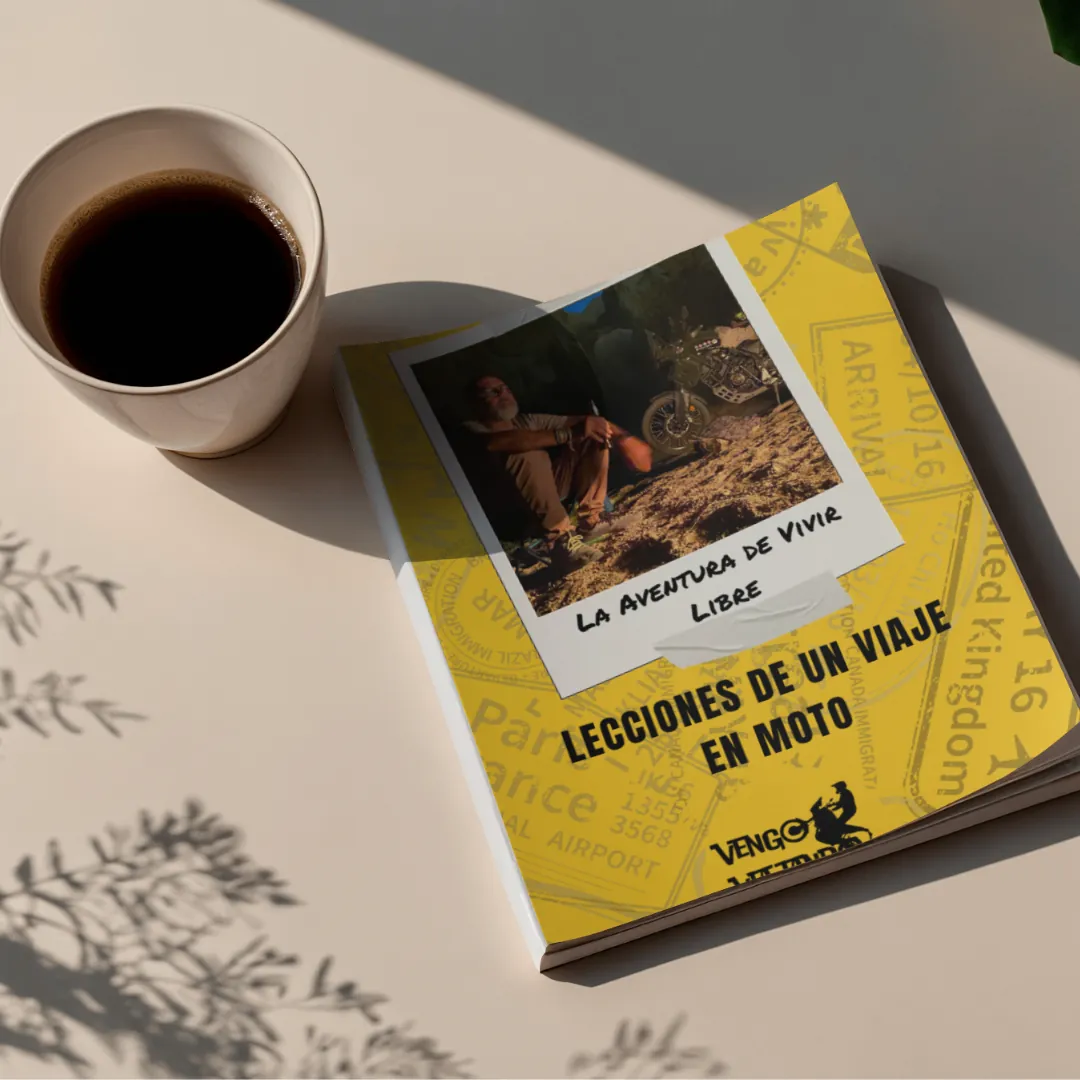
A GIFT FOR BEING HERETHE ADVENTURE OF LIVING FREE
Do fear or doubt paralyze you before starting any project? You're not alone — every one of us has been there.
As a thank-you for visiting my site, I'm giving you my book "The Adventure of Living Free". A manual built to bring some light through the shadows and show you the philosophy that has let me ride the world for years.
* PDF STRAIGHT TO YOUR INBOX. NO SPAM.