MOTORCYCLE TRAVEL IN Spain
QUICK ANSWER
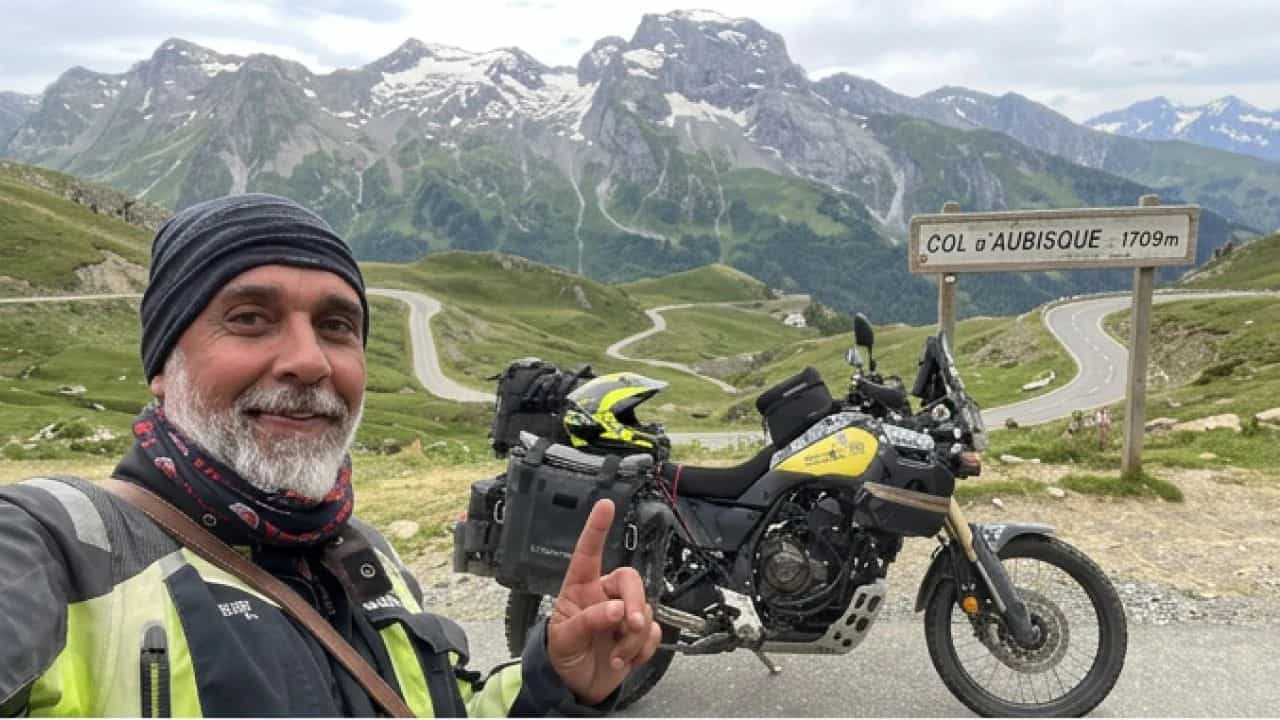
Spain is the top European destination for Latin American motorcycle travelers who ship their bike across the Atlantic: the Transpirenaica links the Atlantic to the Mediterranean over roughly 1,000 km of curves through the Pyrenees, and the whole country has one of Europe's best-paved road networks. If your motorcycle is registered outside the EU, the key step is a temporary customs import (valid up to 6 months) plus mandatory liability insurance — a Green Card from your home insurer or a border insurance policy bought on arrival.
WHAT YOU NEED TO KNOW
The country you're about to enter has particularities you need to know.
Before you cross the border there are four things you need locked down: how safe the country is, what insurance is mandatory for your motorcycle, where you'll actually find fuel, and when to go. None of these are optional.
SAFETY: VERY LOW RISK (1/5)
Is Spain safe to enter by motorcycle? Yes — it is one of the calmest countries in Europe to ride through, with no real risk zones on a traveler's actual route.
AREAS TO AVOID
- Eixample and around Sants (Barcelona): Barcelona has the highest number of motorcycle thefts in Spain, concentrated in the Eixample district and around hospitals and Sants station, where bikes sit parked on the street all day.
- AP-7 service areas (Barcelona-La Jonquera): This is the stretch of highway with the most thefts from travelers in Spain, according to the Mossos d'Esquadra: organized gangs empty luggage in seconds while you stop at gas stations and rest areas.
WHERE TO PARK
- Parking: In towns and rural areas the street is safe day and night. In Madrid and Barcelona, prioritize a gated or watched lot overnight, especially in the Eixample district.
- Alarm: Not essential across most of the country. Worth having if you are leaving the bike for hours in a big city — Barcelona has the highest number of motorcycle thefts in Spain.
- Luggage: Take off your panniers and anything you can carry when you stop at a highway service area, especially on the AP-7 between Barcelona and La Jonquera.
- Visibility: Park in plain sight, near shops or foot traffic — avoid quiet alleys in the center of big cities.
TIPS
- ➜Never leave the key in the ignition, not even for a second while unloading — it is the most common cause of motorcycle theft in Barcelona.
- ➜If someone flags a breakdown or an object that fell from another vehicle on the AP-7, do not stop on the shoulder — it is a tactic gangs use to steal luggage. Continue to the next service area.
Outside those two specific spots, Spain is one of the safest countries in the world to ride through — the real risk is opportunistic theft of bikes and luggage, not violence.
MANDATORY INSURANCE: Green Card / Border Insurance
If your motorcycle is registered in the European Union or European Economic Area, your home policy already covers you in Spain under the EU motor insurance directive, with no extra paperwork. If it is registered outside the EU, the typical case if you shipped it from Latin America, you need the Green Card from your home insurer or, if they will not issue one, a Spanish border insurance policy for mandatory third-party liability, sold in 15, 30, 90 or 180-day terms through the National Insurance Office network.
FUEL: WIDE NETWORK, HIGH PRICE
Spain has one of the densest fuel station networks in Europe — there are no stretches without fuel, not even in mountain areas like the Pyrenees. What does hit your budget is the price: unleaded 95 runs around 1.67 euros per liter, among the highest you will pay on the whole trip if you are coming from Latin America.
BEST SEASON: JUN → SEP
June to September to cross the Pyrenees mountain passes (the Transpirenaica) with the roads open and stable weather. July and August bring more traffic, higher prices, and summer storms; from October to March ice and snow close or complicate the high passes.
ENTERING SPAIN BY MOTORCYCLE
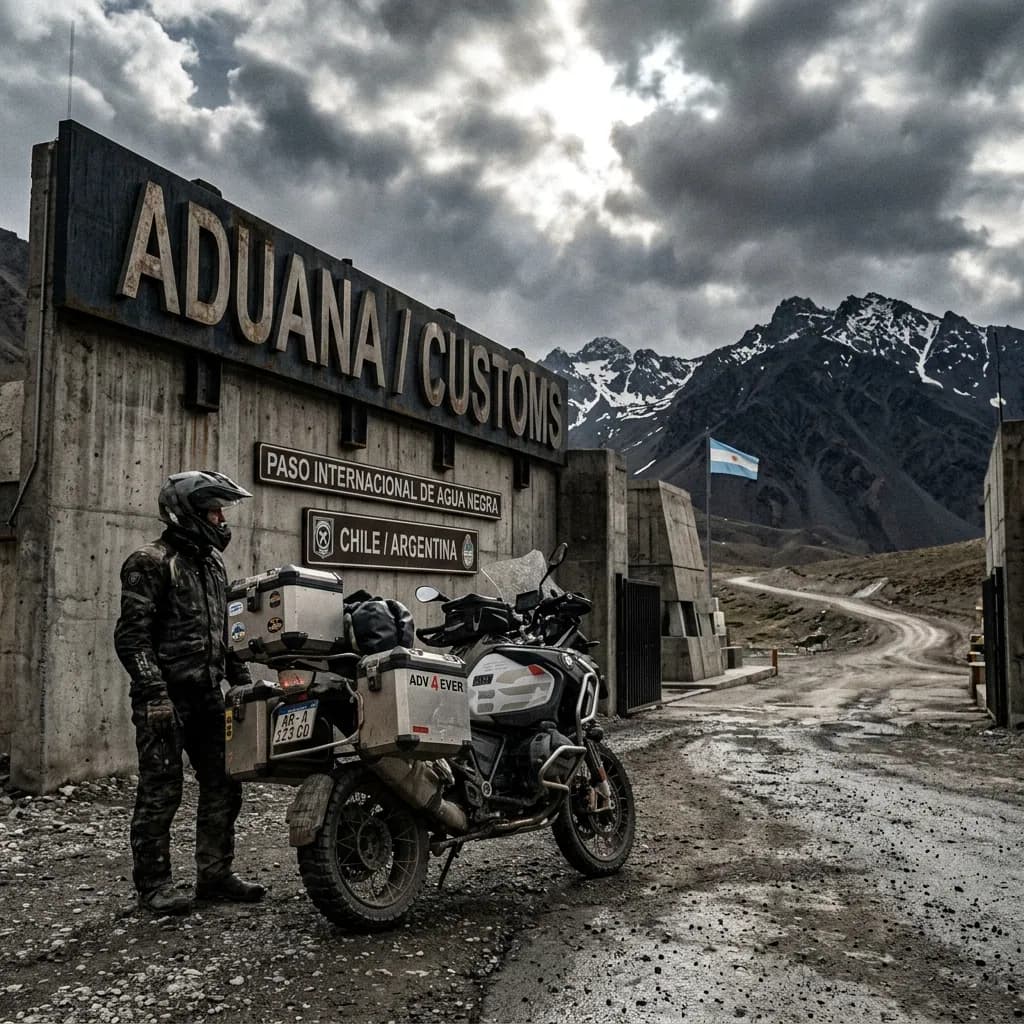
Unlike the South American border crossings, riding into Spain from France or Portugal by road involves no border checkpoint at all — Spain is part of the Schengen Area and its land borders are open. The real paperwork happens at the point where your motorcycle first enters EU customs territory, which for most Latin American riders is a port or airport, since the bike usually arrives by sea or air freight rather than overland.
The process has two parts:
Border control (Schengen): If you fly in from outside the Schengen Area, this is where your passport gets stamped. If you ride in from France or Portugal, there is no checkpoint.
Customs — temporary import: Processed at the port or airport where you pick up the motorcycle: a simplified declaration, valid for up to 6 months.
The temporary import procedure has no cost — you pay no VAT or duties as long as you re-export the bike within 6 months and use it strictly for private purposes, according to Spain's tax agency.
Real friction point:many Latin American insurers do not issue a Green Card valid for the Schengen Area, so you often have to buy a Spanish border insurance policy on arrival. It is sold in 15, 30, 90, or 180-day terms through the National Insurance Office network, but not every port or airport has a sales point right there.
Best to sort this out before you ship the motorcycle, or right when you pick it up at destination — riding without mandatory third-party liability coverage is a serious offense.
REQUIRED DOCUMENTATION
Valid passport: Valid for the whole length of your stay.
Driving license: Your home country's original license, with an official translation or an International Driving Permit if it is not in Spanish.
Motorcycle title/registration: Registration card or title issued in your home country; if you are not the owner, you need notarized power of attorney from them.
Green Card or border insurance: International Insurance Certificate from your home insurer, or a Spanish border insurance policy if they will not issue one.
Temporary import customs document: Issued at the customs checkpoint of your port or airport of entry — keep it, you need it to re-export the bike without issues.
With these five documents sorted, entering Spain with your motorcycle is an orderly process — the piece worth resolving before you fly is insurance, because not every Latin American insurer issues a Green Card valid for the Schengen Area.
DAILY BUDGET
This price range combines cheap lodging, cooking your own meals, and basic bike maintenance — the three categories that weigh most on any moto traveler's daily budget.
Your real daily budget is something you build yourself, based on your own needs and limits — but if you want an idea of how to build yours, pick a category to see the full guide:
Full cost breakdown in the budget guide
THE 10 BEST MOTORCYCLE ROUTES IN SPAIN
This top 10 isn't ranked by difficulty or distance, but by real-world fame: it opens with the two roads Spanish and foreign motorcycle travelers name most often when they think of Spain on two wheels — the Ronda-San Pedro road and the Transpirenaica, the route that crosses the whole mountain range and that this site rode in full for its own guide — and works its way down to routes that are just as recognized but somewhat less cited on international forums like Horizons Unlimited or ADVrider, in specialist road rankings, and in the number of trip reports and videos they generate each year.
Several of these routes climb mountain passes where the nearest repair shop can be an hour away, so before heading out it's worth reviewingthe mechanics guide for long motorcycle trips, especially if you're heading up to Pico Veleta or crossing the Pyrenees on the N-260.
You can leave in 30-degree heat on the coast and hit leftover snow at 2,500 meters in Sierra Nevada the same day, so checkingthe long-trip motorcycle gear guidebefore you pack will save you more than one bad afternoon.
A-397:Ronda and the 365 Curves of Sierra de las Nieves
Málaga, AndalusiaRiding the A-397 by motorcycle, the road between Ronda and San Pedro de Alcántara, means tackling 45 kilometers with 365 curves —eight per kilometer— while the pavement drops nearly 700 meters from Ronda's 723 meters above sea level down to almost sea level.
The road cuts straight through Sierra de las Nieves National Park, declared Spain's 16th national park in 2021 and home to the pinsapo, a relict Spanish fir forest that has survived since the Tertiary era in only a handful of places on Earth.
Local press calls it one of the most dangerous roads in Málaga province: around 15,000 vehicles cross it daily, including trucks and tour buses, sharing the tarmac with riders chasing its curves.
WARNINGS FOR THIS ROUTE
This is what you need to sort out before riding this route.
- 01Fuel range
Good. There are stations in Ronda and San Pedro de Alcántara; the stretch is short and needs no special planning.
- 02Road flagged as a high-accident zone
Local press documents this road as an accident black spot in Málaga province, with injuries and fatalities recorded over the years. Blind curves and rockfalls, especially in winter, call for a wide safety margin.
N-260:The Transpirenaica from Portbou to Sabiñánigo
Girona, Lleida and Huesca (Pyrenees)Riding the N-260 by motorcycle, known as the Transpirenaica or the Pyrenean Axis, means crossing over 400 kilometers of curves from Portbou, on the Girona coast, to Sabiñánigo, in the Huesca Pyrenees.
The road splits into three main sections —from the French border to Ripoll, from Puigcerdà to El Pont de Suert, and from there to Sabiñánigo— and strings together mountain passes like Port del Cantó at 1,725 meters and Puerto de Cotefablo at 1,425.
Specialist motorcycling outlets call it, again and again, one of the best motorcycle roads in Europe: light traffic, constant technical curves, and scenery that shifts every few kilometers, from the green of the Catalan Pyrenees to the stone tones of the Aragonese Pyrenees.
WARNINGS FOR THIS ROUTE
This is what you need to sort out before riding this route.
- 01Fuel range
Good in the main towns (La Seu d'Urgell, Sort, El Pont de Suert), but fill up before climbing into the passes, where there's no fuel for tens of kilometers.
Sa Calobra:Mallorca's Tie-Knot Curve
Serra de Tramuntana, MallorcaRiding down the Sa Calobra road by motorcycle is barely 13 kilometers, but it packs in 26 bends —twelve of them 180 degrees or sharper— down to the Nus de sa Corbata, a 360-degree turn where the road literally passes underneath itself.
Engineer Antonio Parietti built it by hand, with no machinery, in 1932, moving over 30,000 cubic meters of rock to carve the route into the cliffs of the Serra de Tramuntana.
Spanish press names it one of the country's most dangerous roads: a narrow track with no center line along much of it, serious accidents recorded every year, shared with cyclists who have trained here for decades.
WARNINGS FOR THIS ROUTE
This is what you need to sort out before riding this route.
- 01Fuel range
Good. The last reliable station is in Escorca, before the descent; there's no fuel at Sa Calobra itself.
- 02One of Spain's most dangerous roads
Spanish press and outlets specializing in dangerous roads repeatedly name it one of the country's most dangerous, with serious accidents recorded every year. No center line along much of the route, few guardrails, and heavy cyclist and tour-bus traffic in high season — slow down whenever you pass them.
Picos de Europa:Desfiladero de la Hermida and Fuente De
Cantabria and AsturiasCrossing the Desfiladero de la Hermida by motorcycle —the mandatory road to Fuente De— means riding 22 kilometers through the only vehicle corridor between the Cantabrian coast and the Liébana valley, boxed in by limestone walls over 600 meters high that the Deva River has carved over millennia.
This gorge leads into Spain's oldest national park: declared in 1918 as the Montaña de Covadonga National Park at the urging of Pedro Pidal, after a trip he took to Yellowstone, known today as Picos de Europa.
At Fuente De, at 1,094 meters, the cable car —Europe's longest single-span line— climbs 753 meters in just 3 minutes 40 seconds to the Mirador del Cable, at 1,823 meters: a perfect finish to the ride before heading back through the same curves.
WARNINGS FOR THIS ROUTE
This is what you need to sort out before riding this route.
- 01Fuel range
Fair. There are stations in Panes and Potes; there's no fuel between Potes and Fuente De, though the stretch is short.
Route of the White Villages:Ronda, Grazalema and Zahara de la Sierra
Cádiz and Málaga, AndalusiaRiding the Route of the White Villages by motorcycle, through Ronda, Grazalema, Zahara de la Sierra and Arcos de la Frontera, covers around 300 kilometers over two days, making it the only route in all of Andalusia officially declared of tourist interest.
The climb toward Puerto de las Palomas, already inside the Sierra de Grazalema —a Biosphere Reserve since 1977 and a Natural Park since 1985— delivers one of the highest viewpoints in Cádiz province, in one of the rainiest areas in Spain.
Halfway along, the Venta Puerto de Gáliz has worked for generations as the unofficial meeting point for riders from across Andalusia, the spot where everyone stops for breakfast before continuing on to Ubrique or Arcos.
WARNINGS FOR THIS ROUTE
This is what you need to sort out before riding this route.
- 01Fuel range
Good, towns with a station every 20-30 km; it's worth leaving Ronda or Ubrique with a full tank rather than counting on finding one open in a small village.
- 02Heavy rain and sudden fog
With over 2,000 mm of rain a year, the Sierra de Grazalema is one of the rainiest areas in Spain — pack rain gear even if you leave under clear skies, especially in autumn and winter.
Pico Veleta:Europe's Highest Paved Road
Granada, AndalusiaRiding up toward Pico Veleta by motorcycle means taking on Europe's highest paved road, a route that starts in Granada, at 750 meters, and once climbed all the way to the summit itself, at 3,398 meters.
The road opened in 1935, but since 1999 motorized traffic has been stopped at a barrier around 2,500 meters, near Hoya de la Mora — the final kilometers to the top were left to hikers, cyclists and park vehicles because of the environmental damage the traffic was causing.
Even so, the roughly 45 kilometers still open to motorcycles climb around 1,750 meters of elevation, passing the Pradollano ski resort and leaving the forest behind for the almost bare high-mountain landscape at the top of the Iberian Peninsula.
WARNINGS FOR THIS ROUTE
This is what you need to sort out before riding this route.
- 01Fuel range
Good in Granada; there's no fuel point past Pradollano.
TF-21:The Teide Road in Tenerife
Tenerife, Canary IslandsThe Teide road by motorcycle, the TF-21, links La Orotava with Granadilla de Abona over 82.6 kilometers that climb from the subtropical coast up to Spain's highest volcano.
Teide reaches 3,715 meters —the highest peak in all of Spanish territory and on any land rising from the Atlantic— and its national park, declared in 1954, is the country's third oldest and Spain's most visited, drawing more than 4 million people a year.
From kilometer 31.5 the road enters the national park, declared a UNESCO World Heritage Site in 2007, and the scenery shifts all at once: from humid laurel forest to an ochre-and-red volcanic desert that looks like another planet.
WARNINGS FOR THIS ROUTE
This is what you need to sort out before riding this route.
- 01Fuel range
Good in La Orotava, Vilaflor and Granadilla; there's no fuel service inside the national park.
Ruta de la Plata:the Roman Road from Seville to Gijón
From Andalusia to AsturiasRiding the Ruta de la Plata by motorcycle, from Seville to Gijón, covers 810 kilometers along the path of a Roman road that once connected Emerita Augusta (Mérida) with Asturica Augusta (Astorga), used for centuries by legions, merchants and migrating shepherds.
Despite the name (which translates as 'silver route'), the road has nothing to do with silver: most historians trace it to the Arabic 'al-balat', meaning paved or cobbled road.
Today the N-630 follows that same line nearly end to end, south to north, through Mérida, Cáceres, Salamanca, Zamora, León and Astorga before climbing into Asturias — a multi-day crossing built for the rider who wants to cut through Spain's entire historic spine, more than for tight technical curves.
WARNINGS FOR THIS ROUTE
This is what you need to sort out before riding this route.
- 01Fuel range
Very good, a route with constant services in towns and cities every few kilometers along the whole way.
- 02Extreme summer heat
The Extremadura and Castilla y León stretches can top 40°C in midsummer — if you ride in July or August, start early and avoid the middle of the day.
Flysch Route:Zumaia, Deba and Mutriku
Gipuzkoa, Basque CountryRiding the Flysch Route by motorcycle, the coastal road linking Zumaia, Deba and Mutriku, means skirting 90 square kilometers of cliffs where the rock preserves, layer upon layer, 60 million years of geological history almost without interruption.
UNESCO declared the area a Global Geopark in November 2015, largely because the cliffs at Zumaia let you read, with the naked eye, the boundary between the Cretaceous and Paleogene periods — the geological marker of the mass extinction that wiped out most dinosaurs 66 million years ago.
Unlike other routes on this list, it isn't a mountain pass but a relatively short, easygoing coastal road, ideal for combining with other Basque Country routes on the same trip.
WARNINGS FOR THIS ROUTE
This is what you need to sort out before riding this route.
- 01Fuel range
Good. There are stations in Zumaia, Deba and Mutriku.
Valle de Pineta and the Bielsa Tunnel
Huesca, Aragonese PyreneesClimbing to the Bielsa tunnel by motorcycle, from Aínsa, means riding through the Valle de Pineta and the Cinca River canyon before crossing, under the Pyrenees, the international tunnel that has connected Spain with the French Aure valley since October 1976.
The tunnel runs 3,070 meters long —1,298 on Spanish soil— and was built because, at the head of the valley, the river itself had narrowed the passage so much that no conventional mountain road could be traced through it.
The area sits inside Ordesa y Monte Perdido National Park, declared in 1918 as the Valle de Ordesa National Park —the same year as Picos de Europa— and expanded in 1982 to include Monte Perdido, at 3,348 meters, Europe's third-highest limestone massif, recognized as a UNESCO World Heritage Site in 1997.
WARNINGS FOR THIS ROUTE
This is what you need to sort out before riding this route.
- 01Fuel range
Fair. Last station in Aínsa or Bielsa before the tunnel; nothing on the immediate French side.
NEIGHBORING COUNTRIES
Crossing the border next? Click a country to see its 10 best motorcycle routes.

FREQUENTLY ASKED QUESTIONS
01What is the Green Card and do I need it to enter Spain by motorcycle?
+
What is the Green Card and do I need it to enter Spain by motorcycle?
It is the International Insurance Certificate that proves your liability policy covers Spain. You need it if your motorcycle is registered outside the European Union; if your home insurer will not issue one, you can buy a Spanish border insurance policy on arrival.
02How long can I ride in Spain on a motorcycle registered in Latin America?
+
How long can I ride in Spain on a motorcycle registered in Latin America?
Up to 6 consecutive months under the customs temporary import regime, according to Spain's tax agency. After that you have to re-export the bike or start the process for permanent registration in Spain.
03Do I need a Carnet de Passage en Douane to bring my motorcycle into Spain?
+
Do I need a Carnet de Passage en Douane to bring my motorcycle into Spain?
It is not required for most motorcycle travelers arriving at a Spanish port or airport — the EU uses a simplified customs declaration at the entry point itself, different from the carnet system some non-EU countries require. It is worth confirming with your shipping line or cargo airline before you ship the bike, since the process can vary by entry point.
04What is the best time of year to ride the Transpirenaica?
+
What is the best time of year to ride the Transpirenaica?
June to September, when the mountain passes are open and the weather is stable. July and August bring heavier traffic and summer storms; outside May-September, ice and snow complicate or close the highest passes.
05Is a reflective vest mandatory for motorcycles in Spain?
+
Is a reflective vest mandatory for motorcycles in Spain?
Yes, as of October 1, 2026. You do not need to wear it while riding — it has to be within reach on the bike, and you only put it on if you get off and step onto the road or shoulder of an interurban road due to a breakdown or accident.
06Do I need an international driving permit to ride a motorcycle in Spain?
+
Do I need an international driving permit to ride a motorcycle in Spain?
If your license is not in Spanish and has no official translation, yes. The International Driving Permit is valid for the first 6 months after you enter as a tourist, always alongside your original valid license.
07Where do I buy border insurance if my insurer will not issue the Green Card?
+
Where do I buy border insurance if my insurer will not issue the Green Card?
You can buy it through the network of National Insurance Offices inside Spain, in 15, 30, 90, or 180-day terms. It only covers mandatory third-party liability — it does not include theft or roadside assistance, so it is worth adding separate travel assistance coverage.
Want to ride the Transpirenaica on your own?
Everything on this page is free and will help you plan the trip. If you want the route loaded on your GPS and fully mapped out ahead of time, the paid guide bundles the GPX track, checklist, lodging and mechanics into a single PDF.
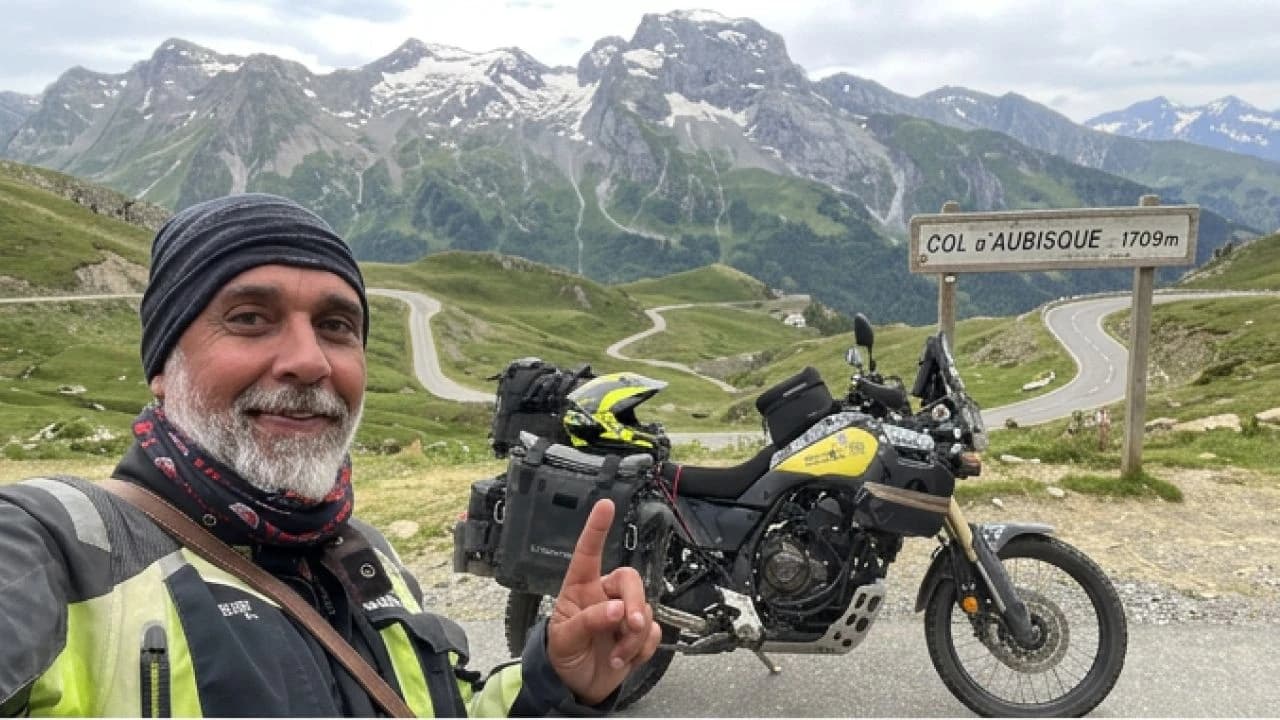
SEE THE ROUTE GUIDE WITH GPX TRACK →
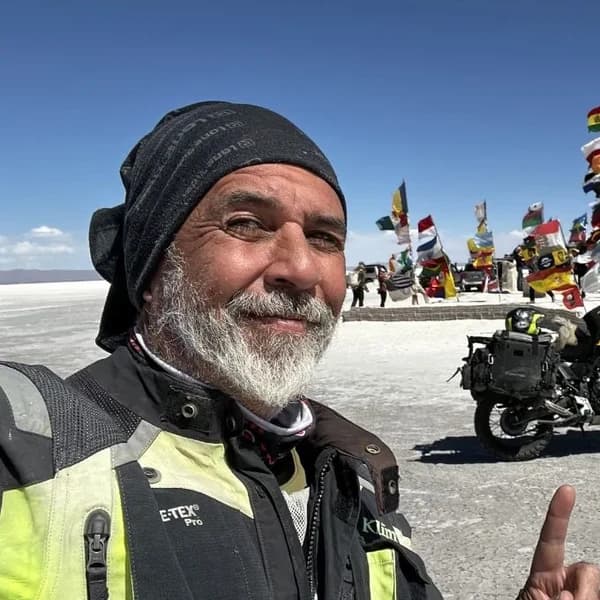
Gustavo Correa
Moto traveler, author and motorcycle travel consultant. 110,000+ km across 4 continents with Gloria, my motorcycle. Everything you read here has been tested on the road, not in an office.
Read my story →Last verified: 2026-08-29
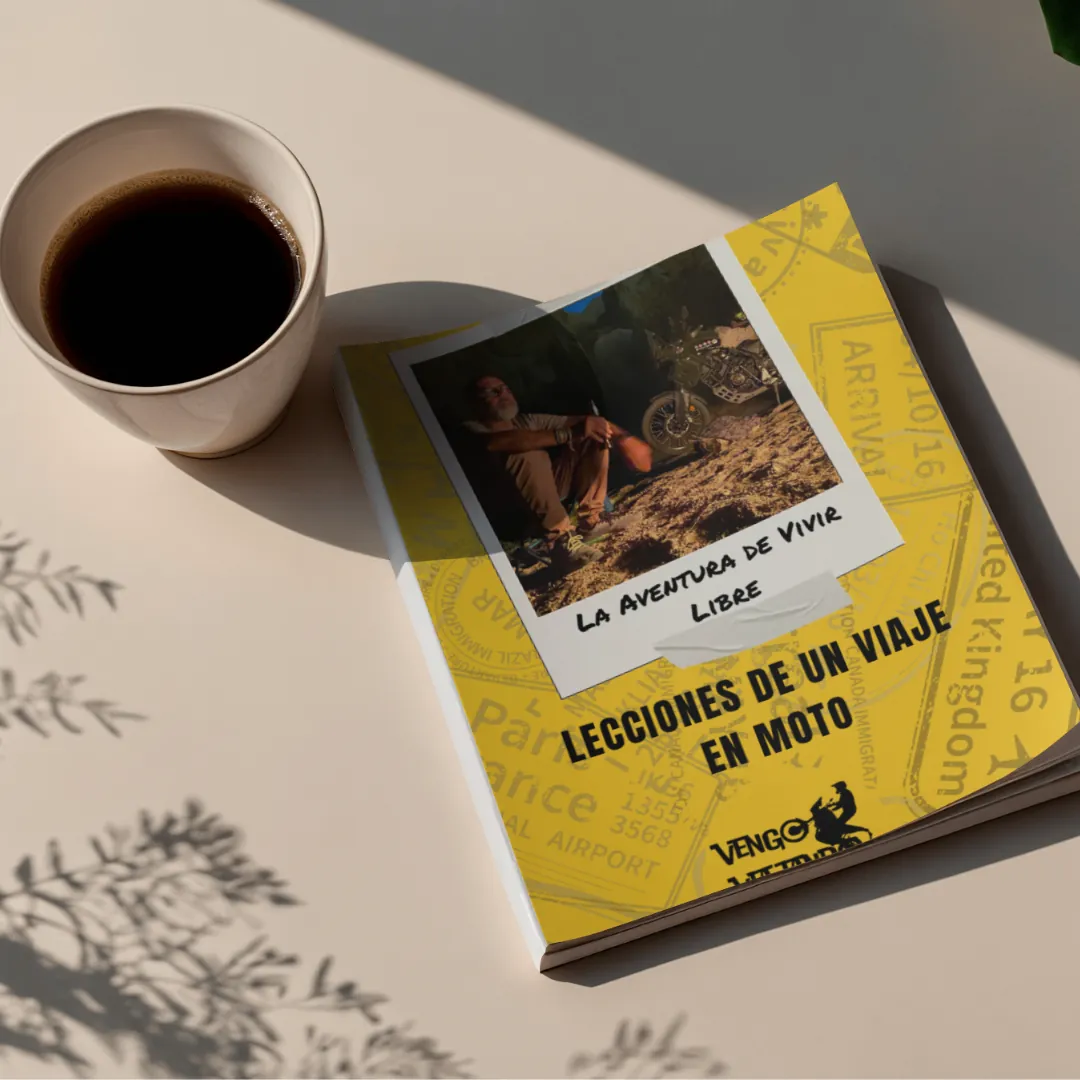
A GIFT FOR BEING HERETHE ADVENTURE OF LIVING FREE
Do fear or doubt paralyze you before starting any project? You're not alone — every one of us has been there.
As a thank-you for visiting my site, I'm giving you my book "The Adventure of Living Free". A manual built to bring some light through the shadows and show you the philosophy that has let me ride the world for years.
* PDF STRAIGHT TO YOUR INBOX. NO SPAM.