MOTORCYCLE TRAVEL IN France
QUICK ANSWER
France is the gateway to two of Europe's classic motorcycle routes — the Transpirenaica along the Pyrenees and the alpine passes further east — and, unlike a South American border, entering by land from a Schengen neighbor involves no checkpoint at all. The real thing to sort out before you go isn't a customs stamp: it's your insurance status (EU/EEA plates need nothing extra, others need frontier insurance) and, if your route goes through a major city center, the Crit'Air emissions sticker, which must be arranged online in advance.
WHAT YOU NEED TO KNOW
The country you're about to enter has particularities you need to know.
Before you cross the border there are four things you need locked down: how safe the country is, what insurance is mandatory for your motorcycle, where you'll actually find fuel, and when to go. None of these are optional.
SAFETY: LOW RISK (2/5)
Is France safe to enter by motorcycle? Yes — it's one of the calmer countries in Western Europe to travel through. The real risk isn't violence, it's theft of a parked bike, concentrated in the big cities.
AREAS TO AVOID
- Greater Paris (Île-de-France): Accounts for close to half of the country's motorcycle and scooter thefts, averaging 27 thefts a day in the city of Paris alone. Most happen with the vehicle parked on the street, both by day and by night.
- Saint-Denis and Porte de la Chapelle (north Paris): The metro area's highest-crime zone after dark; most Parisians themselves avoid riding through there once night falls.
- Marseille Saint-Charles station: A hotspot for pickpockets and fake taxi drivers who approach newly arrived travelers loaded down with luggage and disoriented — not a violent area, but one for opportunistic theft.
WHERE TO PARK
- Parking: On the street: fine by day almost everywhere in the country. At night in Île-de-France or Marseille, prioritize a gated lot or a station with cameras.
- Alarm: Recommended: yes, especially in Paris and its outskirts, which account for nearly half of all motorcycle and scooter thefts in the country.
- Luggage: Take off what you can carry (tank bag, backpack) when parking in any big city. Never leave anything loose visible inside your panniers.
- Visibility: Park where there's foot traffic and good lighting — avoid alleys and out-of-the-way spots, especially near train stations.
TIPS
- ➜If your route crosses the center of a big city (Paris, Lyon, Marseille), get the Crit'Air sticker before you leave home — it can't be obtained on the spot.
- ➜At Marseille Saint-Charles station, the typical first contact many travelers have with the city, keep a close eye on your luggage — it's a known pickpocketing hotspot.
Outside those specific spots, France is one of the calmest countries in the world to travel through by motorcycle: the real risk is theft of a parked bike, not violence against the traveler. The usual common sense — a watched bike, luggage never left in plain sight, caution at night in big cities — is more than enough.
MANDATORY INSURANCE: EU insurance / frontier insurance
There's no single mandatory policy like in South America — it depends on where your motorcycle is registered. With plates from an EU or EEA country, your regular policy already covers riding in France under the EU motor insurance directive, with no extra paperwork. With plates from outside that system — the case for nearly all of Latin America, which isn't part of the green card system — you need to buy frontier insurance (assurance frontière) when you enter, valid for 15 to 90 days, since your home policy has no legal coverage on French soil.
FUEL: DENSE NETWORK, EUROPEAN PRICES
Excellent availability across the whole country, including on toll motorways, with service areas every few kilometers. Fuel is noticeably more expensive than in most of South America: through 2026 the price hovered around 1.90-2.25 euros per liter depending on the fuel type, region, and moment — diesel, which used to be the cheaper option years ago, now typically costs the same as or more than 95 octane after successive tax increases. Avoid filling up at motorway service stations — they run pricier than village pumps or supermarket-chain stations (E.Leclerc, Hyper U), which tend to be the cheapest.
BEST SEASON: MAY → SEP
May to September for the mountain routes (Pyrenees, Alps), when the high passes are open and the weather is stable — June and September bring lighter traffic and milder temperatures than August, when French holiday traffic peaks. Winter closes most alpine and Pyrenean passes with snow and ice. The south (Provence, Côte d'Azur) is rideable nearly year-round, with June and September again preferable to the crowded, hot peak of summer.
ENTERING FRANCE BY MOTORCYCLE
Crossing into France with a bike is, in practice, unlike any South American border: if you're coming from Spain, Italy, Switzerland, or Germany through a land crossing, there's no immigration booth and no customs post — France is part of the Schengen Area, so riding across the Pyrenees or the Alps is, legally, like crossing between provinces.
The real procedure, then, doesn't happen at the border — it happens before you leave home:
Schengen control: Only applies if you enter France from outside the Schengen Area (e.g. ferry from the UK, or by plane). Overland from a Schengen neighbor, there's no control at all.
Registration and insurance: There's no physical checkpoint reviewing it as you cross, but you must carry it: the registration certificate and whichever insurance applies to your case (EU/EEA or frontier).
Riding your own EU/EEA-plated motorcycle across a land border into France is free — no customs procedure, no fee, no paperwork at all, since France sits inside both the EU and the Schengen Area.
Real friction point:it isn't at the border, it's in the cities. France has required the Crit'Air emissions sticker to ride into the center of 25 cities since 2025 — Paris, Lyon, Marseille, Toulouse and Strasbourg among them — with no exception for foreign plates or motorcycles. It's arranged online at certificat-air.gouv.fr before the trip (around 5 euros with shipping abroad); it can't be obtained on the spot or at the border, so if your route enters any of those city centers, sort it out ahead of time or risk a 68-euro fine.
The other real point is insurance: if your bike isn't registered in a green-card-system country (most of Latin America isn't), you need to buy 15-to-90-day frontier insurance when you enter — without it, your home policy doesn't cover you on French soil.
REQUIRED DOCUMENTATION
Passport or national ID: Valid for the whole stay. For tourist stays within the 90-in-180-day limit, most Latin American passports don't need a prior Schengen visa.
Driving license: Your home country's license is enough for a tourist stay. If it's not in Latin script, an International Driving Permit is mandatory; if it is, it's only recommended.
Motorcycle title/registration: The original registration certificate. If you're not the owner, carry a notarized authorization from them.
Insurance certificate: If your plate is EU/EEA, your regular policy already covers France. If it's from outside that system, you need to buy frontier insurance when you enter.
Crit'Air sticker (if heading into a city): Mandatory to enter the center of 25 French cities, including Paris. Apply online before the trip — it can't be obtained on the spot.
Reflective vest and approved helmet: The helmet must meet ECE 22.05/22.06 standards. The reflective vest must be carried on board in case of breakdown, though you aren't required to wear it while riding.
In short:if your motorcycle carries EU or EEA plates, entering France through a land crossing from Spain, Italy, Switzerland, or Germany involves no procedure at all — no booth, no paperwork, no cost. The real thing to sort out before you leave is different: check whether your plate falls inside the green card system, and if you plan to ride into a major city center, apply for the Crit'Air sticker ahead of time.
With that handled, crossing into France is, in practice, the simplest border procedure on the continent.
DAILY BUDGET
This price range combines cheap lodging, cooking your own meals, and basic bike maintenance — the three categories that weigh most on any moto traveler's daily budget.
Your real daily budget is something you build yourself, based on your own needs and limits — but if you want an idea of how to build yours, pick a category to see the full guide:
Full cost breakdown in the budget guide
THE 10 BEST MOTORCYCLE ROUTES IN FRANCE
This order isn't a ranking by difficulty or scenery: it's built on real fame. We researched which routes show up first and most often across specialized "best motorcycle roads in France" lists, on motorcycle travel forums like Horizons Unlimited and ADVrider, and in real accounts from riders who've already crossed the Alps, the Pyrenees and Corsica on two wheels. Route Napoléon tops the list because it's, almost without exception, the first French route any international motorcycle traveler names; from there on, the fame goes down but never stops being real.
Several of these routes climb above 2,000 meters, where the weather can change in minutes even at the height of summer, and the cold shows up even if you left the valley in 30°C heat.
Before climbing any of these passes, it's worth reviewingthe gear guide for long motorcycle trips, because at 2,800 meters a summer jacket won't cut it even if it's hot down in the valley.
And if your plan is to string several of these passes together in one trip, check firstthe mechanics guide for long motorcycle trips, because brakes and tires take a different kind of beating through that many mountain hairpins in a row.
Route Napoléon:Golfe-Juan to Grenoble
Alpes-de-Haute-Provence and IsèreRiding the Route Napoléon by motorcycle means following, kilometer by kilometer, the exact path Napoleon Bonaparte marched between March 1 and 7, 1815, when he landed at Golfe-Juan after escaping his exile on the island of Elba and advanced 325 km toward Grenoble to reclaim the French throne.
For most riders searching "best motorcycle road in Europe", it's the first route that comes up: pavement smooth as a billiard table, fast sweeping curves and technical mountain hairpins combine without a single dull stretch across its 325 km.
At Sisteron, the road runs beneath a citadel carved into the rock that has dominated the Durance river valley since the 14th century — one of the points where Napoleon actually stopped during his march.
Today the N85 still follows that historic route almost unchanged, and it remains the road where most international motorcycle travelers kick off their first road trip through the French Alps.
WARNINGS FOR THIS ROUTE
This is what you need to sort out before riding this route.
- 01Fuel range
Fair overall, but stations thin out between Grasse and Gap. Fill up in Grasse before heading into the mountains.
Col de la Bonette:Europe's highest paved road
Alpes-Maritimes and Alpes-de-Haute-Provence (Mercantour)Crossing the Col de la Bonette by motorcycle means reaching, on the panoramic loop around the Cime de la Bonette, 2,802 meters above sea level — Europe's highest paved road and the highest dead-end paved point on the continent.
The pass stays closed by snow most of the year: it typically opens in mid-June and closes again by late September, a short window every European rider marks on the calendar.
The road is part of the historic Route des Grandes Alpes, the chain of 17 alpine passes running from Lake Geneva to the Mediterranean, and the final detour around the Cime adds a full loop around the summit just to be able to say you touched Europe's paved roof.
At that altitude the engine loses power from lack of oxygen, and the weather can turn in minutes, even in the middle of summer.
WARNINGS FOR THIS ROUTE
This is what you need to sort out before riding this route.
- 01Fuel range
Limited at altitude. Fill up in Jausiers or Saint-Étienne-de-Tinée before climbing: there are no stations on the pass.
- 02Closed by snow most of the year
The pass stays closed roughly from October to mid-June. Check road status before heading out — outside the summer window, crossing it simply isn't possible.
Gorges du Verdon:Route des Crêtes and Corniche Sublime
Alpes-de-Haute-Provence and VarRiding the rim of the Gorges du Verdon by motorcycle along the Corniche Sublime means hugging the edge of a canyon more than 700 meters deep, carved by the Verdon river through limestone over millions of years — one of the deepest gorges in Europe and the reason it's known as the continent's Grand Canyon.
The full loop combines the D952 on the north bank with the D71 (Corniche Sublime) on the south, crossing more than a dozen single-lane tunnels cut directly into the rock, some without artificial lighting.
There's no guardrail along much of the route, and the road narrows to one lane in several stretches with blind curves and unlit tunnels: it demands full attention, especially when meeting cars or tourist caravans during high season.
WARNINGS FOR THIS ROUTE
This is what you need to sort out before riding this route.
- 01Fuel range
Scarce inside the canyon. Fill up in Castellane or Moustiers-Sainte-Marie before entering.
- 02Narrow, unguarded road and dark tunnels
Much of the route has no guardrail and narrows to one lane inside rock-cut tunnels, some without lighting — ride slowly and use your lights, especially when meeting oncoming traffic on the narrow stretches.
Col d'Izoard and the Casse Déserte
Hautes-AlpesClimbing the Col d'Izoard by motorcycle to its 2,360 meters means entering the Casse Déserte, a lunar landscape of eroded rock spires and grey scree that looks pulled straight out of a western — raw enough that films have used it as a natural set with no dressing needed.
The pass is part of the Route des Grandes Alpes and one of the most cited climbs in Tour de France history, crossed more than 35 times since 1922, with monuments to Fausto Coppi and Louis Bobet standing right in the Casse Déserte.
The southern stretch, between Cervières and the pass, still sees active rockfall: it's not unusual to find loose stone on the pavement after a storm, something every rider climbing from Briançon should keep in mind.
WARNINGS FOR THIS ROUTE
This is what you need to sort out before riding this route.
- 01Fuel range
Limited on the high section. Fill up in Briançon or Guillestre before climbing.
- 02Rockfall on the Casse Déserte
The pass's south side is prone to rockfall, especially after rain — it's common to find loose gravel and rock on the pavement in that stretch.
Col du Tourmalet
Hautes-PyrénéesCrossing the Col du Tourmalet by motorcycle means climbing the most historic pass in world cycling: since its debut in the 1910 Tour de France, the race has crossed it more than 87 times, more than any other pass in the event's history.
At 2,115 meters it's also the highest paved pass in the French Pyrenees, with a final stretch from La Mongie — the ski station at 1,800 m — of tight, exposed switchbacks up to the cyclist monument at the summit.
In 1910, Tour organizer Henri Desgrange was talked into sending the race into the high mountains for the first time by his assistant Alphonse Steinès, and the Tourmalet became the centerpiece of that shift.
In the region it's common to find loose cattle grazing right next to the road, a typical Pyrenean scene that forces you to slow down through blind curves.
WARNINGS FOR THIS ROUTE
This is what you need to sort out before riding this route.
- 01Fuel range
Limited at altitude. Fill up in Bagnères-de-Bigorre or Luz-Saint-Sauveur.
- 02Loose livestock on the road
In the high pastures of the Pyrenees it's common to find cows and sheep loose on the road, even on blind curves — slow down near grazing areas.
Col du Galibier
Savoie and Hautes-AlpesCresting the Col du Galibier by motorcycle at 2,642 meters means reaching one of the highest paved passes in the French Alps and the most frequently used climb in Tour de France history within that range, with more than 57 appearances since its 1911 debut.
The French army built a 365-meter tunnel at 2,556 m — one meter for every day of the year — that for 90 years let the race skip the final kilometer at an 11% grade before the summit.
It's part of the Route des Grandes Alpes alongside the Col de l'Iseran and the Col d'Izoard, and its link with the Col du Lautaret makes it one of the most sought-after mountain connections for riders crossing from Briançon into Savoie.
WARNINGS FOR THIS ROUTE
This is what you need to sort out before riding this route.
- 01Fuel range
No stations on the pass. Fill up in Valloire or Briançon before climbing.
Col de Bavella:granite needles in Corsica
Southern CorsicaClimbing to the Col de Bavella by motorcycle means entering the heart of wild Corsica, with the Aiguilles de Bavella — seven granite needles rising past 1,600 meters that shift from ochre to gold as the sun moves — dominating the view from the 1,218 m pass.
The road connects Solenzara, on the east coast, with Zonza, in the mountainous interior, and local riders consistently point to it as the best combination of sea and mountain you can pack into a single day of riding.
Corsica has a reputation among European motorcycle travelers as an island built for two wheels — beaches, gorges, peaks and mountain passes packed into a small landmass — and within that island, the Col de Bavella is the stretch that comes up most often.
In the forests around the pass it's common to run into pigs, cows or goats loose on the road, a typical feature of Corsica's free-range grazing.
WARNINGS FOR THIS ROUTE
This is what you need to sort out before riding this route.
- 01Fuel range
Limited on the pass. Fill up in Solenzara or Zonza before climbing.
- 02Loose livestock on the road
Corsica has widespread free-range grazing: pigs, cows and goats cross the road without warning, especially through the wooded stretches around the pass.
Route des Crêtes of the Vosges
Alsace and Lorraine (Grand Est)Riding the Route des Crêtes of the Vosges by motorcycle means spending almost the entire ride above 1,200 meters, following the ridgeline that separates Alsace from Lorraine up to the Grand Ballon, the range's highest point at 1,424 m.
The road wasn't built as a tourist attraction: the French army built it in 1915, in the middle of World War I, as a supply route to move troops and equipment along the front line that ran through these same mountains.
Today, the road that once carried ammunition links the Col du Bonhomme with Thann via the Col de la Schlucht, the Hohneck and the Markstein, with fast ridge curves and open views over the Rhine valley on one side and the forests of Lorraine on the other.
WARNINGS FOR THIS ROUTE
This is what you need to sort out before riding this route.
- 01Fuel range
Fair in the access towns. Fill up in Munster or Cernay before climbing to the ridge.
Gorges du Tarn
Lozère and Aveyron (Causses and Cévennes)Riding through the Gorges du Tarn by motorcycle means following the Tarn river for 50 km between limestone walls that in places rise past 400 meters, separating the Causse Méjean from the Causse de Sauveterre in the heart of the Massif Central.
The river took millions of years to carve out this limestone corridor, and the road that now runs alongside it passes through short tunnels cut straight into the canyon rock, switching between sun and shade every few minutes.
Unlike the high alpine passes, this is a valley-floor canyon: the ride can be combined in the same day with a climb up to the Causses, the limestone plateaus above, to see the full cut of the gorge from the lookouts.
WARNINGS FOR THIS ROUTE
This is what you need to sort out before riding this route.
- 01Fuel range
Scarce inside the canyon. Fill up in Millau or Florac before entering.
Col d'Aubisque and the Cirque du Litor
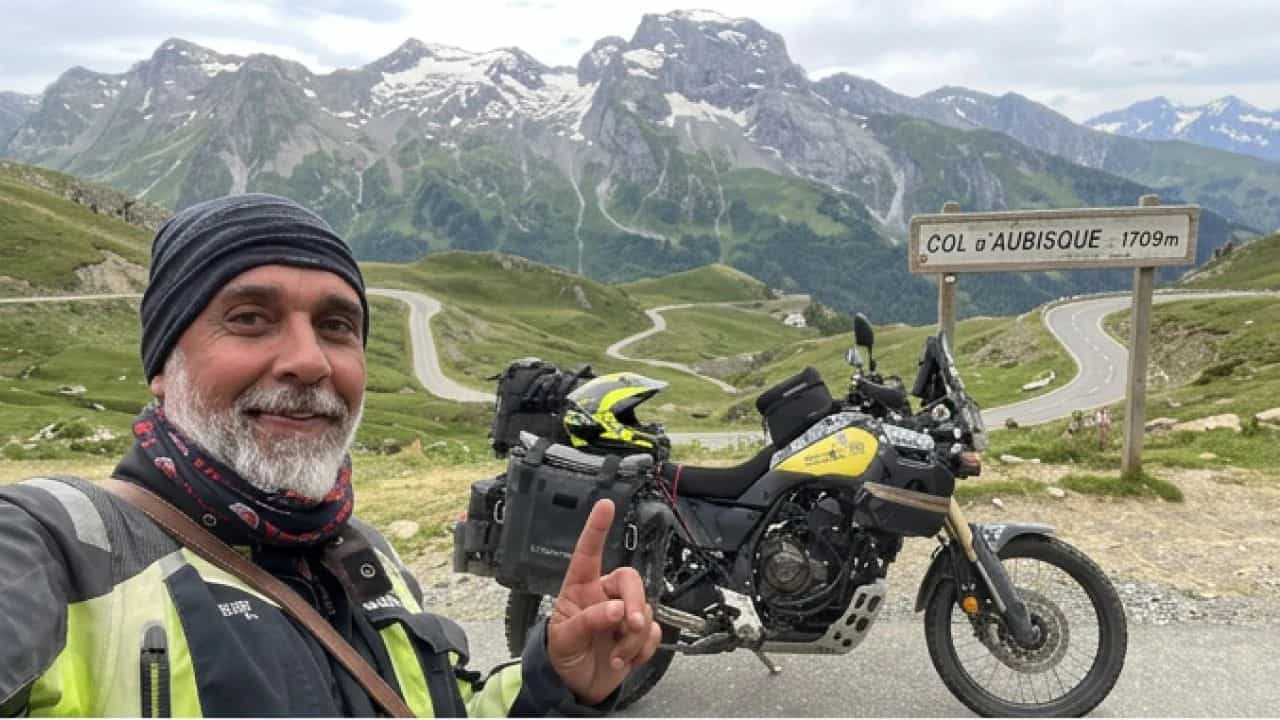
Hautes-PyrénéesCrossing the Col d'Aubisque by motorcycle to its 1,709 meters means riding, between the Col du Soulor and the Aubisque itself, through the Cirque du Litor: a ledge cut directly into a cliff face in the early 1900s, with no guardrail and a straight drop on one side.
This pass is part of the so-called "Circle of Death", the chain of climbs that on the July 21, 1910 stage of the Tour de France — Peyresourde, Aspin, Tourmalet and Aubisque in a single day — marked the birth of high-mountain racing.
Among riders who know the Pyrenees, the Aubisque-Soulor combination is often named the best single day of riding in the whole range, for its mix of technical curves, rock walls and open valley views.
WARNINGS FOR THIS ROUTE
This is what you need to sort out before riding this route.
- 01Fuel range
No stations on the pass. Fill up in Argelès-Gazost before climbing.
- 02Unguarded cliffside ledge at the Cirque du Litor
The stretch between the Col du Soulor and the Col d'Aubisque is a narrow ledge cut into the rock, with no guardrail and a straight drop to the valley — ride slowly, especially in rain or fog.
NEIGHBORING COUNTRIES
Crossing the border next? Click a country to see its 10 best motorcycle routes.

FREQUENTLY ASKED QUESTIONS
01Do I need a green card insurance certificate to enter France with my motorcycle?
+
Do I need a green card insurance certificate to enter France with my motorcycle?
It depends on where your bike is registered. If it carries plates from an EU or EEA country, you need nothing extra — the EU insurance directive already covers riding in France under your regular policy, just carry the insurance certificate. If your bike is registered outside that system (most Latin American countries are not part of it), you need frontier insurance (assurance frontière), a temporary 15-to-90-day policy arranged when you enter.
02Is there passport control when crossing from Spain into France by motorcycle?
+
Is there passport control when crossing from Spain into France by motorcycle?
No, on a normal land crossing. France and Spain are both in the Schengen Area, so riding through the Transpirenaica mountain passes (or along the coastal motorway) is like crossing between provinces — no immigration booth, no customs. Passport control does apply if you enter France from outside Schengen, for example by ferry from the UK or by plane with the bike shipped separately.
03What is the Crit'Air sticker and do I need one on a motorcycle?
+
What is the Crit'Air sticker and do I need one on a motorcycle?
It's a mandatory emissions sticker required since 2025 in 25 French cities (Paris, Lyon, Marseille, Toulouse, Strasbourg, among others) within their low-emission zones (ZFE). It applies to motorcycles too, and there's no exception for tourists or foreign plates: if you plan to ride into the center of any of those cities, you need to apply for it online at certificat-air.gouv.fr before the trip (around 5 euros with shipping abroad). Riding without one carries a 68-euro fine.
04Do I need an international driving permit to ride a motorcycle in France?
+
Do I need an international driving permit to ride a motorcycle in France?
If your license is from an EU or EEA country, no. If it's from another country and written in Latin script (as is the case for nearly all of Latin America), it isn't legally required for a tourist stay either, but it's worth carrying an International Driving Permit anyway — it speeds up any police check and is essential if you ever need to rent a vehicle. If your license isn't in Latin script, the international permit is mandatory.
05How much do motorway tolls cost for a motorcycle in France?
+
How much do motorway tolls cost for a motorcycle in France?
Motorcycles pay roughly 60% of the car (Class 1) rate, and at most automatic barrier tolls you can pay by card or cash without dismounting. The average cost is around 10 euro cents per kilometer, so a long motorway stretch can add up — many riders prefer the free national roads when time isn't an issue, especially through the Pyrenees and the Alps, where the scenery is better anyway.
06What's the best time of year to ride the Transpirenaica?
+
What's the best time of year to ride the Transpirenaica?
Between May and September, when the mountain passes are open and the weather is more stable. Late spring and early autumn (June, September) bring lighter traffic and more comfortable temperatures than August; in winter most passes close or become dangerous with snow and ice. Check the forecast every morning, since mountain storms are frequent and unpredictable even in the middle of summer.
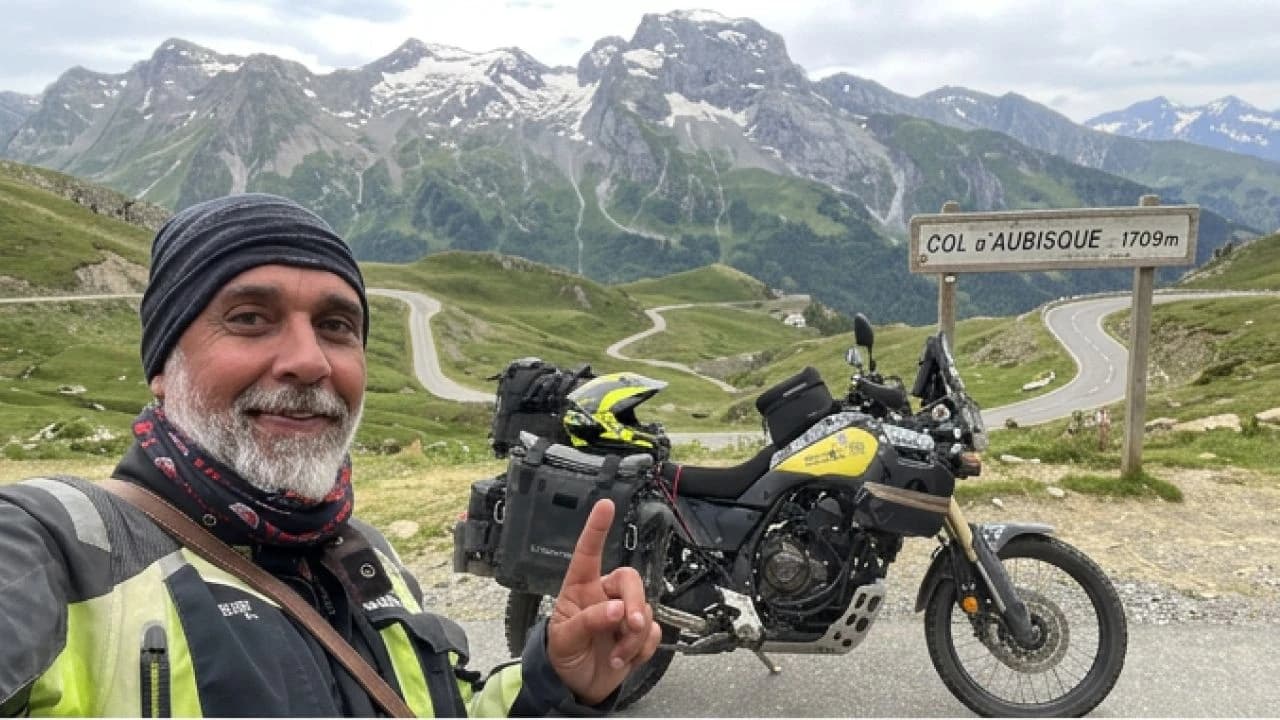
Want to ride the Transpirenaica on your own?
Everything on this page is free and will help you plan the trip. If you want the route loaded on your GPS and fully mapped out ahead of time, the paid guide bundles the GPX track, checklist, lodging and mechanics into a single PDF.
SEE THE ROUTE GUIDE WITH GPX TRACK →
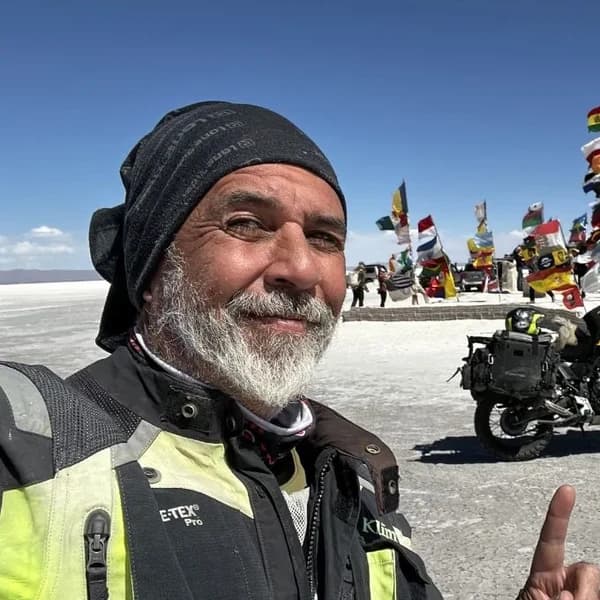
Gustavo Correa
Moto traveler, author and motorcycle travel consultant. 110,000+ km across 4 continents with Gloria, my motorcycle. Everything you read here has been tested on the road, not in an office.
Read my story →Last verified: 2026-08-29
Sources consulted (17)+
- bennetts.co.uk
- drive2spot.com
- mabisz.hu
- demarchesadministratives.fr
- officialdrivingpermit.com
- assurland.com
- moto-net.com
- leccionfrancesfacil.com
- leccionfrancesfacil.com
- estoyderuta.com
- club.autodoc.es
- stayfree.app
- globalpetrolprices.com
- globalpetrolprices.com
- motogsworldtours.com
- visionofhumanity.org
- mochilerosviajeros.com
A GIFT FOR BEING HERETHE ADVENTURE OF LIVING FREE
Do fear or doubt paralyze you before starting any project? You're not alone — every one of us has been there.
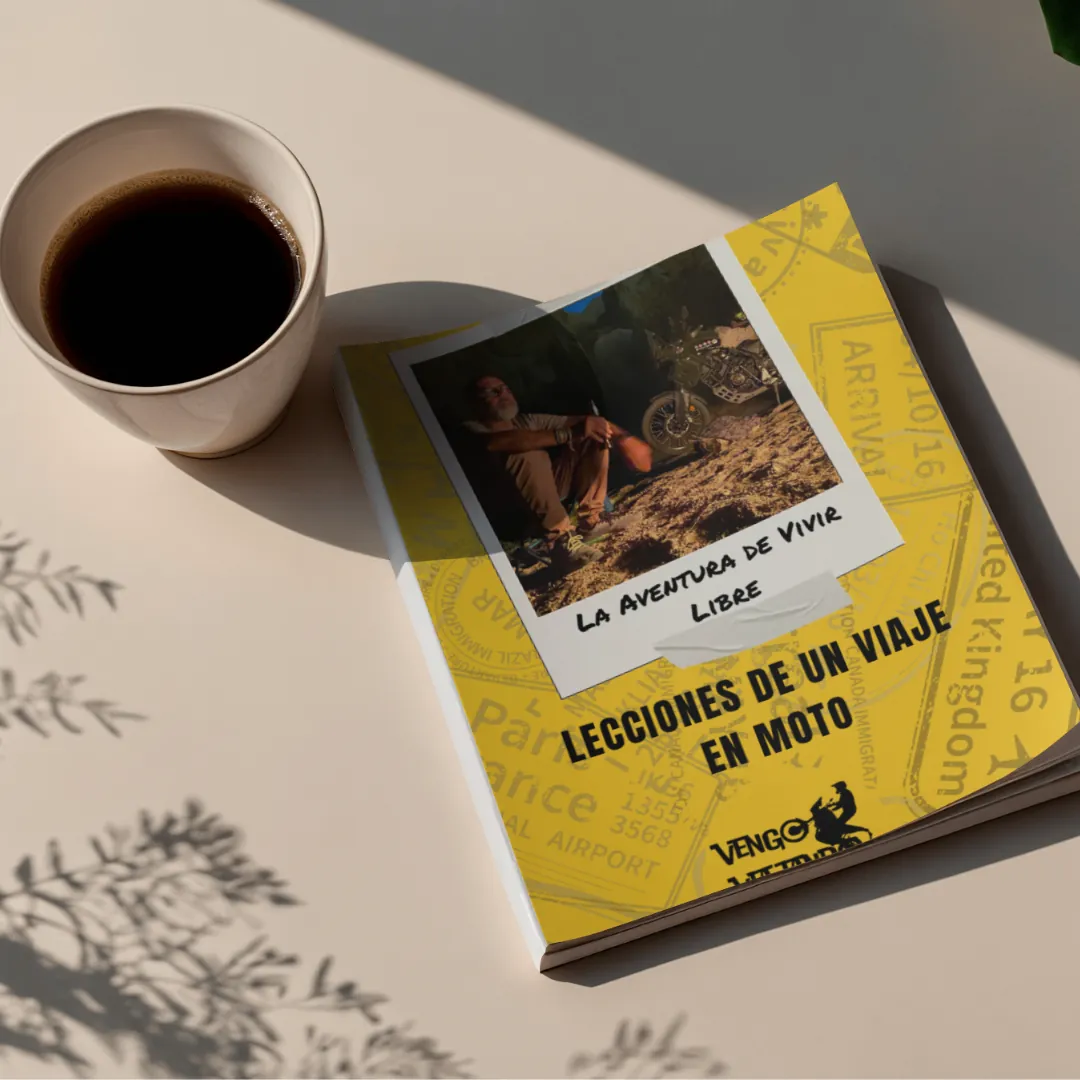
As a thank-you for visiting my site, I'm giving you my book "The Adventure of Living Free". A manual built to bring some light through the shadows and show you the philosophy that has let me ride the world for years.
* PDF STRAIGHT TO YOUR INBOX. NO SPAM.