MOTORCYCLE TRAVEL IN Switzerland
QUICK ANSWER
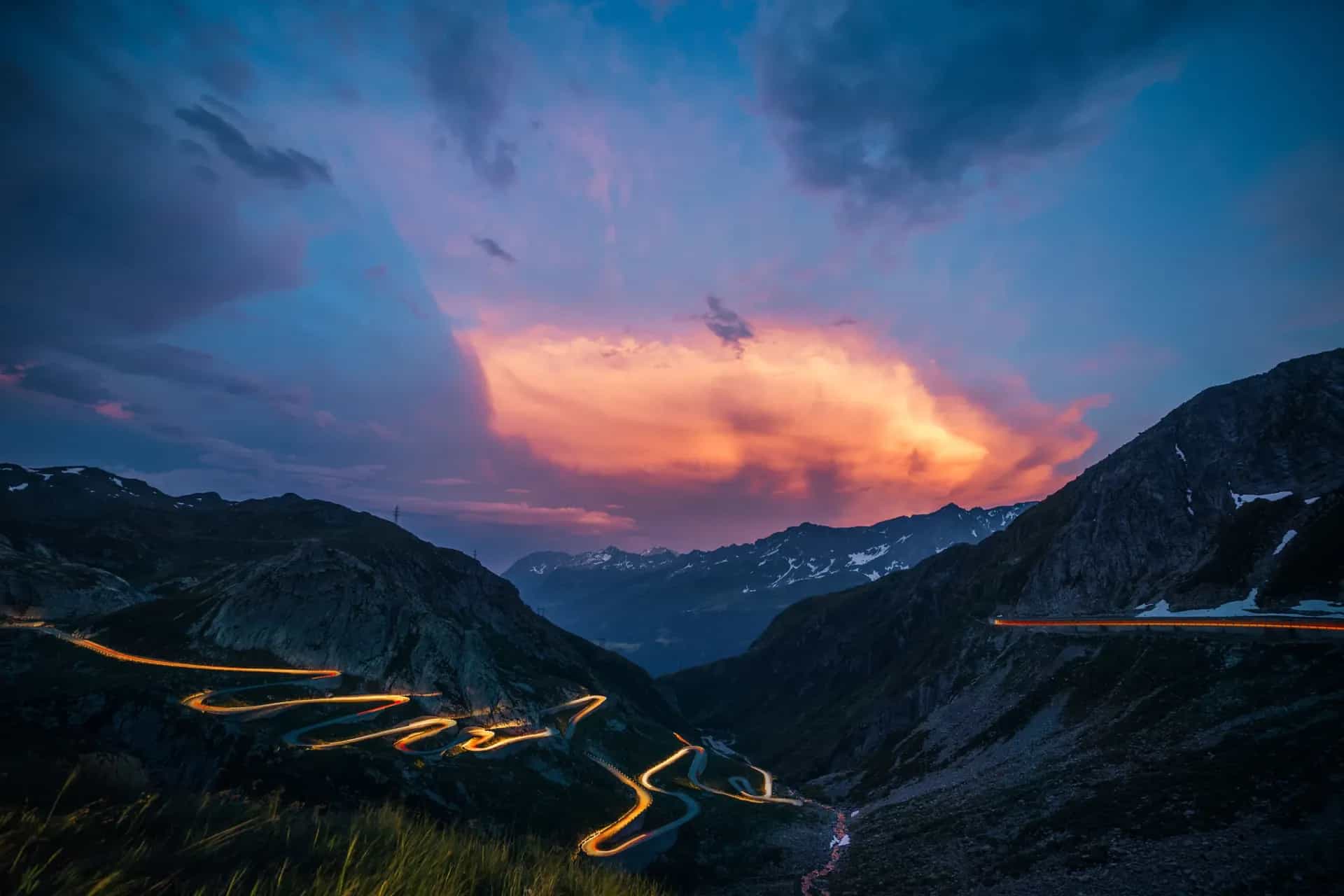
Switzerland is home to Europe's most iconic Alpine passes for motorcycle travel: the Furka, Grimsel, Susten, Nufenen and the historic cobblestone Tremola road up to the Gotthard. Entry itself is nearly formality-free if you're coming from another Schengen country — most crossings have no fixed checkpoint — but there's one requirement that catches many riders off guard: the vignette, a mandatory CHF 40 sticker required to use motorways and expressways, valid for the whole calendar year even if you're just passing through.
WHAT YOU NEED TO KNOW
The country you're about to enter has particularities you need to know.
Before you cross the border there are four things you need locked down: how safe the country is, what insurance is mandatory for your motorcycle, where you'll actually find fuel, and when to go. None of these are optional.
SAFETY: VERY LOW RISK (1/5)
Is Switzerland safe to enter by motorcycle? Yes — it's one of the safest countries in Europe to travel by motorcycle.
AREAS TO AVOID
- Scenic pullouts on the Alpine passes (Furka, Grimsel, Susten, Gotthard): It's not violent crime — it's opportunistic theft of bags, cameras and visible luggage from vehicles parked at the most photographed viewpoints, especially in high season (July–August). Don't leave anything in sight, even for a two-minute stop.
- Train stations and heavily touristed areas (Zurich, Lucerne, Interlaken): Pickpockets around train stations and theft from parking areas in busy tourist spots — the same pattern as any major European city. Low risk compared to other countries in the region, but real if you leave a fully loaded bike unattended for hours.
WHERE TO PARK
- Parking: At scenic pullouts on the Alpine passes, don't leave the bike out of sight while taking photos; in cities, guarded underground parking is the safest option at night.
- Alarm: Recommended but not essential — the country has one of the lowest crime rates in Europe. Consider one if your bike is high-value or you'll leave it unattended for several days.
- Luggage: During short stops on the passes (Furka, Grimsel, Susten), take bags and cameras with you or hide them — these are the areas with the most reports of opportunistic theft from parked vehicles.
- Visibility: Park where there's foot traffic — busy viewpoints and service stations are safer than isolated single-lane pullouts.
TIPS
- ➜Don't leave anything visible on the bike during photo stops on the passes, not even for a couple of minutes.
- ➜Respect the blood-alcohol limit (0.5‰, or 0.1‰ if you've held your licence less than 4 years) — checks are frequent and Swiss fines are among the highest in Europe.
- ➜Carry a digital copy of your passport, insurance and motorcycle paperwork — rarely requested, but it saves time if a customs check asks for it.
Outside those opportunistic thefts in tourist spots, Switzerland is, in practical terms, one of the safest countries in the world to travel by motorcycle.
MANDATORY INSURANCE: Green Card (or frontier insurance)
Switzerland isn't an EU or EEA member, but it does belong to the Green Card multilateral agreement: if your bike is registered in the EU/EEA, or in another signatory country such as the UK, your home third-party liability insurance automatically covers you in Swiss territory, with no need to carry the physical card. If your bike carries a plate from a country that hasn't signed that agreement, which is the case for most Latin American plates, you need a Green Card issued by your insurer before you travel, or you buy frontier insurance (Grenzversicherung) directly at customs when you cross, issued by the Swiss Nationales Versicherungsbüro (NBI).
FUEL: PRICEY, NEVER SCARCE
At around CHF 2 per litre (August 2026), fuel in Switzerland is among the priciest in continental Europe, but finding it is never a problem — the station network is dense even on the Alpine passes. The exception is stretches closed by snow in the off season (see Best time to go) — no service there because there's no traffic.
BEST SEASON: JUN → SEP
June to September is the safest window to cross the big Alpine passes. The Furka, Grimsel, Susten and Nufenen usually open between late May and mid-June and close around late October, depending on how long the snow takes to clear each year. Outside that window several of the country's most iconic passes are closed, and you have to route around through a tunnel or, in the case of the Furka, load the bike onto a train.
ENTERING SWITZERLAND BY MOTORCYCLE
Crossing into Switzerland by motorcycle through the main posts from Germany, France, Italy or Austria is, in practice, almost invisible: as a Schengen country, most crossings have no fixed checkpoint. But Switzerland isn't a member of the European Union or the European Economic Area, so it's still, technically, a customs border — the Federal Office for Customs and Border Security (BAZG) can stop and check you at any point.
The procedure, when it applies, has up to two steps:
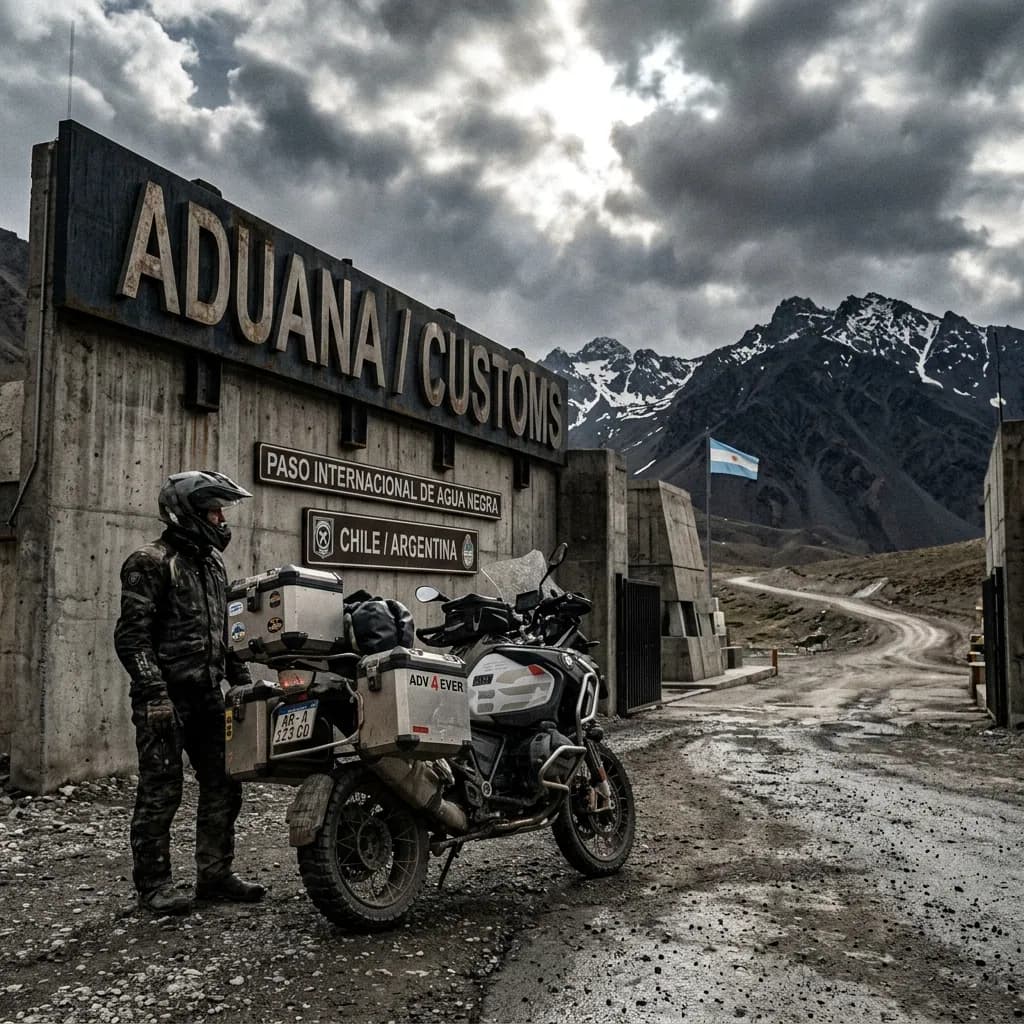
Border crossing: At crossings from Germany, France, Italy or Austria there usually isn't a fixed checkpoint — many are marked only with a sign, no barrier or officer. Even so, keep your passport and motorcycle documents on hand: the BAZG carries out random checks.
Customs, if stopped or arriving from outside the EU/EEA: If you're stopped, ask at the post for form 15.25: it gives you two working days to declare the motorcycle at an inland customs office. For private tourist use, no import duty is charged for up to 6 months total per calendar year.
The procedure itself costs nothing: there's no import duty for private tourist use, up to a maximum of 6 months per calendar year, and Swiss customs' (BAZG) form 15.25 is free.
Real friction point:the motorway vignette (CHF 40) is not part of the border procedure, and many riders overlook it — it isn't charged at the crossing, you have to buy it separately (online, at petrol stations or right at the border) before taking any Swiss motorway or expressway, and the fine for not having it is CHF 200 plus the cost of the vignette.
If your bike doesn't carry a plate from a Green Card signatory country, add the insurance check on top (see Mandatory insurance below) — it's the other thing riders discover too late if they don't look into it beforehand.
REQUIRED DOCUMENTATION
Passport or national ID: Valid for the whole length of your stay.
Driving licence: Valid if it's in German, French, Italian or English; otherwise carry an International Driving Permit (IDP) or an official translation.
Motorcycle documents: Title or registration document, with the chassis number (VIN) matching the physical bike.
Green Card or valid third-party liability insurance: Check whether your plate is automatically covered (see Mandatory insurance below).
Motorway vignette: CHF 40, mandatory for motorways and expressways; bought separately, not at the border crossing.
If your bike carries an EU/EEA plate, or one from another Green Card signatory country, crossing into Switzerland is, in practice, as simple as changing lanes: no checkpoint, no stamp, no procedure. The real difference lies in two things that don't get sorted at the border — the motorway vignette and, if it applies to you, insurance — so settle those before you set off.
DAILY BUDGET
This price range combines cheap lodging, cooking your own meals, and basic bike maintenance — the three categories that weigh most on any moto traveler's daily budget.
Your real daily budget is something you build yourself, based on your own needs and limits — but if you want an idea of how to build yours, pick a category to see the full guide:
Full cost breakdown in the budget guide
THE 10 BEST MOTORCYCLE ROUTES IN SWITZERLAND
This Top 10 isn't ordered by kilometers or technical difficulty, but by real fame: research focused on which alpine passes come up first when any international motorcycle traveler searches "motorcycle routes Switzerland", which names repeat across forums like Horizons Unlimited and ADVrider, and which gather the most travel stories, videos and specialized articles. The Furka tops the list because no other Swiss pass has the crossover recognition that film gave it — the rest rank lower in real fame, but all of them are passes any motorcyclist crossing Switzerland should know.
Before setting out to string several of these passes together in one day, it's worth planning the trip properly —how to prepare a long motorcycle tripcovers the base logistics that apply to an alpine route too.
Descents from over 2,400 meters change temperature in minutes, sothe gear guide for long motorcycle tripshelps you avoid reaching an alpine summit with the wrong gear.
Furka Pass:the James Bond Road
Valais - UriRiding the Furka Pass by motorcycle means climbing the most famous curve in action-movie history: in 1964, the car-chase scene from Goldfinger with Sean Connery was filmed on a bend on the east side, today officially marked as "James Bond Strasse," complete with its own lookout point and parking area.
The pass connects Gletsch (Valais) with Realp (Uri) at 2,429 meters above sea level, with grades of up to 11% and a series of numbered switchbacks climbing in zigzag from the valley floor.
Just below the summit, the Hotel Belvédère gives access to the Rhône Glacier ice grotto, which retreats 30 to 40 meters a year — every season the 100-meter tunnel carved into the ice has to be dug out again because the glacier has already moved.
At the summit station, the Furka-Bergstrecke also runs: a volunteer-restored steam cogwheel railway reviving the original 19th-century line that was abandoned when the base tunnel opened in 1982.
WARNINGS FOR THIS ROUTE
This is what you need to sort out before riding this route.
- 01Fuel range
Good. There are stations in Oberwald and Realp, at both ends; at the summit there's only the Hotel Belvédère, no fuel.
Grimsel Pass:the Dam that Crowns the Alps
Valais - BernCrossing Grimsel Pass by motorcycle means riding over one of the most ambitious hydroelectric engineering feats in the Alps: the first carriage road was finished between 1891 and 1894 by local and Italian laborers, but the current road wasn't fully complete until 1986, after nearly 15 years of staged widening between the cantons of Bern and Valais.
The road winds alongside the Grimselsee reservoir, one of the dams the utility Kraftwerke Oberhasli (KWO) built between the 1920s and 1950s to power much of Switzerland — the turquoise water contrasts with grey rock polished smooth by glaciers.
A few meters off the route the Gelmerbahn funicular also starts, the steepest incline in all of Switzerland, climbing straight up to the suspended Gelmersee reservoir.
It's the mandatory link between the Furka and the Susten: together, the three passes form the most-ridden alpine circuit among motorcycle travelers in the whole country.
WARNINGS FOR THIS ROUTE
This is what you need to sort out before riding this route.
- 01Fuel range
Good. There are stations in Gletsch, Guttannen and Innertkirchen/Meiringen; at the summit there's only the Grimsel Hospiz, no fuel.
Susten Pass:the First Alpine Road Built for Engines
Uri - BernRiding Susten Pass by motorcycle feels different from the rest of the alpine passes: it was the first mountain road in the entire Alps designed specifically for motorized traffic, not a converted mule track.
Construction began in 1938 and, despite interruptions from World War II, it officially opened in September 1946: 46 km of wide curves, 26 bridges and tunnels carved into the rock between Wassen (Uri) and Innertkirchen (Bern).
That engineering shows on the bike — the curves are long and well-cambered instead of the tight switchbacks of older passes like the Klausen, which made it a favorite among sport riders from day one.
On the descent toward the south, the Stein Glacier stays in view for most of the ride, one of the few alpine glaciers still visible from a paved road.
WARNINGS FOR THIS ROUTE
This is what you need to sort out before riding this route.
- 01Fuel range
Good. There are stations in Wassen and Innertkirchen; at the summit there's only the Restaurant Passhöhe.
Gotthard Pass:the Cobblestone Tremola
Uri - TicinoClimbing Gotthard Pass by motorcycle via the Tremola means riding the original carriage road, built between 1830 and 1832 by engineer Francesco Moschini and preserved almost intact: 15 km of granite cubes (not the rounded cobbles of other European routes, but machine-cut "setts") through a series of numbered switchbacks climbing the Airolo side.
The Gotthard is known as the "king of the Alpine passes": crossing it has been strategic since the year 1200, and in 1799 the Russian army under General Suvorov crossed it in the middle of the war against Napoleon, in one of the most cited mountain marches in European military history.
Today most traffic runs through the base tunnel opened in 2016, so there's almost no car traffic on the Tremola — just motorcyclists and cyclists seeking the real experience, riding slowly because the cobbles turn slick and polished when wet.
The north side, from Hospental, is standard pavement: the mix of both worlds over 24 km is what turned this pass into one of the most cited cult routes in all of Switzerland.
WARNINGS FOR THIS ROUTE
This is what you need to sort out before riding this route.
- 01Fuel range
Good at both ends. There are stations in Airolo and Andermatt; at the summit there's only the Ospizio San Gottardo.
- 02Slippery cobblestones when wet
The Tremola's granite setts become loose and polished when wet — several local riding guides recommend slowing down and avoiding hard braking mid-curve on a wet surface.
Nufenen Pass:Switzerland's Second-Highest Paved Road
Valais - TicinoCrossing Nufenen Pass by motorcycle means touching the 2,478 meters above sea level of Switzerland's second-highest paved pass, just behind the Umbrail.
The current road only opened to motor traffic in September 1969 — before that there was only a bridle path between the Ulrichen valley (Valais) and the Bedretto valley (Ticino), historically the shortest route connecting Brig with Airolo.
From the summit, the Gries Glacier stays in view to the south, and to the north the full Bernese range unfolds, with the Finsteraarhorn as backdrop.
It's almost always paired in the same day with the Gotthard, since both start and end in Airolo — the perfect closer for the "four passes" circuit any motorcycle traveler builds when passing through the canton of Uri.
WARNINGS FOR THIS ROUTE
This is what you need to sort out before riding this route.
- 01Fuel range
Good at both ends. There are stations in Ulrichen and Airolo; there's no service at the summit.
Klausen Pass:the Birthplace of European Hillclimb Racing
Uri - GlarusRiding Klausen Pass by motorcycle means covering the course of one of the most prestigious mountain races in European history: the Klausenrennen ran from 1922 to 1934 and drew more than 450 cars and motorcycles per edition, with up to 40,000 spectators along the route.
The outright course record went to Hans Stuck, driving an Auto Union, in the 1934 edition, for the nearly 22 km climb through tight bends and over 1,000 meters of elevation gain.
Since 1993 the race has been periodically revived as a historic event for vintage vehicles — the next edition is announced for 2027 — and during those weekends the pass closes to regular traffic.
Outside those dates, the Klausen remains territory for motorcyclists chasing genuinely technical curves, without the Susten's long straights or the Gotthard's tourist traffic.
WARNINGS FOR THIS ROUTE
This is what you need to sort out before riding this route.
- 01Fuel range
Good at both ends. There are stations in Altdorf/Bürglen and in Linthal; at the summit there's only the Hotel Passhöhe.
Oberalp Pass:Where the Rhine is Born
Uri - GraubündenCrossing Oberalp Pass by motorcycle is the mandatory gateway to the area's other legendary passes: Andermatt, at the western end, is the crossroads where the Furka, the Gotthard, the Susten and the Oberalp itself all begin — the only village in the Swiss Alps where four historic passes converge.
The current road was built in 1862-1863, though the original track was a medieval path connecting to Disentis Monastery, one of the oldest in Switzerland.
A few meters off the route, a two-hour hike leads to the Lai da Tuma, the glacial lake that is the official source of the Rhine — the same river that, 1,200 km downstream, empties into the North Sea.
It's also the highest point on the Glacier Express route, Switzerland's most famous panoramic train, so it's not unusual to cross paths with the train winding along parallel to the road.
WARNINGS FOR THIS ROUTE
This is what you need to sort out before riding this route.
- 01Fuel range
Good at both ends. There are stations in Andermatt and Disentis/Sedrun; at the summit there's only a restaurant.
San Bernardino Pass:the Italian Road Between Graubünden and Ticino
Graubünden - TicinoRiding San Bernardino Pass by motorcycle means taking the road partly financed by the Kingdom of Sardinia in the 19th century — which is why it's still known as the "Italian road": the carriage road opened in 1770 and was widened between 1821 and 1823 with Sardinian funds, seeking a direct connection north across the Alps.
The pass connects the Hinterrhein valley (Graubünden) with the Mesolcina, already in the Italian-speaking territory of Ticino, also marking Switzerland's Italian-German language border.
Since 1967 a 6.6 km tunnel has absorbed almost all heavy traffic, leaving the high-altitude road almost entirely free for motorcyclists and cyclists looking for curves without trucks.
At the summit, the small Lake Moesola (2,053 masl) crowns a pass that gets up to 5.2 meters of accumulated snowfall per season — among the snowiest of all the Swiss Alps.
WARNINGS FOR THIS ROUTE
This is what you need to sort out before riding this route.
- 01Fuel range
Good at both ends. There are stations in Hinterrhein/Splügen and in San Bernardino village; there's no service at the summit.
Flüela Pass:Davos's 17 Hairpins
GraubündenClimbing Flüela Pass by motorcycle from Davos means 17 curves ranging from tight switchbacks to long, stretched-out straights — that variety is what made it a favorite among Graubünden motorcyclists.
The road crosses the drainage divide between the Rhine and Danube basins, cresting at 2,384 meters next to the Flüela Hospice, between two mountain lakes, Lai da la Scotta and Lai Nair.
Since the Vereina rail tunnel opened in 1999 (19 km under the mountain), the high-altitude road stopped being the only winter route into the Engadin, freeing it from most heavy traffic and leaving it almost exclusively to tourism and motorcycling.
It's one of three paved passes connecting the Engadin with northern Graubünden — alongside the Albula and the Julier — and the most sought-after variant for riders setting out from Davos.
WARNINGS FOR THIS ROUTE
This is what you need to sort out before riding this route.
- 01Fuel range
Good at both ends. There are stations in Davos and in Susch/Zernez; at the summit there's only the Flüela Hospice.
Great St Bernard Pass:Napoleon's Crossing and the Rescue Dogs
Valais (Switzerland) - Aosta (Italy)Crossing the Great St Bernard Pass by motorcycle means literally following in Napoleon's footsteps: in May 1800 he moved an army of 40,000 men and their artillery across in single file, 6,000 soldiers a day, to surprise Austrian forces in Italy — the scene was immortalized in David's painting, today an almost pop-culture icon.
At the summit, 2,469 meters up, the hospice founded in 1049 by Saint Bernard of Menthon still stands: this is where the Saint Bernard dog breed was born, documented in paintings since 1690, bred for centuries for snow rescue. The hospice sold its last dogs in 2004, but dedicated foundations keep the breed alive in the area today.
The pass connects Bourg-Saint-Pierre, in the Swiss Valais, with Aosta, already in Italy, and can only be crossed in summer: temperatures down to -30°C and snowfall up to 10 meters keep it closed the rest of the year, which is why a tunnel opened in 1964 to carry winter traffic.
It's the only pass on this Top 10 that ends in another country, making it the perfect side trip to add Italy to the itinerary without stepping outside the logic of a Switzerland motorcycle trip.
WARNINGS FOR THIS ROUTE
This is what you need to sort out before riding this route.
- 01Fuel range
Good up to Bourg-Saint-Pierre, the last Swiss village before the climb; at the summit there's only the hospice, no fuel.
NEIGHBORING COUNTRIES
Crossing the border next? Click a country to see its 10 best motorcycle routes.


FREQUENTLY ASKED QUESTIONS
01Do I need the Swiss vignette if I'm only passing through, without using motorways?
+
Do I need the Swiss vignette if I'm only passing through, without using motorways?
It depends on your route. The vignette is only mandatory for motorways and expressways (marked green on Swiss signage) — if your route stays on cantonal roads and mountain passes, you technically don't need one. In practice, most routes that cross Switzerland touch at least one stretch of motorway, so it's worth buying it before you set off to avoid the CHF 200 fine.
02How much does the Swiss vignette cost and how long is it valid?
+
How much does the Swiss vignette cost and how long is it valid?
CHF 40, the same price for motorcycles, cars and motorhomes up to 3.5 tonnes. Each year's vignette is valid from 1 December of the previous year through 31 January of the following year (14 months total), either as a physical sticker or as an e-vignette linked to your plate.
03Does my motorcycle insurance automatically cover Switzerland?
+
Does my motorcycle insurance automatically cover Switzerland?
It depends on where your bike is registered. If it's registered in the EU/EEA, or another Green Card multilateral agreement country like the UK, yes — your home insurance covers Switzerland with no extra paperwork. If your plate is from a country that hasn't signed that agreement, which is the case for almost all of Latin America, you need a Green Card issued by your insurer before you travel, or frontier insurance bought at the border crossing.
04Is lane splitting between cars allowed in Switzerland?
+
Is lane splitting between cars allowed in Switzerland?
No. Unlike France, Italy or Portugal, lane splitting is banned in Switzerland — a proposal to allow it in stopped traffic was rejected by the Swiss Parliament. In a traffic jam, motorcycles have to queue like any other vehicle.
05When do Alpine passes like the Furka and Gotthard open?
+
When do Alpine passes like the Furka and Gotthard open?
It varies year to year depending on snowfall, but as a reference: in 2026 the old Gotthard pass reopened on 8 May, the Grimsel and Furka on 29 May, and the Susten in mid-June. They close again around late October. Outside that window they stay shut, and you have to route around through a tunnel or, in the case of the Furka, load the bike onto a train.
06Do I need an International Driving Permit to enter Switzerland by motorcycle?
+
Do I need an International Driving Permit to enter Switzerland by motorcycle?
Only if your driving licence isn't in German, French, Italian or English. If it is, the original is enough. Otherwise you need an International Driving Permit (IDP) or an official translation — and since most Latin American licences don't meet that criteria, it's worth getting the IDP before you travel.
Gustavo Correa
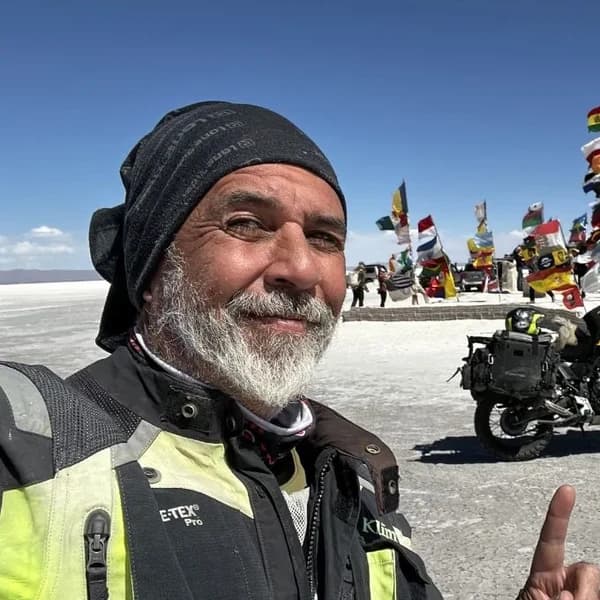
Moto traveler, author and motorcycle travel consultant. 110,000+ km across 4 continents with Gloria, my motorcycle. Everything you read here has been tested on the road, not in an office.
Read my story →Last verified: 2026-08-29
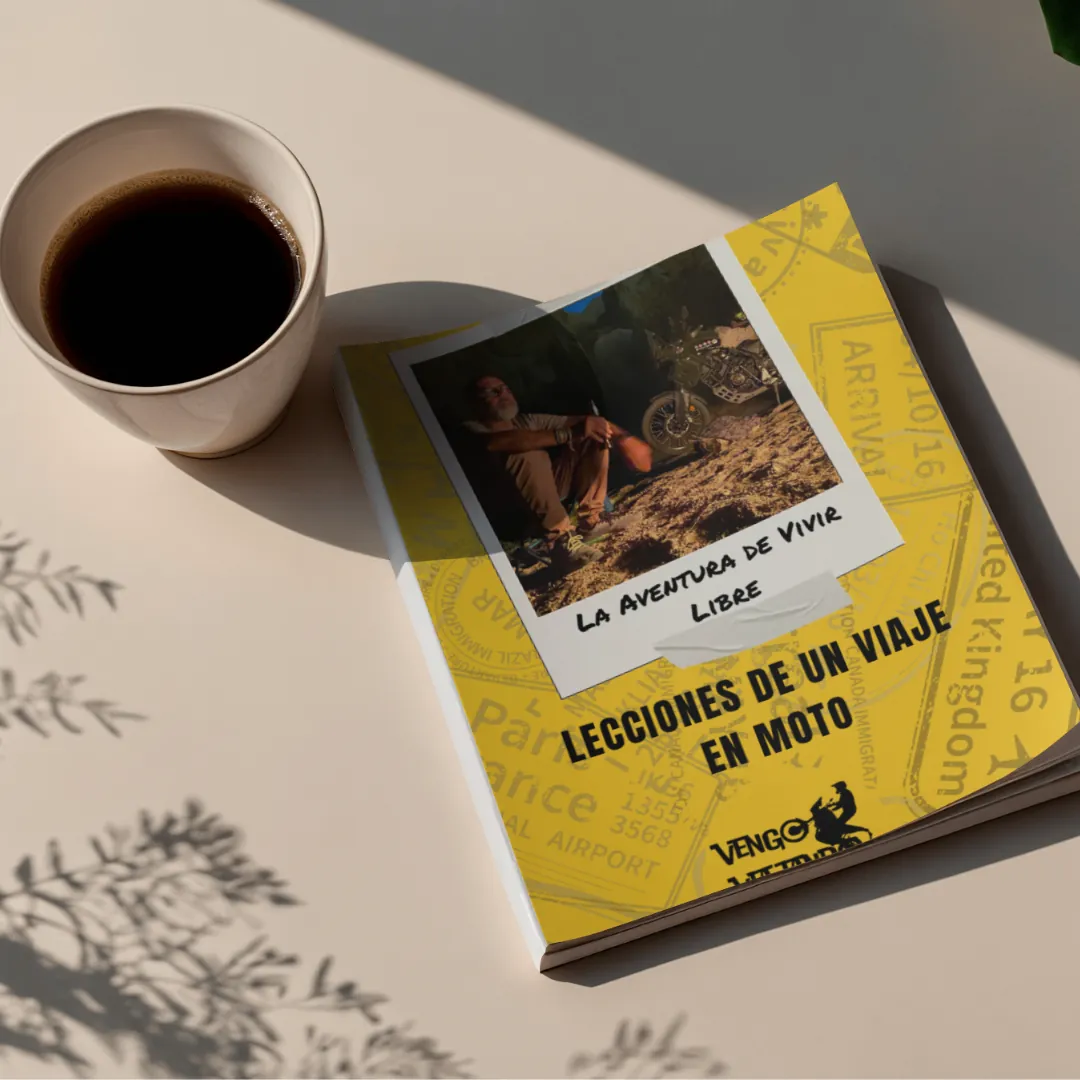
A GIFT FOR BEING HERETHE ADVENTURE OF LIVING FREE
Do fear or doubt paralyze you before starting any project? You're not alone — every one of us has been there.
As a thank-you for visiting my site, I'm giving you my book "The Adventure of Living Free". A manual built to bring some light through the shadows and show you the philosophy that has let me ride the world for years.
* PDF STRAIGHT TO YOUR INBOX. NO SPAM.