VIAJAR EN MOTO POR Alemania
RESPUESTA RÁPIDA
Alemania es el país con menos fricción burocrática de Europa para viajar en moto: al pertenecer al espacio Schengen, cruzar desde otro país europeo no exige ningún trámite de aduana, aunque desde 2024 hay controles de identidad reinstaurados en las nueve fronteras terrestres. Lo que sí hay que resolver es el seguro: si tu moto tiene matrícula fuera del sistema europeo Green Card (el caso de la mayoría de las matrículas latinoamericanas), necesitas contratar un seguro de frontera antes de cruzar. A cambio, Alemania ofrece rutas de culto como la Deutsche Alpenstraße y tramos de autopista sin límite de velocidad.
LO QUE NECESITAS SABER
El país al que piensas entrar tiene particularidades que tienes que conocer.
Antes de cruzar la frontera hay cuatro cosas que tienes que tener resueltas: qué tan seguro es el país, qué seguro es obligatorio para tu moto, dónde vas a encontrar combustible y cuándo conviene ir. Ninguna es opcional.
SEGURIDAD: RIESGO MUY BAJO (1/5)
Es seguro Alemania para entrar en moto? Sí — es uno de los países más seguros de Europa para rodar; el riesgo real no es la violencia, sino el robo de motos estacionadas en las grandes ciudades.
ZONAS A EVITAR
- Berlín — mayor número absoluto de motos robadas: En 2023 se registraron 2.684 motos y ciclomotores robados en la capital, la cifra más alta del país; el estacionamiento nocturno en la calle en barrios céntricos es el punto débil real.
- Colonia y Renania del Norte-Westfalia: Las estadísticas policiales de 2024 ubican a Colonia primera en casos registrados dentro de Renania del Norte-Westfalia (1.179), con Duisburgo —a unos 60 km— como otro punto de robo frecuente en la región (454 casos, entre las diez ciudades con mayor tasa de robos por habitante del país).
- Áreas de descanso de autopista (Raststätten) sin vigilancia: No están cercadas ni custodiadas y son un punto de robo de equipaje y motos documentado entre viajeros; un Autohof privado o un cámping son una opción más segura para pasar la noche.
DÓNDE DEJAR LA MOTO
- Parking: En la calle es común y generalmente está bien de día en casi todo el país; de noche, en las cuatro ciudades con más robos (Berlín, Colonia, Hamburgo, Leipzig) vale la pena buscar un parking cerrado o vigilado.
- Alarma: Recomendable pero no imprescindible en la mayor parte del país; más útil en las grandes ciudades del norte y el oeste.
- Equipaje: Alforjas rígidas con candado desalientan el hurto oportunista; en las Raststätten de autopista, no dejes nada suelto ni siquiera de día.
- Visión: Alemania tiene muy buena iluminación urbana en general; igual conviene estacionar donde haya movimiento y evitar rincones ciegos de parkings subterráneos vacíos de noche.
CONSEJOS
- ➜Usa un candado de disco o cadena adicional al estacionar de noche en Berlín, Colonia, Hamburgo o Leipzig, las cuatro ciudades con más robos de moto del país.
- ➜Evita pasar la noche en una Raststätte de autopista sin vigilancia; un Autohof privado o un cámping son opciones más seguras y no cuestan mucho más.
Alemania es uno de los países más seguros de Europa para viajar en moto — el riesgo real es el hurto oportunista de motos en las grandes ciudades del norte y oeste, no la violencia. Fuera de esos puntos, es de los destinos más tranquilos del continente para rodar.
SEGURO OBLIGATORIO: Seguro de frontera (Grenzversicherung)
Si tu moto está matriculada en un país europeo o adherido al sistema internacional Green Card, tu seguro de responsabilidad civil ya cubre Alemania automáticamente por la directiva europea de seguros de vehículos — no necesitas comprar nada adicional. Si tu matrícula es de fuera de ese sistema (el caso de la mayoría de las motos con patente latinoamericana), necesitas un seguro de frontera contratado antes de cruzar, con brokers como Tourinsure o Alessie, porque la Carta Verde del Mercosur no tiene validez en Europa pese al nombre compartido.
ASEGURADORAS PARA MATRÍCULAS NO MERCOSUR
Broker alemán especializado en seguro de frontera para vehículos no europeos —autos, campers y motos— con la póliza emitida antes de viajar; cubre toda Europa además de otras regiones (Turquía, EE. UU., Marruecos).
Correduría neerlandesa regulada por la AFM, especializada en seguros temporales para vehículos extranjeros, motos incluidas, con coberturas de uno a doce meses válidas en toda Europa.
COMBUSTIBLE: RED DENSA, PRECIO ALTO
Red de estaciones densísima en todo el país — la disponibilidad nunca es un problema, incluso en zonas rurales. El precio es alto para estándares sudamericanos: la nafta súper ronda los 2,20 euros por litro y el diésel está en niveles similares. Los tramos de autopista sin límite general de velocidad (unos 6.500 km del total de la red) disparan el consumo si rondas a fondo.
MEJOR ÉPOCA: MAY → OCT
Mayo a octubre para todo el país, con septiembre y octubre como los meses más secos y templados. Los pasos alpinos de la Deutsche Alpenstraße, como la Roßfeldhöhenringstraße, suelen cerrar por nieve entre noviembre y abril — conviene verificar el estado de cada paso antes de planificar la ruta, porque Google Maps no siempre refleja los cierres estacionales.
ENTRAR A ALEMANIA EN MOTO
A diferencia de Sudamérica, entrar a Alemania en moto casi nunca implica un trámite de aduana clásico: al pertenecer al espacio Schengen, si ya estás rodando desde otro país europeo (Austria, Suiza, Francia, Países Bajos, etc.) cruzas sin ningún control aduanero. Lo que sí cambió desde septiembre de 2024 es que Alemania reinstauró controles de identidad temporales en sus nueve fronteras terrestres — vigentes, con prórrogas sucesivas, al menos hasta septiembre de 2026 — así que conviene llevar los papeles a mano aunque técnicamente no dejes el espacio Schengen.
El trámite real tiene dos momentos:
Primer punto de entrada a la UE/Schengen: Si tu moto no es europea (llega por barco o avión desde fuera de la UE), el despacho aduanero real ocurre ahí, no necesariamente en Alemania — declaración de importación temporal y prueba de seguro.
Control fronterizo terrestre alemán: Control de identidad reinstaurado desde 2024 en las nueve fronteras terrestres del país; pasaporte y documentación de la moto a mano, aunque no haya sello de entrada.
El control de identidad en la frontera terrestre alemana es gratuito — no hay tasa ni trámite de aduana si ya circulas dentro del espacio Schengen.
Punto de fricción real:no es el control fronterizo, es el seguro. La Carta Verde del Mercosur (Argentina, Brasil, Chile, Uruguay, Paraguay) no tiene ninguna validez en Europa pese al nombre compartido — es un sistema totalmente distinto. Si tu moto tiene matrícula latinoamericana, necesitas contratar un seguro de frontera europeo (con brokers como Tourinsure o Alessie) antes de cruzar, porque la policía puede pedir prueba de cobertura válida en cualquier control.
Si tu moto está matriculada en un país europeo o adherido al sistema Green Card, tu propio seguro ya te cubre en Alemania automáticamente.
DOCUMENTACIÓN NECESARIA
Pasaporte vigente: Válido durante toda la estadía; llévalo a mano incluso viajando dentro de Schengen, por los controles reinstaurados en frontera.
Carnet de conducir: El de tu país alcanza para una estadía corta; si no está en alfabeto latino o no es de la UE/EEE, conviene llevar el Permiso Internacional de Conducir (IDP) o una traducción certificada.
Título de propiedad de la moto: Si no eres el titular, necesitas poder notarial del dueño.
Seguro válido en Alemania: Carta Verde si tu país está adherido al sistema europeo, o seguro de frontera comprado antes de cruzar (Tourinsure, Alessie) si no lo está.
Documentación de importación temporal: Solo aplica si tu moto entra a la UE desde fuera de Schengen (por barco o avión) — declaración aduanera en el primer puesto de entrada.
Con estos cinco puntos resueltos, cruzar a Alemania en moto es, en la práctica, el trámite más simple de este sitio — no hay aduana si vienes de otro país Schengen. El verdadero trabajo de planificación es el seguro, que hay que resolver antes de salir, no en la frontera.
PRESUPUESTO DIARIO
Este rango de precios combina alojamientos económicos, cocina propia y mantenimiento básico de la moto — los tres rubros que más pesan en el presupuesto diario de cualquier motoviajero.
El verdadero presupuesto diario lo armas tú, de acuerdo a tus necesidades y tus límites, pero si quieres tener una idea de cómo armar el tuyo, elige tu categoría para ver la guía completa:
Desglose completo por rubro en la guía de presupuesto
LAS 10 MEJORES RUTAS EN MOTO POR ALEMANIA
Este top 10 está ordenado por fama y popularidad real entre motoviajeros, no por preferencia personal: la posición 1 es la ruta que cualquiera que busque "motorcycle route Germany" encuentra primero, la más recorrida tanto por alemanes como por viajeros internacionales, y la que más aparece mencionada en foros de motoviajeros (Horizons Unlimited, ADVrider), blogs especializados en moto-turismo y marcas de motociclismo. Las posiciones siguientes bajan en fama real, pero todas siguen siendo rutas genuinamente reconocidas — ninguna es una "joya oculta" que solo nosotros conozcamos.
A diferencia de otras guías de este sitio, ninguna de estas 10 rutas exige preparación off-road: son carreteras asfaltadas de excelente calidad, con estaciones de servicio frecuentes y señalización impecable. El desafío en Alemania es la curva técnica encadenada y el respeto a límites de velocidad y prohibiciones puntuales, no el terreno ni el aislamiento.
Antes de salir a cualquiera de estas 10 rutas, conviene revisarla guía de mecánica para viajes largos en moto, porque una falla mecánica en medio de un paso alpino no se resuelve igual que una en la autopista.
Y si este es tu primer viaje largo en moto por Europa, conviene arrancar porcómo preparar un viaje largo en moto, la guía base que resume todo lo que hay que resolver antes de subirse a cualquiera de estas rutas.
La Ruta Romántica:de Würzburg a Füssen
Baviera y Baden-WurtembergHacer la Ruta Romántica en moto significa recorrer los 460 kilómetros que unen Würzburg con Füssen, la carretera turística más famosa de Alemania desde que un grupo de agentes de viajes la bautizó así en 1950 para relanzar el turismo de la posguerra.
El trazado sigue en gran parte una antigua vía comercial medieval que conectaba el centro de Alemania con el sur, y hoy atraviesa tres pueblos amurallados —Rothenburg ob der Tauber, Dinkelsbühl y Nördlingen— prácticamente intactos desde el siglo XV.
El final de la ruta es el castillo de Neuschwanstein, construido por el rey Luis II de Baviera entre 1869 y 1886, que inspiró el castillo de la Bella Durmiente de Disney en 1955. Recibe más de 1,4 millones de visitantes al año, lo que lo convierte en una de las paradas obligadas de cualquier motoviajero que cruce Baviera.
ADVERTENCIAS DE ESTA RUTA
Esto es lo que necesitas tener en cuenta antes de meterte en esta ruta.
- 01Autonomía de combustible
Excelente. Estaciones frecuentes en cada pueblo a lo largo de todo el recorrido.
La Carretera Alpina Alemana (Deutsche Alpenstraße)
De Lindau (lago Constanza) a BerchtesgadenCruzar la Deutsche Alpenstraße en moto es recorrer la ruta turística más antigua de Alemania: nació en 1927 por una idea del médico August Knorz y tomó su trazado definitivo en los años 30 bajo la dirección del ingeniero Fritz Todt.
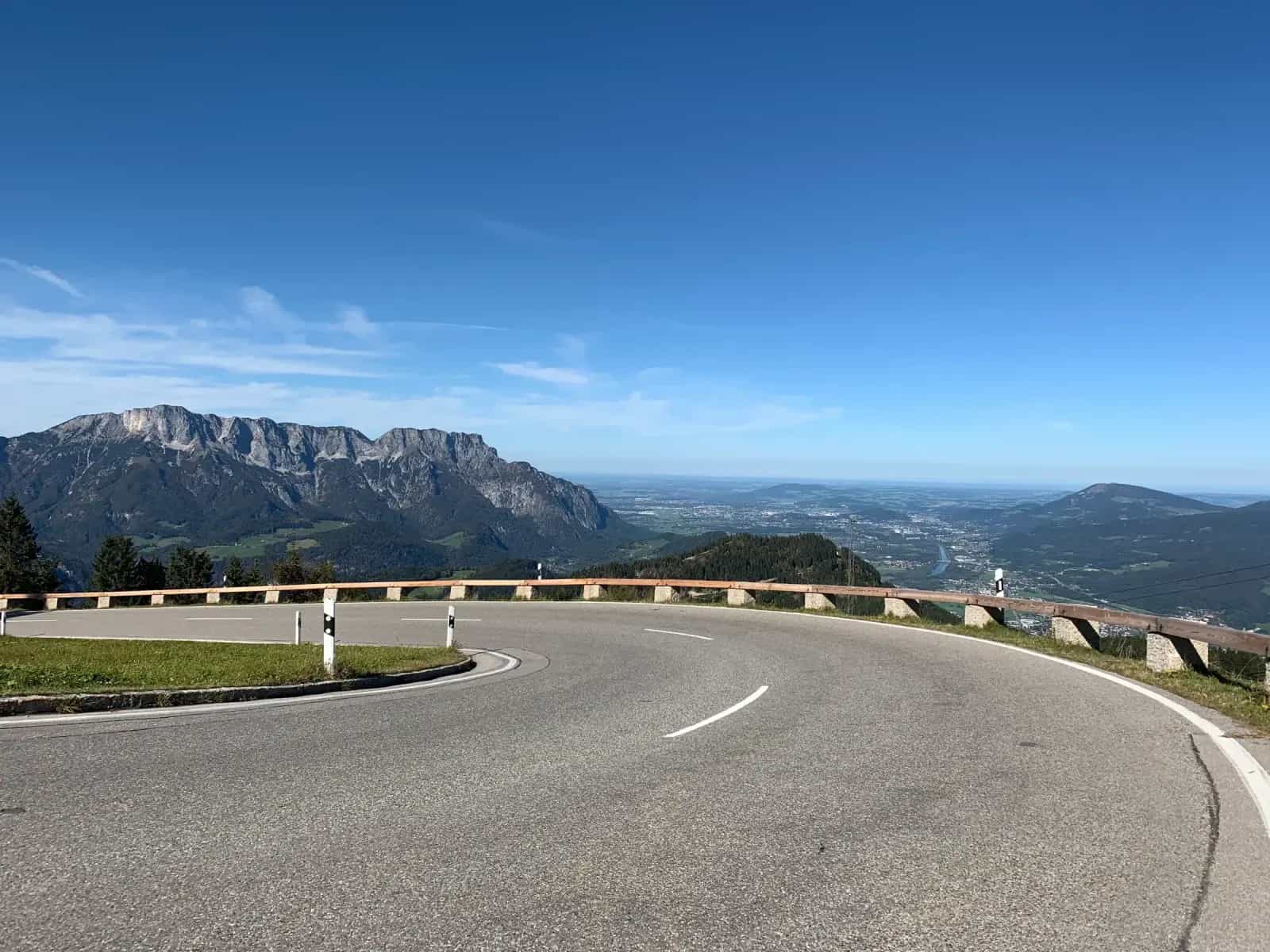
Son 484 kilómetros desde Lindau, a orillas del lago Constanza, hasta Schönau am Königssee, con el paso de Oberjoch como techo de la ruta a 1.178 metros sobre el nivel del mar — el tramo entre Bad Hindelang y Oberjoch es, con más de 100 curvas en pocos kilómetros, el camino más sinuoso de Alemania.
Durante la construcción original en los años 30 se llegó a dinamitar parte del Gletschergarten de Weißbach antes de que el proyecto se frenara para proteger lo que quedaba de ese jardín glaciar, hoy área protegida.
ADVERTENCIAS DE ESTA RUTA
Esto es lo que necesitas tener en cuenta antes de meterte en esta ruta.
- 01Autonomía de combustible
Buena. Estaciones en todos los pueblos alpinos, aunque conviene no dejar pasar la oportunidad antes de los tramos de montaña.
- 02Cierre diario para motos en Tatzelwurm-Bayrischzell
Este tramo está cerrado a motos de 11 a 21 horas (el sentido contrario sí está permitido) — conviene revisar la dirección de circulación antes de planificar el día.
La Selva Negra:Schwarzwaldhochstraße
De Baden-Baden a FreudenstadtSubir la Schwarzwaldhochstraße en moto es el rito de iniciación de cualquier motoviajero en Alemania: el tramo entre Hundseck y Unterstmatt se inauguró en 1930 como la primera "carretera alta" del país, aunque el recorrido completo entre Baden-Baden y Freudenstadt —unos 60 kilómetros— no quedó totalmente transitable hasta 1952.
La ruta serpentea entre 800 y más de 1.000 metros de altura, al pie del Hornisgrinde, la montaña más alta de la Selva Negra del norte con 1.164 metros, y bordea el Parque Nacional Selva Negra.
Durante la época nazi, el tramo entre Ruhestein y Alexanderschanze se amplió (1938-1941) con fines militares-estratégicos, un dato que hoy pasa inadvertido para los motoviajeros que solo buscan las curvas encadenadas de la B500.
ADVERTENCIAS DE ESTA RUTA
Esto es lo que necesitas tener en cuenta antes de meterte en esta ruta.
- 01Autonomía de combustible
Buena. Estaciones en Baden-Baden y Freudenstadt; en el tramo alto conviene salir con el tanque lleno.
Nürburgring y la Eifel:el infierno verde
Renania-PalatinadoRodar por la Eifel y el Nürburgring en moto es entrar al corazón mismo del automovilismo mundial: el circuito se construyó entre 1925 y 1927, y se inauguró el 18 de junio de ese año con el Eifelrennen, un fin de semana que arrancó justamente con carreras de motos.
La Nordschleife, con sus 20,832 kilómetros y decenas de curvas encadenadas, es la pista permanente más larga del mundo y ganó el apodo de "infierno verde" de boca del piloto escocés Jackie Stewart tras ganar el Gran Premio de Alemania de 1968 bajo lluvia torrencial y niebla.
La carretera B258, que lleva hasta Adenau y el propio circuito, es hoy el punto de encuentro de motoviajeros de toda la cuenca del Ruhr, aunque en los últimos años la administración del circuito ha restringido en distintos momentos el ingreso de motos a las vueltas turísticas (Touristenfahrten) de la Nordschleife por motivos de seguridad — conviene confirmar la situación vigente antes de planificar una vuelta a la pista.
ADVERTENCIAS DE ESTA RUTA
Esto es lo que necesitas tener en cuenta antes de meterte en esta ruta.
- 01Autonomía de combustible
Excelente. Adenau y los pueblos de la zona tienen estaciones bien provistas.
La Kesselbergstraße:el paso de Kochelsee a Walchensee
Alta BavieraCruzar la Kesselbergstraße en moto es subir uno de los pasos con más historia de Baviera: el primer camino sobre este puerto se abrió en 1492 por orden del duque Alberto IV, y su trazado actual —apenas 8 kilómetros entre el Kochelsee y el Walchensee— data de la reconstrucción de 1893-1897 bajo el príncipe regente Luitpold.
Entre 1905 y 1907 el paso fue escenario de carreras de autos y motos con pendientes de hasta el 21,3%, y volvió a usarse como circuito de competición entre 1928 y 1935.
Hoy el límite de velocidad es de 60 km/h con prohibición total de adelantamiento, y en años recientes se han sumado restricciones horarias para motos tras décadas de carreras clandestinas y accidentes fatales que dejaron cruces conmemorativas a los costados del camino — conviene revisar la señalización local antes de subir.
ADVERTENCIAS DE ESTA RUTA
Esto es lo que necesitas tener en cuenta antes de meterte en esta ruta.
- 01Autonomía de combustible
Buena. Hay estaciones en Kochel am See y en las localidades cercanas a la Alpenstraße.
El Valle del Mosela (Moseltal)
De Trier a Koblenz, Renania-PalatinadoRecorrer el Valle del Mosela en moto es seguir 208 kilómetros de río dentro de Alemania por una región que los romanos ya cultivaban con viñedos hace más de 1.900 años — el poeta Ausonio describió estas laderas en el año 371.
Las curvas se encadenan entre pueblos vitivinícolas como Bernkastel-Kues y Cochem, donde el castillo de Cochem, reconstruido en el siglo XIX sobre bases del siglo XI, corona el valle.
Cerca de Bremm, el sendero del Calmont bordea el viñedo más empinado de Europa, con pendientes que las guías de la zona describen por encima del 60% — un dato que explica por qué las curvas del Mosela son tan cerradas: la carretera literalmente tiene que treparse a esas laderas.
ADVERTENCIAS DE ESTA RUTA
Esto es lo que necesitas tener en cuenta antes de meterte en esta ruta.
- 01Autonomía de combustible
Excelente. Estaciones en cada pueblo vitivinícola a lo largo del río.
El Sauerland y el Sorpesee
Renania del Norte-WestfaliaRodar por el Sauerland y el Sorpesee en moto es entrar al patio trasero de curvas de toda la cuenca industrial del Ruhr: la represa del Sorpesee se construyó entre 1926 y 1935, tiene 69 metros de altura y retiene 70 millones de metros cúbicos de agua repartidos en 3,3 km².
Desde 2017 la presa está catalogada como monumento histórico dentro de la Ruta de la Cultura Industrial de la región, y las carreteras que la rodean —angostas, arboladas y llenas de curvas cerradas— son territorio de fin de semana para miles de motoviajeros alemanes y neerlandeses que llaman a la zona "el hogar de los cazadores de curvas".
A diferencia de las rutas alpinas, aquí no hay puertos de montaña: son bosques densos, lagos artificiales y un trazado que cambia de dirección todo el tiempo, ideal para motos livianas y de trail.
ADVERTENCIAS DE ESTA RUTA
Esto es lo que necesitas tener en cuenta antes de meterte en esta ruta.
- 01Autonomía de combustible
Buena. Zona con infraestructura turística desarrollada, estaciones en Sundern, Langscheid y alrededores.
El Harz y el Brocken
Baja Sajonia y Sajonia-AnhaltSubir hasta el Brocken en moto —el punto más alto del norte de Alemania con 1.141 metros— tiene un límite que sorprende a cualquier motoviajero: desde la localidad de Schierke sale una carretera asfaltada hasta la cima, pero los vehículos con motor de combustión solo pueden circular por ella con permiso especial, reservada de otro modo a bicicletas, caminantes y el histórico tren a vapor Brockenbahn.
Entre 1961 y 1989 la cumbre fue zona militar prohibida de Alemania Oriental, rodeada por un muro de hormigón y estaciones de escucha soviéticas y de la Stasi; recién el 3 de diciembre de 1989, tras la caída del Muro de Berlín, volvió a abrirse al público.
Goethe inmortalizó la montaña en su Fausto de 1808 como el escenario de la Noche de Walpurgis, el aquelarre de brujas del 30 de abril — una leyenda que todavía da nombre a fiestas y rutas turísticas en la región.
ADVERTENCIAS DE ESTA RUTA
Esto es lo que necesitas tener en cuenta antes de meterte en esta ruta.
- 01Autonomía de combustible
Buena. Pueblos con estaciones a lo largo de todo el circuito.
- 02La cima del Brocken no se puede subir en moto
Desde Schierke sale una carretera asfaltada hasta la cima, pero los vehículos con motor de combustión solo pueden circular con permiso especial — está reservada a bicicletas, caminantes y el tren a vapor Brockenbahn.
La Suiza Sajona (Sächsische Schweiz)
Sajonia, cerca de DresdeRecorrer la Suiza Sajona en moto es andar sobre un fondo marino fosilizado: las formaciones de arenisca que dan forma al paisaje se depositaron durante el período Cretácico y quedaron expuestas cuando el levantamiento de los montes Metálicos y la presión lateral de las tierras altas de Lusacia fracturaron la meseta en una grilla de bloques y agujas de roca.
El Parque Nacional Suiza Sajona se creó en septiembre de 1990, apenas semanas antes de la reunificación alemana, y protege 93 km² repartidos entre la zona del Bastei y el sector fronterizo con República Checa.
El puente de Bastei, ya fotografiado como postal desde comienzos del siglo XX, es hoy el mirador obligado sobre el valle del Elba — el punto donde toda ruta en moto por la región termina, inevitablemente, estacionando para caminar los últimos metros.
ADVERTENCIAS DE ESTA RUTA
Esto es lo que necesitas tener en cuenta antes de meterte en esta ruta.
- 01Autonomía de combustible
Buena. Estaciones en Pirna y Bad Schandau, a poca distancia entre sí.
La vuelta al Lago Constanza (Bodensee)
Frontera entre Alemania, Suiza y AustriaDar la vuelta al Lago Constanza en moto significa cruzar tres países en un solo día: Alemania, Suiza y Austria comparten sus 273 kilómetros de costa, repartidos entre los estados alemanes de Baden-Wurtemberg y Baviera, los cantones suizos de San Galo, Turgovia y Schaffhausen, y el estado austríaco de Vorarlberg.
El lago se formó por el glaciar del Rin durante la última glaciación, y hace unos 10.000 años, al derretirse el hielo, la erosión del Rin Alto separó gradualmente sus dos secciones — el Obersee de 473 km² y el Untersee de 63 km².
En la isla de Reichenau, dentro del Untersee, la antigua abadía fundada en el año 724 conserva tres iglesias altomedievales declaradas Patrimonio de la Humanidad por la UNESCO — un desvío corto en moto desde la costa que vale la pena para cualquiera que haga el circuito completo.
ADVERTENCIAS DE ESTA RUTA
Esto es lo que necesitas tener en cuenta antes de meterte en esta ruta.
- 01Autonomía de combustible
Excelente. Estaciones constantes en las localidades de las tres orillas.
PAÍSES VECINOS
Vas a cruzar la frontera? Haz clic en un país para ver sus 10 mejores rutas en moto.


PREGUNTAS FRECUENTES
01Necesito Carta Verde para entrar a Alemania en moto?
+
Necesito Carta Verde para entrar a Alemania en moto?
Depende de la matrícula. Si tu moto está registrada en un país europeo o adherido al sistema internacional Green Card, tu seguro ya cubre Alemania automáticamente por la directiva europea de seguros de vehículos. Si tiene matrícula latinoamericana (Argentina, Brasil, Chile, etc.), la Carta Verde del Mercosur no sirve en Europa pese al nombre compartido — necesitas un seguro de frontera europeo contratado antes de cruzar.
02Hay controles fronterizos para entrar a Alemania desde Austria o Suiza?
+
Hay controles fronterizos para entrar a Alemania desde Austria o Suiza?
Sí. Desde septiembre de 2024 Alemania reinstauró controles de identidad temporales en sus nueve fronteras terrestres por motivos migratorios, con prórrogas sucesivas vigentes al menos hasta septiembre de 2026. No es un trámite aduanero — es un control de pasaporte — pero conviene llevar los papeles a mano.
03Necesito la pegatina ambiental (Umweltplakette) para entrar en moto a las ciudades alemanas?
+
Necesito la pegatina ambiental (Umweltplakette) para entrar en moto a las ciudades alemanas?
No. Las motos, motonetas y ciclomotores están completamente exentos del requisito de la Umweltplakette en las zonas de bajas emisiones alemanas, sin importar dónde esté matriculada la moto.
04Hay límite de velocidad en la Autobahn alemana?
+
Hay límite de velocidad en la Autobahn alemana?
En unos 6.500 km de la red de autopistas no existe un límite general — pero en tramos con más tráfico, curvas o mal tiempo sí se aplican límites señalizados (entre 80 y 130 km/h), y no adaptarse a las condiciones puede complicar un reclamo de seguro después de un accidente.
05Se puede acampar libre (wild camping) en Alemania en un viaje en moto?
+
Se puede acampar libre (wild camping) en Alemania en un viaje en moto?
No de forma general — está prohibido y las multas van de 10 € a varios cientos de euros. Se tolera una parada de descanso puntual de una noche sin instalar nada, pero Baviera es especialmente estricta por sus áreas protegidas. La alternativa legal son los campings (12-25 €) o los Trekking-Plätze, zonas de acampada designadas.
06Cuál es la mejor época para recorrer los pasos alpinos alemanes en moto?
+
Cuál es la mejor época para recorrer los pasos alpinos alemanes en moto?
Mayo a octubre, con septiembre y octubre como los meses más secos. Los pasos de la Deutsche Alpenstraße, como la Roßfeldhöhenringstraße, suelen cerrar por nieve entre noviembre y abril — conviene verificar el estado del paso antes de salir, porque Google Maps no siempre refleja los cierres estacionales.
Gustavo Correa
Motoviajero, autor y consultor de viajes en moto. +110.000 km por 4 continentes con Gloria, mi moto. Todo lo que lees aquí está probado en la carretera, no en un despacho.
Conoce mi historia →Última verificación: 2026-08-29
Fuentes consultadas (21)+
UN REGALO POR ESTAR AQUÍLA AVENTURA DE VIVIR LIBRE
Sientes que el miedo o la duda te paralizan antes de arrancar cualquier proyecto? No estás solo, a todos nos ha pasado.
Como agradecimiento por visitar mi página, te regalo mi libro "La Aventura de Vivir Libre". Un manual diseñado para darte un poco de luz entre tantas sombras y mostrarte la filosofía que me ha permitido recorrer el mundo durante años.
* PDF DIRECTO A TU BANDEJA. SIN SPAM.