VIAJAR EN MOTO POR Austria
RESPUESTA RÁPIDA
Austria es uno de los países más fáciles del mundo para entrar en moto: al pertenecer a la Unión Europea y al espacio Schengen, no hay control de pasaporte ni aduana en la frontera si llegas desde otro país Schengen — el único trámite real es tener la vignette (viñeta) pegada antes de subir a una autopista o autovía. El punto que sí exige atención es el seguro: si tu moto lleva matrícula fuera de la UE/EEE (por ejemplo de Latinoamérica), tu póliza local no está automáticamente reconocida y necesitas resolver la cobertura antes de cruzar.
LO QUE NECESITAS SABER
El país al que piensas entrar tiene particularidades que tienes que conocer.
Antes de cruzar la frontera hay cuatro cosas que tienes que tener resueltas: qué tan seguro es el país, qué seguro es obligatorio para tu moto, dónde vas a encontrar combustible y cuándo conviene ir. Ninguna es opcional.
SEGURIDAD: RIESGO MUY BAJO (1/5)
Es seguro Austria para entrar en moto? Sí — es uno de los países más seguros de Europa para viajar en moto, sin zonas de riesgo real en la ruta de un motoviajero.
ZONAS A EVITAR
- Praterstern (Viena, distrito 2): El entorno inmediato de la estación de tren tiene fama de zona incómoda de noche por venta de drogas y aglomeraciones — no es un riesgo violento para un motoviajero de paso, pero evita dejar la moto estacionada ahí durante la noche.
- Áreas de descanso de autopista (Rastplätze): El club automovilístico austríaco ÖAMTC advierte que el equipaje de moto es un blanco fácil en las áreas de descanso de autopista, sobre todo en viajes largos con la moto cargada — recomienda elegir un lugar desde donde puedas vigilar el vehículo y nunca dejar equipaje a la vista al bajarte a comer o descansar.
DÓNDE DEJAR LA MOTO
- Parking: En la calle es seguro de día y de noche en casi todo el país. En Viena hay plazas específicas para moto marcadas en el mapa municipal, y estacionar ahí es gratis.
- Alarma: No imprescindible, pero un disco de freno con candado o una cadena a un punto fijo es la recomendación estándar de los talleres austríacos para paradas largas.
- Equipaje: Saca las alforjas o mochilas sueltas al parar en un área de descanso de autopista — es el punto donde más se reportan hurtos oportunistas de equipaje.
- Visión: Estaciona en zonas con movimiento y buena luz. Evita el entorno inmediato de la estación Praterstern en Viena de noche.
CONSEJOS
- ➜Lleva siempre chaleco reflectante, triángulo de emergencia y botiquín — son obligatorios y se piden en cualquier control de ruta.
- ➜Circula siempre con la luz baja encendida, incluso de día — es obligatorio para motos en toda Austria.
Fuera de esos dos puntos prácticos, Austria no tiene zonas de riesgo real para un motoviajero — es de los destinos más tranquilos de este listado. La mayor amenaza no es la delincuencia, es el clima alpino cambiante en los pasos de montaña.
SEGURO OBLIGATORIO: Seguro obligatorio (UE) / Grenzversicherung (fuera de la UE)
Si tu moto está matriculada en la UE o el EEE, ya estás cubierto en Austria por la directiva europea de seguro de vehículos — no necesitas Carta Verde ni trámite adicional. Si tu matrícula es de fuera de ese bloque (la mayoría de Sudamérica, Norteamérica, Reino Unido tras el Brexit para algunos casos), tu póliza local no aplica: contrata un seguro de frontera (Grenzversicherung) antes de cruzar, disponible en pasos fronterizos internacionales y en compañías aseguradoras austríacas. Cubre solo responsabilidad civil frente a terceros, no daños propios, robo ni al equipaje.
ASEGURADORAS PARA MATRÍCULAS NO MERCOSUR
COMBUSTIBLE: RED DENSA, SIN ESCASEZ
Austria tiene una de las redes de gasolineras más densas de Europa — nunca vas a quedarte sin nafta por falta de estaciones, ni siquiera en los valles alpinos remotos. El precio promedio ronda 1,78 euros/litro para nafta 95 y 2,05 euros/litro para diésel, con las estaciones de autopista y de zonas turísticas de montaña notablemente más caras que las de pueblo. Conviene cargar antes de subir a un paso alpino con peaje, donde el combustible siempre cuesta más.
MEJOR ÉPOCA: JUN → SEP
Junio a septiembre para los pasos alpinos de altura, con julio y agosto como los meses de clima más estable pero también de más tráfico turístico. La Grossglockner Hochalpenstrasse y el Timmelsjoch abren recién a fines de abril o principios de mayo (según cómo esté la nieve) y cierran hacia fines de octubre o principios de noviembre — fuera de esas fechas, la ruta de montaña está directamente cerrada. Mayo y octubre pueden tener buen clima en los valles pero riesgo real de nieve o cierre en los puertos más altos.
ENTRAR A AUSTRIA EN MOTO
Austria pertenece a la Unión Europea y al espacio Schengen, así que el trámite de entrada no se parece en nada al de un cruce fronterizo latinoamericano. Si llegas desde otro país Schengen (Alemania, Italia, Suiza, etc.) no hay puesto de control en la ruta: cruzas sin parar, sin sello de pasaporte y sin oficina de aduana para la moto.
El control real ocurre solo una vez, en el primer punto de entrada al espacio Schengen (por ejemplo un aeropuerto si volaste con la moto, o un puerto si llegó en barco/contenedor). Ahí el trámite tiene dos partes:
Control de pasaporte Schengen: Solo en el primer punto de entrada al espacio Schengen, no en cada frontera interna. Sella (o registra electrónicamente) tu entrada para contar los 90 días de estadía.
Admisión temporal del vehículo: Para motos no matriculadas en la UE/EEE, la normativa aduanera europea permite circular hasta 6 meses sin importación formal, siempre que puedas acreditar propiedad y seguro válido. No hay TIP en papel como en Sudamérica.
La admisión temporal de la moto es gratuita — no hay tasa aduanera para un vehículo de turismo bajo este régimen, según la normativa de comercio exterior de Austria.
Punto de fricción real:no es el trámite de entrada, es el seguro. Austria dejó de exigir la Carta Verde física en 2021 porque, dentro de la UE/EEE, la directiva de seguro de vehículos ya cubre a cualquier moto matriculada en el bloque.
El problema aparece si tu moto tiene matrícula de fuera de ese bloque (Argentina, Colombia, México, Brasil, EE.UU., etc.): ninguno de esos países es miembro del sistema de Carta Verde, así que tu póliza local no vale en Austria. En ese caso hay que contratar un seguro de frontera (Grenzversicherung) antes de cruzar o directamente al llegar, algo que sí revisa la policía en un control de ruta.
DOCUMENTACIÓN NECESARIA
Pasaporte o DNI: Vigente durante toda la estadía. Para ciudadanos de fuera de la UE, cuenta para los 90 días de estadía Schengen dentro de un período de 180 días.
Carnet de conducir + Permiso Internacional de Conducir: El IDP es exigido a titulares de licencias no europeas y debe llevarse junto con la licencia original, nunca solo.
Título de propiedad de la moto: Si no eres el titular, conviene llevar poder notarial del dueño — se puede pedir en cualquier control de ruta.
Seguro válido en la UE/EEE: Automático si la moto está matriculada en la UE/EEE. Si no, necesitas un seguro de frontera (Grenzversicherung) contratado antes de entrar.
Vignette (viñeta) para autopistas y autovías: Obligatoria para circular por la red de autopistas y autovías austríaca. Se compra en gasolineras, quioscos, online o en el cruce fronterizo.
Con estos cinco puntos resueltos, entrar a Austria con la moto es, en la práctica, el trámite más simple de cualquier país de esta guía: no hay ventanilla que atender ni sello que gestionar si vienes de otro país Schengen. La única recomendación que se repite entre motoviajeros con matrícula no europea: resuelve el seguro antes de subir a la moto, no en el camino.
PRESUPUESTO DIARIO
Este rango de precios combina alojamientos económicos, cocina propia y mantenimiento básico de la moto — los tres rubros que más pesan en el presupuesto diario de cualquier motoviajero.
El verdadero presupuesto diario lo armas tú, de acuerdo a tus necesidades y tus límites, pero si quieres tener una idea de cómo armar el tuyo, elige tu categoría para ver la guía completa:
Desglose completo por rubro en la guía de presupuesto
LAS 10 MEJORES RUTAS EN MOTO POR AUSTRIA
Este Top 10 está ordenado por fama y popularidad real entre motoviajeros, de mayor a menor: arriba están las rutas que cualquier motociclista extranjero encuentra primero al buscar "motorcycle route Austria" — las más recorridas, las más citadas en blogs de viaje en moto, en foros como Horizons Unlimited y ADVrider, y en sitios de turismo alpino especializados en motociclismo. Hacia el final de la lista aparecen rutas igual de reales y documentadas, pero con un perfil más regional o menos conocido fuera de Austria.
Una diferencia clave frente a otros países de esta serie: en Austria las 10 rutas de culto son caminos 100% pavimentados de alta montaña, muchos de peaje privado, diseñados literalmente para el turismo motociclista (varios tienen curvas anchas, miradores y hasta museos de motos en la cima). No hay tramos de grava salvaje como en la Patagonia — el desafío acá es la altura, el frío repentino y los peajes que se acumulan si encadenas varias rutas.
Antes de cruzar picos que superan los 2.500 msnm con frío, niebla y viento cortante, conviene repasarla guía de equipamiento para viajes largos en moto, porque el salto de temperatura entre el valle y la cima del Grossglockner o el Timmelsjoch puede superar los 15 grados en la misma tarde.
Y si planeas encadenar varias de estas rutas en un mismo viaje, conviene repasarla mecánica para viajes largos en motoantes de salir — pendientes de hasta el 18% y frenadas constantes en curva cerrada exigen frenos y embrague en buen estado, no solo combustible en el tanque.
Grossglockner Hochalpenstrasse:el techo de Austria
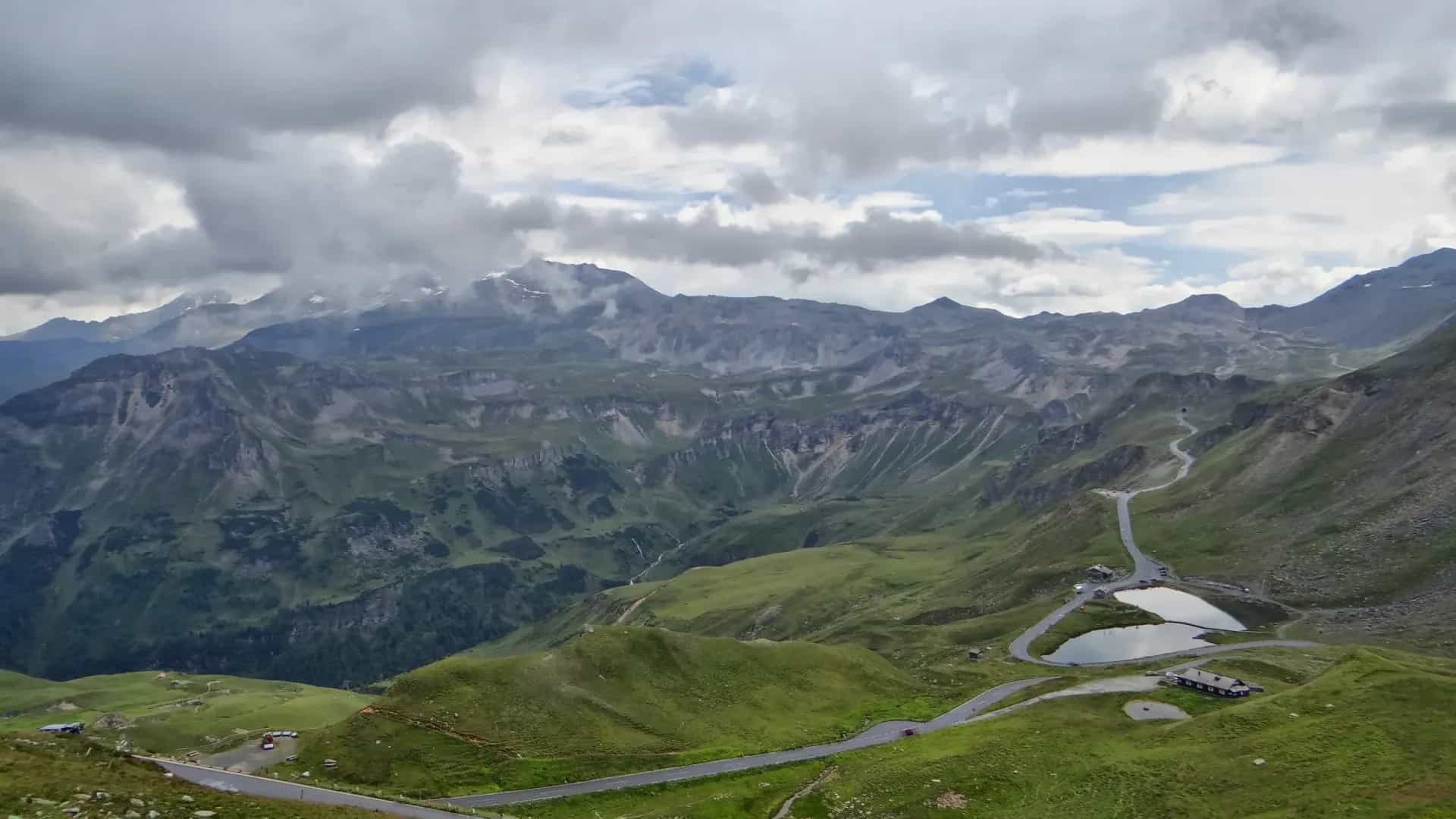
Salzburgo a Carintia (Bruck an der Grossglocknerstrasse–Heiligenblut)Recorrer la Grossglockner Hochalpenstrasse en moto es, para gran parte de la comunidad motoviajera mundial, la razón misma de ir a rodar a los Alpes austríacos: 48 km entre Bruck y Heiligenblut, con 36 curvas cerradas que trepan hasta los 2.504 m del paso Hochtor, dentro del Parque Nacional Hohe Tauern.
La carretera se inauguró en 1935 tras cinco años de obra que dieron trabajo a 3.200 personas durante la Gran Depresión, y apenas un día después de su apertura ya se corría la primera carrera internacional de montaña en sus curvas, el 4 de agosto de 1935. Desde 2003 un programa oficial la convirtió en la ruta "más amigable para motociclistas" de los Alpes.
A un costado se levanta el Grossglockner, el techo de Austria con 3.798 m, casi siempre a la vista durante el ascenso; un desvío de 1,5 km lleva hasta el mirador Edelweißspitze, a 2.571 m, el punto pavimentado más alto de todo el recorrido.
ADVERTENCIAS DE ESTA RUTA
Esto es lo que necesitas tener en cuenta antes de meterte en esta ruta.
- 01Autonomía de combustible
Buena. Hay estaciones en Bruck, Fusch y Heiligenblut en ambos extremos; en el tramo alto entre las casetas de peaje no hay servicio.
Timmelsjoch Hochalpenstrasse:el paso con museo de motos
Tirol (Austria) a Passeiertal, Tirol del Sur (Italia)Cruzar el Timmelsjoch Hochalpenstrasse en moto es, para buena parte de la comunidad motoviajera internacional, la razón misma de ir a rodar a Austria: es un camino privado construido específicamente para el turismo de montaña, que conecta el valle de Ötztal, en Tirol, con el Passeiertal italiano a 2.509 metros sobre el nivel del mar.
Las obras arrancaron en 1955 y el paso quedó habilitado hasta la cima en 1959, aunque el cruce completo entre los dos países recién se abrió al tránsito en 1968. El descenso hacia Italia regala diez curvas talladas en el precipicio, de las postales más fotografiadas de los Alpes.
En la cima, a 2.175 msnm, funciona el TOP Mountain Motorcycle Museum, el museo de motos más alto de Europa: más de 450 piezas en 4.000 m², reconstruido en apenas diez meses después de un incendio que lo destruyó por completo en enero de 2021.
ADVERTENCIAS DE ESTA RUTA
Esto es lo que necesitas tener en cuenta antes de meterte en esta ruta.
- 01Autonomía de combustible
Limitada en altura. Hay estaciones en Obergurgl/Hochgurgl y en Moos in Passeier, a ambos pies del paso; en la cima solo hay el complejo turístico, sin combustible.
Silvretta Hochalpenstrasse:la ruta de los conocedores
Vorarlberg a Tirol (Partenen–Bielerhöhe–Galtür)Para buena parte de los motoviajeros europeos, la Silvretta Hochalpenstrasse en moto es la ruta de culto para conocedores de los Alpes: 34 curvas cerradas y sin baches que trepan 1.000 metros de desnivel entre Partenen y la Bielerhöhe, a 2.032 msnm.
La obra tardó tres décadas en completarse: empezó como camino de servicio para las centrales hidroeléctricas de Vermunt en 1925 y recién se habilitó al tránsito público el 23 de junio de 1954, ampliándose a dos carriles en 1961.
Desde la cima se ve el embalse de Silvretta con el glaciar de fondo, junto al Piz Buin de 3.312 m, el pico más alto de Vorarlberg — uno de los balcones más fotografiados de todos los Alpes austríacos.
ADVERTENCIAS DE ESTA RUTA
Esto es lo que necesitas tener en cuenta antes de meterte en esta ruta.
- 01Autonomía de combustible
Escasa en altura. Carga el tanque en Partenen (Vorarlberg) o en Galtür/Ischgl (Tirol) antes de subir; en la Bielerhöhe no hay estación de servicio.
- 02El lado de Vorarlberg está cerrado hasta 2030
El tramo Partenen–Bielerhöhe (lado de Vorarlberg) permanece cerrado al tránsito por obras de seguridad hasta 2030, según la propia administración de la ruta. Solo se puede subir a la Bielerhöhe desde el lado tirolés (Galtür) en temporada de verano — confirma el estado actualizado antes de planear el cruce completo.
Nockalmstrasse:la ruta panorámica de Carintia
Carintia (Innerkrems–Ebene Reichenau)Subir la Nockalmstrasse en moto es atravesar 52 curvas dentro de la reserva de biosfera Nockberge, un paisaje de montañas redondeadas y sin picos afilados —muy distinto al resto de los Alpes— que le da nombre a la zona ("Nock" significa cima redondeada en el dialecto local).
El camino se abrió al tránsito como ruta de peaje en 1981, y desde 1995 lo administra la misma empresa que gestiona la Grossglockner Hochalpenstrasse. Un dato poco conocido: está prohibido circular en moto entre las 18 y las 8 horas, la única de las grandes rutas alpinas de Austria con ese horario restringido específicamente para motociclistas.
El área protegida se convirtió en parque nacional en 1987 (hoy reserva de biosfera Salzburger Lungau und Kärntner Nockberge), y desde varios miradores del recorrido se puede ver hasta el macizo del Grossglockner en días despejados.
ADVERTENCIAS DE ESTA RUTA
Esto es lo que necesitas tener en cuenta antes de meterte en esta ruta.
- 01Autonomía de combustible
Buena en los extremos. Hay estaciones en Innerkrems y Ebene Reichenau; en el tramo alto, dentro del parque, no hay servicio.
- 02Prohibido circular en moto de noche
Es la única alta ruta alpina de Austria con este cierre específico: está vedado el paso a motociclistas entre las 18 y las 8 horas. Planifica el cruce dentro de esa ventana horaria.
Kaunertaler Gletscherstrasse:la ruta al glaciar
Tirol (Feichten en Kaunertal al glaciar Weißseeferner)Subir la Kaunertaler Gletscherstrasse en moto es ganar 1.500 metros de desnivel en apenas 26 km, con 29 curvas de radio cerrado (28 metros cada una) que llevan de los 1.273 msnm de Feichten hasta los 2.750 msnm del glaciar Weißseeferner, uno de los últimos glaciares vivos de Tirol.
Es la parada obligada de todo motoviajero que hace el clásico circuito del valle de Ötztal combinándola con el paso de Timmelsjoch, ya que ambas rutas nacen a pocos kilómetros de distancia. En la parte alta funciona la parada de autobús postal más elevada de Austria.
El camino incluso sirvió como final de etapa del Tour de Austria de ciclismo en 1996 y 1999, por la dureza del ascenso — una pendiente que exige tanto a las piernas de un ciclista como al embrague de una moto cargada de equipaje.
ADVERTENCIAS DE ESTA RUTA
Esto es lo que necesitas tener en cuenta antes de meterte en esta ruta.
- 01Autonomía de combustible
Escasa en altura. Carga en Feichten o Prutz antes de subir; arriba solo hay la estación de esquí de verano, sin combustible.
Hahntennjoch:el paso angosto y técnico del Tirol
Tirol (Imst al valle de Lech, Elmen)Cruzar el Hahntennjoch en moto tiene fama entre los motoviajeros europeos de ser la alternativa "de verdad" al tráfico del Fernpass: un camino angosto de 29 km, con pendientes de hasta el 18,9%, que conecta el valle del Lech con el valle del Inn por un desfiladero mucho más estrecho que las grandes rutas alpinas turísticas.
La carretera actual se construyó recién a fines de los años 60 y se abrió al tránsito en 1969; antes de eso, cruzar este punto de los Alpes era cosa de sendero de herradura.
Desde 2004 un sistema automático de seguridad cierra el paso apenas detecta riesgo de alud, desprendimiento de rocas o corrimiento de barro — una tecnología poco habitual incluso para los estándares de los Alpes austríacos.
ADVERTENCIAS DE ESTA RUTA
Esto es lo que necesitas tener en cuenta antes de meterte en esta ruta.
- 01Autonomía de combustible
Buena en los extremos. Hay estaciones en Imst y en el valle de Lech (Elmen/Reutte); en el tramo del paso no hay servicio.
- 02Cierre automático por riesgo de alud
Prohibido para vehículos de más de 14 toneladas. Un sistema automático instalado en 2004 corta el paso ante riesgo de alud, desprendimiento de rocas o corrimiento de barro — respeta el cierre si la barrera está baja, no intentes cruzar igual.
Paso del Arlberg:la ruta histórica libre de peaje
Frontera entre Tirol y Vorarlberg (St. Anton am Arlberg–Klösterle)Cruzar el paso del Arlberg en moto es rodar por una de las fronteras naturales más antiguas de los Alpes austríacos: separa las cuencas del Rin y del Danubio, y durante siglos marcó la frontera cultural y lingüística entre el Tirol y Vorarlberg.
Ya se menciona un camino transitable en el siglo XIV, usado por mercaderes de Bolzano para cruzar mercadería hacia el norte; la ruta se formalizó como "Josephinische Straße" en 1787 y quedó terminada como camino reforzado ("Kunststraße") en 1824. Hoy sigue siendo la alternativa gratuita al túnel de peaje de 14 km que pasa por debajo desde 1978.
La región alrededor del paso es cuna del esquí alpino moderno — el club de esquí del Arlberg se fundó en 1901 y las carreras Arlberg-Kandahar de 1928 lo hicieron mundialmente famoso —, así que en verano los motoviajeros cruzan el mismo terreno donde nació buena parte de la historia del esquí europeo.
ADVERTENCIAS DE ESTA RUTA
Esto es lo que necesitas tener en cuenta antes de meterte en esta ruta.
- 01Autonomía de combustible
Buena. Hay estaciones en St. Anton y en Klösterle/Langen, a ambos pies del paso.
- 02Cierres puntuales por alud en invierno
A diferencia de los otros pasos de esta lista, el Arlberg está abierto casi todo el año, pero corta el tránsito sin previo aviso ante riesgo de alud en temporada de nieve — confirma el estado si cruzas fuera de la temporada alta de verano.
Gerlos Alpenstrasse:el enlace entre Salzburgo y el Zillertal
Salzburgo a Tirol (Wald im Pinzgau–Gerlos)Cruzar la Gerlos Alpenstrasse en moto conecta dos de las regiones más fotografiadas de Austria: el Pinzgau salzburgués, con las cascadas de Krimml —las más altas de Austria, con 380 m de caída en tres saltos— y el Zillertal tirolés, uno de los valles con más tráfico motero de todo el país en temporada alta.
La ruta de peaje actual la construyó en los años 60 la misma empresa que administra la Grossglockner Hochalpenstrasse, y por eso comparte el mismo estándar de curvas amplias pensadas para el tránsito turístico.
El camino viejo, sin peaje, sigue existiendo en paralelo del lado de Zell am Ziller: más angosto, cerrado a camiones y no siempre transitable en invierno — la opción de quien prefiere evitar el peaje y no le importa un trazado más exigente.
ADVERTENCIAS DE ESTA RUTA
Esto es lo que necesitas tener en cuenta antes de meterte en esta ruta.
- 01Autonomía de combustible
Buena. Hay estaciones en Krimml, Wald im Pinzgau y Gerlos, a ambos extremos del paso.
Sölkpass:el paso angosto de Estiria
Estiria (valle de Sölk al valle de Enns, entre Schladming y Gröbming)Cruzar el Sölkpass en moto es de las experiencias menos masificadas entre las grandes rutas de Estiria: apenas dos carriles angostos, sin gastronomía ni servicios en el medio, que suben hasta los 1.788 msnm entre los valles de Sölk y Enns.
Hay evidencia de uso del paso desde la Edad de Bronce tardía, y ya en 1593 se documentó el primer proyecto formal de camino de carros. El trazado actual recién se pavimentó y ensanchó a dos carriles en 1954.
En agosto de 2017 fuertes tormentas dañaron ambos lados del camino y lo mantuvieron cerrado casi un año, hasta julio de 2018 — un recordatorio de lo expuesto que sigue este paso al clima de montaña, pese a ser una carretera moderna.
ADVERTENCIAS DE ESTA RUTA
Esto es lo que necesitas tener en cuenta antes de meterte en esta ruta.
- 01Autonomía de combustible
Escasa. Hay estaciones en Schladming y Gröbming en los extremos; en el tramo del paso no hay servicio ni gastronomía.
- 02Historial de cierres por daño climático
El camino estuvo cerrado casi un año completo (agosto 2017 a julio 2018) por daños de tormenta en ambos lados del paso. Confirma el estado de la ruta antes de salir, sobre todo después de temporales fuertes.
Plöckenpass:la calzada romana de los Alpes Cárnicos
Carintia (Austria) a Friul (Italia), entre Kötschach-Mauthen y TimauCruzar el Plöckenpass en moto es rodar literalmente sobre una calzada que abrieron las legiones romanas bajo el emperador Tiberio, entre los años 14 y 37 d.C., como parte de la Via Julia Augusta que unía Venetia con Recia y Nórico.
Inscripciones históricas de la época describen el paso original como tan angosto que "solo podía cruzar un carro y un animal de carga" a la vez; siguió siendo la única vía entre Carintia y Friul durante toda la Edad Media, aunque intransitable para carros con ruedas hasta principios del siglo XX.
El tramo moderno lo construyeron ingenieros militares austríacos entre 1907 y 1910 para vehículos pesados, y quedó arrasado durante la Primera Guerra Mundial (1915-1918), cuando fue escenario de combates de montaña; se reconstruyó recién en 1926 del lado austríaco y en 1938 del lado italiano.
ADVERTENCIAS DE ESTA RUTA
Esto es lo que necesitas tener en cuenta antes de meterte en esta ruta.
- 01Autonomía de combustible
Buena. Hay estaciones en Kötschach-Mauthen del lado austríaco y en Timau/Paluzza del lado italiano.
- 02Cierre reciente por desprendimiento
Un desprendimiento de tierra en 2023 mantuvo el paso cerrado hasta enero de 2025, cuando reabrió con restricciones temporales. Verifica el estado actual antes de cruzar.
PAÍSES VECINOS
Vas a cruzar la frontera? Haz clic en un país para ver sus 10 mejores rutas en moto.



PREGUNTAS FRECUENTES
01Necesito Carta Verde para entrar a Austria con la moto?
+
Necesito Carta Verde para entrar a Austria con la moto?
Depende de dónde esté matriculada. Si es de la UE o el EEE, no — desde 2021 la directiva europea de seguros ya cubre la circulación sin Carta Verde. Si tu matrícula es de fuera de ese bloque (la mayoría de países latinoamericanos, por ejemplo), sí necesitas resolver un seguro de frontera porque tu póliza local no está reconocida.
02Qué es la vignette y dónde la compro para la moto?
+
Qué es la vignette y dónde la compro para la moto?
Es la viñeta obligatoria para circular por autopistas y autovías austríacas. Para moto cuesta 3,80 euros el día, 5,10 euros los 10 días, 12,80 euros los 2 meses o 42,70 euros el año (precios 2026). Se compra en gasolineras, quioscos, online o en el propio cruce fronterizo.
03Cuándo abre la carretera del Grossglockner para moto?
+
Cuándo abre la carretera del Grossglockner para moto?
Suele abrir a fines de abril (en 2026, el 25 de abril) y cerrar a comienzos de noviembre (el 2 de noviembre en 2026), según cómo esté la nieve. El peaje para moto en 2026 es de 36,50 euros por día (30 euros después de las 18h), con opciones de varios días y temporada.
04Es obligatorio el casco y las luces encendidas de día en Austria?
+
Es obligatorio el casco y las luces encendidas de día en Austria?
Sí a ambos, sin excepción. El casco debe cumplir norma ECE 22-05 o 22-06, y las motos deben circular con la luz baja encendida incluso en pleno día.
05Puedo acampar libre con la moto en Austria?
+
Puedo acampar libre con la moto en Austria?
En general no, y varía mucho según el estado federal — Tirol lo prohíbe directamente, Alta Austria lo tolera por encima del límite del bosque y lejos de cultivos, y en Estiria una noche dentro del vehículo suele tolerarse. Las multas van de 5 a 500 euros (hasta 14.500 en parques nacionales o reservas). Conviene usar la extensa red de campings oficiales.
06Cuánto tiempo puedo quedarme en Austria con matrícula extranjera no UE?
+
Cuánto tiempo puedo quedarme en Austria con matrícula extranjera no UE?
El régimen aduanero europeo de admisión temporal permite circular con la moto hasta 6 meses sin importación formal. Pero como turista no europeo, tu propia estadía personal está limitada a 90 días dentro de un período de 180 días por la regla Schengen — ese es el límite real que te va a frenar primero.
Gustavo Correa
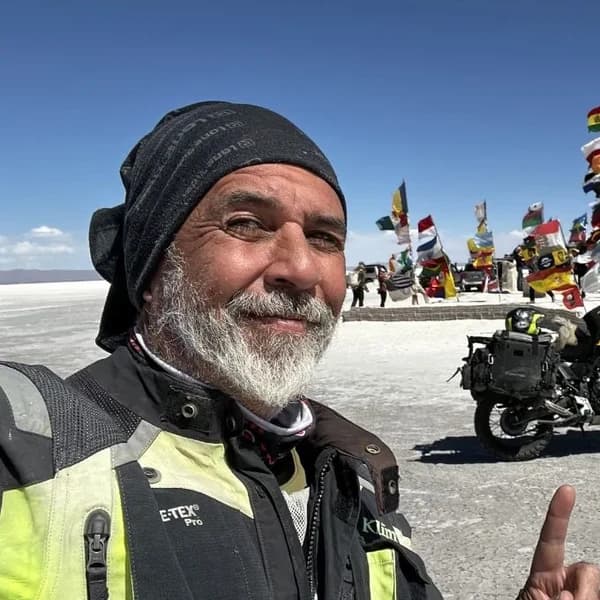
Motoviajero, autor y consultor de viajes en moto. +110.000 km por 4 continentes con Gloria, mi moto. Todo lo que lees aquí está probado en la carretera, no en un despacho.
Conoce mi historia →Última verificación: 2026-08-29
Fuentes consultadas (24)+
- oesterreich.gv.at
- vintrica.com
- en.wikipedia.org
- comparethemarket.com
- rac.co.uk
- grossglockner.at
- grossglockner.at
- oetztal.com
- crosspoint.tirol
- europa.eu
- thelocal.at
- vienna.at
- visitingvienna.com
- oeamtc.at
- fuel-prices.eu
- nomadicmatt.com
- hostelz.com
- vanever.com
- schitterhof.at
- ktm-motohall.com
- trade.gov
- bmeia.gv.at
- tourinsure.de
- commons.wikimedia.org
UN REGALO POR ESTAR AQUÍLA AVENTURA DE VIVIR LIBRE
Sientes que el miedo o la duda te paralizan antes de arrancar cualquier proyecto? No estás solo, a todos nos ha pasado.
Como agradecimiento por visitar mi página, te regalo mi libro "La Aventura de Vivir Libre". Un manual diseñado para darte un poco de luz entre tantas sombras y mostrarte la filosofía que me ha permitido recorrer el mundo durante años.
* PDF DIRECTO A TU BANDEJA. SIN SPAM.