MOTORCYCLE TRAVEL IN Ecuador
QUICK ANSWER
Ecuador is a compact country where in just a few days on the bike you can go from Andean páramo above 4,000 meters to the Amazon jungle or the Pacific coast. Entry is simple through a main crossing: no mandatory insurance for foreign vehicles, just the motorcycle's temporary import permit (TIP), valid for 90 days. The real challenge isn't the paperwork, it's picking the right route: the Panamericana through the sierra is the calmer option, while several coastal provinces are currently under security alert.
WHAT YOU NEED TO KNOW
The country you're about to enter has particularities you need to know.
Before you cross the border there are four things you need locked down: how safe the country is, what insurance is mandatory for your motorcycle, where you'll actually find fuel, and when to go. None of these are optional.
SAFETY: MODERATE RISK (3/5)
Is Ecuador safe to enter by motorcycle? It depends on the route — the Andean sierra (the Panamericana) is calm, but several coastal provinces have been under security alert since 2024.
AREAS TO AVOID
- Colombia border strip (outside Rumichaca): The UK government advises against travel within 20km of the Colombia border, except the Tulcán-Rumichaca corridor along the Panamericana. Outside that corridor there's kidnapping and drug-trafficking-related crime risk.
- Esmeraldas city and the north of the province: A drug transit zone from Colombia; foreign government advisories warn against travel to Esmeraldas city and the whole north of the province due to crime and terrorism risk.
- Guayaquil (south) and Durán: The US travel advisory places the highest risk level ("do not travel") on the areas south of Portete de Tarqui avenue, including Nueva Prosperina and Pascuales, plus the entire Durán canton. North Guayaquil carries a more moderate advisory ("reconsider travel"). If you need to cross the city, do it by day on the main roads, avoiding those southern sectors.
- North Quito: La Roldós, Comité del Pueblo, Carapungo: Neighborhoods flagged by local press as flashpoints for gang disputes and armed robbery, including motorcycle-based robbery. Not on the usual tourist route, but worth avoiding if you're staying in Quito for several days.
WHERE TO PARK
- Parking: On the street: fine by day in busy areas, avoid leaving it there at night. Prioritize a gated lot or a hotel's own parking area.
- Alarm: Recommended: yes, especially in Quito and Guayaquil. Less critical in small sierra towns.
- Luggage: Take off what you can carry (tank bag, backpack, electronics) when parking. Never leave anything loose in plain sight inside the panniers.
- Visibility: Park where there's foot traffic and good lighting — never in an alley or an isolated stretch of road.
TIPS
- ➜Prioritize the sierra route (the Panamericana) over the coast if you want the calmest path between Colombia and Peru.
- ➜Don't ride into Guayaquil at night if you can help it, and avoid the area south of Portete de Tarqui avenue.
- ➜Check iOverlander before deciding on a border crossing — each post's status shifts with the security situation.
Outside those specific coastal spots and the border strip, the Andean sierra — where the vast majority of motorcycle travelers ride — remains the calmest region of the country to move through by motorcycle.
MANDATORY INSURANCE: Not required
Unlike other countries in the region, Ecuador does not require insurance for foreign-plated vehicles. Ecuador's own SOAT only applies to vehicles registered in the country. Buying local coverage is optional, but it is not a requirement to cross the border or to ride.
FUEL: PRICE CHANGES MONTHLY
Ecuador introduced a monthly price-band system for Extra and Ecopaís gasoline in 2024, which progressively reduces the state subsidy each month, and fully removed the diesel subsidy in September 2025 — since then the price adjusts monthly under that band system, tied to international oil (in early 2026 it was around USD 2.67/gallon for Extra and USD 2.71 for diesel). Good coverage along the Panamericana and the coast; in the Amazon, stations are more spread out.
BEST SEASON: JUN - SEP
June to September is the driest, sunniest window in the sierra, where the Panamericana runs and most motorcycle travelers do their route. The coast has its own dry season from December to April, and the Amazon gets rain year-round with only minor breaks around August-September and December-February.
ENTERING ECUADOR BY MOTORCYCLE
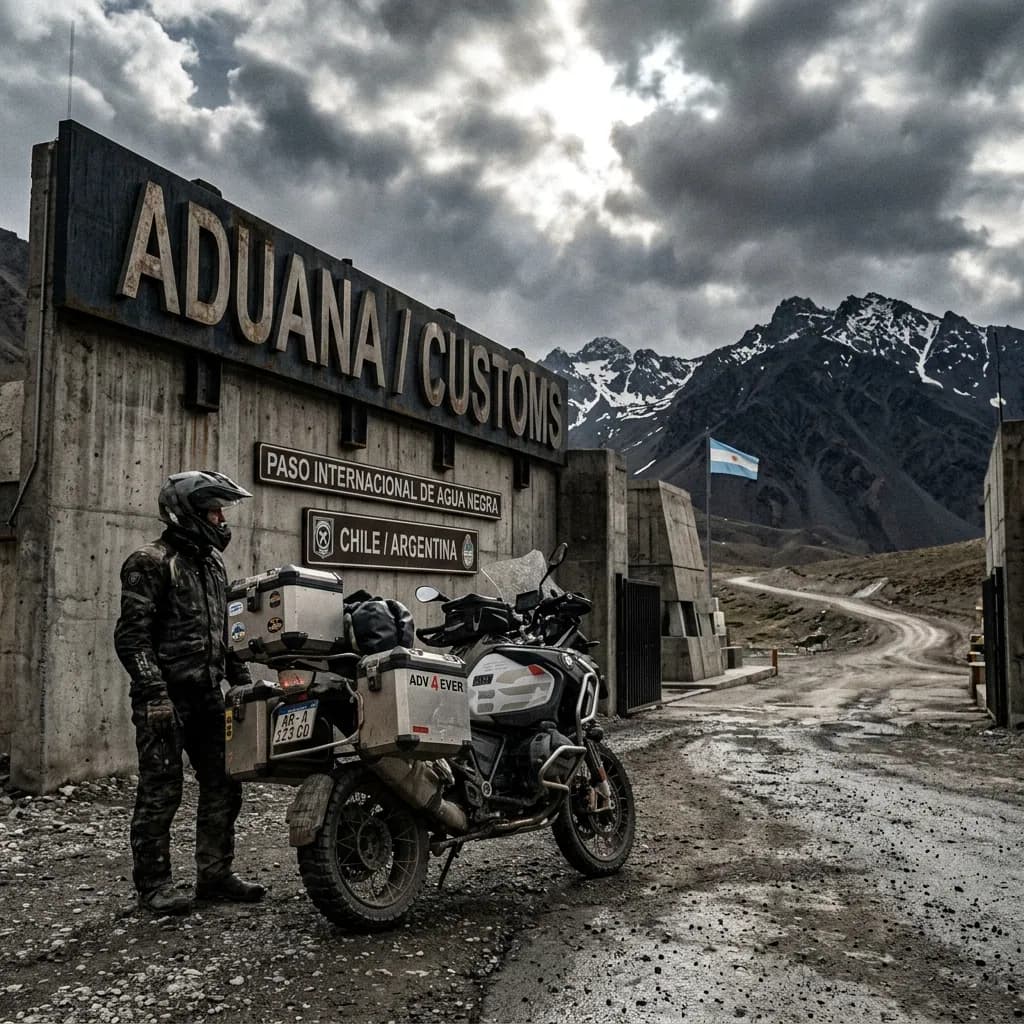
Crossing into Ecuador with a bike through the main posts (Rumichaca from Colombia, Huaquillas or Macará from Peru) is, according to rider accounts on Mad or Nomad and ADVrider, one of the simplest procedures in South America: no mandatory insurance for foreign vehicles, no mechanical inspection.
The process has two steps:
Immigration: Stamps your passport on entry.
Customs: Issues the TIP (Temporary Import Permit) for the motorcycle, at the same post.
The TIP usually has no cost — though some motorcycle travelers report informal fees of USD 15 to 50 at specific crossings, so it's worth confirming on the spot.
Real friction point:it's not the paperwork itself, it's picking the right crossing. Huaquillas, the busiest coastal crossing to/from Peru, has a history of chaos and money-changers looking to scam travelers — Macará, further inland, is a calmer alternative, though it's worth confirming its status before you go: vehicle traffic on the Macará-La Tina bridge was closed between December 2025 and July 2026 for Ecuadorian security measures.
On the Colombia side, Rumichaca (Tulcán-Ipiales) is the recommended crossing: fast, well signposted, and inside the corridor security advisories still consider safe to travel.
REQUIRED DOCUMENTATION
Passport: Valid for the whole length of your stay.
Driving license: Your home country's license is enough.
Motorcycle title/registration: If you're not the owner, you need notarized power of attorney from them.
TIP/TVIP (Temporary Import Permit): Issued right at the border crossing, valid for 90 days. Officials photograph your plate and VIN with their own phone.
Insurance (optional): Not required for foreign-plated motorcycles, unlike Chile or Argentina.
With these documents sorted, entering Ecuador with a bike through a main crossing is routine and, in practice, wraps up in under an hour. The advice that comes up most often among motorcycle travelers: keep the TIP somewhere safe, because you'll have to hand it in when you leave the country, and the motorcycle can't stay longer than your own visa allows.
DAILY BUDGET
This price range combines cheap lodging, cooking your own meals, and basic bike maintenance — the three categories that weigh most on any moto traveler's daily budget.
Your real daily budget is something you build yourself, based on your own needs and limits — but if you want an idea of how to build yours, pick a category to see the full guide:
Full cost breakdown in the budget guide
THE 10 BEST MOTORCYCLE ROUTES IN ECUADOR
Ecuador is a compact country — you can cross from the coast to the Amazon in a single day of riding — but that doesn't make it simple: within the same 300 km you can go from a 30°C beach to a snow-covered Andean pass at 4,800 masl. That's why, in building this Top 10, we didn't look for "the longest route", but for the one that best represents each of the country's four geographic worlds — sierra, Amazon, coast and the far south — always prioritizing the routes that motorcycle travelers and agencies specialized in Ecuador name again and again as the essentials, not the ones that simply look good on a map.
With temperature swings this sharp — from Chimborazo's snow to the humid heat of Puyo or Montañita on the same trip — it's worth reviewingthe gear guide for long motorcycle tripsbefore you go: the layer that saves you at 4,800 masl is the same one you'll be stripping off on the coast.
And on stretches like Zumbahua–El Corazón or the Atillo Lakes, where there's no workshop in sight for hours, it's worth reviewingthe mechanics guide for long motorcycle tripsbefore you go — a simple problem turns serious when you're 90 km from the nearest town.
Avenue of the Volcanoes:Quito to Riobamba
Pichincha to Chimborazo (Central Sierra)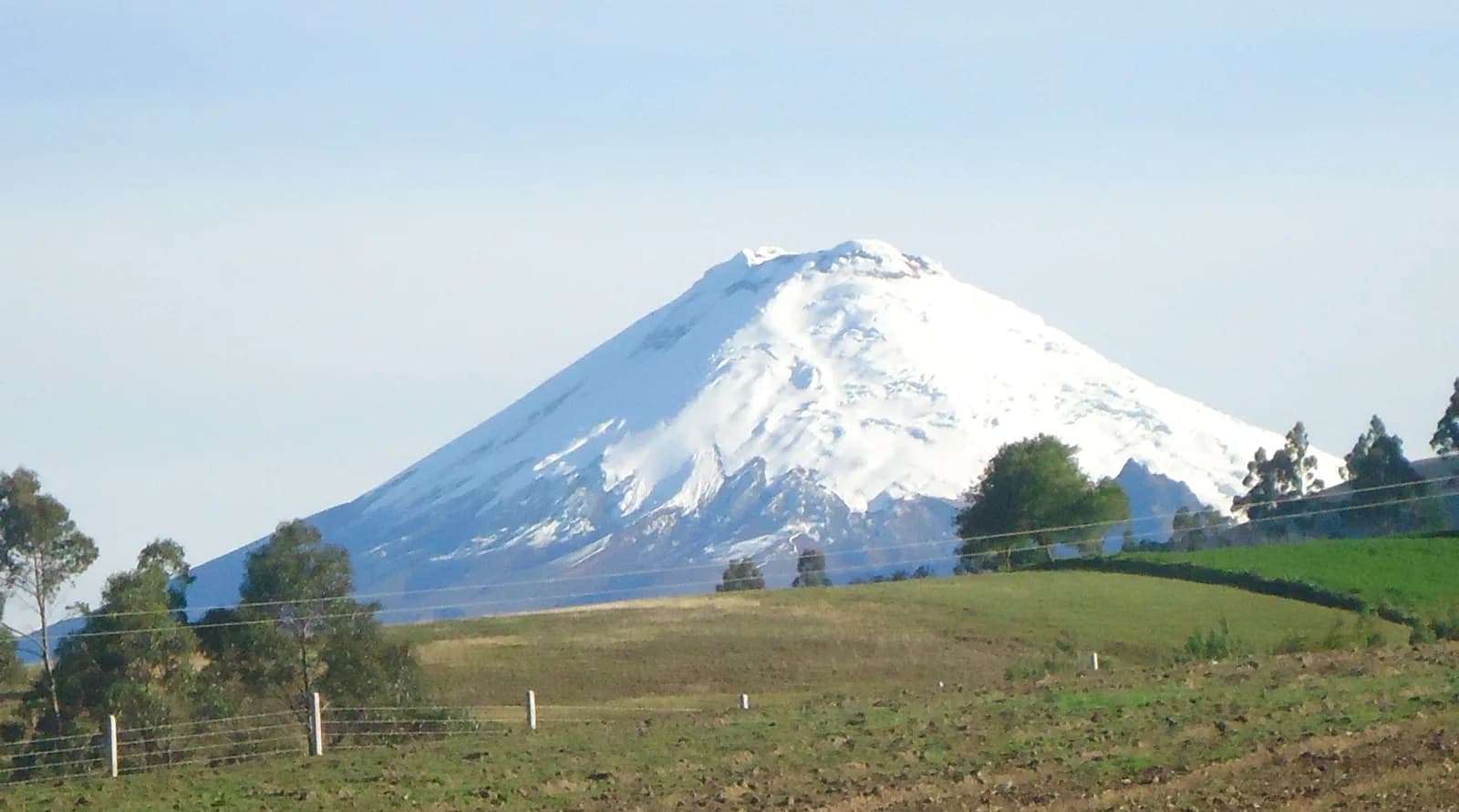
Riding the Avenue of the Volcanoes by motorcycle means following the same corridor that German naturalist Alexander von Humboldt named in 1802, amazed at having more than 70 volcanoes in view along just 300 km between Quito and the southern sierra.
The Panamericana (E35) runs boxed in between the Western and Eastern cordilleras, with Cotopaxi — at 5,897 masl, one of the highest active volcanoes in the world — dominating the landscape for much of the ride, while Illiniza, Carihuairazo and Chimborazo appear and vanish among the clouds as you head south.
It's the backbone of any motorcycle trip through Ecuador: nearly every other route on this list — Quilotoa, Chimborazo, Cajas — starts as a detour off this same stretch.
WARNINGS FOR THIS ROUTE
This is what you need to sort out before riding this route.
- 01Fuel range
Excellent. Frequent stations in Machachi, Latacunga, Salcedo, Ambato and Riobamba.
Quilotoa Loop:Latacunga, Zumbahua and Chugchilán
Cotopaxi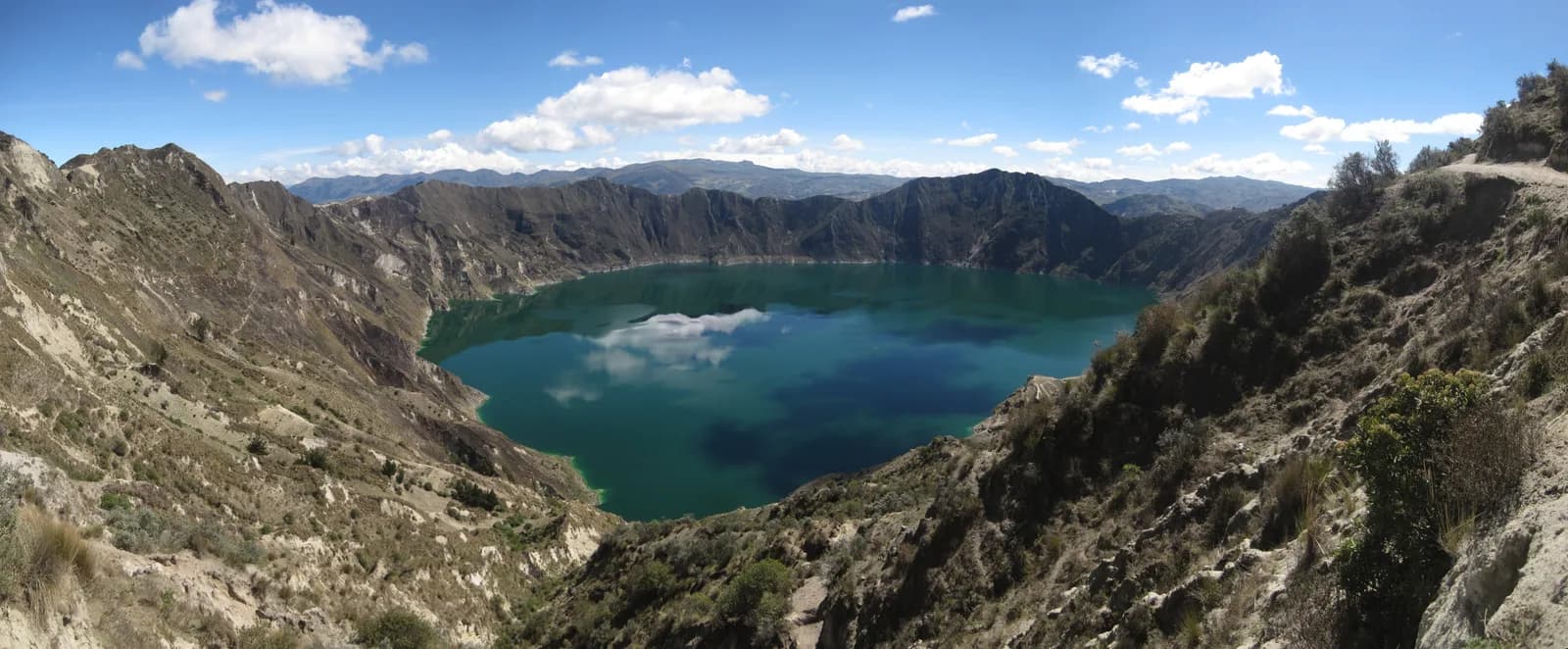
Riding the Quilotoa Loop by motorcycle means circling, over two days, the crater of a volcano that erupted about 800 years ago (around 1280 AD) with Plinian force of VEI 6 — one of the most violent eruptions recorded in the Andes — leaving a 3km-wide caldera now filled by a turquoise lake 250 meters deep, at 3,914 masl.
The road winds through the Kichwa communities of Zumbahua, Chugchilán and Isinliví, weekend markets and crop terraces climbing the hillsides — riders share the road as much with loaded donkeys and sheep as with tight curves of fresh pavement.
Along with Peru's Cordillera Blanca, it's one of the most photographed mountain routes in the Andes, and the most popular entry point for any motorcycle traveler arriving in Ecuador for the first time.
WARNINGS FOR THIS ROUTE
This is what you need to sort out before riding this route.
- 01Fuel range
Fair. Stations in Latacunga, Pujilí and Zumbahua; between Chugchilán and Sigchos there's no fuel supply.
Chimborazo:the road to Refugio Whymper
Chimborazo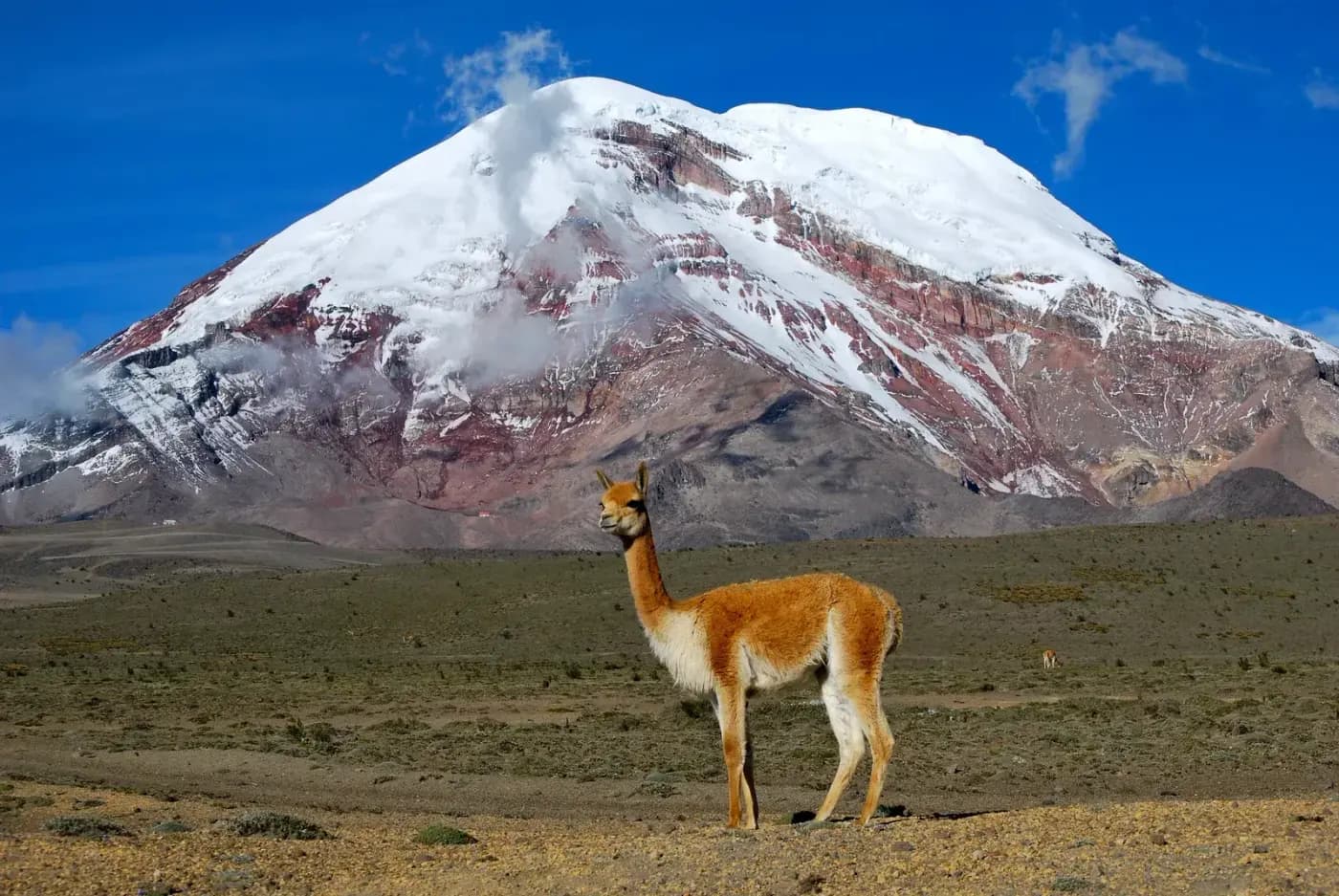
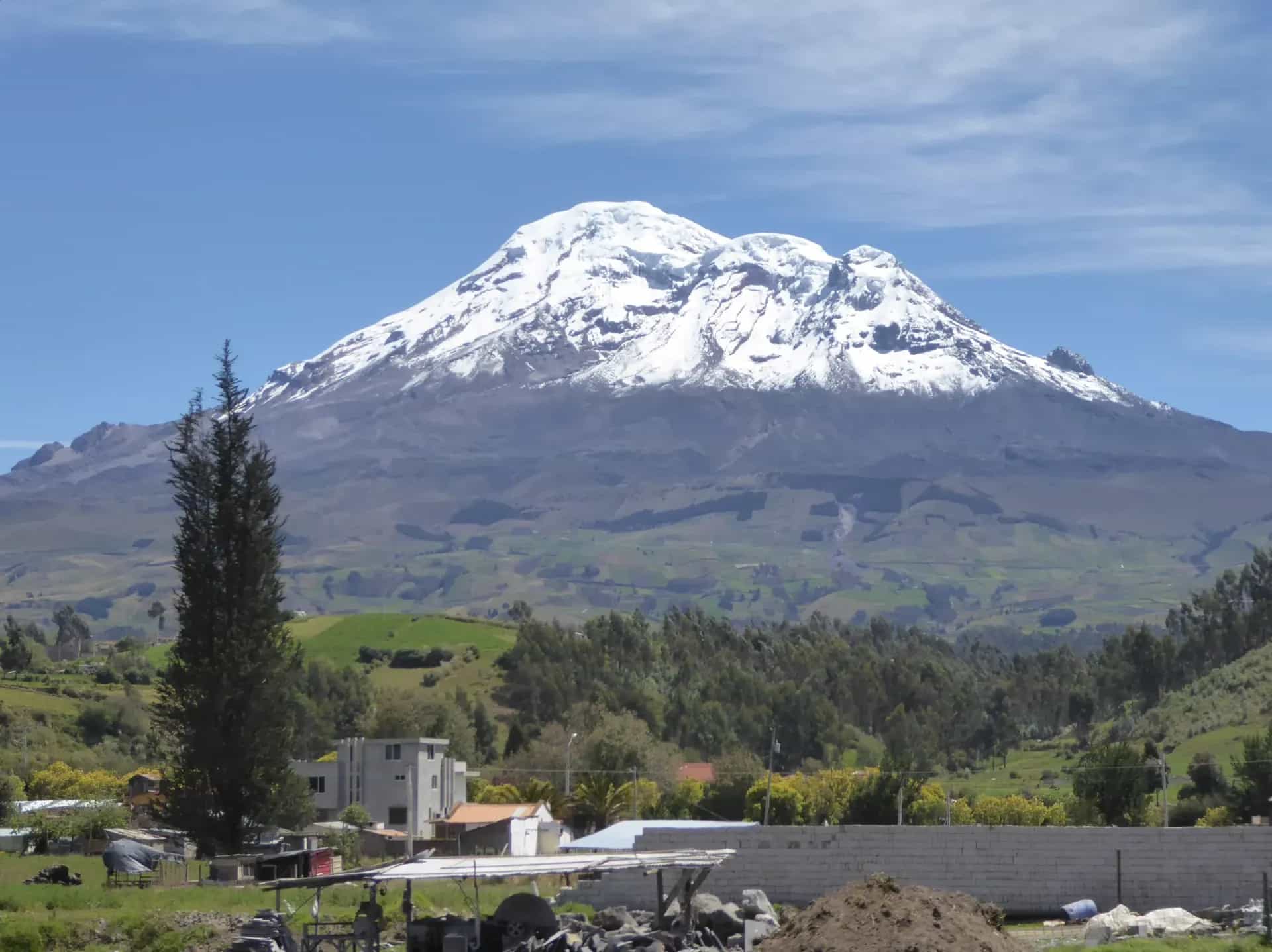
Riding Chimborazo by motorcycle up to the Refugio Whymper parking area means getting as close as you can on two wheels to the highest point in all of Ecuador: 6,263 masl at the summit, and — a real geological fact, not traveler legend — also the point on Earth's surface farthest from the planet's center, thanks to Earth's equatorial bulge. That effectively makes it the place on Earth closest to the Sun, even more so than Everest.
The Chimborazo Fauna Production Reserve protects one of the best-conserved vicuña populations on the planet — reintroduced in the 1980s after disappearing from Ecuador — and it's common to ride past herds grazing beside the road with the glacier as a backdrop.
The road climbs 8 km from the reserve checkpoint (4,370 masl) to the parking area at 4,800 masl: at that altitude the engine visibly loses power from lack of oxygen, and riders themselves feel "soroche" (altitude sickness) just from walking the last stretch up to the refuge.
WARNINGS FOR THIS ROUTE
This is what you need to sort out before riding this route.
- 01Fuel range
None inside the reserve. Fill up in Riobamba or San Juan before climbing.
Zumbahua, Angamarca and El Corazón
CotopaxiCrossing from Zumbahua to El Corazón by motorcycle via Angamarca means dropping almost 3,000 meters of elevation in a single day: you start on a páramo at nearly 4,100 masl and end among subtropical coffee farms just above 1,200 masl — a climate-zone shift that would take several days of travel in most other countries.
The road, almost entirely dirt, is still the herding path for Kichwa shepherds and their llamas and sheep, and it crosses the town of Angamarca, known for its woodcarvers and for still-working water mills.
It's one of the favorite routes among adventure-motorcycle agencies that have operated in Ecuador for two decades — they recommend it precisely for what it doesn't have: traffic, tourist signage, and other riders.
WARNINGS FOR THIS ROUTE
This is what you need to sort out before riding this route.
- 01Fuel range
Very limited. Only in Zumbahua and El Corazón — no station at all along the ~90 km in between.
Ruta de las Cascadas:Baños to Puyo
Tungurahua to Pastaza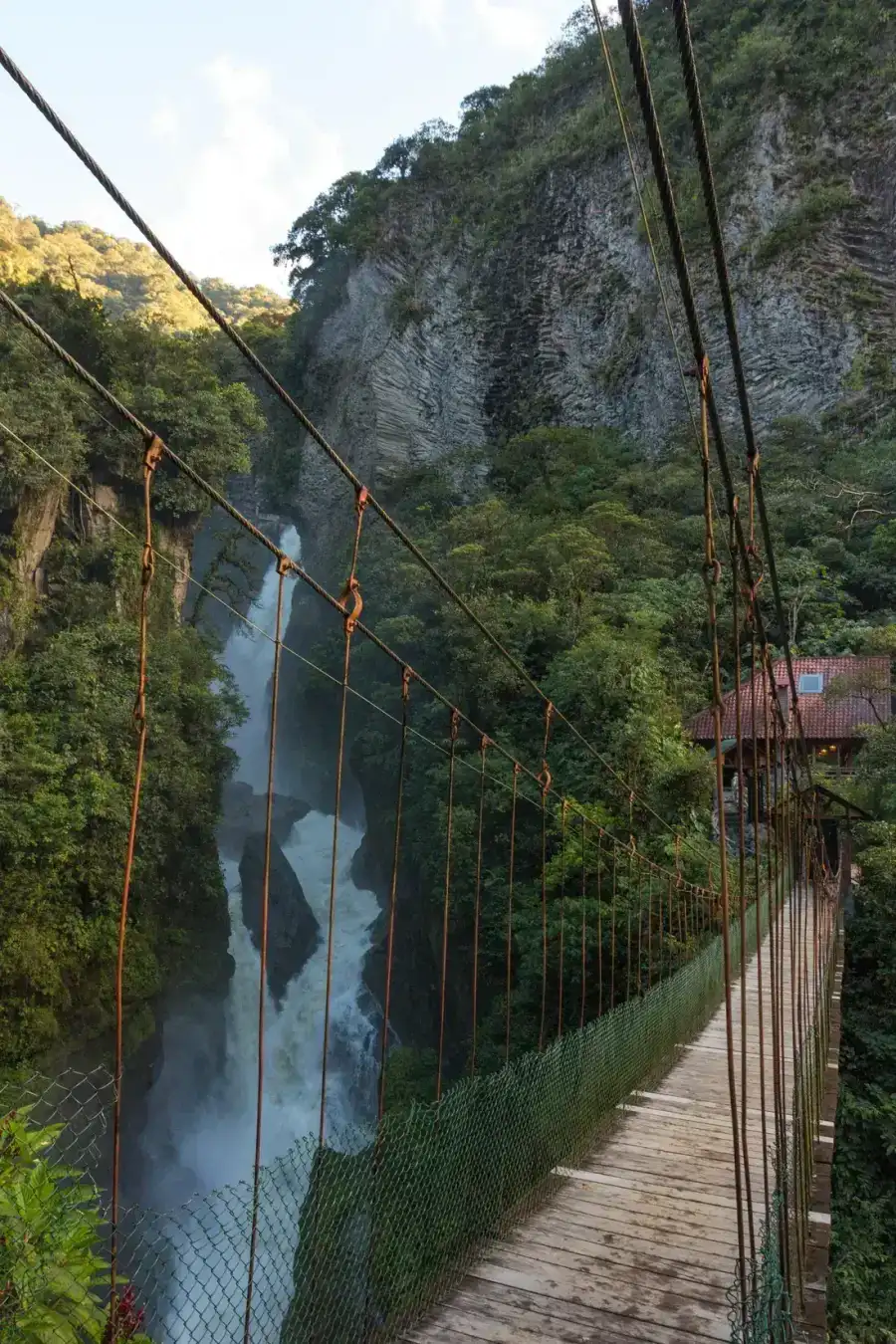
Riding down the Ruta de las Cascadas by motorcycle, from Baños toward Puyo, means following the canyon the Pastaza river carves between the sierra and the Amazon jungle, with seven waterfalls appearing alongside the road in just the first 18 km.
The most famous is Pailón del Diablo, an approximately 80-meter drop crossed by a suspension bridge set deep in cloud forest — riders share the pavement with cyclists and open-sided "chiva" trucks doing the same run, so it's worth taking it slow.
It's, in practice, most travelers' first contact with the Ecuadorian Amazon: in just 60 km the landscape shifts from Andean volcanoes to the dense, humid green of the lowland jungle.
WARNINGS FOR THIS ROUTE
This is what you need to sort out before riding this route.
- 01Fuel range
Good. Stations in Baños, Río Negro and Puyo.
Quito to Baeza via Papallacta
Pichincha to NapoCrossing from Quito to Baeza by motorcycle via Papallacta is the fastest way to go from the capital's 2,850 masl down into the Amazon jungle, first climbing to the Papallacta pass — near 4,000 masl — before dropping sharply toward Baeza, already below 1,900 masl.
Halfway along, the town of Papallacta (3,250 masl) offers one of Ecuador's best-known hot springs complexes, fed by the same volcanic sources that warm the surrounding páramo — a mandatory stop to thaw out after crossing the pass.
It's the opening stretch of longer routes heading east (some riders extend it to Lumbaqui and La Bonita, near the Colombian border), and the Amazon gateway most used by riders leaving Quito.
WARNINGS FOR THIS ROUTE
This is what you need to sort out before riding this route.
- 01Fuel range
Good. Stations in Pifo, Papallacta and Baeza.
- 02Official traffic restrictions due to road risk
Ecuador's Ministry of Infrastructure and Transport and the Risk Management Secretariat have issued controlled-passage restrictions on the Baeza-Papallacta road at various times due to ground instability. Confirm the road's status before heading out.
Atillo Lakes to Macas through Sangay National Park
Chimborazo to Morona SantiagoDescending from the Atillo Lakes to Macas by motorcycle along the Riobamba-Macas road means riding a highway that took over a century to finish: work began in 1903 under General Eloy Alfaro, and the final stretch was only inaugurated in January 2014, crossing Sangay National Park — a UNESCO World Heritage site — end to end.
About 90 km from Riobamba, four páramo lakes — among them Laguna Negra, considered sacred by Puruhá communities — line the road above 3,200 masl, with temperatures rarely topping 12°C.
From there, the road descends without pause into the jungle, crossing cloud forest and tropical rainforest, with occasional views of the actively erupting Sangay volcano, until reaching Macas, already deep in the Amazon.
WARNINGS FOR THIS ROUTE
This is what you need to sort out before riding this route.
- 01Fuel range
Fair. There's a station in Guamote before climbing; between the lakes and Macas, fuel supply is scarce.
Cajas National Park:Cuenca to Naranjal
Azuay to Guayas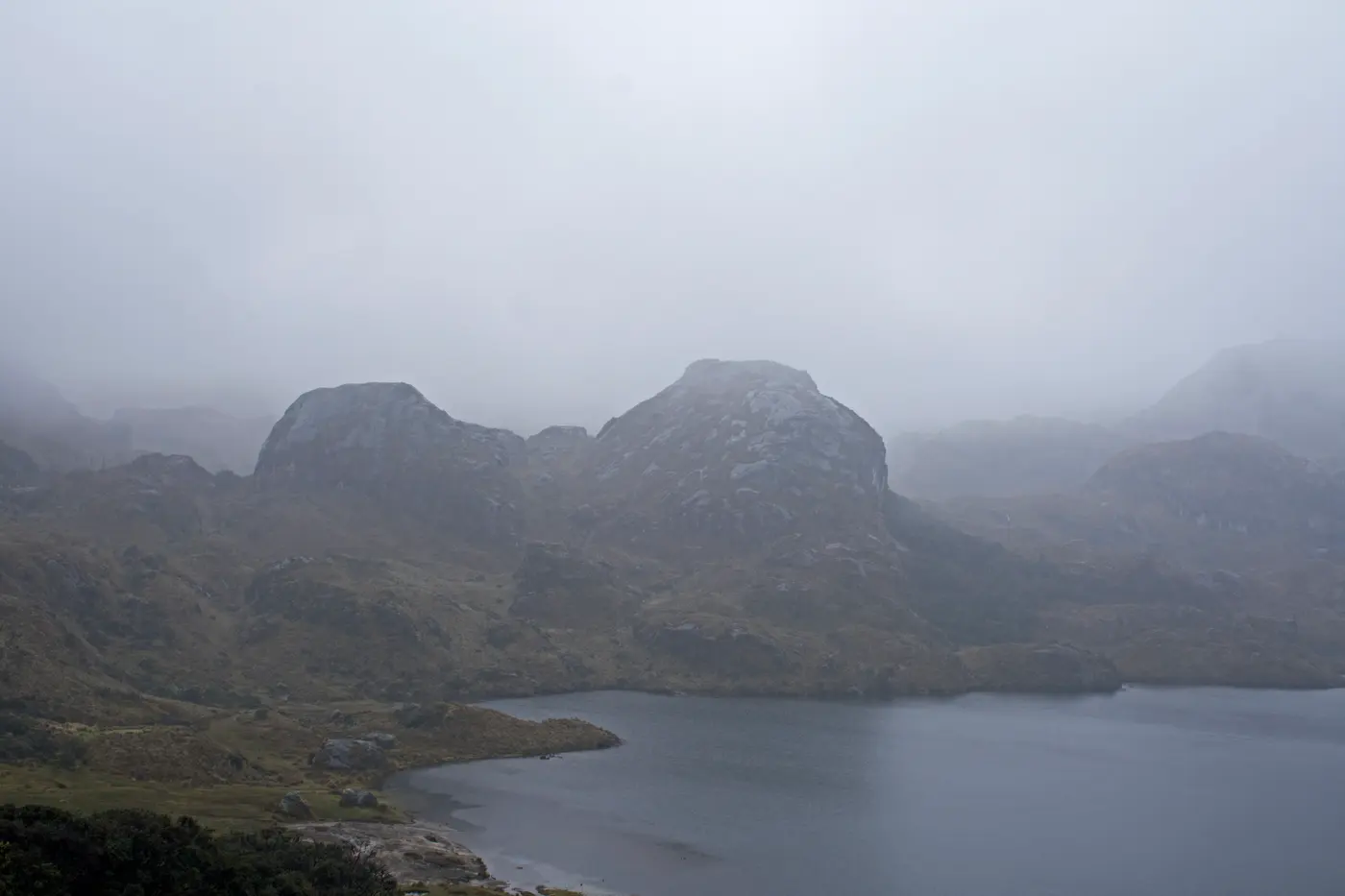
Crossing Cajas National Park by motorcycle, from Cuenca toward Naranjal, means following the same route the Inca once used to descend from Tomebamba (today's Cuenca) to the Paredones tambo, in Molleturo, connecting the sierra with the coast — stretches of the original Inca road are still visible alongside today's highway.
The park protects over 1,000 bodies of water, with 235 well-defined lakes spread between 3,150 and 4,450 masl, in an almost lunar páramo landscape, with rock polished by glaciers that no longer exist and grassland vegetation that shifts color with the light.
After crossing the high point, the road descends without pause into tropical rainforest and, finally, the coast's banana plantations — in just 115 km, the bike drops from nearly 4,000 meters of altitude to sea level.
WARNINGS FOR THIS ROUTE
This is what you need to sort out before riding this route.
- 01Fuel range
Good at both ends. Stations in Cuenca and Naranjal; none inside the park.
Vilcabamba:the Valley of Longevity
Loja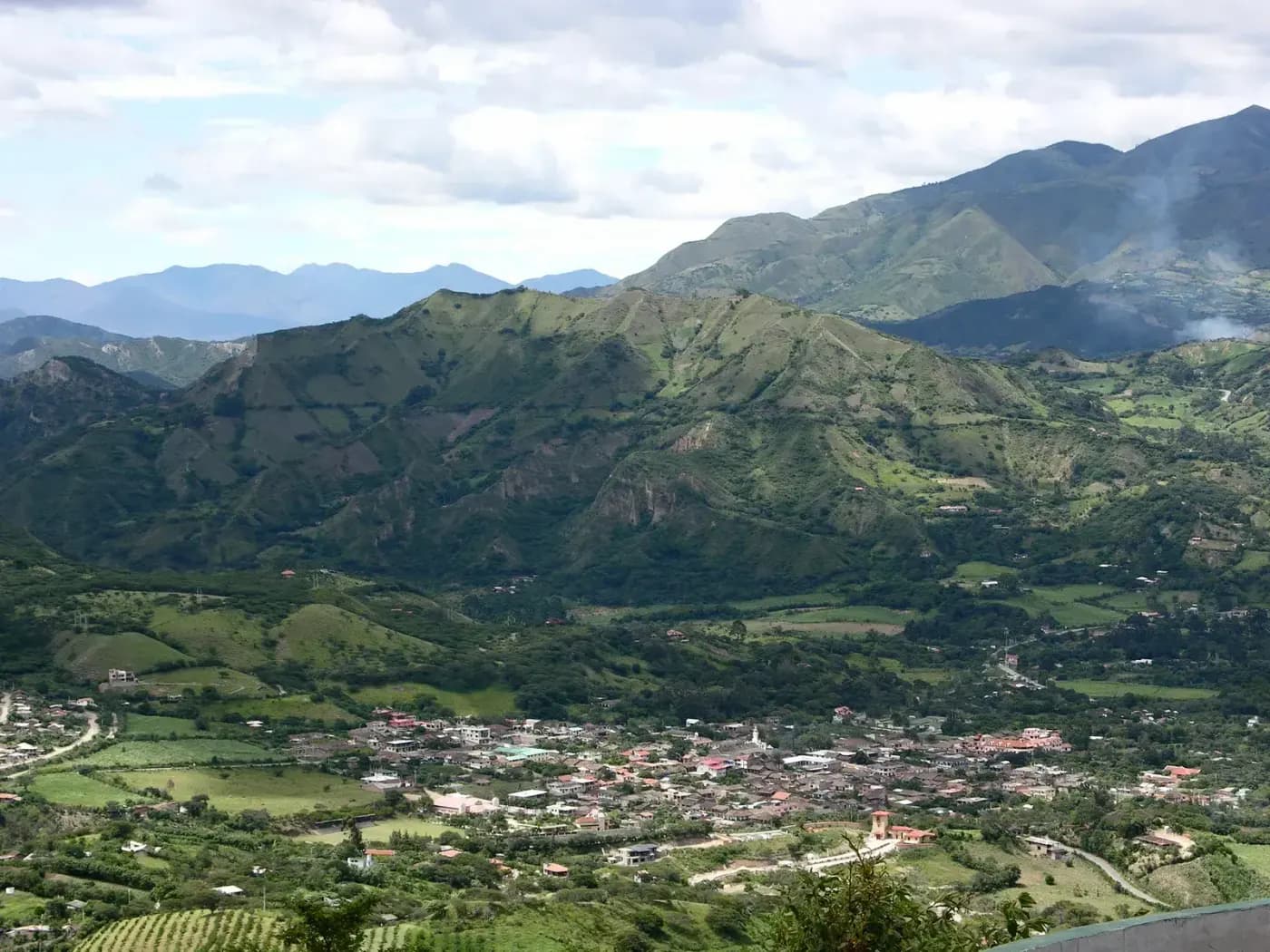
Riding down to Vilcabamba by motorcycle from Loja means entering the so-called "Valley of Longevity", famous since the 1970s after a Harvard University team led by Dr. Alexander Leaf investigated why a town of just 819 residents had seven men and two women over 100 years old — a proportion of centenarians far above the world average at the time.
At 1,753 masl and with a mild subtropical climate year-round, the valley also marks the end of the Ecuadorian sierra: from here the Panamericana continues south, already descending, toward the Zumba-La Balsa border crossing, one of the calmest and least-used crossings into Peru.
It's the last logical stop by motorcycle before leaving Ecuador to the south, and for many overlanders riding down from Colombia, the country's symbolic closing chapter.
WARNINGS FOR THIS ROUTE
This is what you need to sort out before riding this route.
- 01Fuel range
Good. Stations in Loja and Vilcabamba.
Ruta del Spondylus (the Spondylus Route)
Coast: from Salinas to the Colombia border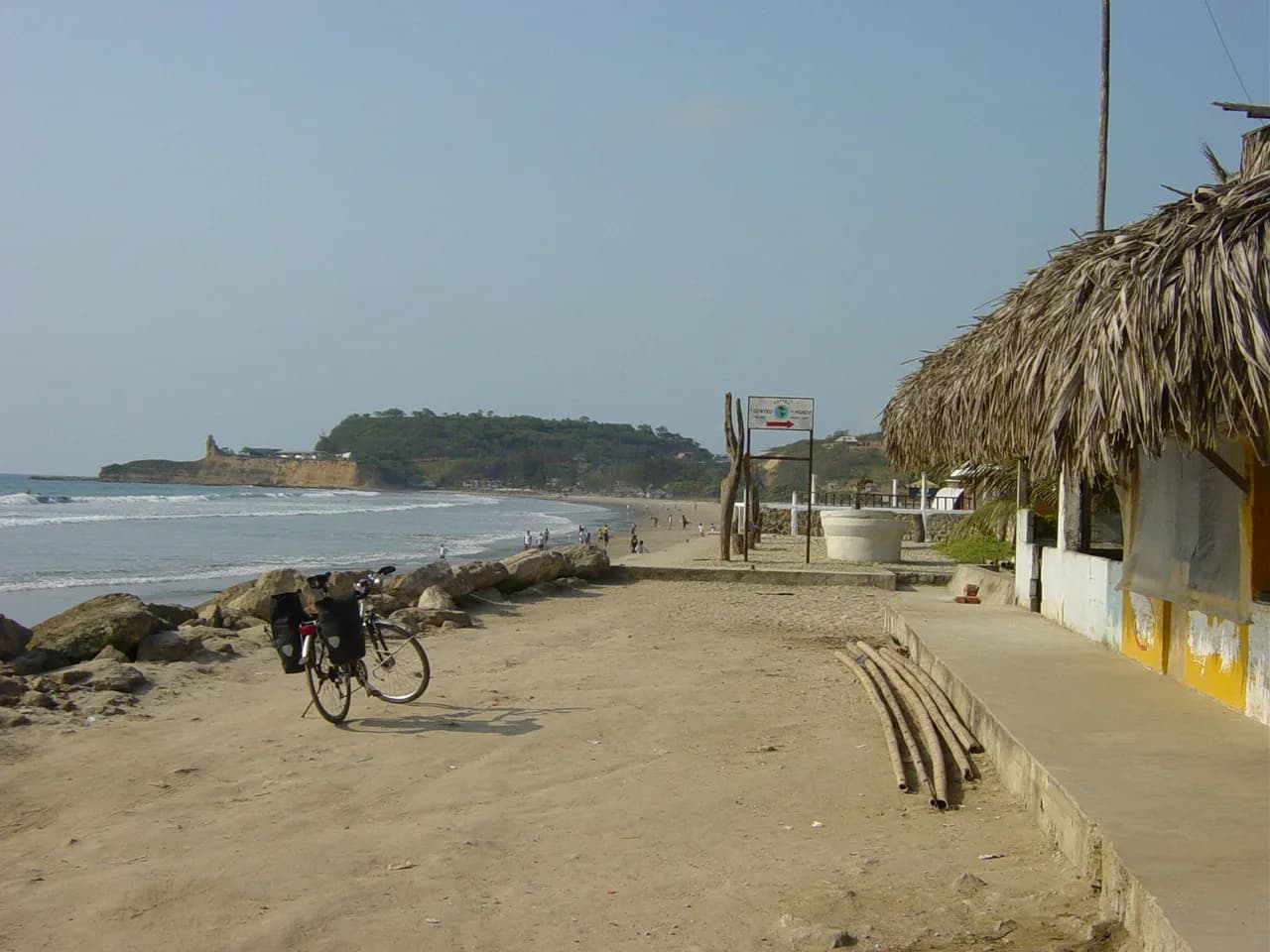
Riding the Ruta del Spondylus by motorcycle end to end covers 748 km of Pacific coastline, crossing the provinces of Santa Elena, Manabí and Esmeraldas along route E15 — a name that honors the spondylus, a reddish spiny shell that pre-Columbian peoples of the Ecuadorian coast considered sacred and used as ritual currency in trade with the Inca empire.
The road links beaches of very different character: Montañita, a surf mecca since the mid-20th century; Puerto López, gateway to Machalilla National Park; and further north, Bahía de Caráquez and Atacames, home to Ecuador's longest natural beach.
Unlike the sierra or Amazon routes on this list, the challenge here isn't altitude or mud, but coastal wind and fishing-truck traffic through the larger towns along the way.
WARNINGS FOR THIS ROUTE
This is what you need to sort out before riding this route.
- 01Fuel range
Very good. Frequent stations in every coastal town of decent size.
NEIGHBORING COUNTRIES
Crossing the border next? Click a country to see its 10 best motorcycle routes.

FREQUENTLY ASKED QUESTIONS
01Do I need insurance to enter Ecuador with my motorcycle?
+
Do I need insurance to enter Ecuador with my motorcycle?
No. Unlike Chile (SOAPEX) or Argentina (Carta Verde), Ecuador does not require insurance for foreign-plated vehicles. Buying local coverage is optional, not a border requirement.
02How long does the motorcycle's temporary import permit (TIP) last in Ecuador?
+
How long does the motorcycle's temporary import permit (TIP) last in Ecuador?
90 days, running alongside your tourist stay. The motorcycle can't remain in the country longer than you do, and you must hand in the TIP when you leave.
03What's the best border crossing to enter from Colombia?
+
What's the best border crossing to enter from Colombia?
Rumichaca, between Tulcán (Ecuador) and Ipiales (Colombia): it's fast, well signposted, and the corridor that security advisories consider safe to travel within the border strip.
04Is it better to cross to/from Peru via Huaquillas or Macará?
+
Is it better to cross to/from Peru via Huaquillas or Macará?
Huaquillas is the fastest, busiest coastal crossing, but it has a history of chaos and money-changers looking to scam travelers. Macará, further inland, is calmer, though it's worth confirming its status before you go: the vehicle crossing was closed between December 2025 and July 2026 for security measures.
05Is it safe to travel Ecuador by motorcycle in 2026?
+
Is it safe to travel Ecuador by motorcycle in 2026?
It depends on the route. Several coastal provinces (Esmeraldas, Guayas, Manabí) are under security alerts for drug-trafficking-related violence, but the Andean sierra, where the Panamericana runs and most motorcycle travelers ride, stays comparatively calm.
06Are there gas stations along the whole route?
+
Are there gas stations along the whole route?
Yes, with good coverage along the Panamericana, the coast and the big cities; in the Amazon, stations are more spread out. The price per gallon changes monthly under a band system — in early 2026 it was around USD 2.67 for Extra gasoline.
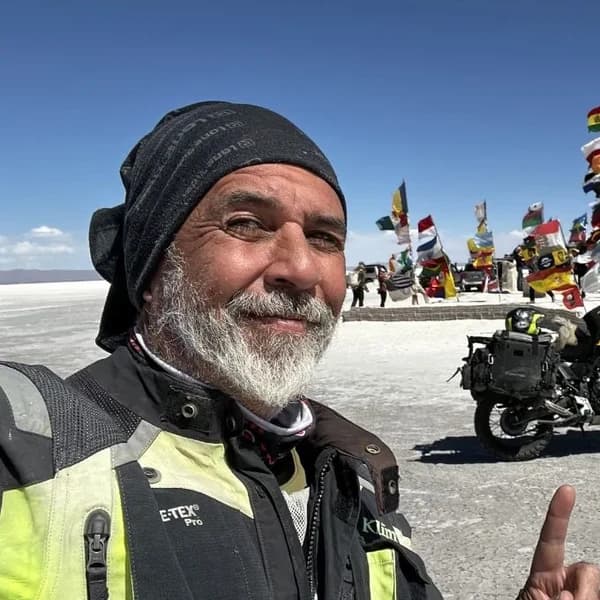
Gustavo Correa
Moto traveler, author and motorcycle travel consultant. 110,000+ km across 4 continents with Gloria, my motorcycle. Everything you read here has been tested on the road, not in an office.
Read my story →Last verified: 2026-08-29
A GIFT FOR BEING HERETHE ADVENTURE OF LIVING FREE
Do fear or doubt paralyze you before starting any project? You're not alone — every one of us has been there.
As a thank-you for visiting my site, I'm giving you my book "The Adventure of Living Free". A manual built to bring some light through the shadows and show you the philosophy that has let me ride the world for years.
* PDF STRAIGHT TO YOUR INBOX. NO SPAM.