MOTORCYCLE TRAVEL IN Colombia
QUICK ANSWER
Colombia is one of the most rewarding countries for a motorcycle traveler in South America: in a few days of riding you go from Caribbean beaches to Andean páramo and the Coffee Region. Entry is quick when the border crossing is running normally — customs (DIAN) issues the TIP (temporary import permit) for free at the post itself, and SOAT (mandatory insurance) can be bought by the day after a pre-registration on RUNT. The thing to watch is the border: Rumichaca, the only land crossing open today with Ecuador, saw several closures from blockades and protests in 2026, so it's worth checking its status before heading that way.
WHAT YOU NEED TO KNOW
The country you're about to enter has particularities you need to know.
Before you cross the border there are four things you need locked down: how safe the country is, what insurance is mandatory for your motorcycle, where you'll actually find fuel, and when to go. None of these are optional.
SAFETY: MODERATE RISK (3/5)
Is Colombia safe to enter by motorcycle? Yes on the main routes and cities, but entire departments are off the table for any reasonable itinerary right now.
AREAS TO AVOID
- Catatumbo and the Venezuela border strip (Norte de Santander): Active armed conflict between the ELN, FARC dissidents, and Venezuelan groups like Tren de Aragua. The US State Department keeps it at Level 4 ('Do Not Travel'), along with the 10km strip around the Venezuela border.
- Rural Cauca and Valle del Cauca (outside Popayán and Cali): Rural areas of both departments are also rated Level 4 for crime and terrorism — car bombs and roadside explosive devices have been reported on secondary roads. Popayán and Cali themselves, as cities, are excluded from the alert.
- Tumaco and the Pasto-Tumaco road (Nariño): A zone disputed by armed groups over Pacific drug-trafficking routes. The Pasto-Tumaco road also sees recurring fatal accidents involving motorcycles, like the one at kilometer 52 (El Porvenir sector) — not a through-route for a traveler.
- Arauca: Rated Level 4 alongside Catatumbo, due to ELN and FARC dissident presence in rural areas. Not part of any real tourist route.
WHERE TO PARK
- Parking: On the street: fine by day in busy areas, avoid leaving it overnight. Look for a gated lot or a service station with cameras — common in every Colombian city.
- Alarm: Recommended: yes. Medellín, Bogotá, and Cali account for most of the country's motorcycle thefts — add a disc lock to the alarm.
- Luggage: Take off what you can carry (tank bag, backpack) when parking. Never leave anything loose or visible inside the panniers.
- Visibility: Park where there's foot traffic and good lighting — never in an alley or an empty block.
TIPS
- ➜Don't approach Cúcuta or the Catatumbo region at night, even if GPS marks it as the shortest route.
- ➜Avoid the Pasto-Tumaco road unless strictly necessary, and never at night.
- ➜At city traffic lights, keep valuables out of sight and your hands free to ride off.
Outside those specific pockets, the Trans-Andean highway, the Coffee Region, the Caribbean coast, and the south down to Pasto ride with the same precautions as any big South American city — the key is not mistaking the exception for the rule.
MANDATORY INSURANCE: SOAT
Mandatory, no exceptions, for any motorcycle riding in Colombia, including foreign-plated ones. It's sold by the day (15-day minimum) after pre-registering the bike on RUNT (Registro Único Nacional de Tránsito), issued by authorized insurers at the border crossing or online. It covers medical care for anyone involved in an accident — it does not cover damage to the bike or theft.
FUEL: SCARCE IN LA GUAJIRA
Colombia has the densest network of gas stations in the region — there's service in practically every town along the Trans-Andean highway and the Caribbean coast, with regular gasoline running around 16,000 Colombian pesos per gallon (about 4 USD) as of mid-2026. The exception is the La Guajira peninsula: Cabo de la Vela and Punta Gallinas have no official stations, and fuel is sold informally in pimpinas (repurposed containers) in the villages — carry an extra margin if you head up there.
BEST SEASON: DEC-MAR & JUN-AUG
Colombia has two dry windows: December to March and June to August, when rainfall drops across most of the country. But it's a country of microclimates — the Caribbean coast is dry December to March, while the Amazon south has its own dry season from June to November. If your route crosses the Andes, avoid April-May and October-November, when heavier rains complicate mountain stretches like the Trampolín de la Muerte (Mocoa-San Francisco).
ENTERING COLOMBIA BY MOTORCYCLE
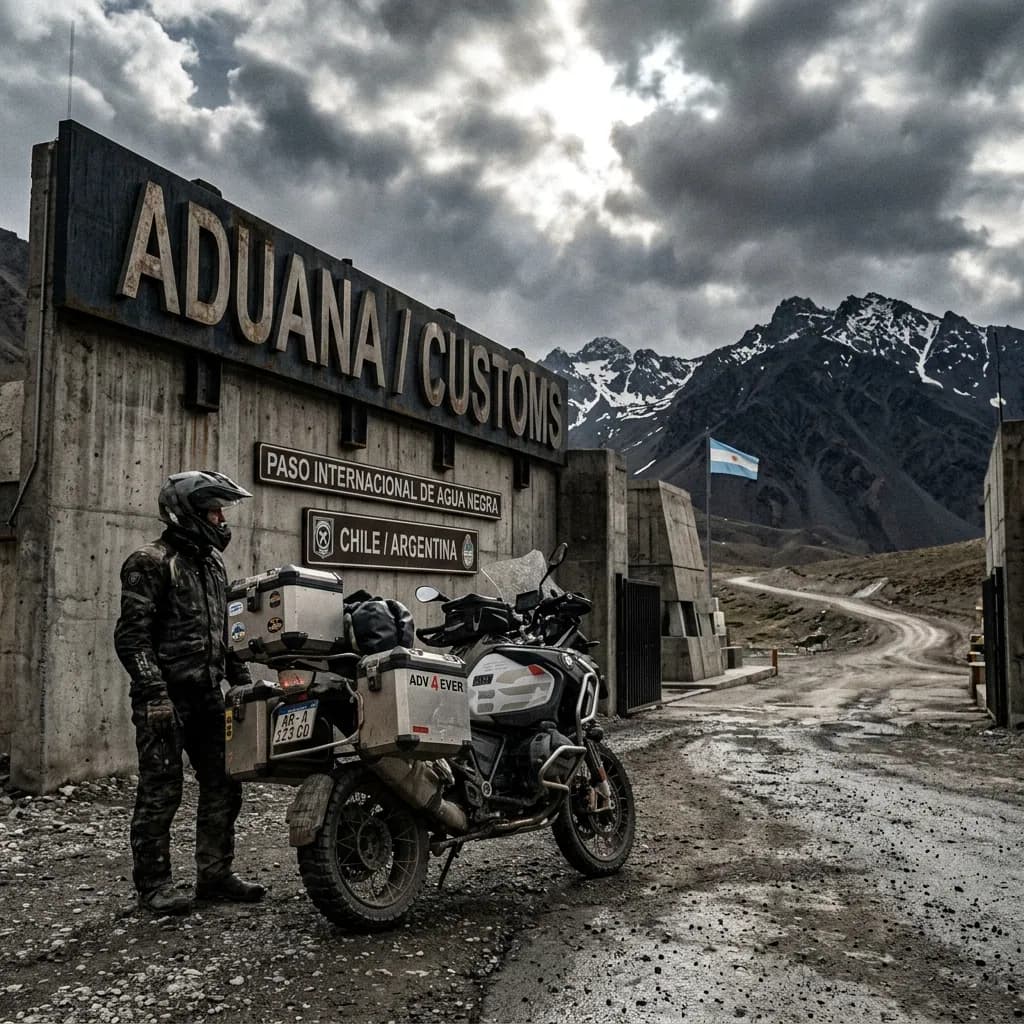
Entering Colombia with a bike through the only land crossing open today with Ecuador (Rumichaca, near Ipiales) is, according to traveler accounts on forums like Horizons Unlimited, a short process when the crossing is running normally.
The process has two steps:
Immigration: Stamps your passport on entry.
Customs (DIAN): Issues the TIP (temporary import permit) for the motorcycle, at the same post.
The TIP is free — DIAN charges no government fee to issue it, and the whole process takes 30 to 90 minutes.
Real friction point:it's not the paperwork itself (fast and free) but whether the crossing is even open the day you arrive. Rumichaca has been the only land crossing open with Ecuador since late 2025, and in 2026 it saw several closures from blockades — tariff protests in February, a drinking-water crisis in Ipiales in July, some lasting more than 24 hours straight.
Worth checking the crossing's status in local press or on forums like Horizons Unlimited before heading to the border, and don't count on a remote crossing as a backup: the Venezuela crossings are advised against by governments on both sides (see Safety below).
REQUIRED DOCUMENTATION
Valid passport: Valid for at least 6 months if you're continuing on into Ecuador.
Driving license: Your home country's license is enough; an international permit is recommended as backup.
Motorcycle title/registration: If you're not the owner, you need notarized power of attorney from them.
SOAT: Mandatory insurance — buy it by the day after pre-registering the bike on RUNT.
TIP form: Temporary Import Transit — issued by DIAN right at the border crossing.
With these five documents sorted, entering Colombia with a bike through Rumichaca is routine when the crossing is open. The TIP is granted for 90 days and can be extended once for 30 more at DIAN — enough to ride the whole country without rushing.
The advice that comes up most often among motorcycle travelers: buy the SOAT before you cross or as soon as you arrive, since riding without it is illegal and road checkpoints ask for it.
DAILY BUDGET
This price range combines cheap lodging, cooking your own meals, and basic bike maintenance — the three categories that weigh most on any moto traveler's daily budget.
Your real daily budget is something you build yourself, based on your own needs and limits — but if you want an idea of how to build yours, pick a category to see the full guide:
Full cost breakdown in the budget guide
THE 10 BEST MOTORCYCLE ROUTES IN COLOMBIA
I picked these 10 routes after tracking which roads motorcycle travelers themselves mention again and again on forums like Horizons Unlimited and ADVrider, specialized blogs like Mad or Nomad, and Colombian adventure-tourism press — this isn't a list of "the 10 prettiest spots", it's the list of routes that people actually ride when they travel Colombia by motorcycle. I prioritized real diversity: Colombia packs desert, Amazon jungle, volcanic páramo, Caribbean coast and coffee-growing cordillera within a few hours of each other, and this Top 10 tries to reflect that instead of repeating the same kind of mountain curve ten times over.
Several of these routes climb past 3,500 masl or cross loose sand for hours, so before heading out it's worth reviewingthe gear guide for long motorcycle trips, because the cold of the páramo and the heat of the Guajira desert demand very different layers on the same day of riding.
Routes like the Trampolín del Diablo or the corridor to Tierradentro cross areas with no repair shop around the corner, so it's worth having the basics covered withthe mechanics guide for long motorcycle tripsbefore heading out.
And if crossing the border into or out of Colombia is still on your radar,this step-by-step guide to crossing the border by motorcyclesummarizes the real process, drawing on the same rider forums I used to build this Top 10.
Trampolín del Diablo:San Francisco to Mocoa
Nariño and PutumayoRiding down Trampolín del Diablo by motorcycle —the stretch linking San Francisco, in the Valle de Sibundoy, with Mocoa, the gateway to the Amazon— means covering 74.8km of single-lane track carved out in 1930 to move troops during the war with Peru.
The road was never built for the traffic it carries today: in 1989 a massive landslide buried buses and trucks, killing around 300 people, and since then the route has racked up over 500 fatalities, putting it among the most dangerous roads on the planet according to dangerousroads.org.
On a bike, the payoff is dropping almost 1,600 meters of elevation in a few hours, from the cold páramo of the Valle de Sibundoy down into the humid jungle of Mocoa, with the Amazon rainforest suddenly opening up at the bottom of the canyon.
Its days are numbered: the government has invested over 3.8 trillion pesos in a new 44km bypass, with 63 bridges and 3 tunnels, that will replace the original road once finished. It's underway, but still incomplete — anyone wanting to ride the original Trampolín del Diablo has a closing window.
WARNINGS FOR THIS ROUTE
This is what you need to sort out before riding this route.
- 01Fuel range
Scarce. Stations only in San Francisco and Mocoa; no fuel supply along the stretch in between.
- 02History of fatal landslides
In 1989 a landslide buried buses and trucks on this same stretch, killing around 300 people; the road has recorded over 500 fatalities since, according to dangerousroads.org. Never cross after recent rain, and don't stop beneath the slopes.
Alto de Letras:Manizales to the Nevado del Ruiz
Caldas and Tolima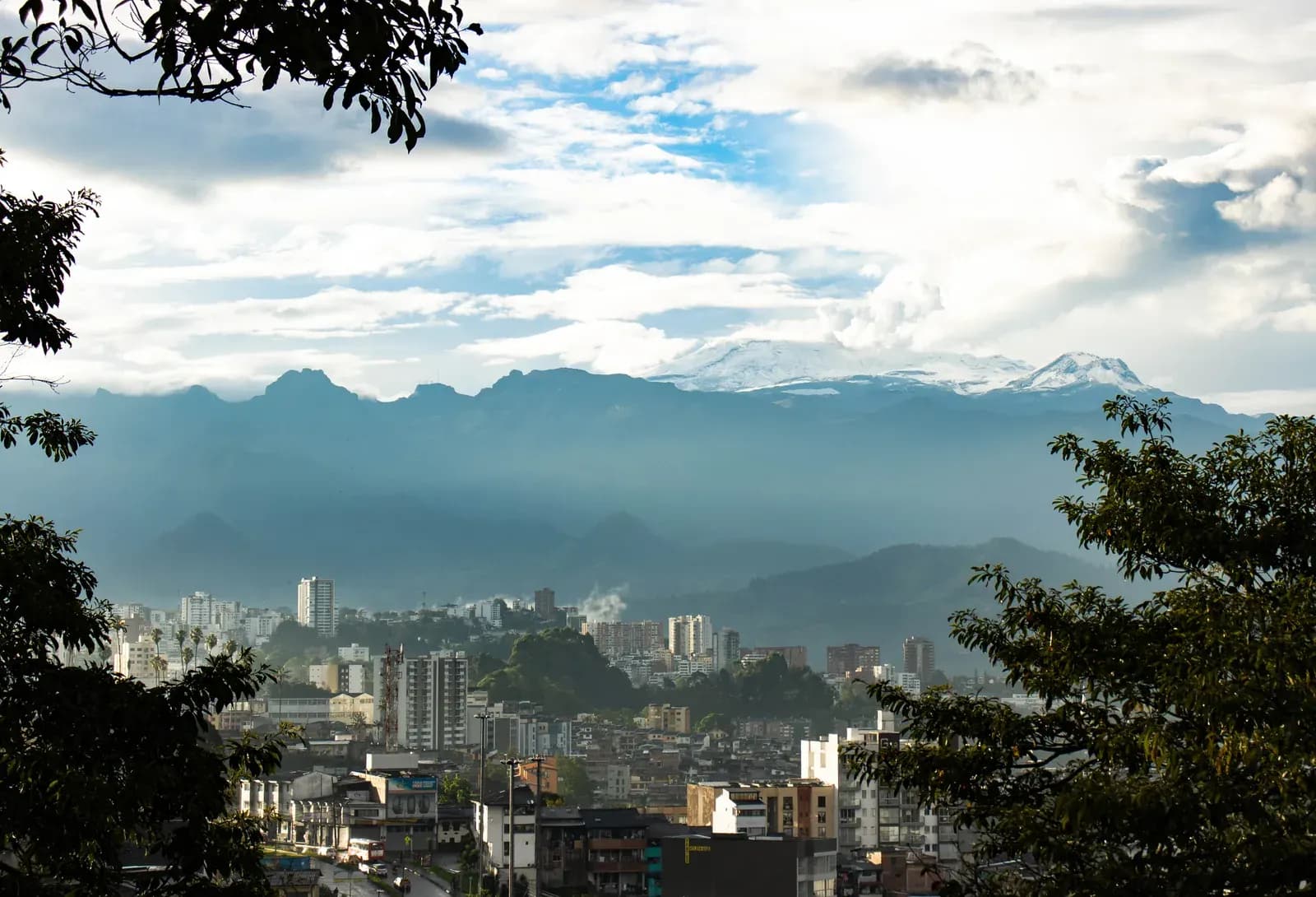
Climbing the Alto de Letras by motorcycle means crossing, in under 40km from Manizales, every thermal floor Colombia has to offer: you leave through coffee fields, ride through high Andean forest, break through the cloud ceiling into páramo full of frailejones, and end up facing the glacier of the Nevado del Ruiz.
The pass tops out at 3,650-3,677 masl, the highest point reached by a main road anywhere in the country, and the climb from Mariquita —80.7km without a break— ranks among the longest mountain climbs in the world, contested year after year in international cycling races.
Waiting at the top of the páramo is the Nevado del Ruiz, an active volcano under permanent monitoring by Colombia's Geological Survey ever since the 1985 Armero tragedy, when an eruption melted the glacier and buried the town in a matter of hours — always check the official alert level before heading up.
The payoff for the rider is twofold: the lunar landscape of volcanic sand fields at nearly 4,000 meters, and the hot springs bubbling at the mountain's foot to thaw you out after the descent.
WARNINGS FOR THIS ROUTE
This is what you need to sort out before riding this route.
- 01Fuel range
Good up to the páramo. Fill up in Manizales; there are no stations inside Los Nevados National Park.
- 02Active volcano under official monitoring
The Nevado del Ruiz is an active volcano — its 1985 eruption melted the glacier and buried the town of Armero, killing over 25,000 people. Colombia's Geological Survey maintains alert levels that can close access to the park; check them before heading up.
Chicamocha Canyon:Bucaramanga to San Gil
Santander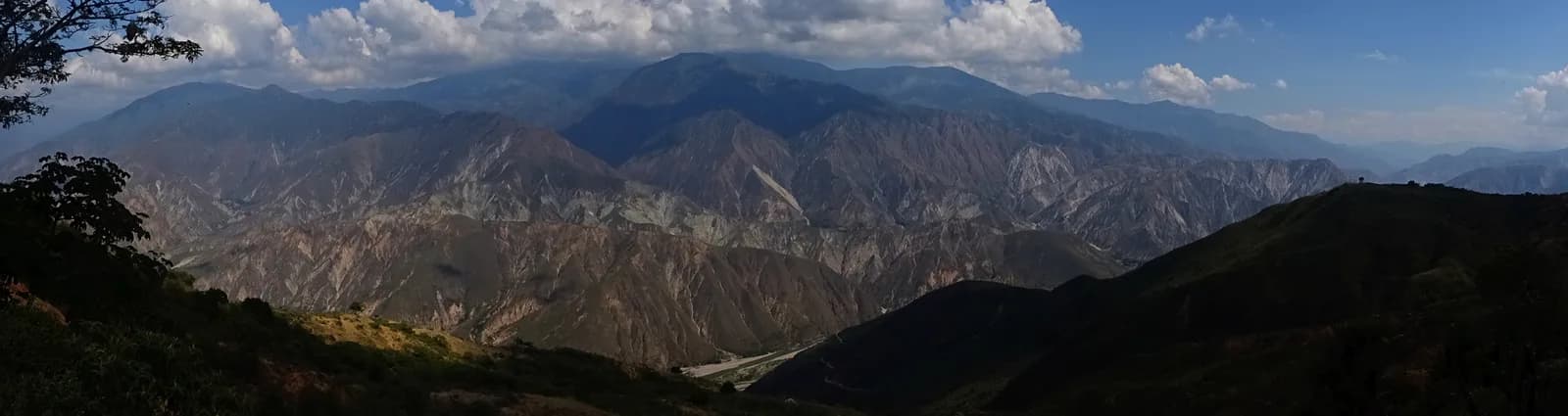
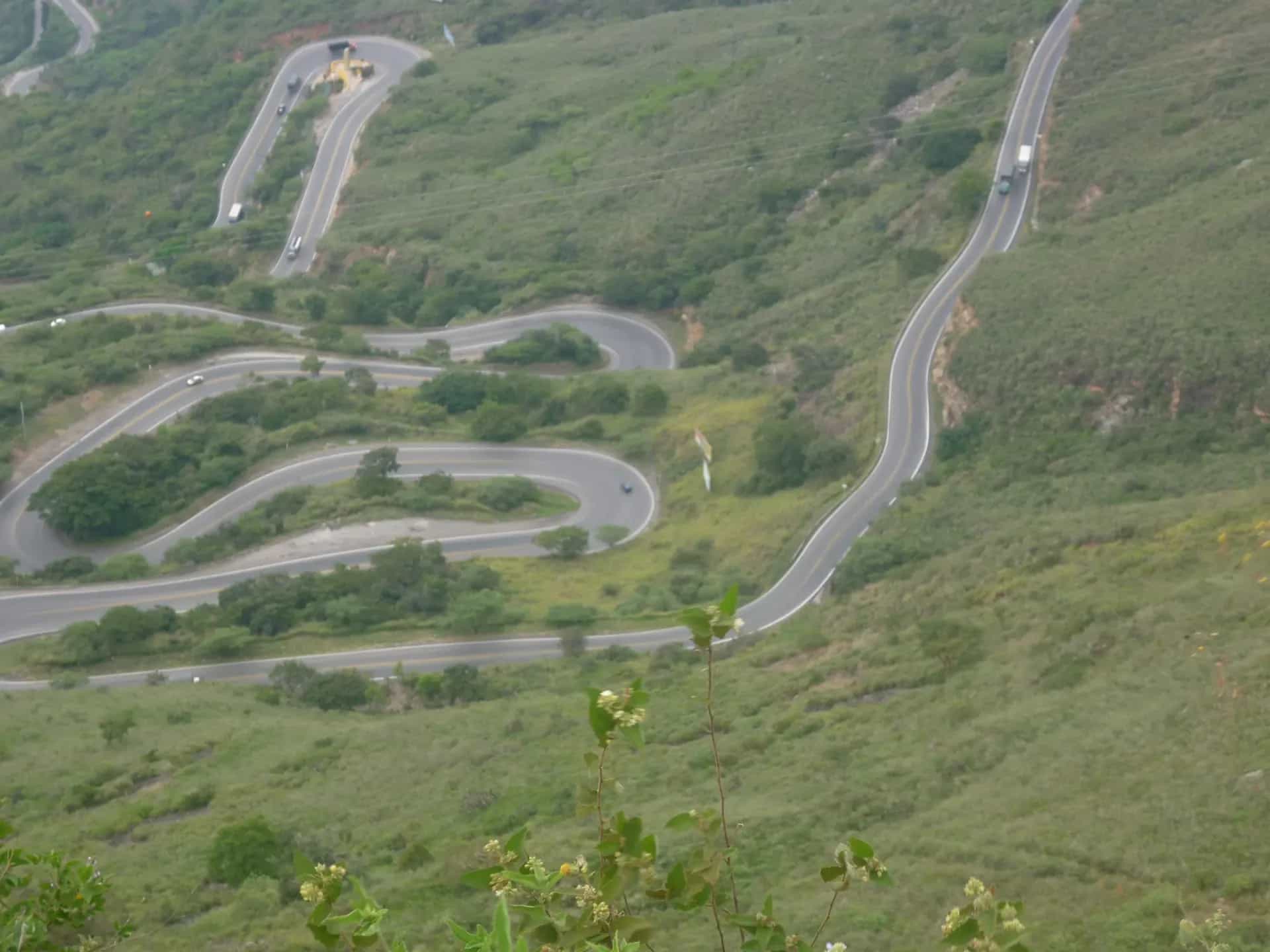
Descending into the Chicamocha Canyon by motorcycle from Bucaramanga is a string of tight switchbacks dropping nearly 1,500 meters to the canyon floor, only to climb right back up the other side on the way to San Gil.
The canyon stretches 227km and reaches depths of up to 2,000 meters at 1,450 masl — locals from Santander unapologetically compare it to the Grand Canyon, and at the highest point of the ride sits Panachi, home to one of the longest cable cars in the world, a 6.3km line that crosses the canyon end to end.
The route crosses the historic Pescadero bridge before climbing back up toward San Gil, Colombia's capital of extreme sports, so once you're off the bike there's still rafting, rappelling or paragliding if your body wants more adrenaline.
It's one of the few routes on this Top 10 that any bike can handle, with no real off-road, just a well-maintained national highway — ideal for anyone just starting to travel Colombia by motorcycle.
WARNINGS FOR THIS ROUTE
This is what you need to sort out before riding this route.
- 01Fuel range
Excellent. Full-service stations in Bucaramanga, Aratoca and San Gil.
Cocora Valley:the wax palms of Salento
Quindío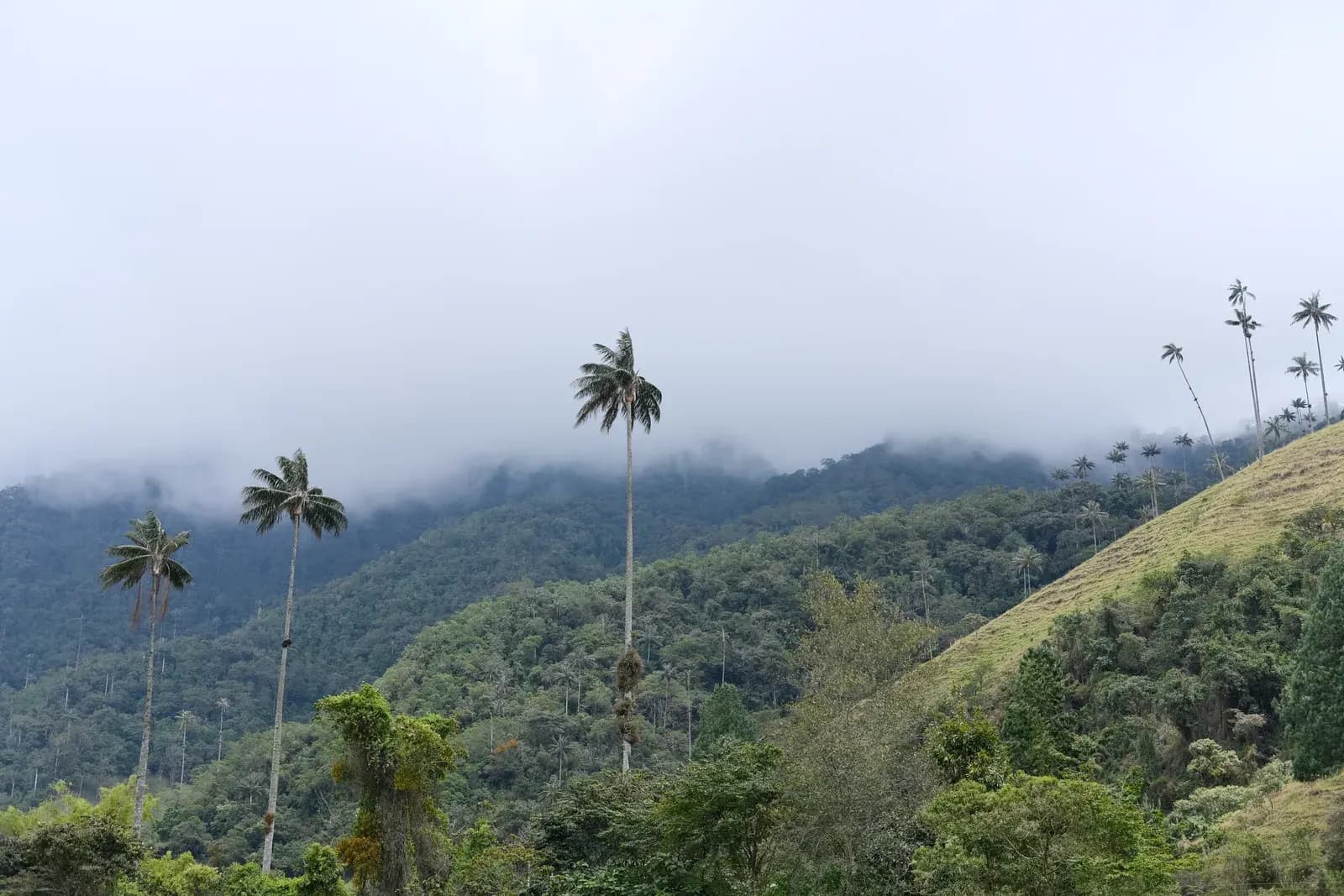
Riding into the Cocora Valley by motorcycle from Salento means crossing hills of coffee plantations to reach a valley where the tallest wax palms in the world grow, some over 60 meters high and living nearly 200 years.
The Ceroxylon quindiuense is Colombia's national tree, and this is essentially the only place on the planet where it forms forests this dense — a landscape that feels out of scale, with impossibly thin, towering palms poking through the mist of the Andean forest.
Pavement runs as far as the restaurant and lodging area; beyond that, the track gets technical if you push toward the edge of Los Nevados National Park, and the valley is also home to the yellow-eared parrot, an endangered species that only survives where wax palms still stand.
Salento, the gateway town, keeps its colorful balconies and vintage Willys jeeps from the coffee-boom era — the perfect contrast before or after the ride on two wheels.
WARNINGS FOR THIS ROUTE
This is what you need to sort out before riding this route.
- 01Fuel range
Good. Full-service stations in Salento, Armenia and Pereira.
The Western Route:Puente de Occidente and Santa Fe de Antioquia
Antioquia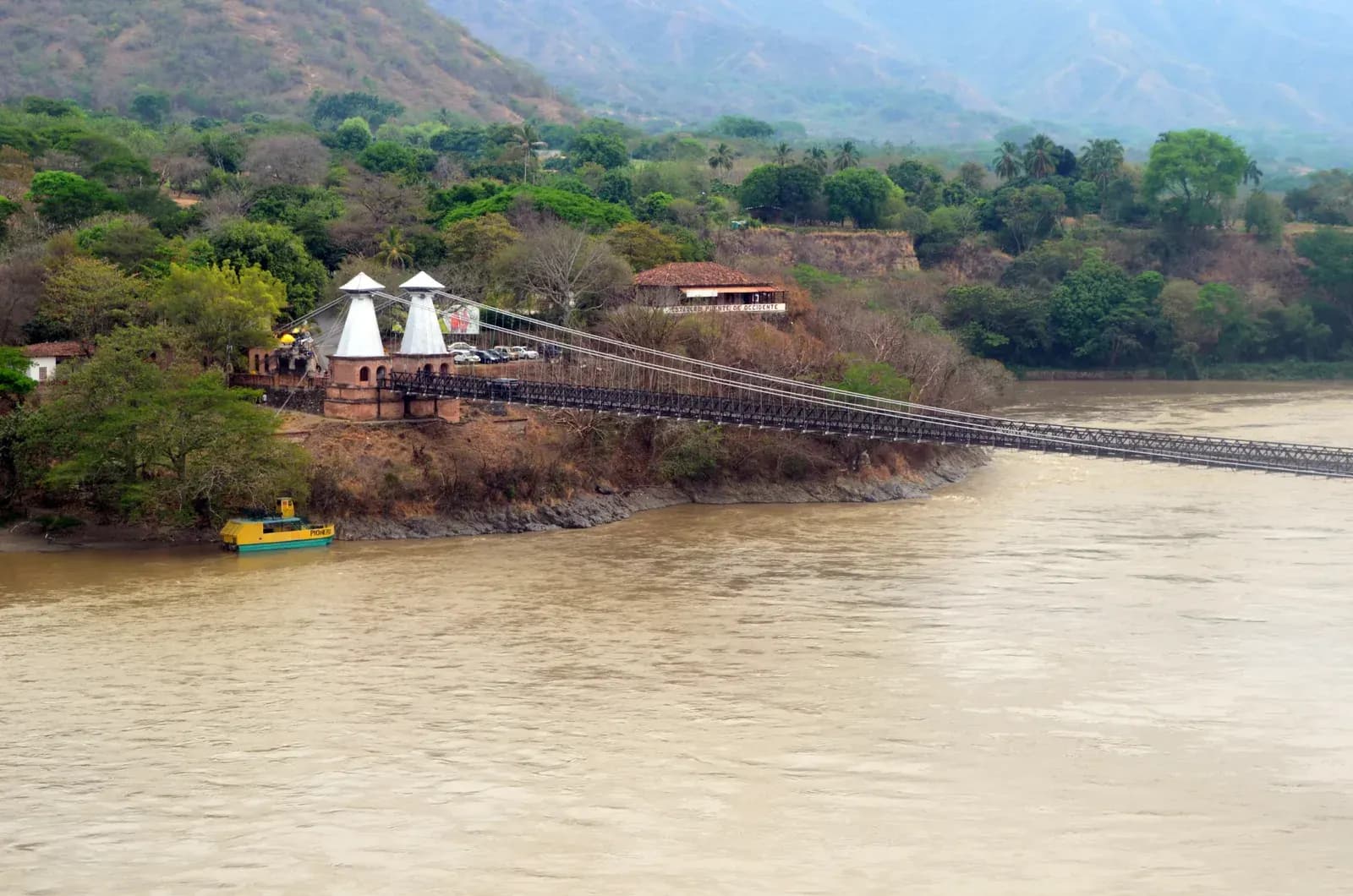
Crossing the Puente de Occidente by motorcycle means riding over an 1895 engineering relic, built by José María Villa — the same Antioquian engineer who worked on the construction of the Brooklyn Bridge in New York.
It was once the longest suspension bridge in South America and the seventh longest in the world; today only pedestrians, motorcycles and mototaxis cross it, so feeling the structure sway slightly under your wheels is part of the experience.
The full loop covers 165km from Medellín: it drops from the cool paisa climate down into the dry heat of the Cauca canyon at Santa Fe de Antioquia, crosses the bridge, and climbs back up tight gravel switchbacks to the Horizontes viewpoint at 2,800 masl, before passing through the coffee towns of Sopetrán and Olaya.
It's the ideal route for anyone who wants colonial history, 19th-century engineering and mountain off-road all in a single day, without leaving Medellín's area of influence.
WARNINGS FOR THIS ROUTE
This is what you need to sort out before riding this route.
- 01Fuel range
Good. Stations in Medellín, Santa Fe de Antioquia and San Pedro de los Milagros.
- 02Bridge restricted to pedestrians and light vehicles
The Puente de Occidente only allows pedestrians, motorcycles and mototaxis — no cars or trucks. Cross slowly and carefully: the 1895 structure sways under weight.
Alto de la Línea:Ibagué to Calarcá
Tolima and Quindío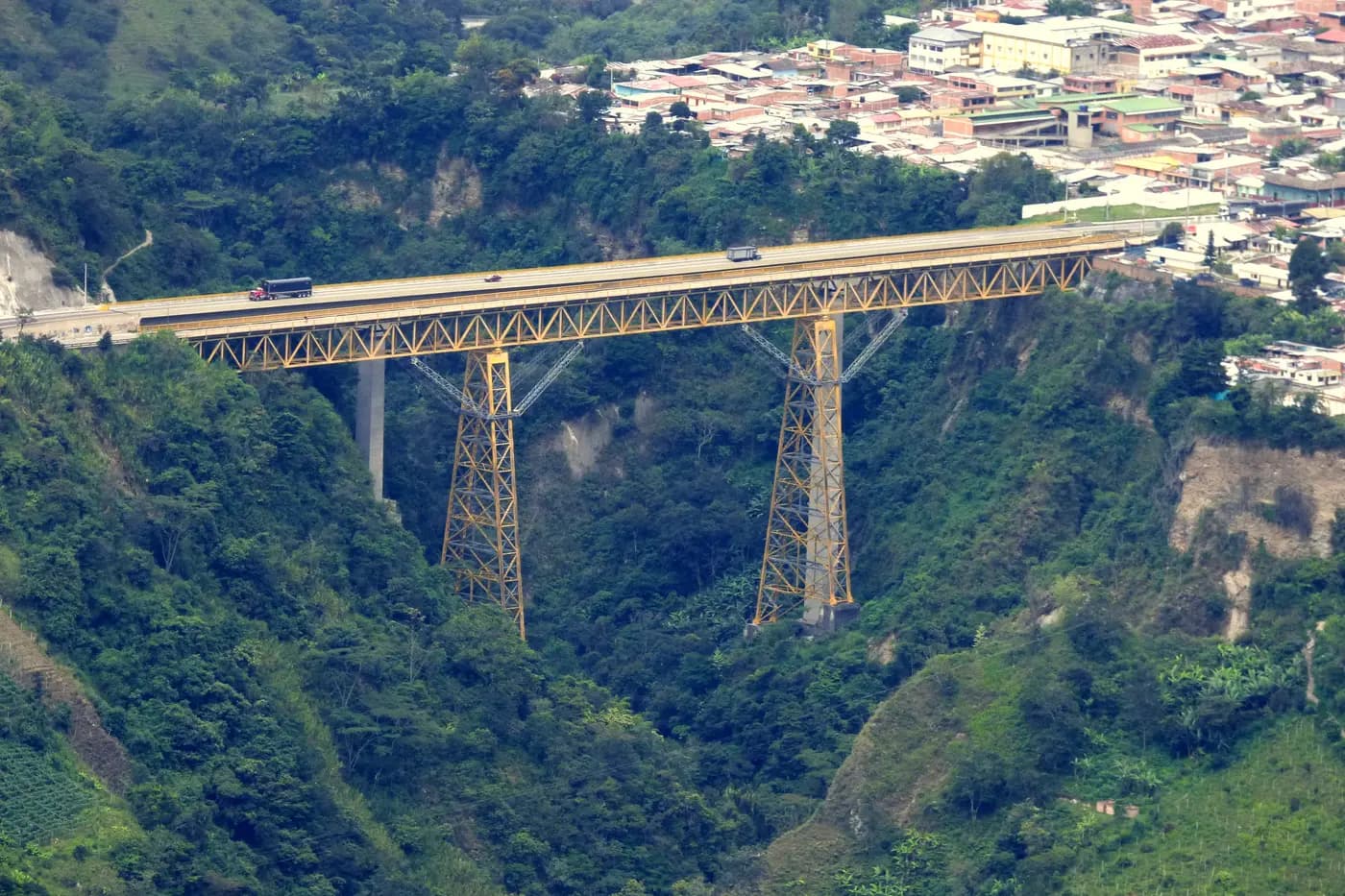
Climbing the Alto de la Línea by motorcycle between Ibagué and Calarcá means crossing the Cordillera Central at nearly 3,200 masl on one of Colombia's busiest freight corridors — cyclists nickname it the "Colombian Stelvio" for how demanding its grades are.
It's a route of contrasts: you climb through fog, tractor-trailers and interdepartmental buses on a winding road built for trucks, not for the joy of leaning a motorcycle through curves — the appeal here is the feat more than the scenery.
The heavy truck traffic isn't an exaggeration: this corridor carries much of the freight moving between the country's interior and the Coffee Region, and its mix of fog, blind curves and tractor-trailers makes it a recurring site of crashes between trucks, buses and motorcycles, with periodic closures reported by Tolima and Quindío road authorities.
Since 2024 a 30km tunnel crossing between Cajamarca and Calarcá has been under construction, one that will eventually replace this open-air route — until then, La Línea remains the obligatory, and dangerous, toll between Tolima and the Coffee Region.
WARNINGS FOR THIS ROUTE
This is what you need to sort out before riding this route.
- 01Fuel range
Good. Stations in Ibagué, Cajamarca and Calarcá.
- 02Freight corridor with frequent accidents
It's one of Colombia's busiest freight corridors, with frequent fog and blind curves: Tolima and Quindío road authorities report recurring crashes and closures involving trucks, buses and motorcycles. Avoid peak freight-traffic hours and never pass on a curve.
Villa de Leyva and the Desierto de la Candelaria
Boyacá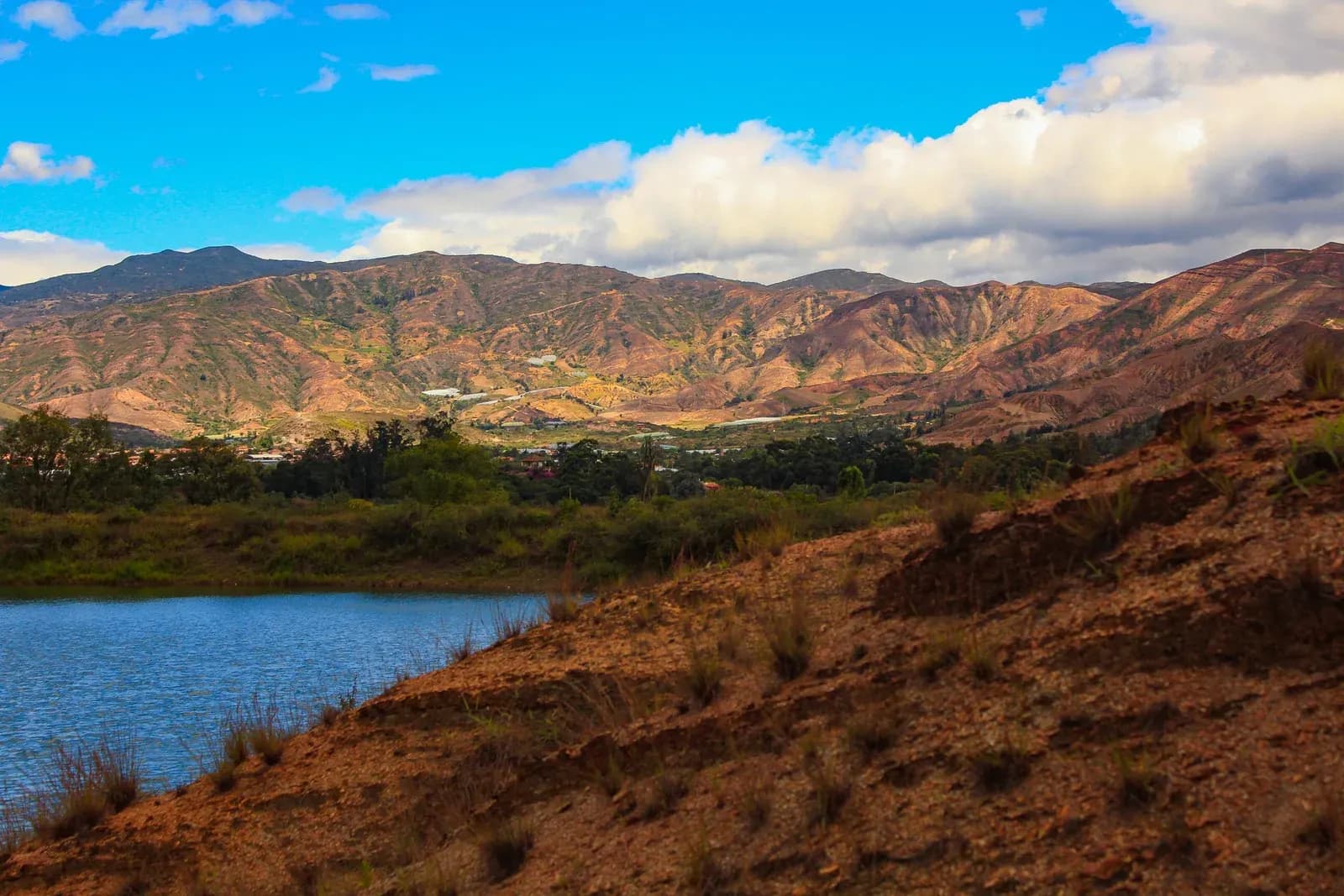
Riding into Villa de Leyva by motorcycle means arriving at one of the best-preserved colonial towns in Boyacá, with cobblestone streets and whitewashed 16th-century houses around an imposing, all-stone main square.
Minutes from town, the Desierto de la Candelaria opens up — a small Andean desert of red earth and rock formations that was, barely 100 million years ago, the floor of an ancient sea.
In 1977, the fossil of a Kronosaurus boyacensis was found here — a marine reptile up to 12 meters long — one of only two complete specimens of this species ever found in the world, now on display at the Museo El Fósil, built literally around the original find.
In a 20-minute ride you go from Boyacá's most photographed colonial plaza to an arid landscape that looks like another planet, with loose dirt tracks that test your balance through tight curves.
WARNINGS FOR THIS ROUTE
This is what you need to sort out before riding this route.
- 01Fuel range
Good. Full-service stations in Villa de Leyva.
San Agustín and Tierradentro:the archaeological corridor
Huila and Cauca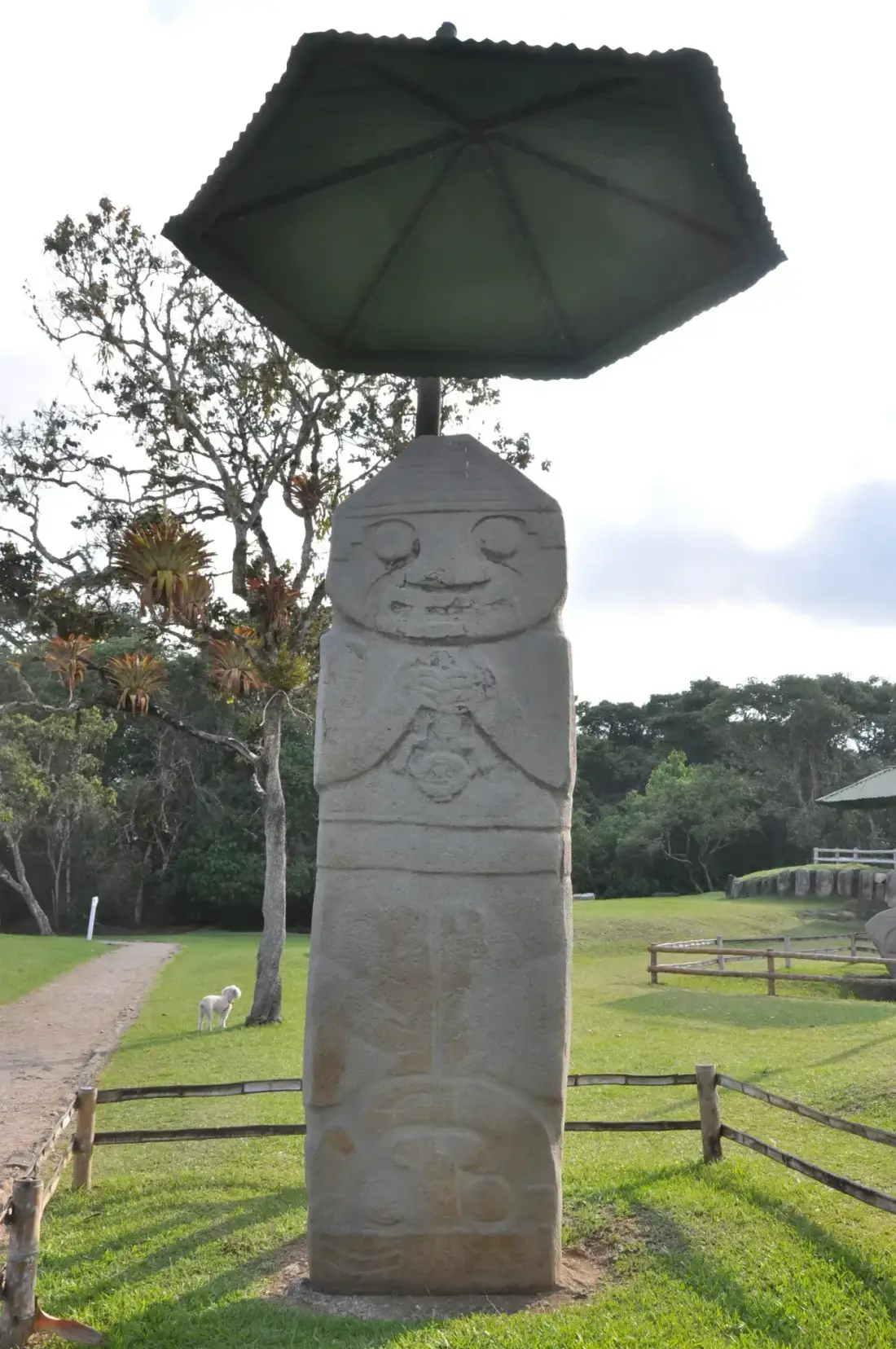
Connecting San Agustín and Tierradentro by motorcycle through the Páez river canyon means covering the 176km that separate two of South America's most important pre-Columbian necropolises, both UNESCO World Heritage Sites.
San Agustín holds more than 500 stone statues carved by a culture that vanished before the Spanish arrived — gods and warriors up to several meters tall, scattered across forests and plateaus.
Tierradentro, on the other side of the canyon via La Plata, holds the largest concentration of monumental underground tombs from the pre-Hispanic era anywhere in the Americas — hypogea carved into volcanic rock, with staircases and mural painting that has survived for over a thousand years.
The last few kilometers before Tierradentro turn to dirt as the canyon closes in, so on top of the history, the route adds a real off-road stretch through little-touristed mountains of Cauca.
WARNINGS FOR THIS ROUTE
This is what you need to sort out before riding this route.
- 01Fuel range
Limited on the final stretch. Fill up in San Agustín or La Plata before heading up to Tierradentro.
Cabo de la Vela:the desert of the Alta Guajira
La Guajira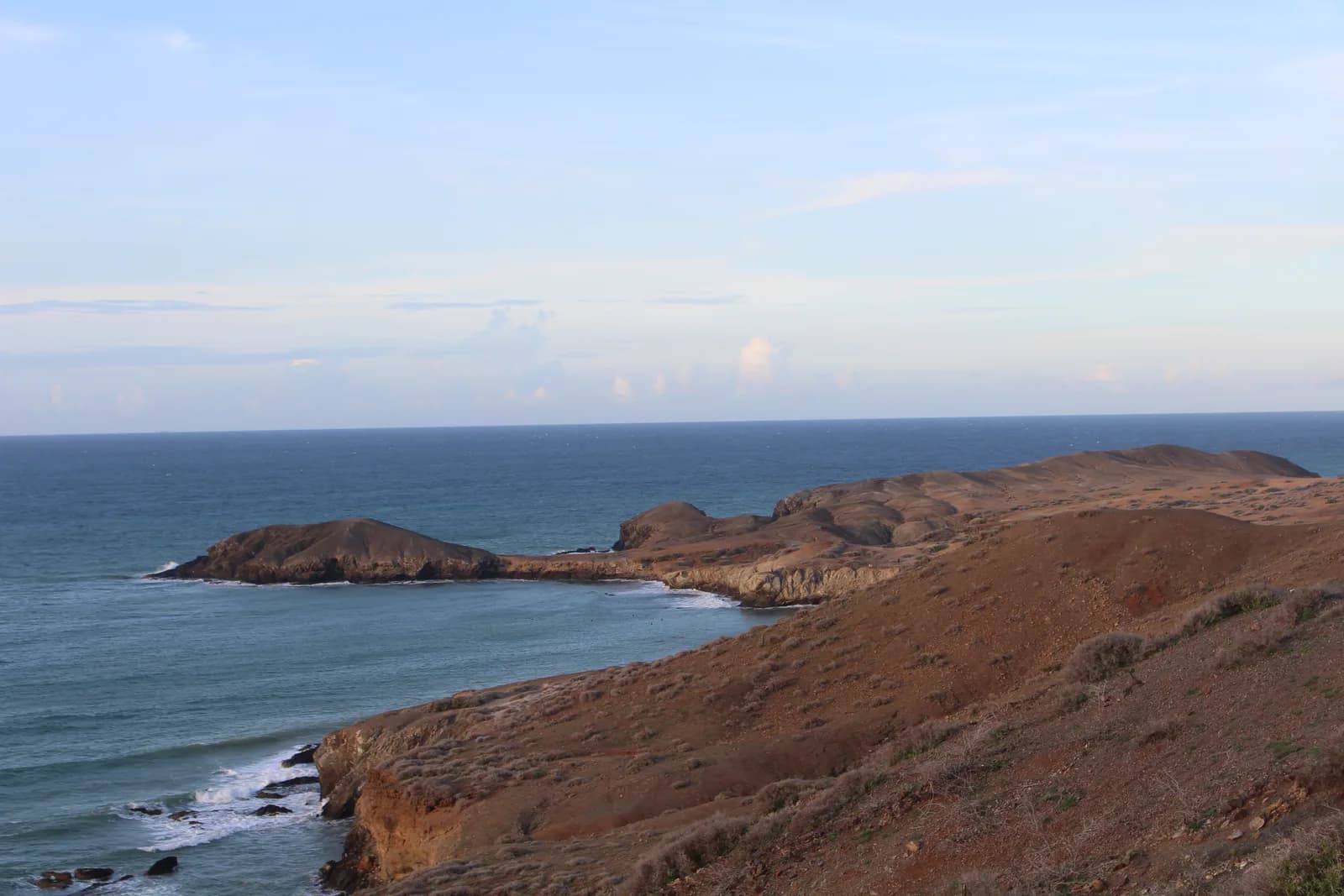
Reaching Cabo de la Vela by motorcycle means crossing the Alta Guajira desert through ancestral Wayuu territory, 160km from Riohacha where the pavement runs out well before you arrive.
From Uribia, the last 60km are loose sand, dunes and rock — according to local guides, only large-displacement bikes manage to cross without getting stuck, and continuing on to Punta Gallinas, further north, is strictly 4x4 territory.
The landscape makes up for the difficulty: the desert runs literally into the Caribbean Sea, with red cliffs like the Pilón de Azúcar and beaches where the Wayuu wind never lets up — the same force that makes La Guajira a breeding ground for kitesurfers.
Along with Palomino, it's the other face of the Colombian Caribbean on two wheels: no jungle, no river, just pure desert, wind and an endless horizon with no road reaching it.
WARNINGS FOR THIS ROUTE
This is what you need to sort out before riding this route.
- 01Fuel range
Critical beyond Uribia. There are no formal stations in Cabo de la Vela — buy from informal jerry-can vendors, or fill the tank and carry a spare can from Uribia.
- 02Deep sand: not suitable for small bikes
Local guides report that only large-displacement motorcycles cross the loose sand beyond Uribia without getting stuck; a small bike or one with road tires is at high risk of sinking into the dunes.
Santa Marta to Palomino:the coast at the foot of the Sierra Nevada
Magdalena and La Guajira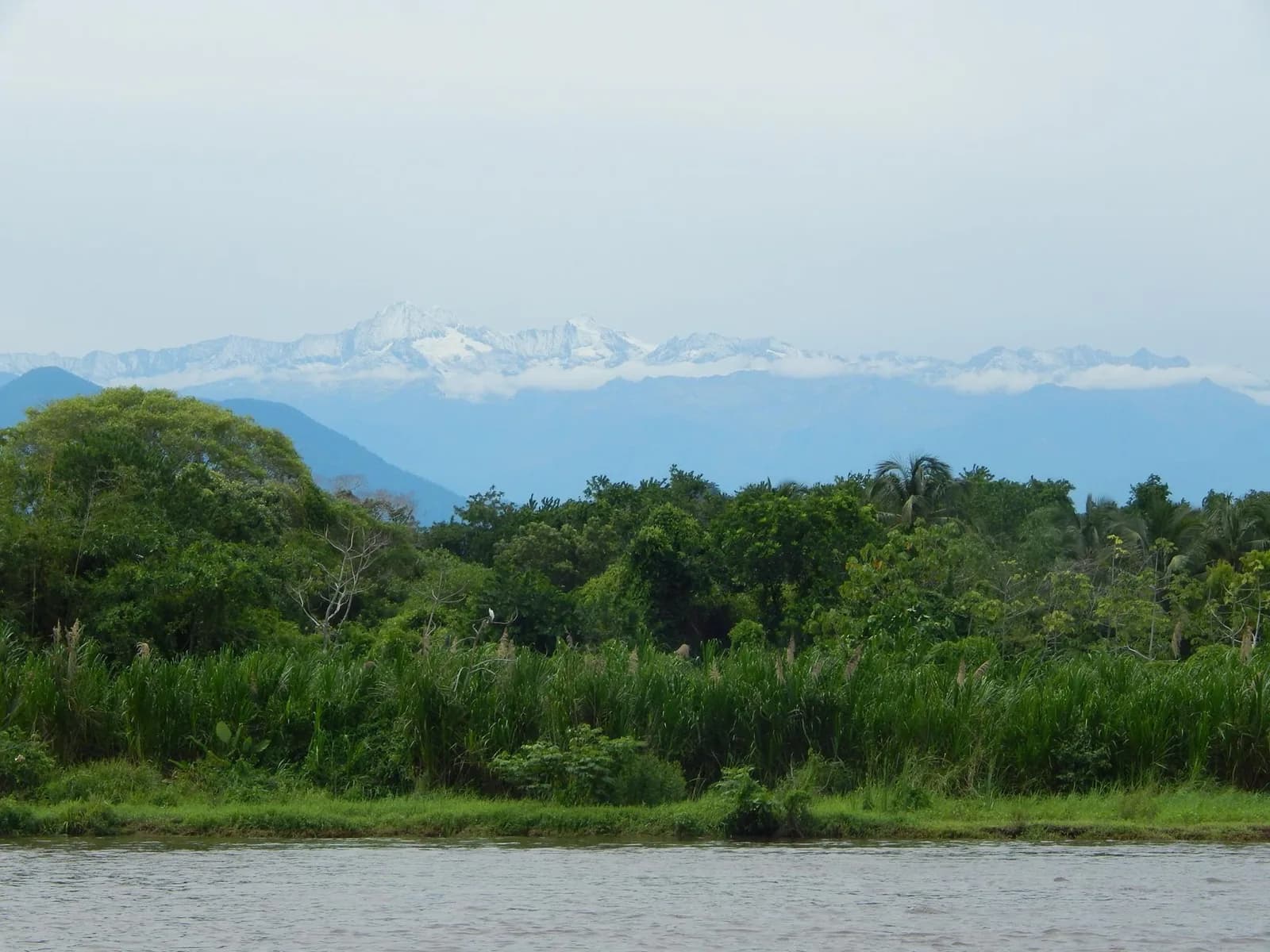
Riding from Santa Marta to Palomino by motorcycle along the Troncal del Caribe means skirting the Sierra Nevada de Santa Marta, the highest coastal mountain range on the planet — its peaks top 5,700 masl and sit just hours from the sea, a world record for how close snow and beach can get.
The 72km of pavement run with the Caribbean on one side and the sierra's jungle on the other, crossing rivers that flow straight down from the glaciers to the sea, like the Palomino river, which separates jungle from sand on the beach of the same name.
The Sierra Nevada is ancestral territory of the Kogui, Arhuaco, Wiwa and Kankuamo peoples, who consider themselves the spiritual guardians of the world's balance — seeing them come down from the mountain with their woven mochilas is part of the route's human landscape.
It's the most accessible route on this Top 10: pavement start to finish, ideal for closing out a Colombian Caribbean motorcycle trip with zero technical demands.
WARNINGS FOR THIS ROUTE
This is what you need to sort out before riding this route.
- 01Fuel range
Excellent. Stations in Santa Marta, Guachaca and Palomino.
NEIGHBORING COUNTRIES
Crossing the border next? Click a country to see its 10 best motorcycle routes.


FREQUENTLY ASKED QUESTIONS
01What is the TIP and where do I get it to bring my motorcycle into Colombia?
+
What is the TIP and where do I get it to bring my motorcycle into Colombia?
It's the Temporary Import Transit permit, issued by DIAN (Colombian customs) at the border crossing itself. It's free, takes 30 to 90 minutes, and is granted for a maximum of 90 days, extendable once for 30 more.
02Is SOAT mandatory for foreign-plated motorcycles?
+
Is SOAT mandatory for foreign-plated motorcycles?
Yes, no exceptions. After pre-registering as a foreign vehicle on RUNT, you can buy a SOAT by the day (15-day minimum) through authorized insurers, either at the border crossing itself or online before you cross.
03Which border crossing with Ecuador is actually open?
+
Which border crossing with Ecuador is actually open?
Rumichaca, near Ipiales, is the only land crossing open today between Colombia and Ecuador. It saw several closures in 2026 due to transporter blockades and protests — worth checking its status before heading to the border.
04Is it safe to cross into Venezuela by motorcycle through Cúcuta?
+
Is it safe to cross into Venezuela by motorcycle through Cúcuta?
It's not advisable. The 10km strip on each side of the Colombia-Venezuela border is rated Level 4 ('Do Not Travel') by the US State Department, due to ELN and FARC dissident presence and the risk of detention.
05Can I cross the Darién Gap by motorcycle from Colombia to Panama?
+
Can I cross the Darién Gap by motorcycle from Colombia to Panama?
There's no road: the Darién jungle has no overland crossing. The bike is shipped by air or by boat between Colombia's Caribbean coast and Panama, while the rider travels separately. If you need logistics advice for that leg, Vengo Viajando runs an international motorcycle transport service.
06Is there fuel along the whole route, or are there stretches without stations?
+
Is there fuel along the whole route, or are there stretches without stations?
Colombia's station network is the densest in the region — the only genuinely scarce stretch is the La Guajira peninsula (Cabo de la Vela, Punta Gallinas), which has no official stations and sells fuel out of pimpinas (jerry cans).
07How much does it cost to travel by motorcycle through Colombia per day?
+
How much does it cost to travel by motorcycle through Colombia per day?
Between 35 and 65 USD a day covers hostel or camping accommodation, local food, and fuel, based on traveler budget guides for the country. The range rises if you prefer a mid-range hotel every night.
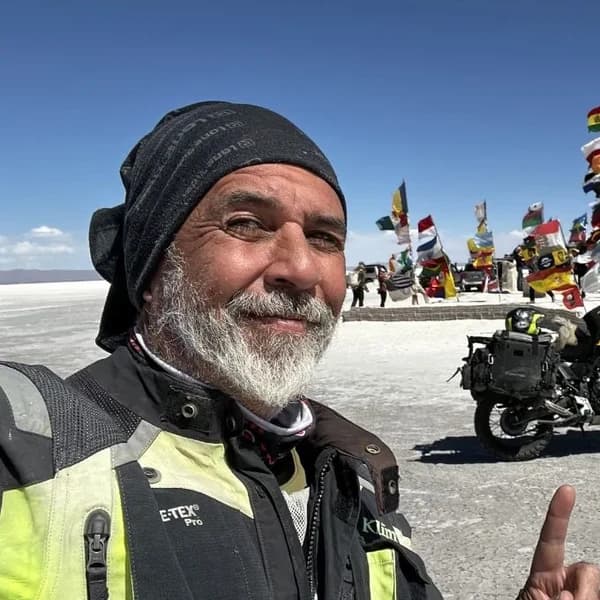
Gustavo Correa
Moto traveler, author and motorcycle travel consultant. 110,000+ km across 4 continents with Gloria, my motorcycle. Everything you read here has been tested on the road, not in an office.
Read my story →Last verified: 2026-08-29
Sources consulted (30)+
- dian.gov.co
- dian.gov.co
- dian.gov.co
- colombiamotoadventures.com
- colombiamotoadventures.com
- noticiasrcn.com
- eltiempo.com
- nomadicniko.com
- tiger800rtw.com
- cambiocolombia.com
- infobae.com
- portafolio.co
- co.usembassy.gov
- thecitypaperbogota.com
- hsbnoticias.com
- bogota.gov.co
- semana.com
- demotos.com.co
- infobae.com
- eltiempo.com
- travelgrafia.co
- elephantmoto.com
- weroad.es
- descubreteviajando.com
- amazonas.travel
- horizonsunlimited.com
- paisatours.com
- adventuremotorcycle.com
- ivssuk.com
- commons.wikimedia.org
A GIFT FOR BEING HERETHE ADVENTURE OF LIVING FREE
Do fear or doubt paralyze you before starting any project? You're not alone — every one of us has been there.
As a thank-you for visiting my site, I'm giving you my book "The Adventure of Living Free". A manual built to bring some light through the shadows and show you the philosophy that has let me ride the world for years.
* PDF STRAIGHT TO YOUR INBOX. NO SPAM.