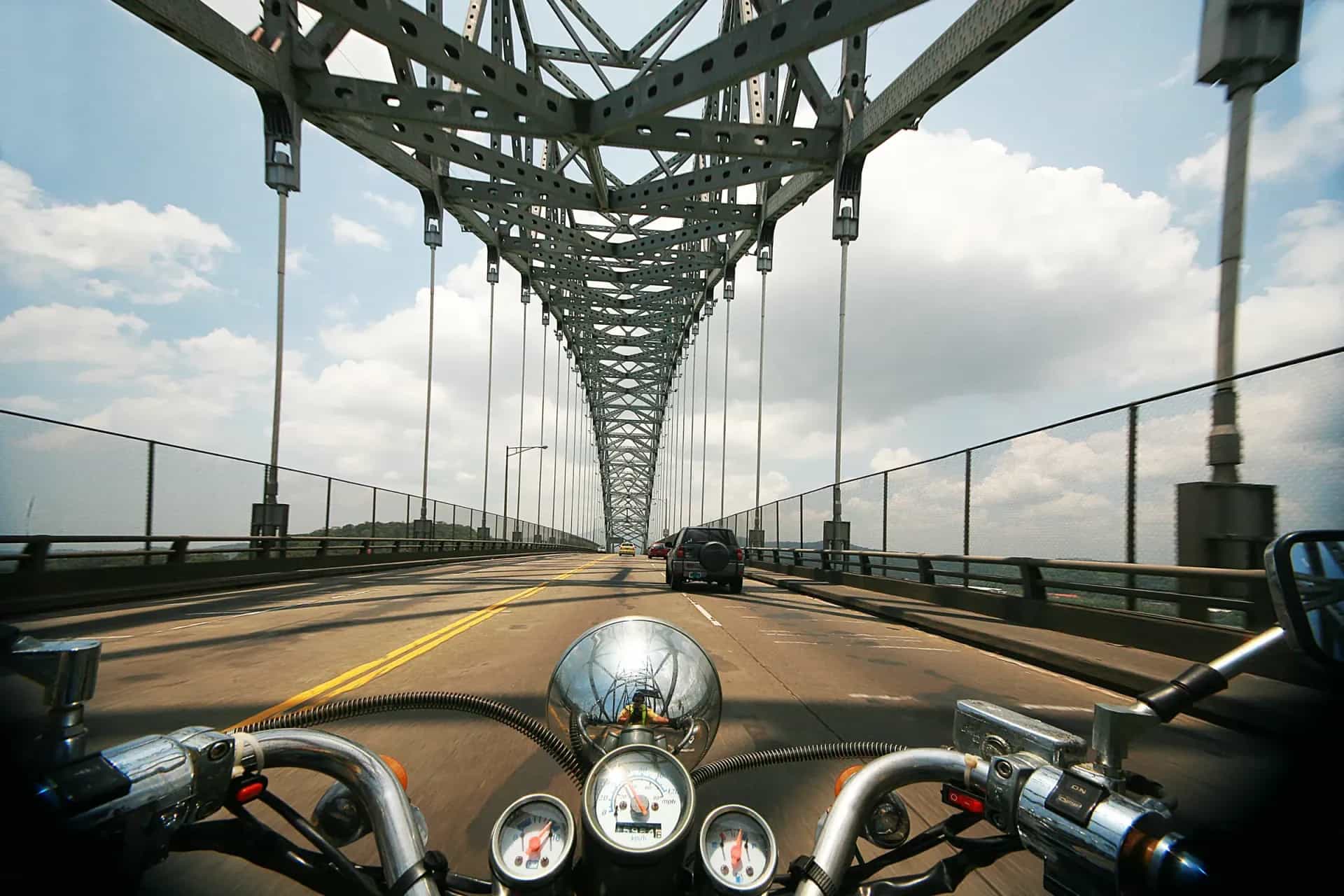
MOTORCYCLE TRAVEL IN Panama
QUICK ANSWER
Panama is the end — or the starting point — of the Pan-American Highway by land: the Darién Gap breaks the road toward Colombia, so any rider continuing the route to or from South America ends up flying the bike between Panama City and Bogotá. The only real land crossing is with Costa Rica at Paso Canoas, where the process is one of the fastest in the region: mandatory insurance for foreign plates bought right at the crossing, immigration, a free Temporary Import Permit (TIP) for the bike, and a final fumigation — all done in under two hours with no line.
WHAT YOU NEED TO KNOW
The country you're about to enter has particularities you need to know.
Before you cross the border there are four things you need locked down: how safe the country is, what insurance is mandatory for your motorcycle, where you'll actually find fuel, and when to go. None of these are optional.
SAFETY: LOW RISK (2/5)
Is Panama safe to enter by motorcycle? Yes — it's calm along nearly the entire tourist route, with a handful of specific spots to avoid.
AREAS TO AVOID
- City of Colón: 20% of the country's recorded homicides happen here, per the US State Department; gov.uk also flags it as elevated risk. Avoid it at night — GPS can route you through downtown instead of around on the main road.
- Darién, south of Yaviza: The State Department advises against travel south of Jaque, Manene, Yaviza, and Lajas Blancas toward the Colombian border: organized crime and human trafficking networks, with almost no police presence. There's also no road — the Darién Gap is roadless jungle.
- Mosquito Gulf: Caribbean coastline between Alligator Creek and Coclé del Norte. Both the US State Department and the Canadian government advise staying more than 10 miles from the coastline due to drug trafficking and other illegal activity.
- El Chorrillo, Curundú, and San Miguelito (Panama City): Neighborhoods with documented crime inside the capital. They're not on any logical route for a rider passing through, but if you cross the city, stick to the main corridors (Corredor Norte, Corredor Sur) rather than internal streets.
WHERE TO PARK
- Parking: In Panama City and Colón, look for a gated or watched lot at night. In interior towns like Boquete or David, the street is fine.
- Alarm: Recommended: yes. More important in Panama City and Colón; less critical in the interior.
- Luggage: Take off what you can carry (tank bag, backpack) when parking. Never leave anything loose in plain sight, especially in tourist areas like Casco Viejo.
- Visibility: Park where there's foot traffic and good lighting — never in an alley or dark corner.
TIPS
- ➜Don't ride into the city of Colón at night if you can help it.
- ➜Avoid riding at night on the highway in general — police checkpoints and animals on the road are harder to spot.
- ➜If you're heading south, the Interamericana ends at Yaviza — there's no land route past that point.
Outside Colón, the far south of Darién, and the Mosquito Gulf, Panama is one of the calmer countries in the region to ride through — the real tourist route (Boquete, Bocas del Toro, Casco Viejo) doesn't pass through any of them.
MANDATORY INSURANCE: Border-crossing insurance
Mandatory for any foreign-plated motorcycle entering Panama. It can't be bought online ahead of time — you pay cash at an insurance office right past the border crossing. It costs $20-25 and, per the rider accounts consulted, covers anywhere from 30 to 90 days depending on the crossing and the day. It's third-party liability only; it doesn't cover damage to your own bike.
FUEL: GOOD ON THE MAIN ROUTE
Regular 91-octane runs around $4.50 a gallon (August 2026), with slightly higher prices in Darién and Guna Yala due to transport costs. The Interamericana highway has frequent stations all the way to Yaviza. Past that point, toward the Colombian border, the road stops being passable or advisable anyway (see Safety).
BEST SEASON: DEC → APR
December to April is the dry season (Panama's summer): less rain and secondary roads in better condition. From May to November it rains almost every afternoon and some dirt stretches get complicated, though the paved Interamericana stays passable year-round.
ENTERING PANAMA BY MOTORCYCLE
Crossing into Panama with a bike through Paso Canoas — the border with Costa Rica, the country's only real land crossing — is, according to rider accounts on Horizons Unlimited and guides like Mad or Nomad, one of the faster processes in Central America: under two hours when the post isn't backed up.
The process has three steps:
Insurance: Bought at an office right after the crossing, cash only.
Immigration: Stamps your passport on entry.
Customs: Issues the TIP (temporary import permit) for the motorcycle and does the final fumigation, at the same post.
The TIP is free — Panama's customs authority charges no fee to issue it. The border-crossing insurance and the final fumigation are separate costs, roughly $20-25 and $3-6.
Real friction point:it's not the paperwork itself — orderly and fast at Paso Canoas — but two details that only matter if you're continuing on toward South America. The TIP is issued for 30 days (extendable), so if your plan includes flying the bike across the Darién Gap into Colombia, it's worth timing things with margin. And any mistake in the chassis or engine number on the form — one wrong digit copied down — only turns into a real problem later, at the air cargo counter when you go to ship the bike to Bogotá.
The border post isn't open 24 hours and closes around 6pm, so it pays to arrive early; the crossing insurance is cash-only.
REQUIRED DOCUMENTATION
Valid passport: The original, not a copy — several rider accounts explicitly insist on this.
Driving license: Your home country's license is enough; carrying an international permit too is a useful backup.
Motorcycle title/registration: If you're not the owner, you need notarized power of attorney from them.
Foreign-plate insurance: Bought with cash right after the crossing, before immigration and customs.
TIP form: Temporary Import Permit — issued by the National Customs Authority at the border post itself.
With these five documents sorted, entering Panama through Paso Canoas is a routine process — one of the more orderly ones in Central America according to the rider accounts consulted.
The advice that comes up most often: arrive before mid-afternoon so you're not rushed by the 6pm closing time, and triple-check the chassis and engine numbers on the TIP form before you leave the counter — a typo only becomes a real problem months later, at the cargo desk when you try to fly the bike out through the Darién Gap.
DAILY BUDGET
This price range combines cheap lodging, cooking your own meals, and basic bike maintenance — the three categories that weigh most on any moto traveler's daily budget.
Your real daily budget is something you build yourself, based on your own needs and limits — but if you want an idea of how to build yours, pick a category to see the full guide:
Full cost breakdown in the budget guide
THE 10 BEST MOTORCYCLE ROUTES IN PANAMA
This Top 10 is ranked by real fame and popularity, from the route most talked about worldwide among riders doing the Americas down to the ones that are mostly local classics for Panamanians themselves. The order came from tracking which routes show up most often, and in what position, on forums like Horizons Unlimited and ADVrider, in international motorcycle-travel blogs, and in Panamanian tourism guides — it is not a ranking of difficulty or scenery, it is a ranking of how much each route gets talked about.
Panama is a special case within the Americas: it is not just a country to ride through, it is the mandatory bottleneck of any round-the-continent motorcycle trip, because the Darién Gap cuts the Pan-American Highway and forces you to figure out how to continue toward Colombia. That is why the country's two most famous routes are not the prettiest to ride, but the two that solve that problem: reaching the literal end of the road at Yaviza, and rolling the bike onto a boat at Cartí.
If your plan is to continue toward Colombia after Panama, it is worth sorting out the crossing logistics ahead of time — checkthe long-trip motorcycle logistics guide, because there is no road through the Darién and shipping the vehicle needs to be arranged weeks in advance.
And before crossing the border with Costa Rica or passing the SENAFRONT checkpoints on the way to the Darién, it is worth havingthe international motorcycle travel documents guideon hand, so you do not lose time at a border post with incomplete paperwork.
And if the plan includes climbing Volcán Barú before dawn, it is worth checkingthe gear guide for long motorcycle trips, because in just a few hours you go from the tropical heat of the coast to near-freezing temperatures at the summit.
Yaviza:The End of the Pan-American Highway
Darién ProvinceRiding into Yaviza by motorcycle means literally completing the last rideable kilometer of the northern Pan-American Highway: thousands of kilometers of pavement that start in Alaska and end abruptly against the Darién jungle.
The town sits at the confluence of the Chucunaque and Tuira rivers, and from there begins the Darién Gap, roughly 100 km of roadless jungle separating Panama from Colombia — the one point where the Pan-American project could never be closed, despite a construction attempt in the 1970s that was abandoned in 1974 over cost and its impact on Emberá-Wounaan territory.
For any rider doing the Americas end to end, planting the front wheel at the Yaviza sign is as symbolic a closing ritual as reaching Ushuaia — the exact point where the map runs out of road.
WARNINGS FOR THIS ROUTE
This is what you need to sort out before riding this route.
- 01Fuel range
Good as far as Metetí; scarce in the last 60 km to Yaviza. Fill up in Metetí before continuing.
- 02SENAFRONT checkpoints and an active migration route
The Darién is currently one of the busiest northbound foot-migration routes in the world. National Border Service (SENAFRONT) checkpoints along the Interamerican Highway ask for your passport, and the jungle beyond Yaviza should never be entered under any circumstance — there is no road, only jungle.
El Llano to Cartí:the Gateway to San Blas
Guna Yala ComarcaRiding from El Llano to Cartí by motorcycle means crossing the Serranía de San Blas in just 35 km, from ocean to administrative ocean: you leave Panamanian national territory and enter the Guna Yala Comarca, an indigenous self-government recognized since the Tule Revolution of 1925, long before any other comarca existed in the country.
For more than a decade, travelers on Horizons Unlimited and ADVrider have reported it as one of the steepest paved roads in Central America, with sections running grades of 15-20% dropping straight toward the jungle and the Caribbean Sea.
For years, this route was the mandatory detour for every rider going from Alaska to Ushuaia: since there is no road through the Darién, many rolled the bike off the Pan-American Highway here and loaded it onto a sailboat bound for Cartagena, Colombia — the famous sea bridge that skips the Darién Gap.
WARNINGS FOR THIS ROUTE
This is what you need to sort out before riding this route.
- 01Fuel range
None after El Llano. Fill up on the Interamerican Highway before turning off into the jungle.
- 02Foggy final descent that pushes brakes to the limit
Riders who have made this crossing report thick fog at the highest point and overheated brakes on the final descent to Cartí — go down in a low gear, do not rely on the brake alone.
The Highlands:Boquete, Volcán and Cerro Punta
ChiriquíRiding up into the Highlands by motorcycle, the loop linking Boquete with Volcán and Cerro Punta around Volcán Barú, means leaving Pacific sea-level heat behind and reaching, in under an hour, the 1,200-meter altitude of Panama's best coffee-growing region.
On the Boquete side, the road winds through geisha coffee plantations — the Panamanian variety that broke world auction price records — while on the Cerro Punta side the landscape shifts to cloud forest, with the Los Quetzales hiking trail connecting both towns around the volcano in about 6 hours on foot.
It's the most-ridden curvy circuit for both Panamanian weekend riders and international travelers coming down from Costa Rica: cool temperatures year-round, well-paved technical curves, and an expat community that turned Boquete into one of the country's most visited towns.
WARNINGS FOR THIS ROUTE
This is what you need to sort out before riding this route.
- 01Fuel range
Excellent. Full-service stations in David, Boquete, Volcán and Cerro Punta.
Volcán Barú:the Climb Where Both Oceans Meet
Volcán Barú National Park, ChiriquíRiding to the summit of Volcán Barú by motorcycle means reaching the only spot in Panama, and one of the few on the planet, where on a clear day you can see the Pacific Ocean and the Caribbean Sea at the same time.
At 3,475 meters, it's the country's highest mountain, a dormant volcano declared a National Park in 1976. The access track climbs about 14 km from the 1,700-meter ranger station up to the crater, over loose volcanic rock that demands constant traction.
Most dual-sport riders climb it at night by 4x4 or trail bike to arrive before sunrise: it's tropical-hot at the base, but temperatures at the summit can approach freezing — a contrast few motorcycle rides in Central America offer in so few hours.
WARNINGS FOR THIS ROUTE
This is what you need to sort out before riding this route.
- 01Fuel range
None inside the park. Fill up in Boquete or Volcán before entering.
- 02Near-freezing cold at the summit, at night
Temperature at the base hovers around 20°C, but at the crater, at night, it can approach freezing — climb with thermal gear even if you set out in the heat from Boquete.
The Fortuna Highway:Crossing the Continental Divide
Chiriquí - Bocas del ToroCrossing the Fortuna Highway by motorcycle means riding over the Central Cordillera on one of the few paved roads in Panama that links the Pacific to the Caribbean in a single stretch, climbing up to Cerro Chorcha, at 2,213 meters, inside the Fortuna Forest Reserve.
According to the reserve's own records, it's one of the rainiest areas in the country: over 4,000 millimeters of water fall there every year, feeding the Fortuna hydroelectric dam, one of Panama's most important power plants since the 1980s.
The thick fog wrapping the cloud forest —home to resplendent quetzals— means every tight curve is ridden almost blind, with visibility down to a few meters. It's the mountain crossing most recommended in motorcycle-travel forums for heading down from Chiriquí to Bocas del Toro without taking the long detour through Costa Rica.
WARNINGS FOR THIS ROUTE
This is what you need to sort out before riding this route.
- 01Fuel range
Good in Gualaca and Chiriquí Grande; none inside the reserve — fill up before entering.
- 02Near-permanent fog and visibility of just a few meters
With over 4,000 mm of rain a year, fog covers the road most of the time — keep your lights on at all times and slow down on the blind curves near the highest point.
Cerro Azul and Cerro Jefe:the Mountain Escape Beside the Capital
Eastern Panamá ProvinceRiding up to Cerro Azul and Cerro Jefe by motorcycle is the closest mountain escape for anyone living in Panama City: less than an hour from downtown, the road climbs into the cloud forest of Cerro Jefe, the highest point in the area at 1,007 meters.
It's the curvy circuit most ridden by the capital's motorcyclists and cyclists on weekends, chasing a climate several degrees cooler than the city's humid heat, almost like another country, just 40 km in a straight line from Casco Antiguo.
From the viewpoints near the summit, on clear days, you can see both the Gulf of Panama and part of Lake Bayano to the east — a contrast of jungle and city skyline that few short rides offer this close to a Latin American capital.
WARNINGS FOR THIS ROUTE
This is what you need to sort out before riding this route.
- 01Fuel range
Good. Last full-service station in 24 de Diciembre, before the climb.
- 02Weekend cyclist traffic on narrow curves
It's a classic road-cycling route out of Panama City — on Saturday and Sunday mornings you share the lane with large groups of cyclists on the same tight curves.
Santa Fe de Veraguas:the Ride into Panama's Central Cloud Forest
VeraguasRiding up to Santa Fe de Veraguas by motorcycle means entering Panama's green heart, a town that only got connected by road in 1971 and had lived isolated for centuries in the country's central mountains before that.
The Santa Fe National Park surrounding the town protects over 300 orchid species and just as many bird species, with waterfalls like El Salto and Alto de Piedra just minutes away by bike from the town center.
Santa Fe is also the starting point for one of the dirt tracks most used by dual-sport riders in Panama: the road to Calovébora, on the Caribbean coast, a remote mountain stretch that still demands a trail bike and real gravel experience.
WARNINGS FOR THIS ROUTE
This is what you need to sort out before riding this route.
- 01Fuel range
Good in Santiago; limited past Santa Fe heading into the mountains.
Azuero to Pedasí and Playa Venao
Los SantosRiding down to Pedasí and Playa Venao by motorcycle means crossing the entire Azuero Peninsula, the cradle of Panamanian folklore and cattle-ranching tradition, to reach one of the most sought-after surf coasts in Central America.
The road passes through Las Tablas, home to the country's most famous Carnival, before opening onto a stretch of gentle curves along the Pacific, with short detours to nearly empty beaches and to the Isla Iguana Wildlife Refuge.
In a little over a decade, Playa Venao went from fishing village to host of international surf competitions, and today it's the favorite long-weekend destination for Panama City motorcyclists looking for fast curves and a beach in the same trip.
WARNINGS FOR THIS ROUTE
This is what you need to sort out before riding this route.
- 01Fuel range
Excellent along the whole corridor. Frequent stations in Chitré, Las Tablas and Pedasí.
Portobelo and the Colonial Caribbean Coast
ColónRiding to Portobelo by motorcycle means following the same route the Spanish Empire used for nearly two centuries to ship Peruvian silver to Europe, crossing the isthmus from the Pacific to this port founded in 1597.
Its fortifications, a UNESCO World Heritage Site since 1980, withstood attacks from privateers like Francis Drake —who died off this coast in 1596 and was buried at sea nearby— and from Henry Morgan, who sacked the port in 1668.
Today's road hugs the Caribbean between jungle and bays, passing near the Atlantic entrance to the Panama Canal, before ending in a town of colonial ruins and turquoise water that remains the most-ridden Caribbean escape for the capital's motorcyclists.
WARNINGS FOR THIS ROUTE
This is what you need to sort out before riding this route.
- 01Fuel range
Good. Last full-service stations in Sabanitas, before taking the coast road.
Chiriquí Grande:the Caribbean Descent to Bocas del Toro
Bocas del ToroRiding down to Chiriquí Grande by motorcycle, the final stretch of the Fortuna Highway on the Caribbean side, means reaching the point where the bike gets parked and the trip continues by boat: the Bocas del Toro archipelago has no bridge or road connecting it to the mainland.
For decades the town has been the northern terminal of the Trans-Panama pipeline, which for years moved oil from one ocean to the other back when crossing through the Canal wasn't cost-effective — today it's mainly the boarding point for the islands.
It's the natural finish line for any crossing of the Fortuna Highway: after hours of fog and mountain curves, the landscape suddenly opens onto the Chiriquí Lagoon and the humid Caribbean heat, with the islands of Bocas already visible on the horizon.
WARNINGS FOR THIS ROUTE
This is what you need to sort out before riding this route.
- 01Fuel range
Fair. Last full-service station in Gualaca; basic fuel supply is available in Chiriquí Grande.
NEIGHBORING COUNTRIES
Crossing the border next? Click a country to see its 10 best motorcycle routes.
FREQUENTLY ASKED QUESTIONS
01What is the TIP and how do I get it to bring my motorcycle into Panama?
+
What is the TIP and how do I get it to bring my motorcycle into Panama?
It's the Temporary Import Permit, issued by Panama's customs authority (ANA) right at the border post to authorize the bike's temporary entry. It's free, processed at the customs kiosk just past immigration, and according to rider reports takes 10 to 20 minutes if your title and passport are in order.
02Can you ride through the Darién Gap into Colombia?
+
Can you ride through the Darién Gap into Colombia?
No. The Darién Gap is roadless jungle between Yaviza (Panama) and the Colombian border, and it's also a high-risk area for organized crime and human trafficking — the US State Department itself advises against travel there. The only real way to continue the Pan-American route is flying the bike as air cargo between Panama City and Bogotá; it costs around $1,000 per bike plus the rider's own flight, and it's worth coordinating several weeks ahead since cargo space fills up fast.
03Is insurance mandatory for a foreign-plated motorcycle in Panama?
+
Is insurance mandatory for a foreign-plated motorcycle in Panama?
Yes. It can't be bought online ahead of time: you pay cash at an insurance office right past the crossing, it costs $20-25, and according to the accounts consulted it covers anywhere from 30 to 90 days depending on the crossing and the day. It's third-party liability only, not damage to your own bike.
04Is it safe to travel through Panama by motorcycle?
+
Is it safe to travel through Panama by motorcycle?
Generally yes, especially on the usual tourist route (Boquete, Bocas del Toro, Casco Viejo, the Interamericana toward David). The specific spots to avoid are the city of Colón, southern Darién province past Yaviza, and the Mosquito Gulf on the Caribbean coast — all outside a passing rider's normal route.
05How long can I stay in Panama with my foreign motorcycle?
+
How long can I stay in Panama with my foreign motorcycle?
The TIP is issued for 30 days and can be extended. Watch your own passport's clock too: US and Canadian citizens get 180 visa-free days, while most other nationalities (including the EU and UK) get 90 — if your stay will run longer than the TIP, you need to process the extension at the Regional Customs Administration before it expires.
06What's the best time of year to ride through Panama?
+
What's the best time of year to ride through Panama?
December through April, the dry season: less rain and secondary roads in better shape. From May to November it rains most afternoons and some dirt sections get tricky, though the paved Interamericana stays passable year-round.
07Are there gas stations the whole way to the Colombian border?
+
Are there gas stations the whole way to the Colombian border?
Only as far as Yaviza, the last town with stations before the Interamericana ends at the Darién Gap. There's no land route past that point — and as explained above, it's not advisable to try anyway for safety reasons.
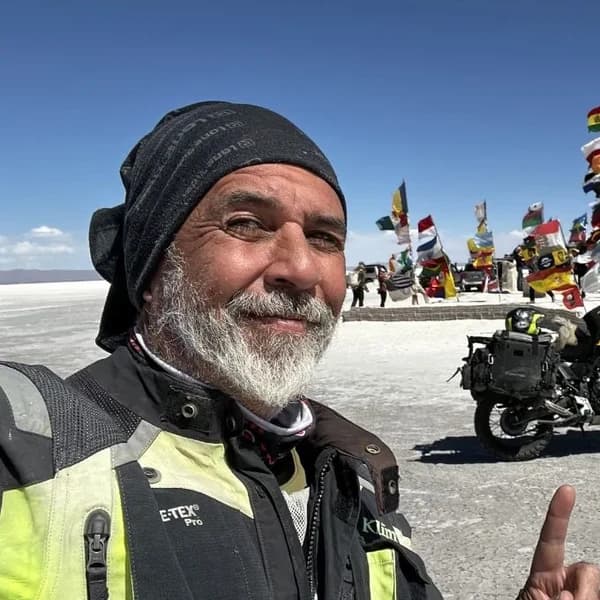
Gustavo Correa
Moto traveler, author and motorcycle travel consultant. 110,000+ km across 4 continents with Gloria, my motorcycle. Everything you read here has been tested on the road, not in an office.
Read my story →Last verified: 2026-08-29
A GIFT FOR BEING HERETHE ADVENTURE OF LIVING FREE
Do fear or doubt paralyze you before starting any project? You're not alone — every one of us has been there.
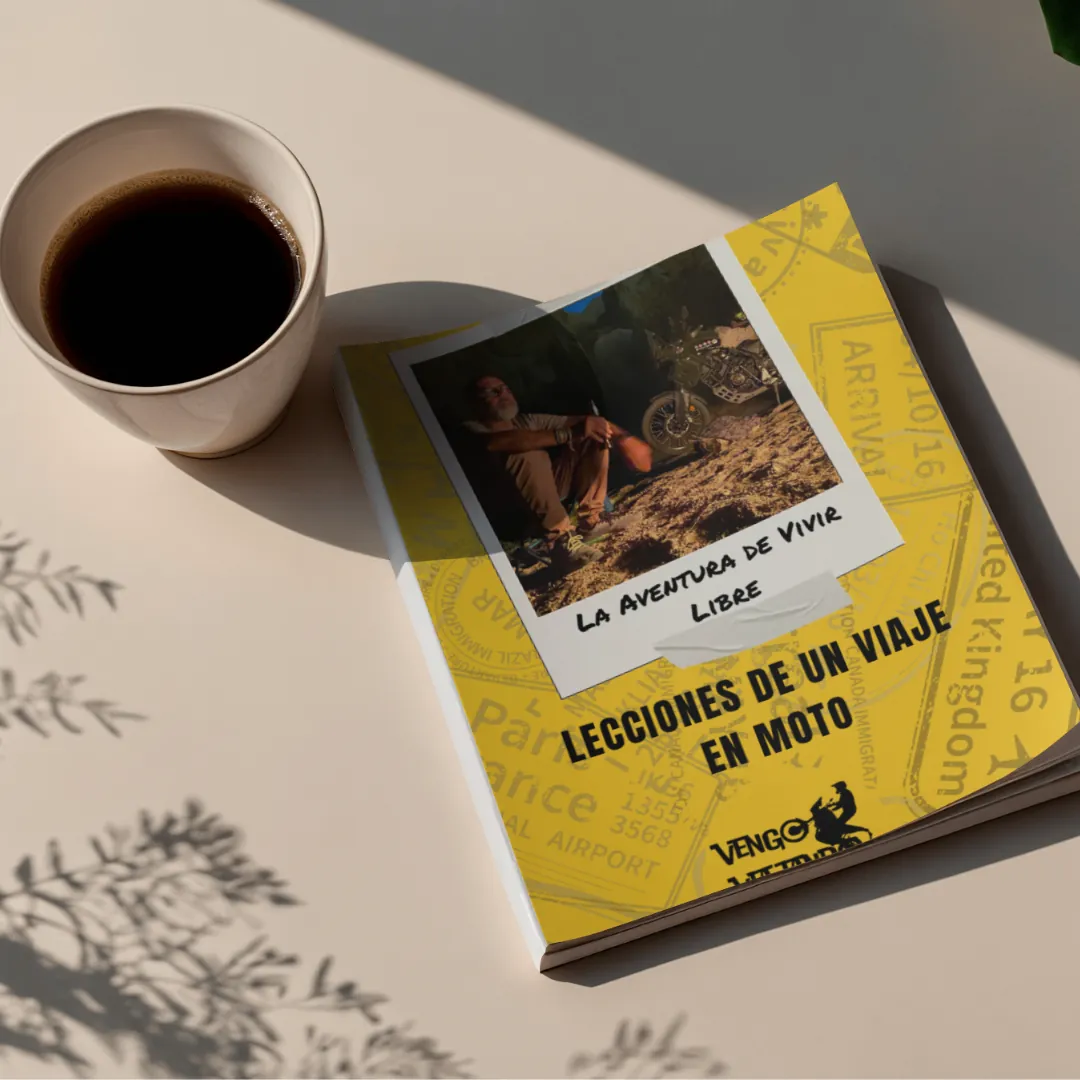
As a thank-you for visiting my site, I'm giving you my book "The Adventure of Living Free". A manual built to bring some light through the shadows and show you the philosophy that has let me ride the world for years.
* PDF STRAIGHT TO YOUR INBOX. NO SPAM.