MOTORCYCLE TRAVEL IN Venezuela
QUICK ANSWER
Venezuela is the most demanding country in this guide to enter by motorcycle: in March 2026 the US State Department lowered its overall advisory to "Reconsider Travel" (Level 3), but keeps a "Do Not Travel" (Level 4) rating for specific areas — the border strip with Colombia (the 32 km/20 miles closest to the line) and the whole of Táchira state, plus Apure, Amazonas, and the rural areas of Bolívar state, where the Gran Sabana is. Real motorcycle traveler accounts describe dozens of alcabalas (military and police checkpoints) with documented extortion along the route toward Cúcuta-San Antonio del Táchira. The alternative that comes up most among overlanders active in 2026 is entering via Brazil, crossing at Santa Elena de Uairén into the Gran Sabana on the paved highway — one of the most spectacular motorcycle routes on the continent, with reports of far calmer transit, though the official alert still covers rural areas off that road. Whichever crossing you pick, the bike needs foreign-plate RCV insurance and a temporary import permit, and it's worth checking the crossing's real current state (iOverlander, forums) before deciding on a route.
WHAT YOU NEED TO KNOW
The country you're about to enter has particularities you need to know.
Before you cross the border there are four things you need locked down: how safe the country is, what insurance is mandatory for your motorcycle, where you'll actually find fuel, and when to go. None of these are optional.
SAFETY: VERY HIGH RISK (5/5)
Is Venezuela safe to enter by motorcycle? Not yet — it's the highest-risk country in this guide, with an active Do Not Travel alert for several zones.
AREAS TO AVOID
- Border strip with Colombia (Táchira and Zulia): The US State Department maintains its Do Not Travel alert for the 20 miles (32 km) closest to the border line, and separately for the entire state of Táchira, due to guerrilla and drug-trafficking group presence.
- Apure state: Do Not Travel alert due to armed and terrorist group presence, per the same official advisory.
- Rural areas of Bolívar state (off the paved route to Santa Elena): The US Do Not Travel alert also covers rural areas of Bolívar state for crime and kidnapping risk. Traveler accounts describing calm transit refer to the paved highway toward Santa Elena de Uairén and the touristic Gran Sabana — not to rural detours or back-roads off it.
- 23 de Enero neighborhood (Caracas): Active presence of armed colectivos according to recent traveler accounts; avoid entering at night or being routed there by GPS.
WHERE TO PARK
- Parking: Prioritize gated lots or the hotel/posada itself. The street is a real risk at night, even in cities considered calm like Mérida or Maracaibo.
- Alarm: Recommended: yes, especially in Caracas and border cities. In the Gran Sabana, with less traffic, it's less critical.
- Luggage: Take off what you can carry with you when you stop, even at checkpoints themselves — there are reports of cash and belongings confiscated at alcabalas.
- Visibility: Park where there's foot traffic and good lighting. Avoid alleys and the areas around checkpoints outside operating hours.
TIPS
- ➜Avoid riding at night anywhere in the country — it's the advice repeated most by those who crossed in 2026.
- ➜Carry physical copies of your documents and clear your phone of anything you don't want shown: immigration and checkpoints can ask to check it.
- ➜If it's your first time in the country, enter via Santa Elena de Uairén (Brazil border) instead of the Colombian corridor, and stay on the paved highway — traveler accounts describe a much calmer route, but the official US alert still covers rural areas of Bolívar off that road.
Outside the paved route to the Gran Sabana and stretches already ridden by other motorcycle travelers, Venezuela demands a level of preparation that no other country in this guide requires — check active forums before deciding on a route.
MANDATORY INSURANCE: Foreign-plate RCV
Mandatory for any foreign-plated vehicle riding beyond the immediate axis of the border crossing. It replaces standard Venezuelan RCV — you arrange it with a licensed Venezuelan insurer, either in advance online or at kiosks inside shopping centers in border cities like Santa Elena de Uairén. Mercosur's Carta Verde is not valid in Venezuela.
INSURERS FOR NON-MERCOSUR PLATES
FUEL: CHEAP BUT UNSTABLE
Venezuela has the cheapest gasoline in the region, but the subsidized price (from 2 cents of a dollar per liter) only applies to holders of the Carnet de la Patria — a foreigner pays the international rate, around 50 cents per liter, at specific pumps. Supply is unstable, especially in the border states: carry an extra margin and don't assume you'll find fuel in every town.
BEST SEASON: NOV → MAR
November to March, the dry season, is the best window to ride the Gran Sabana and the rest of the country. Avoid April and May: they're transition months with heavier rain, with reports of flooding and landslides on several roads.
ENTERING VENEZUELA BY MOTORCYCLE
Entering Venezuela with a bike isn't a standardized procedure like in the rest of the region — according to real accounts from motorcycle travelers on WikiOverland, Horizons Unlimited, and border-press reporting, the process varies a lot depending on the crossing you pick and the political moment.
The process has two steps:
Immigration: Stamps your passport on entry. For Mercosur and associated nationalities (Argentina, Chile, Colombia, Peru, Bolivia, among others) no visa is needed for stays of up to 90 days.
Customs: Fill out the temporary import form for the motorcycle and arrange the foreign-plate RCV insurance, required to ride beyond the immediate axis of the border crossing.
Tourist entry, for up to 90 days, is free of charge for most Mercosur and associated nationalities — it's settled with the passport stamp at immigration.
Real friction point:according to Saiga Tours, there's no "official system for registering foreign cars" at the busiest crossing (Cúcuta-San Antonio del Táchira), which can turn the process into hours of waiting.
Beyond customs, the real problem is the road itself: a La Opinión investigation documented a San Antonio del Táchira to Maracaibo trip (421 km, normally 10 hours) that took over 16 hours because of the sheer number of alcabalas (military and police checkpoints), with cases of cash and belongings being confiscated along the way. That's why more and more motorcycle travelers active in the region choose to enter via Brazil instead, crossing at Santa Elena de Uairén into the Gran Sabana, an area with accounts of a much calmer transit. The official US alert also covers rural areas of Bolívar state, where the Gran Sabana is, for crime and kidnapping risk — the account of calmer transit applies to the paved highway toward Santa Elena, not to rural detours off it.
REQUIRED DOCUMENTATION
Valid passport: At least 6 months of remaining validity.
Driving license: Your home country's license is enough for a tourist stay.
Motorcycle title/registration: If you're not the owner, you need notarized power of attorney from them.
Proof of accommodation or onward ticket: Frequently requested at immigration control.
Foreign-plate RCV insurance: Arranged before you travel or at the crossing — see item 02 below.
Temporary import form: Completed at customs; according to traveler accounts, valid for 90 days.
Yellow fever certificate: Mandatory if entering through the jungle/Amazonas area or coming from Brazil.
With these seven documents sorted, crossing into Venezuela with a bike is possible — but it's not the routine procedure it is in its neighbors. The real advice repeated most by motorcycle travelers who did it in 2026: avoid the Colombia border corridor if you can choose, enter via Brazil into the Gran Sabana instead, and confirm the crossing's current state on iOverlander or traveler forums before you leave.
DAILY BUDGET
This price range combines cheap lodging, cooking your own meals, and basic bike maintenance — the three categories that weigh most on any moto traveler's daily budget.
Your real daily budget is something you build yourself, based on your own needs and limits — but if you want an idea of how to build yours, pick a category to see the full guide:
Full cost breakdown in the budget guide
THE 10 BEST MOTORCYCLE ROUTES IN VENEZUELA
Venezuela's most mythical road isn't just one stretch of asphalt: it's nearly 700 km of continuous pavement between Ciudad Guayana and the Brazilian border at Santa Elena de Uairén (Troncal 10), but riding it end to end as "a single route" hides three completely different experiences. Just like we did with Argentina's Ruta 40 elsewhere in this guide, we break it apart here into its three genuine cult sections: first, gold before the savanna, in El Callao and Km 88, a mining district active since 1871 with its own carnival named a UNESCO World Heritage tradition; then La Escalera and the roof of the savanna, the climb from 200 to 1,500 masl in under 30 km that opens the door to the tepuis; and finally the dirt spur to Roraima, 50 km of dirt track from near San Francisco de Yuruaní to Paraitepuy, the last motorized point before the trek.
The other seven routes on this list aren't filler: each one answers to a real, distinct geographic region of the country —the Andes, the llanos, the Caribbean coast, the Falcón desert— chosen because there's something concrete and verifiable behind it, not because it "sounds good" on a list.
Venezuela can take you from the 40°C heat of the Médanos de Coro to snow at Pico El Águila's 4,118 masl in a single trip, so before heading out it's worth reviewingthe gear guide for long motorcycle trips, built for exactly that kind of extreme climate range.
And on stretches like the Gran Sabana, the Paraitepuy spur or the llanos, there's no repair shop around the corner — it's worth havingbasic mechanics for long motorcycle tripssorted out before tackling any of these remote stretches.
La Escalera and the Gran Sabana:Troncal 10 to Brazil
El Dorado to Santa Elena de Uairén, Bolívar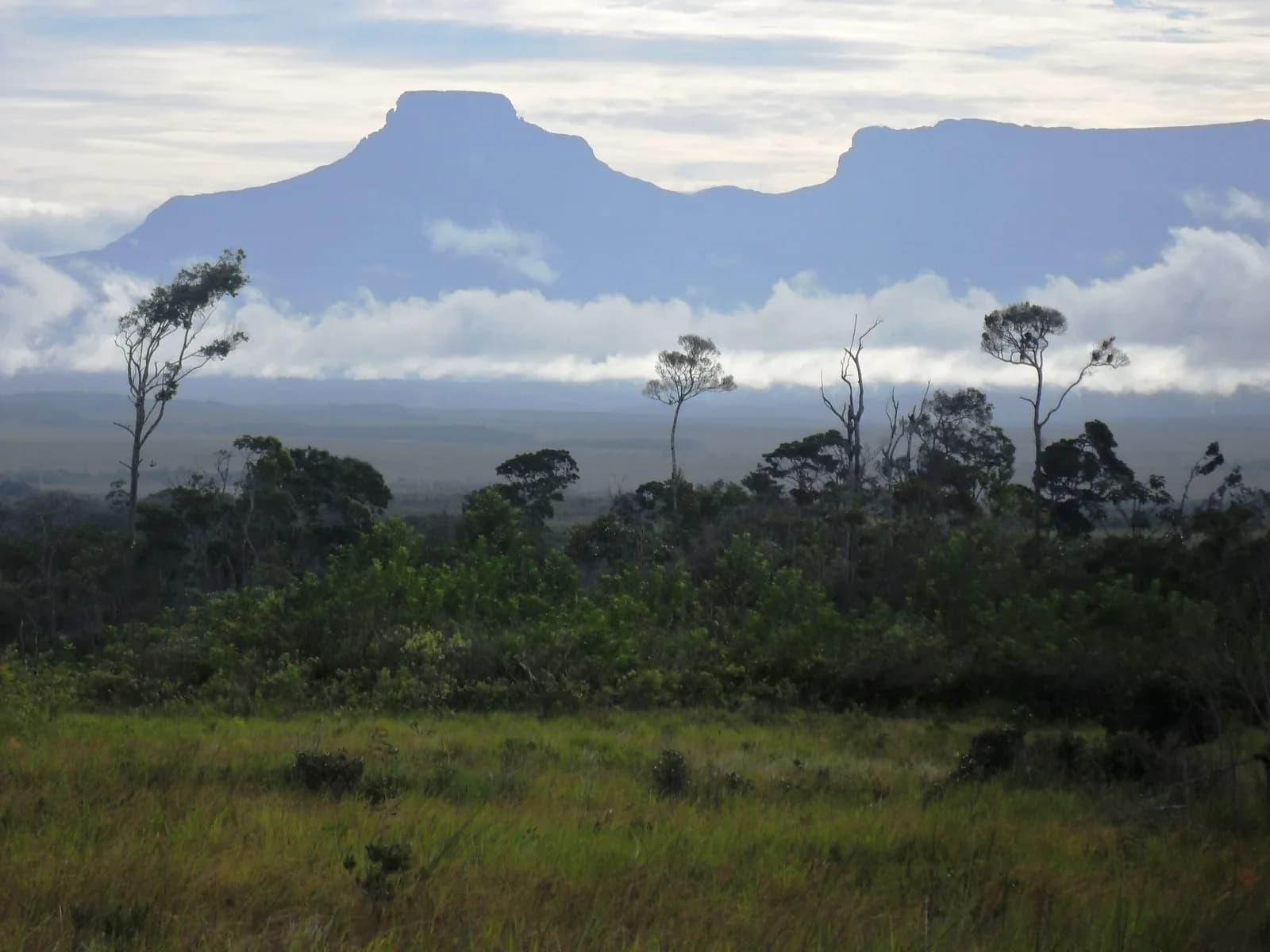
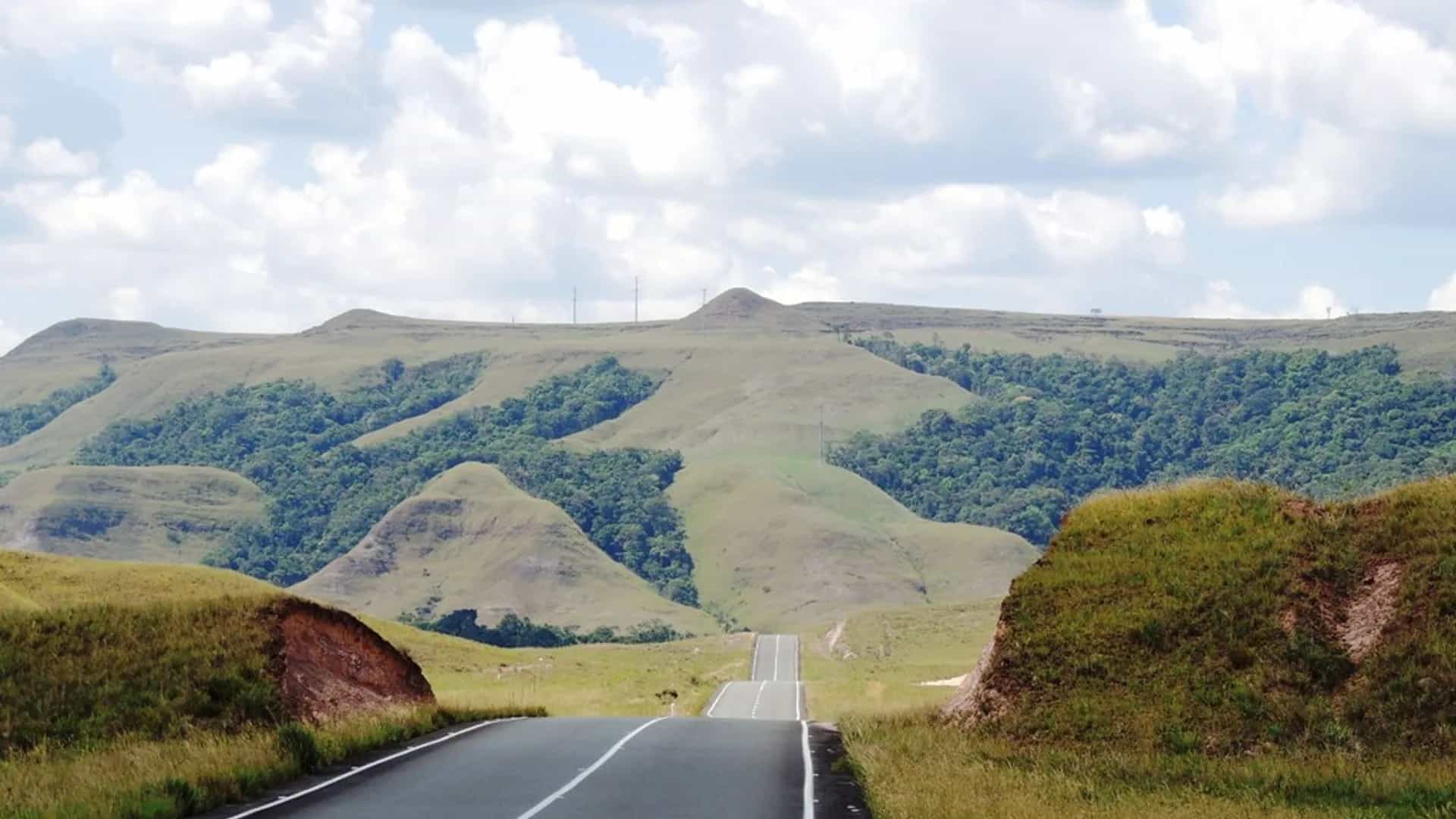
Climbing La Escalera by motorcycle is the gateway to one of the strangest landscapes on the planet: in under 30 km, the road climbs from 200 to 1,500 meters above sea level, leaving the humid jungle behind to enter the tepui savanna.
From the pavement, without leaving the road, you can see waterfalls like Salto Kamá and the first silhouettes of sandstone plateaus that formed over a billion years ago, when the supercontinent Gondwana still existed.
Riding the Gran Sabana by motorcycle all the way to Santa Elena de Uairén, just 5 km from the Brazilian border, is also the alternative most recommended today by overlanders active in the region: entering via Brazil and exiting on this road avoids the Colombia border corridor, where reports of checkpoints and extortion are far more frequent.
WARNINGS FOR THIS ROUTE
This is what you need to sort out before riding this route.
- 01Fuel range
Fair, but pricier for foreigners. There are stations in El Dorado, Km 88 and Santa Elena de Uairén; as a visitor you pay the international rate (around USD 0.50 per liter) instead of the subsidized local price, and supply can be unstable.
El Callao and Km 88:the gold route before the savanna
El Callao Municipality, BolívarRiding into El Callao by motorcycle means crossing one of the richest gold districts the world has had: the mine that gave the town its name went into production in 1871 and became one of the most productive gold mines of its era.
The official population is around 25,000, but estimates suggest it could be five times higher counting the unregistered miners who work the area — gold still drives the local economy, now on a smaller, artisanal scale.
The most visible tradition is Calypso de El Callao, a musical genre with Caribbean and African roots born from the Antillean immigration that came to work the mines in the 19th century. UNESCO named it Intangible Cultural Heritage of Humanity in 2016, and the February carnival is the best time to hear it live, right in the street.
WARNINGS FOR THIS ROUTE
This is what you need to sort out before riding this route.
- 01Fuel range
Fair. There are stations in El Callao and Km 88, though as a visitor you pay the international rate and shouldn't assume stock is guaranteed.
Paraitepuy:the dirt road to Mount Roraima
San Francisco de Yuruaní to Paraitepuy, Bolívar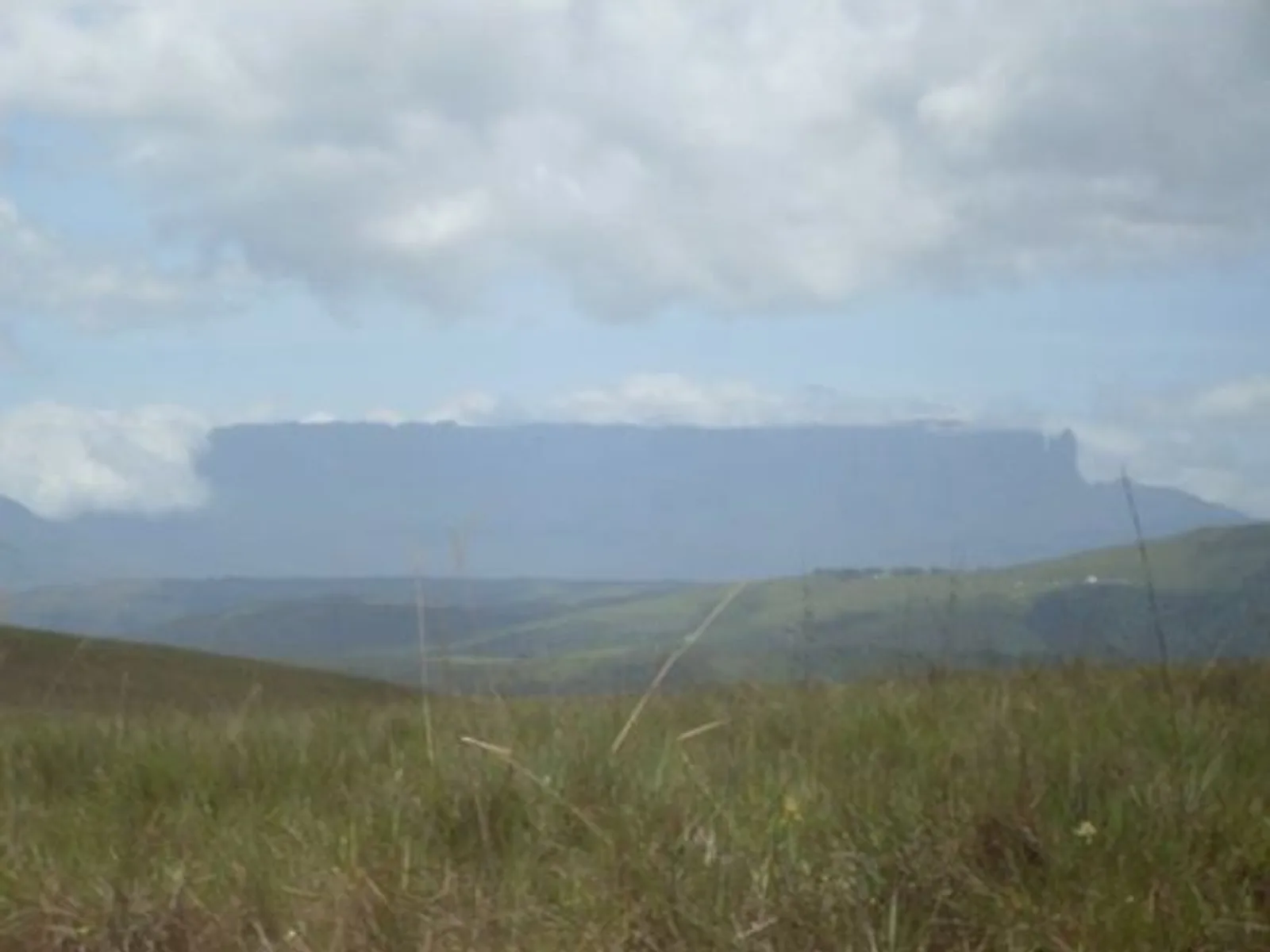
Riding to Paraitepuy by motorcycle is the last motorized stretch possible before Mount Roraima: 50 km of pure dirt across the savanna, starting from a paved turnoff near San Francisco de Yuruaní, until even a 4x4 (or a bike with good ground clearance) can go no further.
From there, the tepui cuts against the sky at 2,810 meters above sea level: a Precambrian sandstone plateau nearly two billion years old, part of the same Guiana Shield that underlies much of South America.
Paraitepuy is also where the pavement ends and the indigenous world begins: Pemón guides must be hired here to climb the tepui, a requirement that protects both visitors and the unique ecosystem at the summit.
WARNINGS FOR THIS ROUTE
This is what you need to sort out before riding this route.
- 01Fuel range
None along the way. Fill up completely in Santa Elena de Uairén or San Francisco de Yuruaní before taking the turnoff — there is no fuel station anywhere in the 50 km to Paraitepuy.
The Trasandina Highway:Mérida to Pico El Águila
Mérida to Apartaderos, Mérida state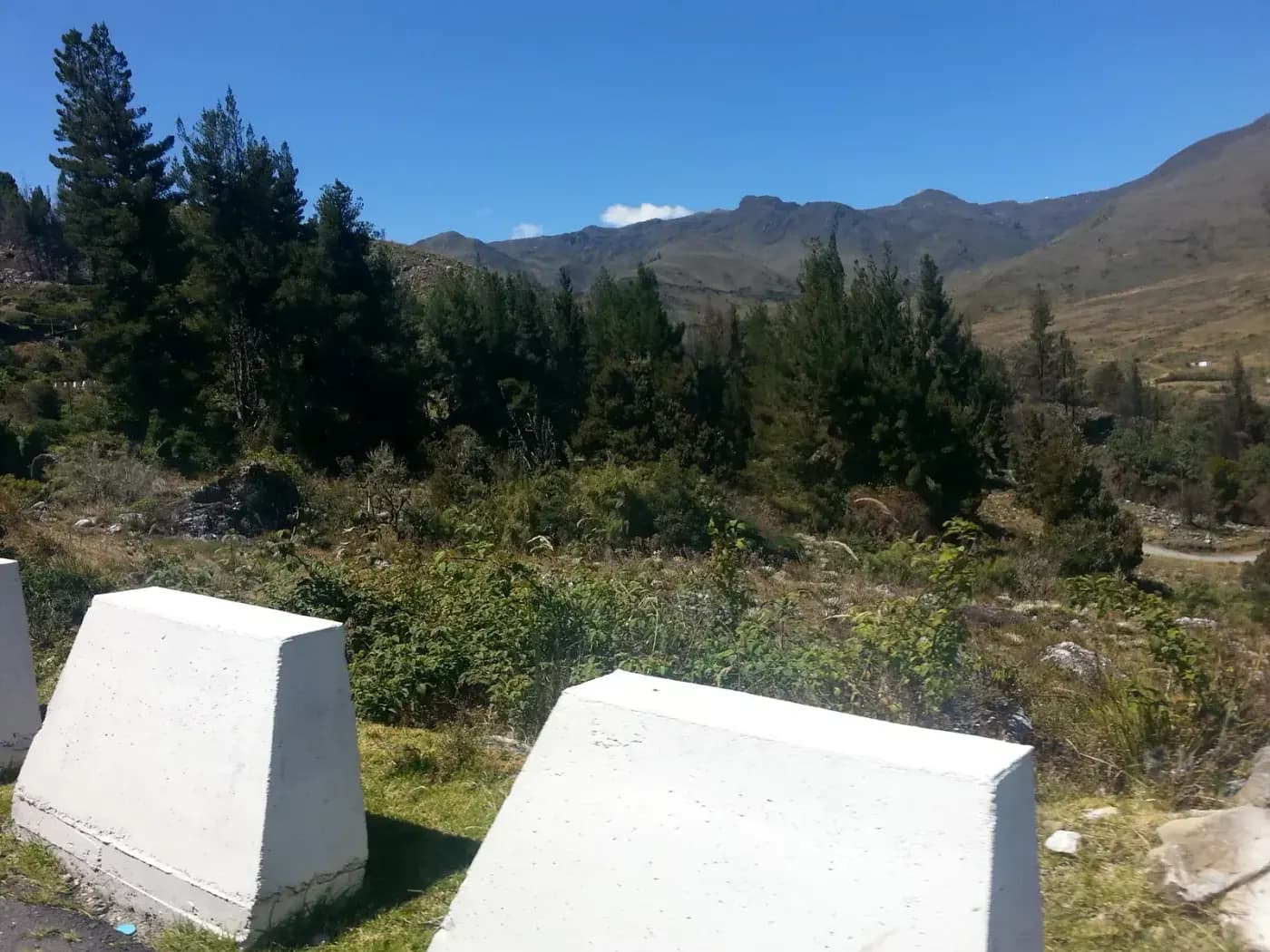
Climbing the Trasandina highway by motorcycle from Mérida to Pico El Águila means reaching, at 4,118 meters above sea level, the highest point on the entire Trasandina road and one of the highest paved routes in South America.
At the summit, a bronze monument to the Andean condor —by Colombian sculptor Marcos León Mariño— commemorates Simón Bolívar's passage through these same páramos in 1813, during the Admirable Campaign to liberate Venezuela.
Average temperature hovers around 5°C and can drop below 0°C within minutes: it's common to go from intense high-altitude sun to a full snowstorm with no warning, something no rider who's done Pico El Águila by motorcycle easily forgets.
WARNINGS FOR THIS ROUTE
This is what you need to sort out before riding this route.
- 01Fuel range
Good. Stations in Mérida and Apartaderos; there is no station at Pico El Águila itself, so leave with a full tank.
Maracay to Choroní through Henri Pittier National Park
Aragua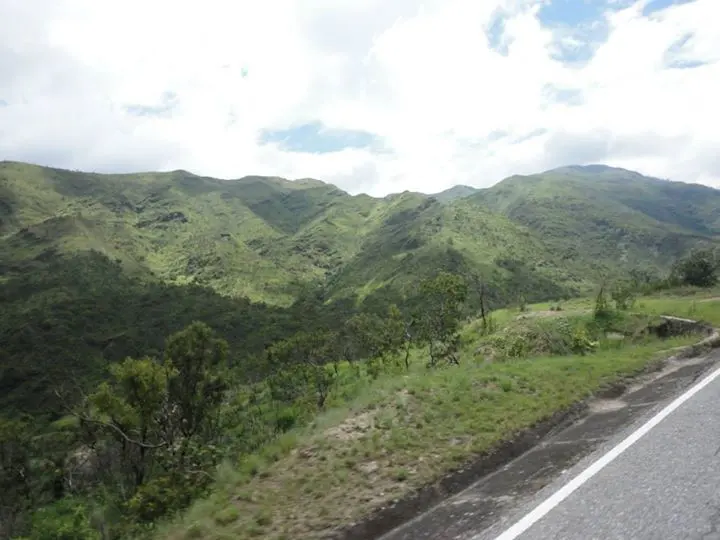
Riding Choroní by motorcycle from Maracay means crossing Venezuela's oldest national park: Henri Pittier was decreed on February 13, 1937, when it was still called Rancho Grande, and only took the name of the Swiss naturalist who studied it thoroughly in 1953.
The road climbs to Paso Portachuelo, at 1,136 masl, a genuine migration corridor: around 79 bird species that migrate from North America pass through there every year, inside a park that's home to over 500 species — more than 40% of all bird species recorded in Venezuela.
It's also one of the favorite curvy weekend rides for motorcyclists from Caracas and Maracay: cloud forest on one side, the Caribbean Sea on the other, and a final descent to the Choroní beach that cuts through the mountain humidity with salt air.
WARNINGS FOR THIS ROUTE
This is what you need to sort out before riding this route.
- 01Fuel range
Good at both ends (Maracay and Choroní/Puerto Colombia), none in the middle of the park — there are no stations inside Henri Pittier.
Médanos de Coro:the desert highway
Coro, Falcón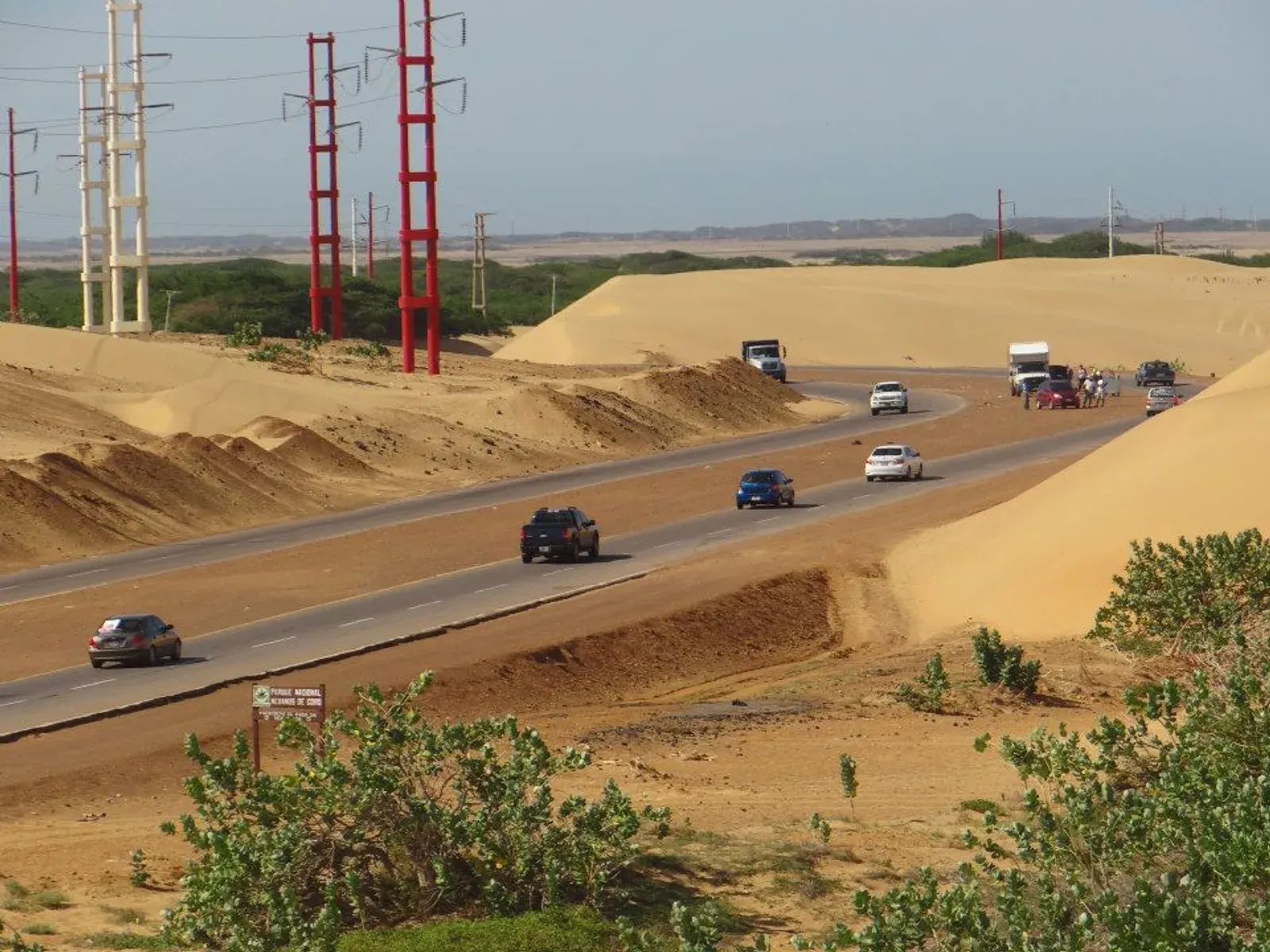
Crossing Médanos de Coro by motorcycle means riding smooth pavement through a real desert, something found nowhere else on the Venezuelan coast: dunes reaching 40 meters in height, constantly shifting in the wind, inside a national park decreed on February 6, 1974.
The park's 91 km² pack three landscapes into a few kilometers —the Mitare river's arid delta, the dune field itself, and mangroves toward the coast— and are home to foxes, rabbits and hares that can be seen crossing the road at dusk.
The same wind that moves the sand is what pushes the bike on the straight: there are no curves, but the constant crosswind demands steady course correction the whole way, something that surprises riders who don't expect it.
WARNINGS FOR THIS ROUTE
This is what you need to sort out before riding this route.
- 01Fuel range
Good. Full-service stations in Coro and Punto Fijo on both sides of the park.
The Mochima Route:Puerto La Cruz to Cumaná
Anzoátegui and Sucre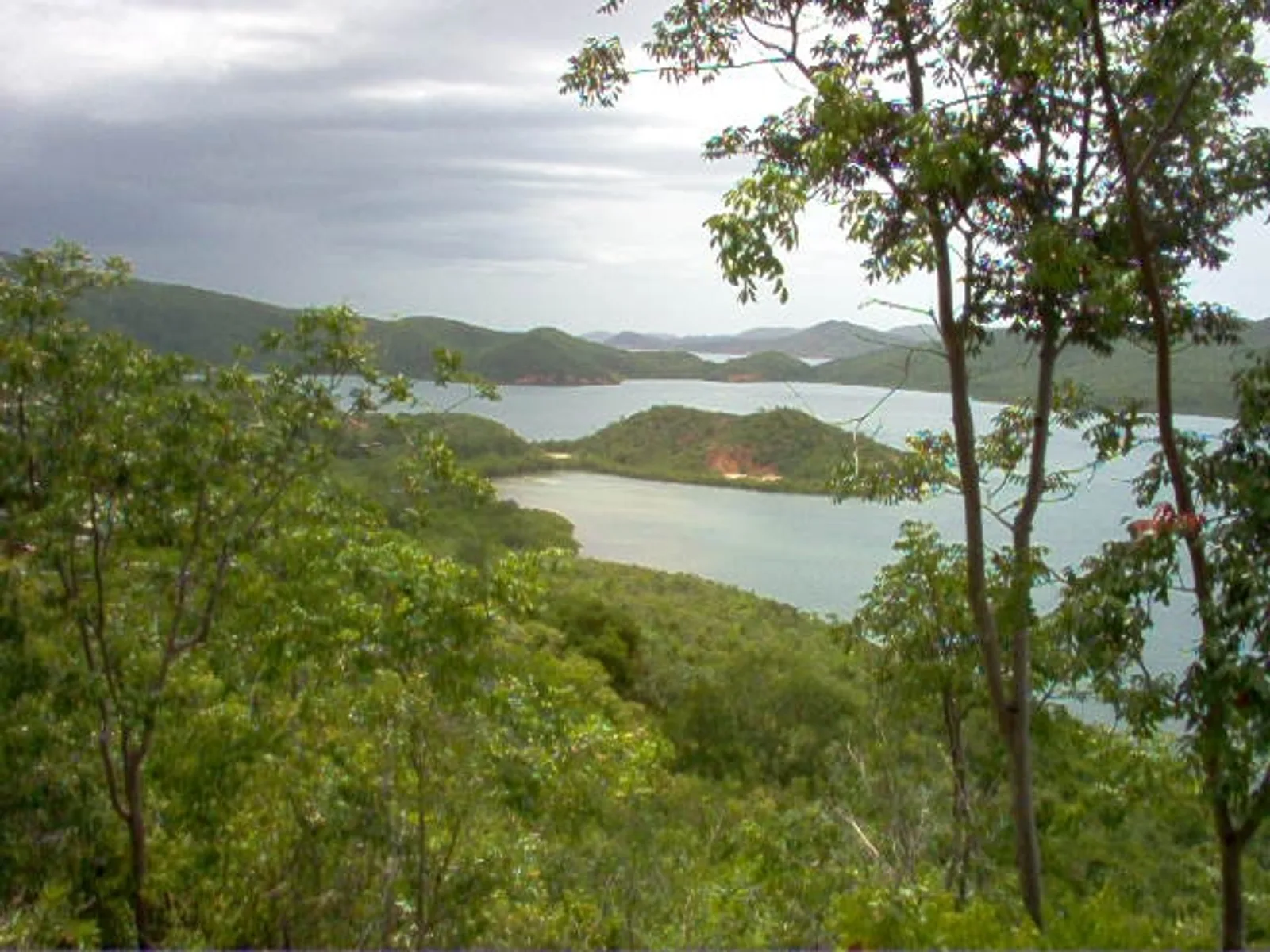
Riding the Mochima route by motorcycle between Puerto La Cruz and Cumaná means skirting, on pavement, Venezuela's second-oldest marine park: it was decreed on December 19, 1973, and today protects 38 islands off the coast, including Chimana Grande and La Borracha, the two largest.
The 50 km of road alternate between cliffs and white-sand beaches, with small fishing towns like Santa Fe where you stop to eat before continuing on.
In the waters visible from the road, humpback whales, Bryde's whales and several dolphin species share the sea —a marine postcard few motorcycle travelers expect to find in the Venezuelan Caribbean.
WARNINGS FOR THIS ROUTE
This is what you need to sort out before riding this route.
- 01Fuel range
Good. Stations in Puerto La Cruz, Barcelona, Santa Fe and Cumaná along the route.
Los Llanos:a motorcycle safari through Barinas, Apure and Guárico
Barinas, Apure and Guárico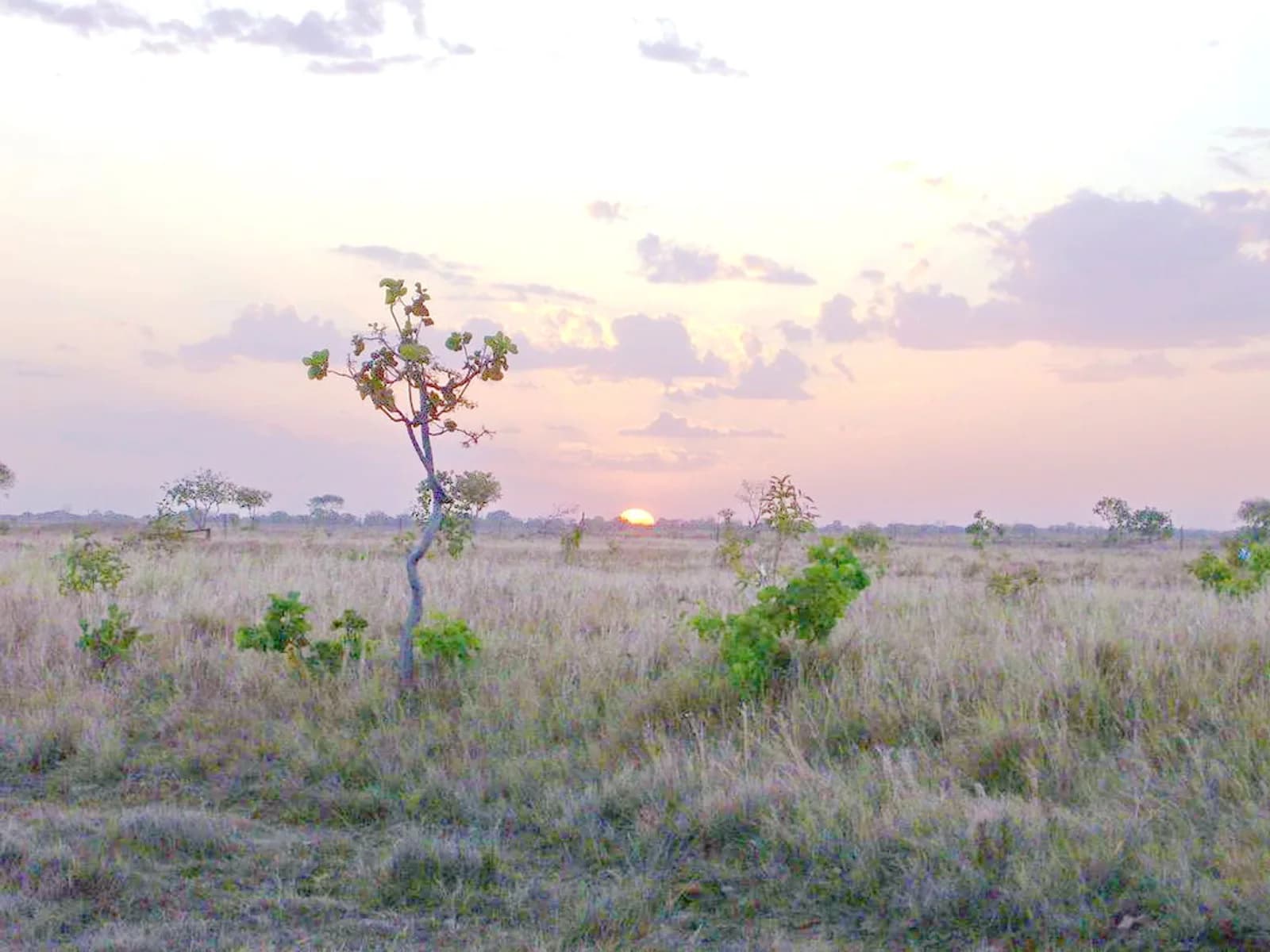
Riding through Los Llanos by motorcycle means entering one of the largest plains in South America: roughly 375,000 km² shared between Venezuela and Colombia, crossed from end to end by the Orinoco River.
In dry season, when the bike can move without mud stopping it, it's normal to cross paths with capybaras (the world's largest rodents), caimans, and flocks of scarlet ibis —over 70 waterbird species have been counted in the region's wetlands alone.
This is also llanero country: horseback cattle ranching has been the region's economic activity since colonial times, and several traditional hatos still welcome travelers to show that trade firsthand, something no other region of Venezuela offers in quite the same way.
WARNINGS FOR THIS ROUTE
This is what you need to sort out before riding this route.
- 01Fuel range
Irregular. There are stations in the main towns, but distances between ranches are long and stock isn't always guaranteed — always leave with a full tank.
Caracas to Colonia Tovar:the German cloud forest
Aragua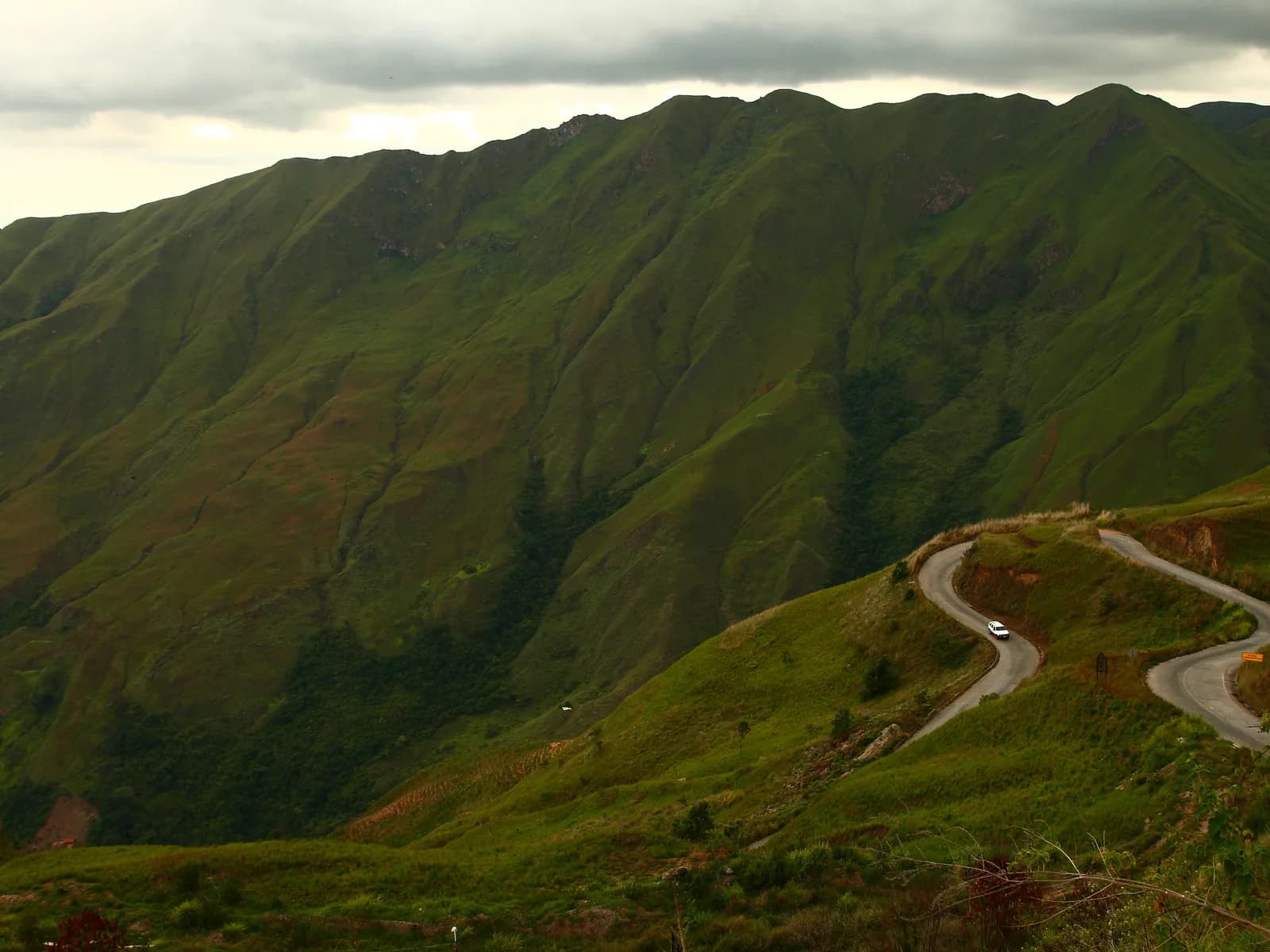
Riding up to Colonia Tovar by motorcycle means entering, just 65 km from Caracas, a German colony that has run almost like a transplanted village for close to 180 years: it was founded by 390 immigrants from the Kaiserstuhl region of Baden on April 8, 1843.
At an average altitude of 1,800 meters, with fog frequent at dawn and dusk, the mountain scenery looks more like Germany's Black Forest than the Caribbean: pitched roofs, timber framing, and a temperature that calls for a jacket even in the middle of the tropics.
The climb up is pure mountain switchbacks, ideal for a short getaway from the capital without having to leave the country's central region.
WARNINGS FOR THIS ROUTE
This is what you need to sort out before riding this route.
- 01Fuel range
Good. Stations in Caracas, La Victoria and in Colonia Tovar itself.
El Vigía to La Azulita:Mérida's cloud forest
MéridaDescending from Mérida to La Azulita by motorcycle proves how tight the road is with the stopwatch itself: it's barely 75 km, but the ride takes 2 to 3 hours because the road never stops doubling back on itself as it drops toward the village, at 1,135 masl.
The change in ecosystem is total: you leave Mérida's dry Andes behind and enter a dense, humid primary cloud forest, very different from the páramo that dominates the rest of the state.
It's a far less traveled route than the Trasandina, which is exactly what makes it attractive to riders looking for technical curves without Pico El Águila's tourist traffic, with the forest closing in over the road in several stretches.
WARNINGS FOR THIS ROUTE
This is what you need to sort out before riding this route.
- 01Fuel range
Good at both ends (Mérida and El Vigía), limited in La Azulita — confirm stock before continuing.
NEIGHBORING COUNTRIES
Crossing the border next? Click a country to see its 10 best motorcycle routes.
FREQUENTLY ASKED QUESTIONS
01Is it safe to travel by motorcycle through Venezuela in 2026?
+
Is it safe to travel by motorcycle through Venezuela in 2026?
Not as a general rule. The US State Department maintains a Do Not Travel alert for the states bordering Colombia (Táchira, Zulia), plus Apure, Amazonas, and rural areas of Bolívar state. Areas like the paved Gran Sabana highway, entering from Brazil, have accounts of a much calmer transit — but it demands planning and up-to-date information before choosing a route.
02What insurance do I need to enter Venezuela with a foreign-plated motorcycle?
+
What insurance do I need to enter Venezuela with a foreign-plated motorcycle?
Foreign-plate RCV insurance, mandatory to ride beyond the immediate axis of the border crossing. It's arranged with a licensed Venezuelan insurer — some sell the policy online before you travel, and at the Brazil border (Santa Elena de Uairén) it can also be arranged at kiosks inside shopping centers.
03What's the best border crossing to enter Venezuela by motorcycle?
+
What's the best border crossing to enter Venezuela by motorcycle?
Among motorcycle travelers active in the region, the crossing from Brazil into Santa Elena de Uairén (Gran Sabana) has accounts of calmer transit than the Colombian corridor (Cúcuta-San Antonio del Táchira), where checkpoints with documented extortion and multi-hour waits have been reported.
04How much does gasoline cost in Venezuela for a foreign traveler?
+
How much does gasoline cost in Venezuela for a foreign traveler?
A foreigner pays the international rate, around 50 cents per liter, at specific pumps — the subsidized price (from 2 cents) only applies to holders of the Carnet de la Patria. Supply is unstable, especially near the border.
05Do I need a visa to enter Venezuela by motorcycle if I'm from a Mercosur country?
+
Do I need a visa to enter Venezuela by motorcycle if I'm from a Mercosur country?
No. Citizens of Argentina, Chile, Colombia, Peru, Bolivia and other Mercosur and associated countries enter visa-free for stays of up to 90 days — it's settled with the passport stamp on arrival.
06How long can I stay in Venezuela with my foreign-plated motorcycle?
+
How long can I stay in Venezuela with my foreign-plated motorcycle?
The temporary import permit for the bike, according to accounts from motorcycle travelers who crossed recently, is granted for 90 days. It's worth confirming the exact term at the customs post itself when crossing, since the process isn't as standardized as in other countries in the region.
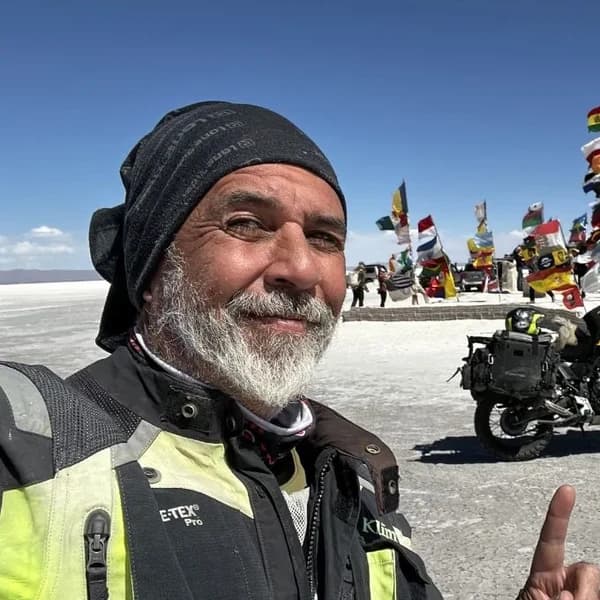
Gustavo Correa
Moto traveler, author and motorcycle travel consultant. 110,000+ km across 4 continents with Gloria, my motorcycle. Everything you read here has been tested on the road, not in an office.
Read my story →Last verified: 2026-08-29
A GIFT FOR BEING HERETHE ADVENTURE OF LIVING FREE
Do fear or doubt paralyze you before starting any project? You're not alone — every one of us has been there.
As a thank-you for visiting my site, I'm giving you my book "The Adventure of Living Free". A manual built to bring some light through the shadows and show you the philosophy that has let me ride the world for years.
* PDF STRAIGHT TO YOUR INBOX. NO SPAM.