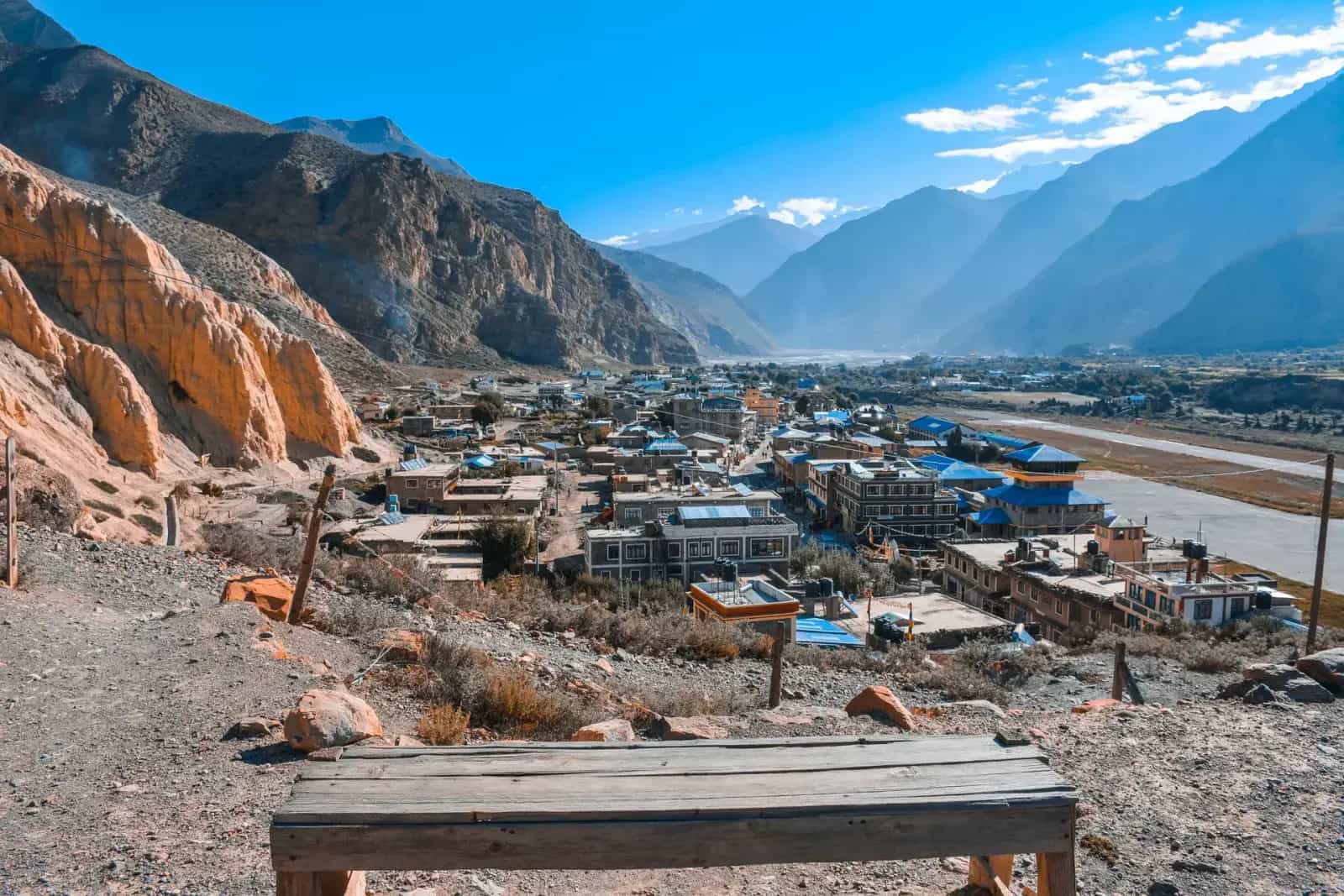
MOTORCYCLE TRAVEL IN Nepal
QUICK ANSWER
Riding into Nepal from India on your own motorcycle is doable, but it takes planning: the country has no carnet-issuing organization of its own, so you either arrange a Carnet de Passage before leaving home, or enter on a temporary import permit capped at 30 days per year. Insurance from your home country doesn't count inside Nepal — you have to buy local cover at the same border crossing, along with the customs stamp for the bike.
WHAT YOU NEED TO KNOW
The country you're about to enter has particularities you need to know.
Before you cross the border there are four things you need locked down: how safe the country is, what insurance is mandatory for your motorcycle, where you'll actually find fuel, and when to go. None of these are optional.
SAFETY: MODERATE RISK (3/5)
Is Nepal safe to enter by motorcycle? Yes — the real risk isn't crime, it's road conditions and traffic.
AREAS TO AVOID
- Prithvi Highway, Mugling-Pokhara stretch (Chitwan and Tanahun): A recurring landslide corridor on the only paved route between Kathmandu and Pokhara — closures reported in 2026 from slides at Fishling, Chitwan (July) and Byas Municipality, Tanahun (August). Check the highway's status before heading out, especially during monsoon (June-September).
- Maitighar Mandala and New Baneshwor, Kathmandu: Epicenter of the September 2025 Gen Z protests, which left more than 70 dead and forced the prime minister's resignation. The situation has stabilized — the US State Department downgraded Nepal to Level 2 in April 2026 — but sporadic demonstrations still happen. Avoid the area if you see crowds gathering.
- Kathmandu's Ring Road at rush hour: Kalanki, Koteshwor, and Chabahil are the valley's most congested spots — buses and trucks weave across lanes without warning. If it's your first day riding in Nepal, avoid crossing the ring road between 8 and 10 a.m.
- Mountain highways at night (Tribhuvan Highway, Araniko Highway): No shoulder or guardrails on most stretches, with freight trucks driving without rear lights and loose livestock on the road. The US State Department itself recommends avoiding motorcycles on the highway outside the Kathmandu Valley, especially at night.
WHERE TO PARK
- Parking: In Thamel, most backpacker hostels and hotels have their own parking or an arrangement with a nearby garage — ask before booking. On the street, avoid leaving it overnight outside a watched area.
- Alarm: Recommended, though violent motorcycle theft isn't the main problem in Nepal. It works more as a deterrent against opportunistic theft of accessories (mirrors, hanging helmets) than against the whole bike being stolen.
- Luggage: Always take off what you can carry (backpack, tank bag, camera) when parking, especially in Thamel and Durbar Marg, areas with reported snatch-and-grab incidents by young men on motorbikes.
- Visibility: Park where there's foot traffic and good lighting. Avoid the narrow alleys of old Kathmandu, where night lighting is scarce.
TIPS
- ➜Don't ride outside the Kathmandu Valley after dark — unlit trucks, loose livestock, and roads with no shoulder make darkness a real multiplier of risk.
- ➜Before heading out, check there's no bandh (general strike) planned on your route — they can shut the only available road with very little warning.
- ➜During monsoon season, check the Prithvi Highway's status in local press (Kathmandu Post, Himalayan Times) before heading out — landslides close sections with no advance warning.
Outside those spots, Nepal is a calm country in terms of violent crime against travelers — the real challenge is traffic, mountain roads, and weather, not crime.
MANDATORY INSURANCE: Mandatory local insurance
Required without exception by Nepal's Motor Vehicles and Transport Management Act (1993) for any vehicle on Nepali roads, including foreign-plated ones. Insurance from your home country or from India has no validity inside Nepal — you buy it at insurer counters operating at the main border crossings (Sunauli, Birgunj, Nepalgunj, Mahendranagar). According to policies from Nepali insurers such as Premier or Shikhar, third-party liability cover often extends to India, Bangladesh, and Bhutan too, but it's worth confirming at the time of purchase.
FUEL: AVAILABLE, RISK OF SHORTAGES
Good availability along the Prithvi Highway (Kathmandu-Pokhara) and in junction towns like Naubise, Malekhu, Mugling, Dumre, and Damauli. On mountain spur roads (Bandipur, Gorkha, the road to Jomsom/Mustang) stations get scarce — fill up before you climb. Nepal also has a history of politically driven shortages: in 2015, a border blockade with India left the country weeks with fuel rationed to 5 liters per motorcycle. It's not something that happens all the time, but it's worth traveling with an extra margin and checking local news before you set off.
BEST SEASON: OCT → APR
October to April is the reliable window for riding in Nepal. October and November give the best mountain visibility of the year, with stable weather right after the monsoon. February to April is warm but hazier from agricultural burning. Avoid June to September: the monsoon brings landslides that close roads like the Prithvi Highway with no advance warning.
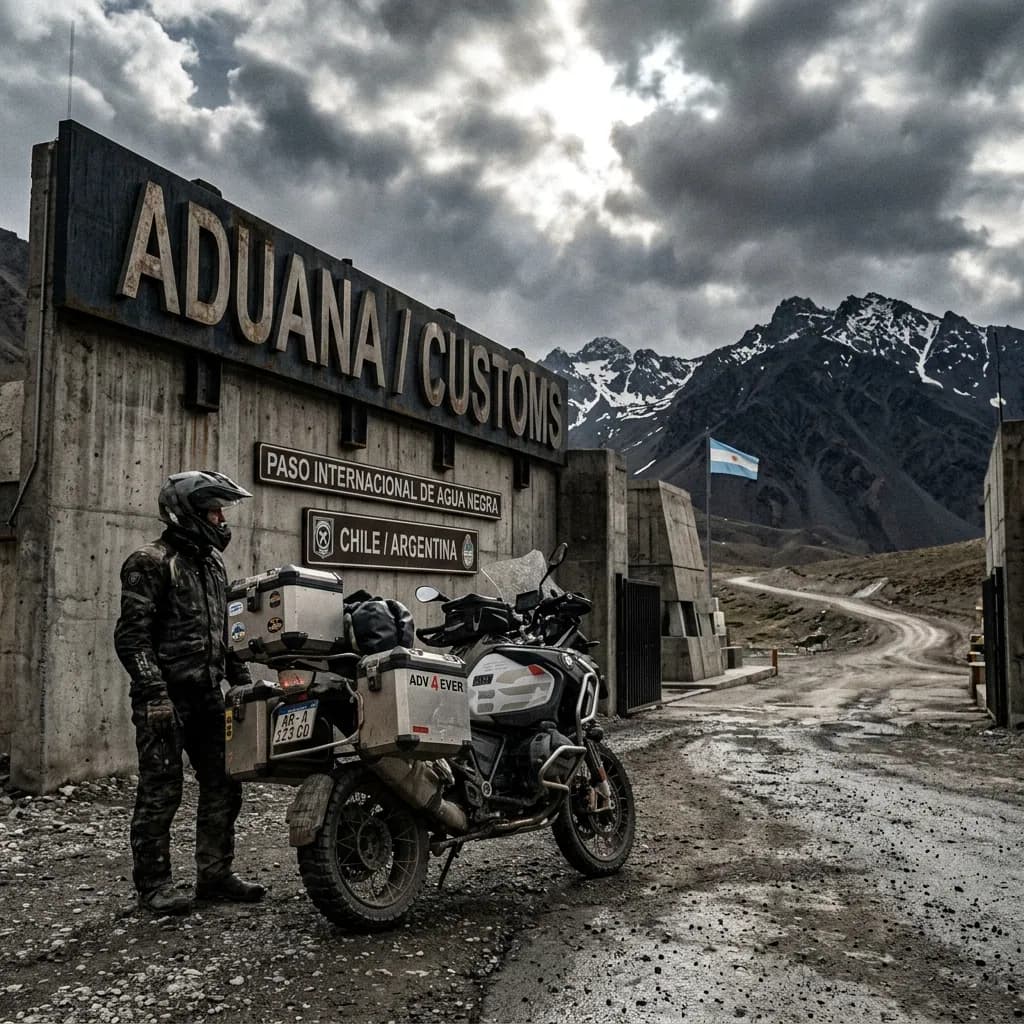
ENTERING NEPAL BY MOTORCYCLE
Crossing into Nepal with your own bike from India is, according to traveler accounts on Horizons Unlimited and guides like Mad or Nomad, one of the more paperwork-heavy procedures in Asia — not because of the crossing itself, but because of the documentation you need to sort out before you ever reach the border.
The process has two steps:
Immigration: Stamps your passport on entry and issues the tourist visa (15, 30, or 90 days) if you haven't arranged it beforehand.
Customs: Registers the bike against your Carnet de Passage (if you have one) or issues the temporary import permit (bhansar/TIV), at the same post.
The passport entry stamp itself carries no cost beyond the visa fee. What you pay for at the same border crossing is the temporary import permit for the bike (TIV/bhansar) and the mandatory insurance — unlike other countries in the region, Nepal doesn't have a separate free procedure for the vehicle.
Real friction point:Nepal has no carnet-issuing organization of its own — you have to arrange the Carnet de Passage in your home country before setting off, at a cost of roughly 200 euros plus courier costs to get the booklet to Nepal. Without a carnet, the fallback is a temporary import pass (locally called bhansar or TIV), but it's capped at a maximum of 30 days per calendar year.
Another detail that catches people off guard: the Mechi/Miteri bridge at the Kakarbhitta crossing, on the eastern route, doesn't allow two- or three-wheeled vehicles across — if your route goes through there, you'll need to pick a different crossing (Sunauli, Birgunj, or Mahendranagar).
REQUIRED DOCUMENTATION
Passport and tourist visa: The visa is processed at the same border post (15, 30, or 90 days) — bring cash in dollars to pay for it.
Driving license + International Driving Permit (IDP): The IDP is required in practice by most insurers and traffic checkpoints; your national license alone isn't always enough.
Motorcycle title/registration: If you're not the owner, you need notarized power of attorney from them.
Carnet de Passage or temporary import permit (bhansar/TIV): With a carnet you can stay up to 6 months within a 12-month period; without one, the limit is 30 days per calendar year.
Mandatory local insurance: Bought at the same border post — international insurance, or a policy bought in India, isn't valid inside Nepal.
With these five documents sorted, the most orderly crossing for entering Nepal by motorcycle is Sunauli-Belahiya — the busiest, and the one with the most experience handling foreigners with their own vehicle — followed by Birgunj-Raxaul if you're coming from Kolkata or Bihar. The mistake that comes up most often among motorcycle travelers who show up without researching first: assuming insurance bought in India or back home covers Nepal. It doesn't, and riders usually find that out standing at the border counter.
DAILY BUDGET
This price range combines cheap lodging, cooking your own meals, and basic bike maintenance — the three categories that weigh most on any moto traveler's daily budget.
Your real daily budget is something you build yourself, based on your own needs and limits — but if you want an idea of how to build yours, pick a category to see the full guide:
Full cost breakdown in the budget guide
THE 10 BEST MOTORCYCLE ROUTES IN NEPAL
The routes in this Top 10 are ordered by real-world fame, from most to least recognized: to decide the order, we researched which routes show up first and most often in international "best motorcycle routes in Nepal" lists, in rider forums like Horizons Unlimited and ADVrider, and in the products Nepal's own motorcycle tour agencies actually sell. First place is the one any motorcycle traveler in the world finds first when searching for a Himalayan motorcycle route; last place is the one that only shows up in trip reports from riders chasing the most remote corner of the country.
Several of these routes climb past 3,500 meters and spend entire days away from the nearest repair shop, so before heading out it's worth reviewingthe long-trip motorcycle gear guide, built exactly for climates and terrain as extreme as the Himalaya's.
Nepal isn't a country where you can improvise repairs in just any village: outside Kathmandu and Pokhara, long stretches of these routes have neither a workshop nor phone signal for hours at a time.
That's why it pays to arrive with the basics already sorted:the mechanics guide for long motorcycle tripscovers exactly what to check before tackling tracks like the Kali Gandaki or the Karnali Highway.
The Annapurna Circuit:from Besisahar to Manang
Lamjung and ManangRiding the Annapurna Circuit by motorcycle is the most searched-for motorcycle experience in all of Nepal: almost any traveler researching Himalayan motorcycle routes ends up finding this Marsyangdi river valley first.
The mountain track climbs from 760 meters in Besisahar to over 3,500 meters in Manang, crossing the Annapurna Conservation Area, Nepal's largest protected zone.
What almost nobody mentions before setting out: the road ends in Manang. Thorong La, the 5,416-meter pass that crowns the full circuit, is still a footpath locals have used for centuries to herd sheep and yaks toward Muktinath — crossing it by motorcycle isn't possible yet, only on foot or by mule.
In October 2014, an out-of-season snowstorm killed at least 43 people in this same area, including 21 trekkers, after nearly 1.8 meters of snow fell in 12 hours. It's the starkest reminder that Himalayan altitude shows no mercy for improvisation, no matter how you travel.
WARNINGS FOR THIS ROUTE
This is what you need to sort out before riding this route.
- 01Fuel range
Limited. There are stations in Besisahar and Chame; between villages, fuel is only available bottled, at a high price.
- 02Sudden high-altitude snowstorms
In October 2014 an out-of-season storm left at least 43 dead, including 21 trekkers, in this same Manang-Mustang area. Check the forecast before riding beyond Chame.
Upper Mustang:from Jomsom to Lo Manthang, the Forbidden Kingdom
MustangRiding into Upper Mustang by motorcycle means crossing into a kingdom that stayed completely closed to foreigners until 1992 — hence the nickname every motorcycle traveler knows it by: the Forbidden Kingdom.
The special permit costs 500 dollars for the first ten days and 50 dollars per extra day, a cost that explains why this route became the flagship product of almost every motorcycle tour agency in Nepal, with the Royal Enfield as the bike of choice.
The landscape is a high-altitude desert of ochre canyons and Buddhist monasteries perched on cliffs, a world away from the jungle and rice terraces that define the rest of Nepal — the region sits in the Himalaya's rain shadow and receives almost no precipitation.
Lo Manthang, the walled former capital of the Kingdom of Mustang, keeps its medieval layout nearly intact: alongside the Annapurna, it's the postcard image most international riders search for when planning a motorcycle trip through Nepal.
WARNINGS FOR THIS ROUTE
This is what you need to sort out before riding this route.
- 01Fuel range
Very limited. There's only a formal fuel station in Jomsom; in Lo Manthang and the villages in between, fuel is resold bottled at a very high price.
Kathmandu to Pokhara:the Prithvi Highway
Dhading, Tanahu and KaskiThe Prithvi Highway by motorcycle is, without question, the stretch most motorcycle travelers ride in all of Nepal — it's the overland link between Kathmandu and Pokhara, the mandatory gateway to every other route on this list.
It was completed in 1974 with assistance from the Chinese government and is named after King Prithvi Narayan Shah, the same king who unified Nepal in the 18th century from his native Gorkha.
It isn't a technical or adventure route: it's a two-lane road with tight curves and constant climbs and descents through the Siwalik Hills, with heavy cargo-truck traffic between the capital and the rest of the country.
Even so, no motorcycle traveler skips it: it follows the Trishuli river, crosses Mugling, the country's busiest road junction, and on a clear day delivers the first views of the Annapurna and Manaslu ranges before dropping into Pokhara.
WARNINGS FOR THIS ROUTE
This is what you need to sort out before riding this route.
- 01Fuel range
Excellent. Constant service stations in Mugling, Damauli and every major town along the route.
The Kali Gandaki Gorge:from Beni to Muktinath
Myagdi and MustangClimbing the Kali Gandaki Gorge by motorcycle means riding through one of the deepest canyons on the planet: the river runs at roughly 2,520 meters, squeezed between Dhaulagiri (8,167 m) to the west and Annapurna (8,091 m) to the east, with over 5,500 meters of sheer relief between the water and the summits.
The road follows a centuries-old India-Tibet trade route, passing through Jomsom, Marpha and Tukuche before climbing to Muktinath at 3,762 meters — one of the highest temples in the world.
Muktinath is sacred to both Hindus and Buddhists: the former count it among their eight "Svayam Vyakta Ksetra" shrines, and the latter call it Chumig Gyatsa ("the hundred waters"), for the 108 sacred water spouts that ring the temple. The Kali Gandaki riverbed itself is famous for its shaligramas, ammonite-fossil stones that Hindus venerate as a form of the god Vishnu.
For the motorcycle traveler, the gorge also doubles as an intensive course in riverbed riding: you cross the Kali Gandaki's own channel at several points, over loose gravel that reshapes itself after every monsoon season.
WARNINGS FOR THIS ROUTE
This is what you need to sort out before riding this route.
- 01Fuel range
Acceptable. Stations in Beni, Tatopani (Mustang) and Jomsom; between the small villages, only bottled resale is available.
The Tribhuvan Highway:the Daman viewpoint
Kathmandu and MakwanpurRiding the Tribhuvan Highway by motorcycle is riding through history on two wheels: it was the first drivable road connecting Nepal with India, completed in 1956 with India's assistance and named in honor of King Tribhuvan.
The road turns into an endless series of climbs and descents just past Naubise, crossing the Siwalik Hills all the way to Hetauda — the two points sit only 32 km apart as the crow flies, but the highway needs 107 km of curves to cover the elevation change.
In between sits Daman, the viewpoint many consider the best Himalaya view reachable by motorcycle from Kathmandu in a single day: on a clear day you can see the full range, from Dhaulagiri in the west to Everest in the east.
Unlike the much busier Prithvi Highway today, the Tribhuvan has remained the road local motorcyclists prefer when they want technical curves without heavy truck traffic.
WARNINGS FOR THIS ROUTE
This is what you need to sort out before riding this route.
- 01Fuel range
Good. Stations in Naubise, Daman and Hetauda.
The Manaslu Circuit:from Arughat to Soti Khola
GorkhaRiding into the Manaslu valley on a motorcycle means riding in the shadow of the world's eighth-highest peak: Manaslu rises to 8,163 meters and was first climbed in 1956, just weeks before the Tribhuvan Highway was finished on the other side of the country.
The Manaslu Circuit by motorcycle follows an ancient salt-trading route along the Budhi Gandaki river, the same one caravans once used before Nepal opened the area to trekking only in 1991 — it remains a restricted area, requiring a special permit and a registered guide by law.
Unlike the Annapurna, the track here is still being pushed further upriver each season, which is why every adventure blog calls it "Nepal's next big motorcycle route" — though today it's still far less traveled than its more famous neighbors.
The starting point, Gorkha, carries its own historical weight: it's the birthplace of King Prithvi Narayan Shah, the unifier of Nepal, and his old royal palace (now in ruins after the 2015 earthquake) still crowns the hill above town.
WARNINGS FOR THIS ROUTE
This is what you need to sort out before riding this route.
- 01Fuel range
Scarce. Last reliable station in Arughat; from there on, only bottled fuel in the villages.
The Nagarkot Viewpoint and the Namobuddha Loop
Bhaktapur and KavrepalanchokThe Nagarkot Viewpoint by motorcycle is the most repeated weekend escape for any motorcyclist living in Kathmandu — it's just 32 km from the capital to this former watchtower at 2,175 meters, now the valley's most famous sunrise viewpoint.
From there you can see 8 of Nepal's 13 Himalayan ranges, including Annapurna, Manaslu and Langtang, and on a perfect day, Everest itself peeking over the horizon.
The full loop adds Dhulikhel, another classic viewpoint 30 km from Kathmandu along the old Araniko Highway, and Namobuddha, a Buddhist pilgrimage site where, according to legend, a prince sacrificed his own body to feed a starving tigress.
It's the ideal route for a motorcycle traveler new to Nepal: it demands far less preparation than the Annapurna or Mustang, yet delivers the same kind of scenery that makes the country famous.
WARNINGS FOR THIS ROUTE
This is what you need to sort out before riding this route.
- 01Fuel range
Excellent. Stations in every town along the way, less than 30 km apart.
Langtang Valley:from Kathmandu to Syabrubesi
RasuwaClimbing the Langtang Valley by motorcycle means following the Trishuli river up to Syabrubesi, gateway to Langtang National Park and, beyond it, the Rasuwagadhi border crossing into Tibet.
It's one of the most emotionally weighted routes in all of Nepal: in April 2015, the earthquake that shook the country triggered an avalanche of ice, rock and mud that completely buried the village of Langtang, killing at least 215 people in a matter of seconds.
Today the valley has been rebuilt and welcomes travelers again, but the disaster still comes up in every conversation with local guides — alongside the earthquake damage that broke the Araniko Highway on the other side of the valley, it's the starkest reminder that the Himalaya's geography is still very much in motion.
The road itself mixes low subtropical jungle with the first mountain pine forests, and ends at Syabrubesi, the last sizable town before the road becomes a border checkpoint.
WARNINGS FOR THIS ROUTE
This is what you need to sort out before riding this route.
- 01Fuel range
Acceptable. Stations in Trishuli Bazar and Dhunche; between those points there's no official fuel supply.
- 02Documented landslide and earthquake risk zone
In April 2015 an earthquake-triggered avalanche completely buried the village of Langtang and killed at least 215 people. The slope remains unstable: heed any landslide warning before heading up after heavy rain.
The Araniko Highway:from Kathmandu to Tatopani
Kathmandu and SindhupalchowkRiding the Araniko Highway by motorcycle to Tatopani means traveling what was, for decades, the only overland link between Kathmandu and Tibet: built in the 1960s with Chinese assistance over an old yak trail, and named after Araniko, the 13th-century Nepali architect who carried his style into Chinese and Tibetan architecture.
The route passes through Dhulikhel, Dolalghat, Lamosangu and Bahrabise before reaching Tatopani, famous for its natural hot springs — a classic reward after hours of tight curves along the Sindhupalchowk hillsides.
The April 2015 earthquake hit this corridor especially hard: the landslides it triggered cut the highway completely, and it only reopened in August of that year after emergency repairs. It's still considered one of Nepal's most dangerous roads because of its extreme grades.
Beyond Tatopani, the crossing to Kodari and Tibet remains subject to restrictions China imposes on its side — but the Nepali stretch up to the hot springs remains a classic among Kathmandu's motorcyclists.
WARNINGS FOR THIS ROUTE
This is what you need to sort out before riding this route.
- 01Fuel range
Good. Stations in Banepa, Dhulikhel and Lamosangu.
- 02One of Nepal's most dangerous highways due to its grades
The 2015 earthquake completely cut this highway with landslides, and it only reopened in August of that year. It's still considered high-risk due to its extreme grades, especially near the border.
The Karnali Highway:the hardest road to Rara Lake
Karnali, far-western NepalTaking on the Karnali Highway by motorcycle toward Rara Lake means riding one of the least finished roads in all of Nepal: a 2011 official report estimated that over 85% of its 505 total km remained in unsafe condition, and much of the Birendranagar-Jumla stretch still awaits pavement.
Until just a few years ago the route was so grueling that an entire documentary, "The Karnali Express," recorded a 52-hour journey to cover just 232 km between those two towns — a pace that gives a real sense of what this road meant before asphalt arrived.
The payoff at the end is Rara Lake, Nepal's largest lake at 2,990 meters, inside a national park created in 1976 and protected as a Ramsar wetland. The lake itself still has no direct connection to the national road network: the final kilometers are still covered on foot or on a very rough track out of Jumla.
Of the ten routes on this list, it's the one that appears least in conventional tourist guides and the one most mentioned in reports from hardcore motorcycle-travel forums looking for the least-traveled corner of Nepal.
WARNINGS FOR THIS ROUTE
This is what you need to sort out before riding this route.
- 01Fuel range
Critical. Formal stations only in Birendranagar and Jumla; carrying extra jerry cans is mandatory for the entire middle stretch.
- 02Over 85% of the road in unsafe condition
A 2011 official report estimated that over 85% of the Karnali Highway remained in unsafe condition, with months-long closures during the monsoon due to landslides.
NEIGHBORING COUNTRIES
Crossing the border next? Click a country to see its 10 best motorcycle routes.

FREQUENTLY ASKED QUESTIONS
01Do I need a Carnet de Passage to enter Nepal with my motorcycle?
+
Do I need a Carnet de Passage to enter Nepal with my motorcycle?
In practice, yes, if you plan to stay longer than 30 days or cross in and out more than once: Nepal is the one country in the Himalayan region with no carnet-issuing organization of its own, so you need to arrange it in your home country beforehand. Without a carnet, the fallback is a temporary import permit (bhansar or TIV) capped at 30 days per calendar year, with a daily charge of roughly NPR 100 to 500 depending on the vehicle.
02Which border crossing should I use to ride into Nepal from India?
+
Which border crossing should I use to ride into Nepal from India?
Sunauli-Belahiya is the crossing most recommended by motorcycle travelers: it's the busiest and has the most experience handling foreigners with their own vehicle. Birgunj-Raxaul is the alternative if you're coming from Kolkata or Bihar. Avoid the Mechi/Miteri bridge at Kakarbhitta if you're on a bike: it doesn't allow two- or three-wheeled vehicles across.
03Does my international green card insurance work in Nepal?
+
Does my international green card insurance work in Nepal?
No. Neither your home-country insurance nor a policy bought in India is valid inside Nepal. Nepal's Motor Vehicles Act requires local third-party liability insurance, which you buy at insurer counters operating at the main border crossings.
04Do I need an International Driving Permit to ride a motorcycle in Nepal?
+
Do I need an International Driving Permit to ride a motorcycle in Nepal?
It's what most insurers and traffic checkpoints require in practice, even though Nepali law doesn't explicitly demand it in every case. Carry it alongside your national license — it saves you arguments at checkpoints, and most travel insurance policies require it to cover motorcycle claims.
05What's the best time of year to ride a motorcycle through Nepal?
+
What's the best time of year to ride a motorcycle through Nepal?
October to April, with October and November as the sweet spot: the best mountain visibility of the year and stable weather right after the monsoon. Avoid June to September, when the monsoon triggers landslides that close roads like the Prithvi Highway with no warning.
06Is it safe to ride a motorcycle at night in Nepal?
+
Is it safe to ride a motorcycle at night in Nepal?
It's not recommended, and it's not a crime issue — it's an infrastructure one. Outside the Kathmandu Valley, most roads have no shoulder or guardrails, and it's common to run into freight trucks driving with no rear lights or livestock loose on the road.
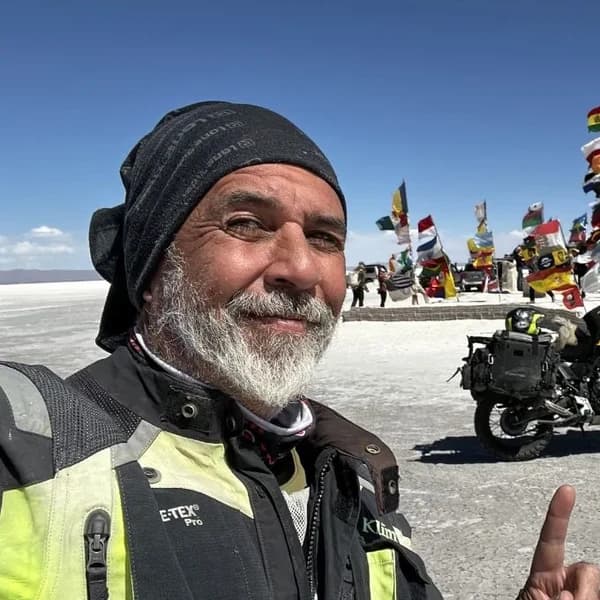
Gustavo Correa
Moto traveler, author and motorcycle travel consultant. 110,000+ km across 4 continents with Gloria, my motorcycle. Everything you read here has been tested on the road, not in an office.
Read my story →Last verified: 2026-08-30
Sources consulted (22)+
- amarnepal.com
- stoneheadbikes.com
- horizonsunlimited.com
- nriinformation.com
- recordnepal.com
- abc.net.au
- thehimalayantimes.com
- travel.state.gov
- kathmandupost.com
- gov.uk
- cnn.com
- thehimalayantimes.com
- travellingnepal.com
- jadomoto.com
- thelongestwayhome.com
- theeverestholiday.com
- lca.logcluster.org
- en.wikipedia.org
- cgibirgunj.gov.in
- acrosshimalaya.com
- en.wikivoyage.org
- commons.wikimedia.org
A GIFT FOR BEING HERETHE ADVENTURE OF LIVING FREE
Do fear or doubt paralyze you before starting any project? You're not alone — every one of us has been there.
As a thank-you for visiting my site, I'm giving you my book "The Adventure of Living Free". A manual built to bring some light through the shadows and show you the philosophy that has let me ride the world for years.
* PDF STRAIGHT TO YOUR INBOX. NO SPAM.