MOTORCYCLE TRAVEL IN Mexico
QUICK ANSWER
Mexico is the natural gateway to Latin America for any motorcycle traveler heading south from North America, with iconic routes like the Baja California peninsula, the Sierra Madre, and the colonial Bajío. Entry is quick if your paperwork is in order: the FMM (tourist permit) and the TIP (Temporary Import Permit) for the motorcycle, both processed at the same Banjercito module at the border crossing — plus Mexican third-party liability insurance, which is mandatory to ride legally.
WHAT YOU NEED TO KNOW
The country you're about to enter has particularities you need to know.
Before you cross the border there are four things you need locked down: how safe the country is, what insurance is mandatory for your motorcycle, where you'll actually find fuel, and when to go. None of these are optional.
SAFETY: MODERATE RISK (3/5)
Is Mexico safe to enter by motorcycle? Yes, on the classic tourist route — but there are specific states where the motorcycle traveler needs to plan the crossing carefully.
AREAS TO AVOID
- Sinaloa (the Highway 15/15D corridor, Culiacán and surroundings): US State Department Level 4 ("Do Not Travel") due to clashes between Sinaloa Cartel factions. Always take the 15D toll highway instead of the free road, and avoid stopping outside towns.
- Tamaulipas (Reynosa, Nuevo Laredo, Matamoros, and the roads between them): State Department Level 4; US government personnel have intercity road travel restricted, and kidnappings are documented in the border zone.
- Michoacán (Tierra Caliente: Apatzingán and roads off the Pátzcuaro-Morelia route): Level 4 due to armed conflict between cartels and self-defense groups. The Morelia-Pátzcuaro tourist route and the monarch butterfly sanctuary carry a lower-risk carve-out, but don't detour south of it.
- Guerrero (Acapulco outside the Zona Dorada, Costa Grande, and Costa Chica): Level 4 due to gang violence and kidnappings; Acapulco is specifically named in the advisory. The hotel-zone tourist strip (Zona Dorada) carries relatively lower risk than the rest of the state.
- Zacatecas (highways between Fresnillo and the state capital): Level 4 due to inter-cartel territorial disputes that have directly affected traffic on intercity highways — this is road risk, not urban foot-traffic risk.
WHERE TO PARK
- Parking: On the street: fine by day in tourist zones, avoid it at night. Look for a gated lot, the hotel's own courtyard, or a gas station with cameras to leave it overnight.
- Alarm: Recommended: yes, especially in big cities (Mexico City, Guadalajara) and border areas. A disc lock is a cheap, effective extra deterrent.
- Luggage: Take off what you can carry (tank bag, backpack, electronics) when parking. Never leave anything loose in plain sight, even in a gated lot.
- Visibility: Park where there's foot traffic and good lighting — never in a lonely alley or an empty lot, no matter the time of day.
TIPS
- ➜Avoid riding at night on libre (free, non-toll) highways — it's not just robbery risk, unmarked potholes, loose livestock, and no lighting are the most cited causes of night-time crashes.
- ➜At military checkpoints (Army or National Guard) stay cordial, don't resist, and don't offer to "sort things out" with cash — these are routine weapons and drug controls, not traffic stops, and the vast majority wrap up in a minute.
- ➜In Sinaloa and Tamaulipas, prioritize the cuota (toll) highway over the libre (free) road whenever an alternative exists — it costs more, but it's better patrolled.
Outside those specific corridors, the classic tourist route — Baja California, the Pacific coast down to Oaxaca, the colonial Bajío, and the Yucatán peninsula — is ridden daily by thousands of motorcycle travelers without incident.
MANDATORY INSURANCE: Mexican third-party liability insurance
Mandatory by law for any vehicle riding in Mexico, even though there's no systematic police checkpoint enforcing it at the border. US and Canadian policies are not valid inside Mexico — you need a policy from a Mexican insurer. Buy it online before crossing or right at the border crossing itself.
INSURERS FOR NON-MERCOSUR PLATES
US-based broker specialized in Mexican third-party liability policies for foreign-plated vehicles, motorcycles included; quote and issue 100% online before you cross the border.
One of the oldest brokers in the business (operating since 1948), with dedicated coverage for foreign tourists' motorcycles and customer service in both Spanish and English.
FUEL: PEMEX EVERYWHERE
Good coverage of Pemex stations along toll highways (cuota), border crossings, and cities. In rural stretches of the south, the sierra, or Baja away from the Transpeninsular Highway, stations are more spread out — top off whenever you can and don't let the tank drop below half on long stretches without a town.
BEST SEASON: NOV → APR
November to April is the dry, cool season across most of the country — ideal for Baja California and the desert north, with November and early December the sweet spot of crisp mornings and clear skies. Avoid June through November, hurricane season on both the Pacific and Gulf coasts (peaking in September), which can wash out roads and strand riders for days, especially in Baja and along the coast.
ENTERING MEXICO BY MOTORCYCLE
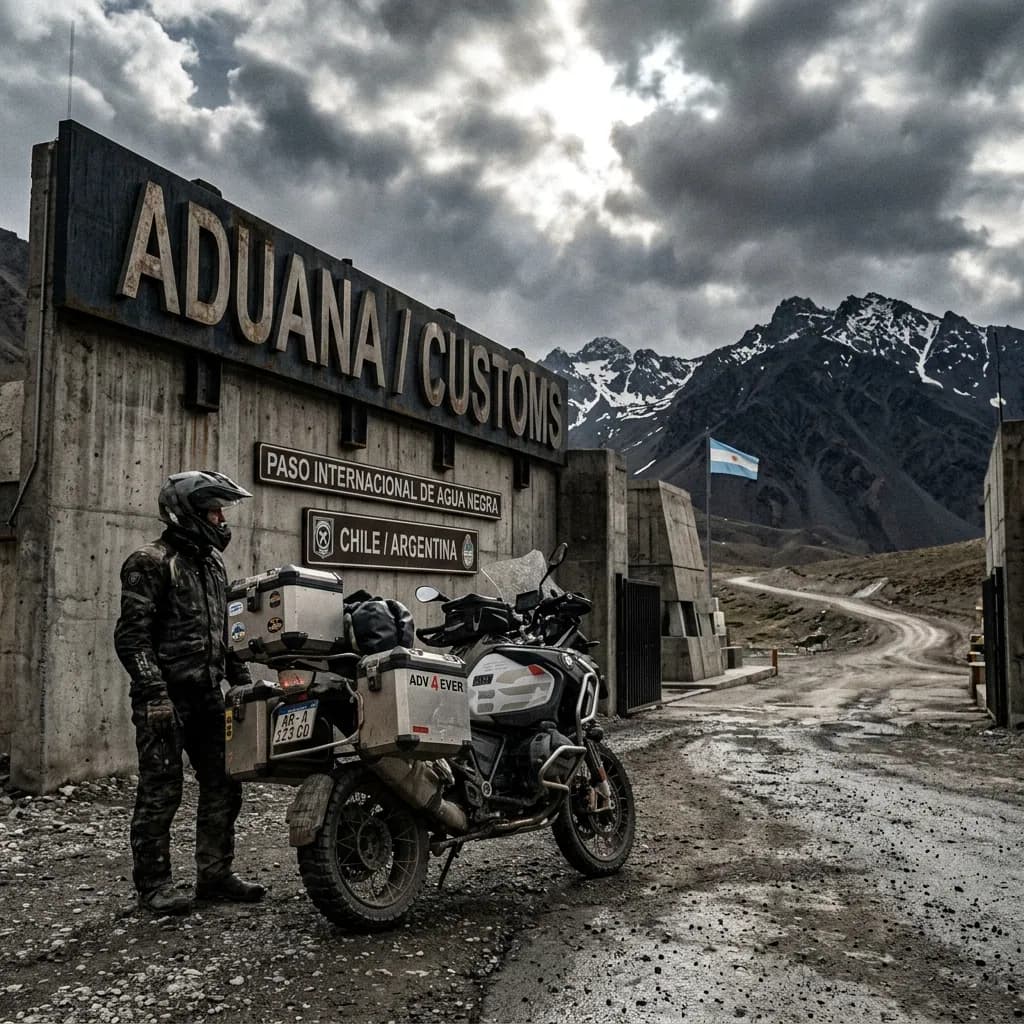
Mexico has the border crossings most traveled by motorcyclists riding down from North America — Tijuana/San Ysidro, Nogales, Ciudad Juárez/El Paso, Nuevo Laredo — plus the crossings into Guatemala (La Mesilla) and Belize (Chetumal/Subteniente López) for those continuing south into Central America. According to accounts on Horizons Unlimited and the Mad or Nomad guide, the process at the main posts is routine once your paperwork is ready.
The process has two steps:
Immigration: You process the FMM (Multiple Immigration Form), your tourist permit, at the crossing's immigration module.
Customs (Banjercito): Issues the TIP (Temporary Import Permit) for the motorcycle, valid for up to 180 days, at the same post.
The FMM is free if your stay is 7 days or less, according to Mexico's National Immigration Institute (INM) — beyond that it costs around $54 USD.
Real friction point:the TIP isn't free — the fee runs $52-55 USD plus a refundable deposit of $200-400 USD depending on your motorcycle's model year (newer = higher deposit), only returned once you cancel the permit on your way out. Travelers on Horizons Unlimited hammer one point above all: cancel the TIP at a Banjercito module before you cross the exit border, never let it expire, because that can block a future import into Mexico.
If your route is Baja California only (without crossing to mainland Mexico), you don't need a TIP — the whole peninsula is a vehicle-import-free zone, according to Baja Bound and Discover Baja Travel Club. You still need the FMM either way.
REQUIRED DOCUMENTATION
Valid passport: Valid for the whole length of your stay.
Driving license: Your home country's license is enough — no international license required.
Motorcycle title/registration: If you're not the registered owner, you need a notarized power of attorney from them.
FMM: Multiple Immigration Form, your tourist permit — stamped at the immigration module of the crossing.
TIP (Banjercito): Motorcycle's Temporary Import Permit — apply online before traveling or at the Banjercito module of the crossing, with your own credit card for the deposit.
Mexican third-party liability insurance: Legally mandatory — buy it before crossing or right at the border.
With these six documents sorted, crossing into Mexico through a main border post is routine — usually 30 to 90 minutes. The advice that comes up most often among motorcycle travelers: arrive early to dodge peak hours at the US border crossings, and have a credit card in your own name ready for the TIP deposit.
DAILY BUDGET
This price range combines cheap lodging, cooking your own meals, and basic bike maintenance — the three categories that weigh most on any moto traveler's daily budget.
Your real daily budget is something you build yourself, based on your own needs and limits — but if you want an idea of how to build yours, pick a category to see the full guide:
Full cost breakdown in the budget guide
THE 10 BEST MOTORCYCLE ROUTES IN MEXICO
This Top 10 is ordered by real fame, not personal preference. Position 1 is the route any international motorcycle traveler finds first when searching "motorcycle route Mexico": the most ridden, the most cited on forums like Horizons Unlimited and ADVrider, the one documented by the most travel blogs and videos. From there down, the rest of the list drops in real fame but stays within genuinely recognized routes — not obscure roads nobody else rides.
Before heading into the Sierra Madre Occidental or a river crossing in the Huasteca, it is worth reviewingthe mechanics guide for long motorcycle trips, because in Batopilas or on the Espinazo del Diablo there is no repair shop around the corner.
And since these 10 routes run from sea level in Baja California to nearly 3,800 meters at the Paso de Cortés, it is worth checkingthe gear guide for long motorcycle tripsbefore packing the panniers.
The Transpeninsular Highway:Baja California End to End
Baja California and Baja California Sur (Tijuana to Cabo San Lucas)Riding the Transpeninsular Highway by motorcycle, from Tijuana to Cabo San Lucas, is the trip any North American motorcycle traveler has checked off before heading further south into Latin America — 1,711 km of a single highway, inaugurated in 1973 as the Carretera Transpeninsular Benito Juárez, with an eagle monument at the 28th parallel marking the exact midpoint of the ride, between Baja California and Baja California Sur.
It is a route of abrupt transitions: you leave one of the busiest border crossings in the world, cross the Valle de Guadalupe (Mexico's most important wine region), enter the Vizcaíno Desert — a UNESCO biosphere reserve and gray whale sanctuary at Guerrero Negro — and end up in the tropics of Los Cabos.
Along the way sit the old 18th-century Jesuit missions, including Loreto, the first mission ever founded in the Californias. The highway remains narrow and shoulderless for nearly its entire length: it is not an interstate, it is a road that demands respect.
WARNINGS FOR THIS ROUTE
This is what you need to sort out before riding this route.
- 01Fuel range
Generally good along the Transpeninsular, with stretches over 100 km without service in the Vizcaíno Desert — top off in every town.
- 02Loose livestock and heavy traffic on a narrow highway
A recurring theme in rider accounts: since it is a shoulderless two-lane road, it is shared with trucks, buses, and loose cattle that cross without warning, especially at dusk.
Espinazo del Diablo:the Old Highway 40 Durango–Mazatlán
Durango and SinaloaRiding the Espinazo del Diablo by motorcycle is, according to several motorcycle-specific blogs, the best road in North America: hundreds of documented curves packed into just 74 km of the old Federal Highway 40, with a viewpoint at 2,440 masl at kilometer 168 and the mountain crest at 2,744 masl, crossing the Sierra Madre Occidental between Durango and Mazatlán.
The weather up there is as changeable as the road itself: frequent fog and seasonal ice at the highest points are, according to several rider accounts, the main reason this road had a dangerous reputation for decades among heavy truck traffic.
In 2013, the 40D toll highway opened, a parallel route with 115 bridges and 61 tunnels — including the Baluarte Bridge, which was the highest cable-stayed bridge in the world at the time of its inauguration — which diverted freight trucks away. Since then, the old free road has been left almost exclusively to motorcyclists and curious travelers, quieter and more enjoyable than ever.
The surroundings add a lesser-known draw: the range holds a unique cloud forest with over 200 bird species, including the historic habitat of the imperial woodpecker, now believed extinct.
WARNINGS FOR THIS ROUTE
This is what you need to sort out before riding this route.
- 01Fuel range
Fair. There are stations in El Salto (Durango side) and Concordia (Sinaloa side); the central stretch of curves has no service, leave with a full tank.
- 02Documented fog and ice at the highest points
This is a documented climate hazard in the area's own geography, not anecdotal: frequent fog and seasonal ice near the crest (2,744 masl) were for years the cited cause of this stretch's dangerous reputation for heavy traffic, before the 40D highway diverted the trucks.
Copper Canyon:Creel, Divisadero, and the Descent to Batopilas
Chihuahua (Sierra Tarahumara)Descending from Creel to Batopilas by motorcycle means dropping almost 1,750 meters through one of the planet's most impressive canyon systems: Copper Canyon covers 65,000 km², four times the size of Arizona's Grand Canyon, and its deepest canyon, Urique, plunges to 1,879 meters — nearly 300 meters deeper than the Grand Canyon's lowest point.
The road drops from Creel (2,350 masl) down to Batopilas (600 masl), a former silver-mining town founded in the 17th century, crossing Rarámuri (Tarahumara) territory, an indigenous people of about 70,000 known worldwide for their physical endurance and traditional barefoot long-distance races.
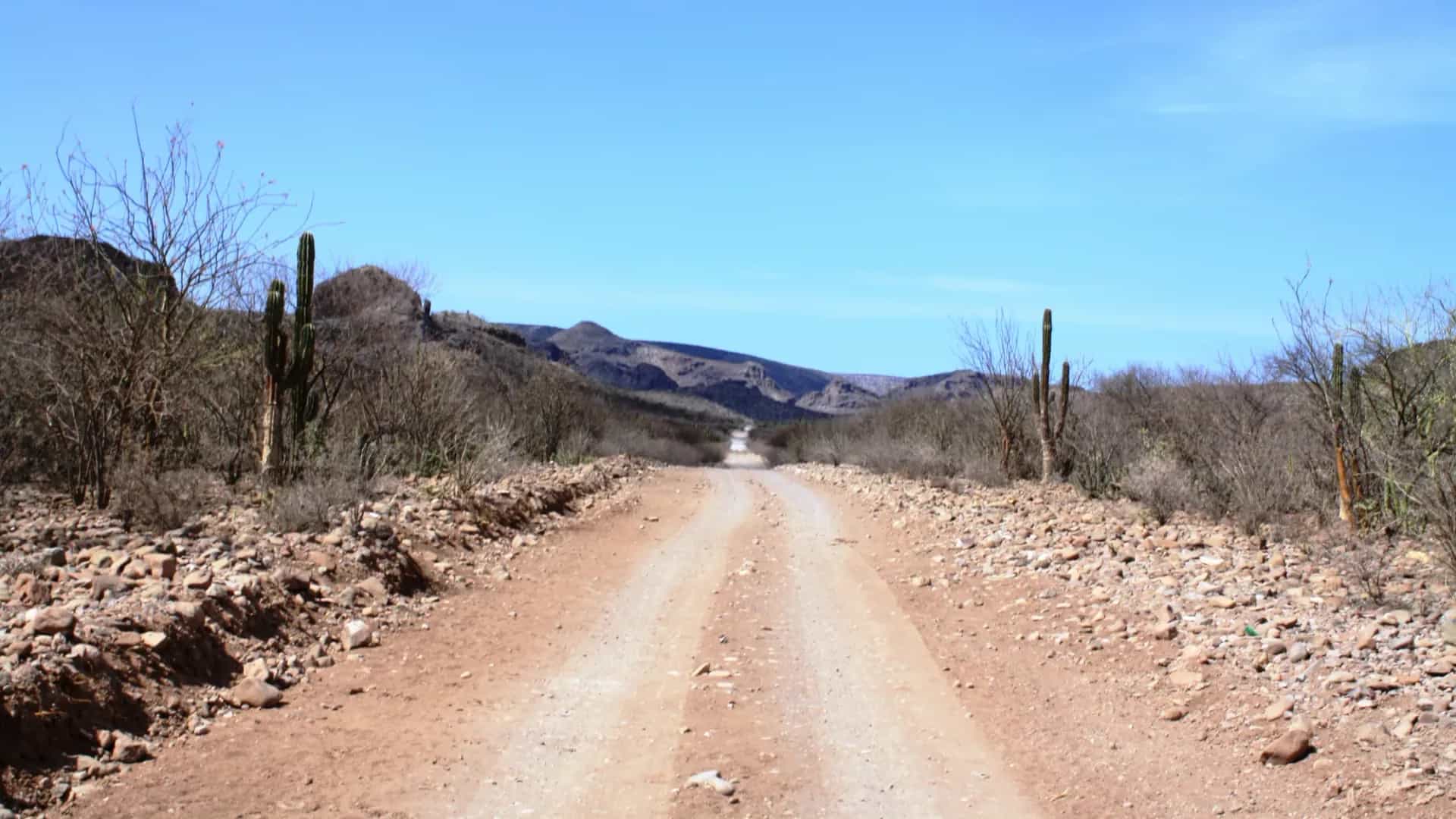
This is dual-sport terrain, not paved touring: the final descent mixes tight dirt curves with river fords that, according to accounts from travelers who have ridden the area, can rise without warning during the rainy season and force riders to turn back.
WARNINGS FOR THIS ROUTE
This is what you need to sort out before riding this route.
- 01Fuel range
Limited. There is a station in Creel; supply in Batopilas is basic and irregular — leave with a full tank and, if possible, an extra jerry can.
- 02River fords that can rise without warning
Travelers who have ridden down to Batopilas describe muddy stretches following the river, with fords that become impassable after heavy rain — check the road's condition in Creel before descending during the wet season.
Highway 175:From Oaxaca's Sierra Norte to the Pacific
Oaxaca (Sierra Norte to the coast)Riding Highway 175 by motorcycle, down from Oaxaca's Sierra Norte to the Pacific, is one of the Mexican routes most cited outside the strictly motorcycle-focused circuit: National Geographic devoted an entire article to riding the Oaxacan coast on two wheels, describing it as the best way to experience the region.
Halfway down sits San José del Pacífico, a cloud-forest town at nearly 2,440 masl, known since the 1960s as a pilgrimage stop for the region's psilocybin mushrooms and today famous among motorcycle travelers for its lookouts above the clouds.
In just over 150 km the highway drops from cold sierra to the tropical coast at Pochutla, Mazunte, and Puerto Ángel, one of the sharpest climate-zone shifts of any route on this Top 10.
Oaxaca is also one of the few Mexican states where you can cross from the Gulf to the Pacific in a single corridor of over 500 km of continuous curves, following the 175 all the way from Tuxtepec down to the coast.
WARNINGS FOR THIS ROUTE
This is what you need to sort out before riding this route.
- 01Fuel range
Good at both ends (Oaxaca City and Pochutla) and in San José del Pacífico; the rest of the route has spaced-out stations, don't skip an open one.
Sierra Gorda de Querétaro:Bernal, Pinal de Amoles, and the Puerta del Cielo
QuerétaroClimbing from Bernal to Pinal de Amoles by motorcycle means leaving behind the Peña de Bernal — one of the tallest monoliths in the world, according to the town's own tourism promotion — to enter the tight curves of Querétaro's Sierra Gorda, cresting at the so-called Puerta del Cielo (Gate of Heaven), a narrow pass where the road seems to float above the valley.
The Sierra Gorda is Querétaro's largest biosphere reserve, declared in 1997, spanning 383,567 hectares from 300 masl in the Río Santa María canyon up to 3,100 masl at Cerro de la Pingüica — since 2001 it has been part of UNESCO's Man and the Biosphere network, considered the most ecodiverse reserve in Mexico.
Five Franciscan missions survive in the area, built between 1750 and 1760 under the direction of Friar Junípero Serra, the same missionary who would later found the California missions — their architecture, a Mestizo Baroque blending Indigenous and European motifs, was declared a UNESCO World Heritage Site in 2003.
WARNINGS FOR THIS ROUTE
This is what you need to sort out before riding this route.
- 01Fuel range
Good. Stations in Bernal, Cadereyta, and Jalpan de Serra; the mountain stretch in between has no service.
The Colonial Bajío:Guanajuato and San Miguel de Allende
GuanajuatoRiding between Guanajuato and San Miguel de Allende by motorcycle means crossing the colonial mining heart of Mexico through two World Heritage cities separated by just 95 km of gentle curves through the hills.
Guanajuato, founded in 1548 as a Real de Minas, hides its most distinctive feature underground: a tunnel network built in response to the catastrophic floods of 1760 and 1780, converted in the 1960s from the old riverbed into the underground street system cars and motorcycles use today. The La Valenciana mine once produced two-thirds of the world's silver at its peak.
San Miguel de Allende, founded in 1542, keeps an almost intact colonial layout of cobblestone streets, with the Parroquia de San Miguel Arcángel — its pink neo-Gothic facade dates to the 1880s — as the town's obligatory postcard shot, declared a UNESCO World Heritage Site.
Halfway between the two sits Dolores Hidalgo, birthplace of the 1810 Cry of Independence, the point that historically links the two colonial cities.
WARNINGS FOR THIS ROUTE
This is what you need to sort out before riding this route.
- 01Fuel range
Excellent. Abundant stations at both ends and in Dolores Hidalgo, at the halfway point.
Huasteca Potosina:the Turquoise Waterfall Route
San Luis PotosíRiding the Huasteca Potosina by motorcycle means moving between jungle and turquoise rivers through one of Mexico's most photographed regions, deep in the Sierra Madre Oriental.
The most sought-after spot is the Tamul Waterfall, with a 105-meter drop — the tallest in the state — formed at the confluence of the Gallinas and Tampaón rivers; part of the access is by boat from the town of Tanchachín.
A short distance away is Xilitla, hidden in the jungle, where the eccentric Brit Edward James built Las Pozas starting in the 1940s and 60s, a surrealist concrete sculpture garden woven through natural waterfalls, today one of the most singular sites in the entire country.
The range's karst limestone terrain explains the region's abundance of waterfalls and pools: water filters through the rock and resurfaces, forming dozens of turquoise falls along the entire route.
WARNINGS FOR THIS ROUTE
This is what you need to sort out before riding this route.
- 01Fuel range
Good in Ciudad Valles and Xilitla; the rural stretches toward the waterfalls have no service, fill up before leaving town.
Monarch Butterfly Route:Morelia, Pátzcuaro, and Angangueo
MichoacánRiding the Monarch Butterfly Route by motorcycle, between Morelia, Pátzcuaro, and Angangueo, means following one of the longest migratory phenomena on the planet up close: the monarch butterfly travels thousands of kilometers from Canada and the United States, and up to four full generations of butterflies are born and die along the way before arriving.
The Monarch Butterfly Biosphere Reserve, spanning 56,259 hectares and declared a UNESCO World Heritage Site in 2008, reaches 2,700 masl in its oyamel fir forests, near Angangueo and Ocampo.
Along the way sits Pátzcuaro, on the shore of the lake of the same name, the heart of Purépecha culture and home to one of Mexico's best-known Day of the Dead celebrations, on Janitzio Island.
The entire state of Michoacán is under a Level 4 ('Do Not Travel') advisory from the US State Department, with no official zone-by-zone exception — but this tourist corridor between Morelia, Pátzcuaro, and the sanctuary is the one that draws the few motorcycle travelers and agencies who still visit the region, with the standing advice being to avoid detouring south of it, toward the Tierra Caliente.
WARNINGS FOR THIS ROUTE
This is what you need to sort out before riding this route.
- 01Fuel range
Good in Morelia, Pátzcuaro, and Zitácuaro; near the sanctuary it's best to arrive with a full tank already.
- 02All of Michoacán is under a Level 4 travel advisory
The US State Department maintains a Level 4 ('Do Not Travel') advisory for the entire state of Michoacán due to conflict between cartels and self-defense groups, with no official zone-by-zone exception — this tourist corridor is the one that draws most visitor traffic and the one recommended by operators and motorcycle travelers who do ride it, avoiding detours toward the Tierra Caliente in the south of the state.
The Puuc Route:From Mérida to the Maya Cities of Uxmal and Labná
YucatánRiding the Puuc Route by motorcycle, from Mérida to the Maya cities of Uxmal, Kabah, Sayil, and Labná, means crossing the low jungle of the Yucatán on a straight, flat road, very different from the rest of the mountain routes on this Top 10.
Uxmal, 62 km south of Mérida, was first built around the year 700 and abandoned in the 13th century; it has been a UNESCO World Heritage Site since 1996, and its Pyramid of the Magician is unusual among Maya structures for its oval footprint, instead of the more common rectangular base.
The rest of the Puuc Route connects Kabah, Sayil, and Labná, cities far less visited than Chichén Itzá, without the tour-bus traffic — nearby are also the Calcehtok caves, historically used as a Maya refuge during the Caste War.
Unlike the rest of the Top 10, this is a rest-day route: flat, short, and ideal for anyone continuing south toward Chetumal to cross into Belize.
WARNINGS FOR THIS ROUTE
This is what you need to sort out before riding this route.
- 01Fuel range
Good. Stations in Mérida, Muna, and Ticul; on the final stretch between the ruins it's best to leave with a full tank already.
Paso de Cortés:Between the Popocatépetl and Iztaccíhuatl Volcanoes
State of México and Puebla, on the border between the twoClimbing the Paso de Cortés by motorcycle, between Popocatépetl and Iztaccíhuatl, is the most classic weekend getaway for any motorcycle traveler starting out from Mexico City, just 90 km from the capital.
The pass, at between 3,600 and 3,800 masl, is named after Hernán Cortés, who crossed it in 1519 after the Battle of Cholula, on his advance toward Tenochtitlan to confront the Mexica — one of the few motorcycle routes in Mexico with such a direct, ancient, and well-documented historical reference.
The two volcanoes framing the pass are the subject of one of the country's best-known legends, that of the warrior Popocatépetl and the sleeping princess Iztaccíhuatl, though today Popocatépetl mostly makes news for its actual activity: it remains active and closely monitored, something anyone riding up there notices in the sulfur smell in the air.
Most riders combine the climb with a crossing toward Puebla or Cholula on the other side of the range, linking the capital, the volcanoes, and the Puebla Bajío in a single day.
WARNINGS FOR THIS ROUTE
This is what you need to sort out before riding this route.
- 01Fuel range
Good in Amecameca; there is no service above the pass, fill up before climbing.
- 02Closures due to volcanic activity
Access to the pass depends on the official Popocatépetl volcanic alert level (monitored by CENAPRED): during phases of higher activity, authorities close access without prior notice, so it's worth checking the volcano's status before heading out.
NEIGHBORING COUNTRIES
Crossing the border next? Click a country to see its 10 best motorcycle routes.


FREQUENTLY ASKED QUESTIONS
01What is the TIP and how much does it cost for a motorcycle?
+
What is the TIP and how much does it cost for a motorcycle?
It's the Temporary Vehicle Import Permit, a Banjercito (the army's bank) procedure that authorizes your motorcycle to ride in mainland Mexico. It costs about $52-55 USD in fees plus a refundable deposit of $200-400 USD depending on the vehicle's model year, returned when you cancel it on exit.
02Do I need Mexican insurance if I already have insurance from my home country?
+
Do I need Mexican insurance if I already have insurance from my home country?
Yes, no exceptions. Foreign policies (from the US, Canada, or anywhere else) aren't valid inside Mexico. Law requires third-party liability insurance issued by a Mexican insurer, which you can buy online before crossing or right at the border.
03Is it safe to ride across Mexico by motorcycle in 2026?
+
Is it safe to ride across Mexico by motorcycle in 2026?
On the classic tourist route (Baja California, the Pacific coast down to Oaxaca, the colonial Bajío, Yucatán) yes, and thousands of motorcycle travelers ride it every year without incident. Real risk concentrates in specific states and corridors — Sinaloa, Tamaulipas, Michoacán, Guerrero, and Zacatecas — where you should plan the crossing carefully, prefer toll highways, and avoid riding after dark.
04Can I stay in Mexico longer than 6 months with my foreign motorcycle?
+
Can I stay in Mexico longer than 6 months with my foreign motorcycle?
Not on the same TIP: the temporary import permit is granted for a maximum of 180 days. If you need more time, the motorcycle must leave the country (or you request an extension at Banjercito, subject to availability) before it expires.
05What are the best months to ride across Mexico by motorcycle?
+
What are the best months to ride across Mexico by motorcycle?
November to April, with November and early December as the sweet spot: cool temperatures, clear skies, and hurricane season already over. Avoid June through November, hurricane season on the Pacific and Gulf coasts (peaking in September), which can wash out roads in Baja and along the coast.
06Do I need the TIP if I'm only riding through Baja California?
+
Do I need the TIP if I'm only riding through Baja California?
No. The entire Baja California peninsula (Norte and Sur) is a vehicle-import-free zone — you don't need a TIP if you stay there and leave with the same bike. You still need the FMM (tourist permit) regardless, and if you take the ferry from La Paz or Santa Rosalía over to the mainland, you'll need to get the TIP there.
07How do I continue on to Guatemala or Belize from Mexico with my motorcycle?
+
How do I continue on to Guatemala or Belize from Mexico with my motorcycle?
The crossings most used by motorcycle travelers are La Mesilla (into Guatemala, on the Pan-American Highway) and Chetumal/Subteniente López (into Belize, with bike fumigation included in the process). In both cases you must cancel your Mexican TIP at a Banjercito module before crossing — skipping that can complicate a future import into Mexico.
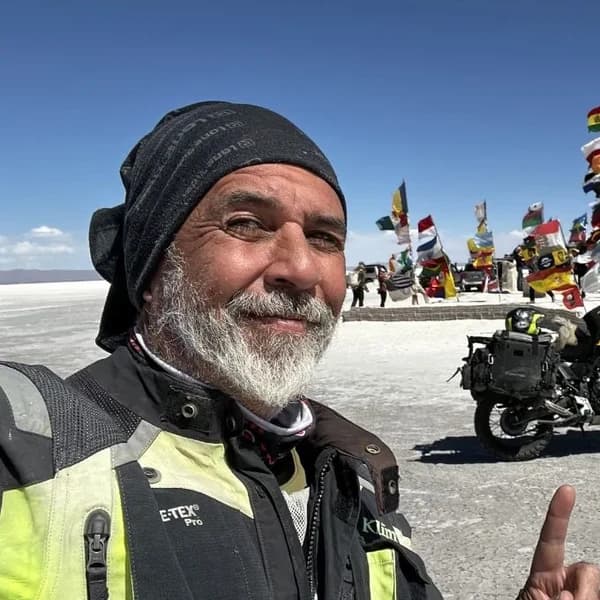
Gustavo Correa
Moto traveler, author and motorcycle travel consultant. 110,000+ km across 4 continents with Gloria, my motorcycle. Everything you read here has been tested on the road, not in an office.
Read my story →Last verified: 2026-08-29
Sources consulted (18)+
A GIFT FOR BEING HERETHE ADVENTURE OF LIVING FREE
Do fear or doubt paralyze you before starting any project? You're not alone — every one of us has been there.
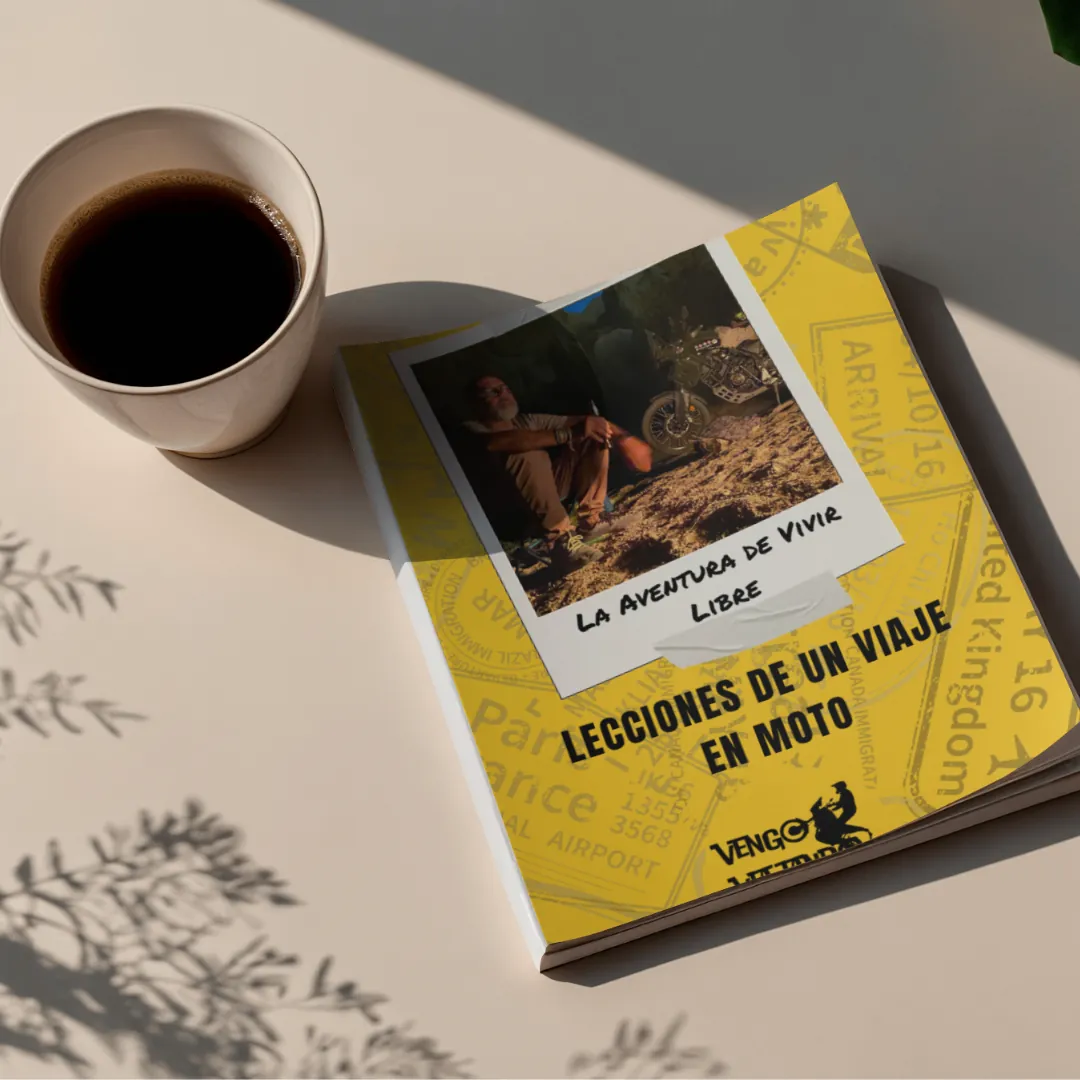
As a thank-you for visiting my site, I'm giving you my book "The Adventure of Living Free". A manual built to bring some light through the shadows and show you the philosophy that has let me ride the world for years.
* PDF STRAIGHT TO YOUR INBOX. NO SPAM.