MOTORCYCLE TRAVEL IN Chile
QUICK ANSWER
Chile is the natural gateway to the Carretera Austral, one of the most spectacular motorcycle routes on the planet. Entry is quick if your paperwork is in order: the key requirement is SOAPEX, the mandatory insurance for foreign vehicles, which you can buy online or right at the border crossing.
WHAT YOU NEED TO KNOW
The country you're about to enter has particularities you need to know.
Before you cross the border there are four things you need locked down: how safe the country is, what insurance is mandatory for your motorcycle, where you'll actually find fuel, and when to go. None of these are optional.
SAFETY: LOW RISK (2/5)
Is Chile safe to enter by motorcycle? Yes — it's calmer than its neighbors.
AREAS TO AVOID
- Santiago's peripheral belt: Cerro Navia, San Ramón, La Pincoya, Lo Espejo, Renca — where GPS can route you if you follow the shortest path instead of the main highways (Costanera Norte, Autopista Central).
- El Plan and Rodelillo (Valparaíso): Organized crime presence. If GPS routes you through there, stick to the main road.
WHERE TO PARK
- Parking: On the street: fine by day, not at night. After dark, look for a gated lot or a station with cameras.
- Alarm: Recommended: yes. Essential in Santiago and Valparaíso; low priority on the Carretera Austral.
- Luggage: Take off what you can carry (tank bag, backpack) when parking. Never leave anything loose in plain sight.
- Visibility: Park where there's foot traffic and good lighting — never in an alley or dark corner.
TIPS
- ➜Don't ride into Santiago at night if you can help it.
- ➜Don't approach Valparaíso at night.
Outside those spots, Chile is one of the calmest countries in the region to ride through.
MANDATORY INSURANCE: SOAPEX
Mandatory, no exceptions, for any foreign-plated vehicle. Buy it online before you travel or right at the border crossing. Coverage only applies within Chilean territory.
FUEL: SCARCE ON THE AUSTRAL
Good availability along Ruta 5 (the Chilean Panamericana). On the Carretera Austral stations are scarce and some stretches rely on jerry cans — carry extra fuel for long sections without a town.
BEST SEASON: NOV → MAR
November to March for the Carretera Austral (southern summer, less rain, ferries running full schedule). The north (Atacama) is rideable year-round.
ENTERING CHILE BY MOTORCYCLE
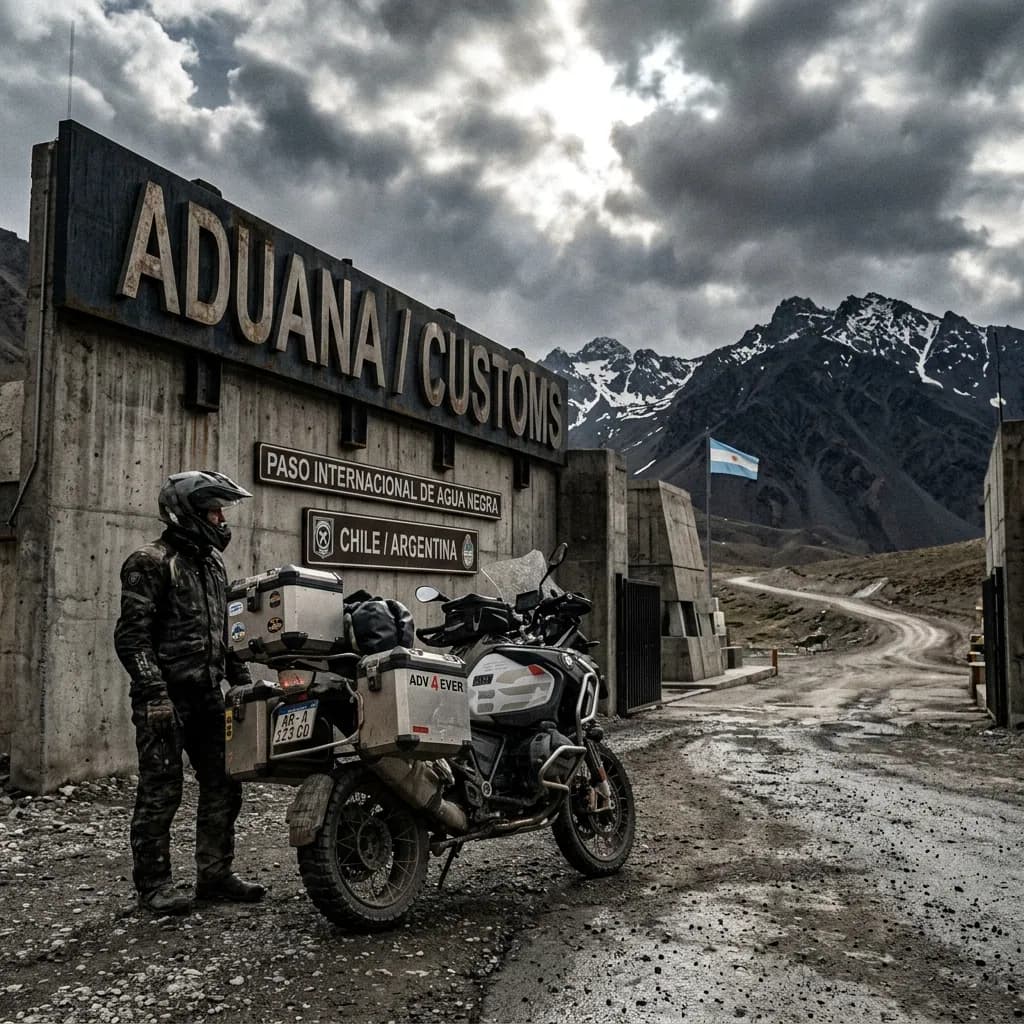
Crossing into Chile with a bike through the main posts (Los Libertadores, Jama, Sistema Cristo Redentor) is, according to traveler accounts on Horizons Unlimited and guides like Mad or Nomad, one of the more orderly procedures in the region.
The process has two steps:
Immigration: Stamps your passport on entry.
Customs: Issues the TITV (temporary import permit) for the motorcycle, at the same post.
The TITV is free — there is no charge, according to Chile's national customs service.
Real friction point:it's not at the major crossings but at remote, low-traffic ones (e.g. Pircas Negras). Some lack a PDI (Chilean border police) office, so you need to arrange a salvoconducto in advance.
Worth checking iOverlander before picking a crossing, since each post's status shifts with the season.
REQUIRED DOCUMENTATION
Passport or national ID: Valid for the whole length of your stay.
Driving license: Your home country's license is enough.
Motorcycle title/registration: If you're not the owner, you need notarized power of attorney from them.
SOAPEX: Mandatory insurance for foreign vehicles — buy in advance or at the crossing.
TITV form: Temporary Vehicle Import Title — can be processed online at aduana.cl or in person at the border.
With these five documents sorted, entering Chile with a bike through a main crossing is routine. The advice that comes up most often among motorcycle travelers: pick a major crossing and avoid remote ones unless you've already arranged the salvoconducto.
DAILY BUDGET
This price range combines cheap lodging, cooking your own meals, and basic bike maintenance — the three categories that weigh most on any moto traveler's daily budget.
Your real daily budget is something you build yourself, based on your own needs and limits — but if you want an idea of how to build yours, pick a category to see the full guide:
Full cost breakdown in the budget guide
THE 10 BEST MOTORCYCLE ROUTES IN CHILE
This Top 10 is not ordered at random: it opens with the most globally famous route in Chile — the one any motorcycle traveler searching "motorcycle routes Chile" finds first, the one most documented on forums like Horizons Unlimited and ADVrider, and the only one with its own paid guide on this site — and works its way down in real fame to routes that are well recognized but more locally scoped, like the classic weekend escapes near Santiago.
Before heading out on any of these routes, it is worth reviewingthe mechanics guide for long motorcycle trips, because in Patagonia or the high altiplano there is not always a workshop nearby.
And if the plan is to string several of these routes together on one long trip, check firstthe gear guide for long motorcycle trips— Patagonian wind and high-altitude cold in the north call for different gear.
Carretera Austral:the full Ruta 7
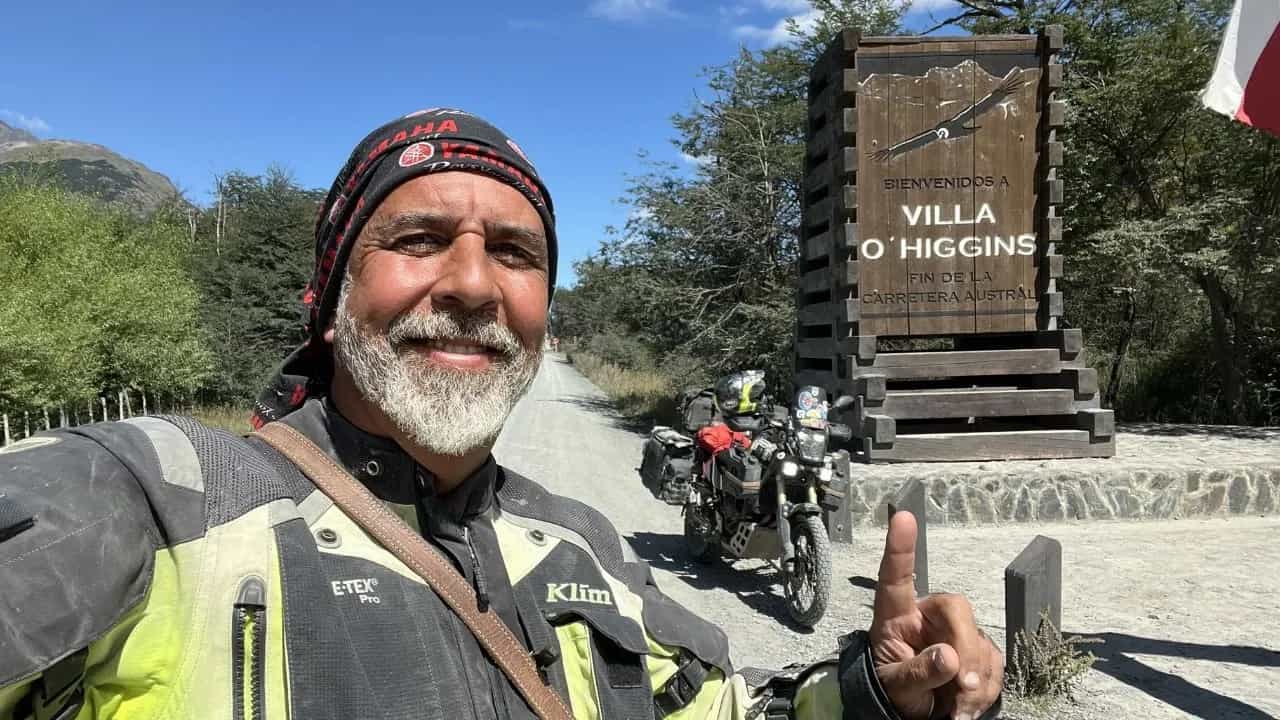
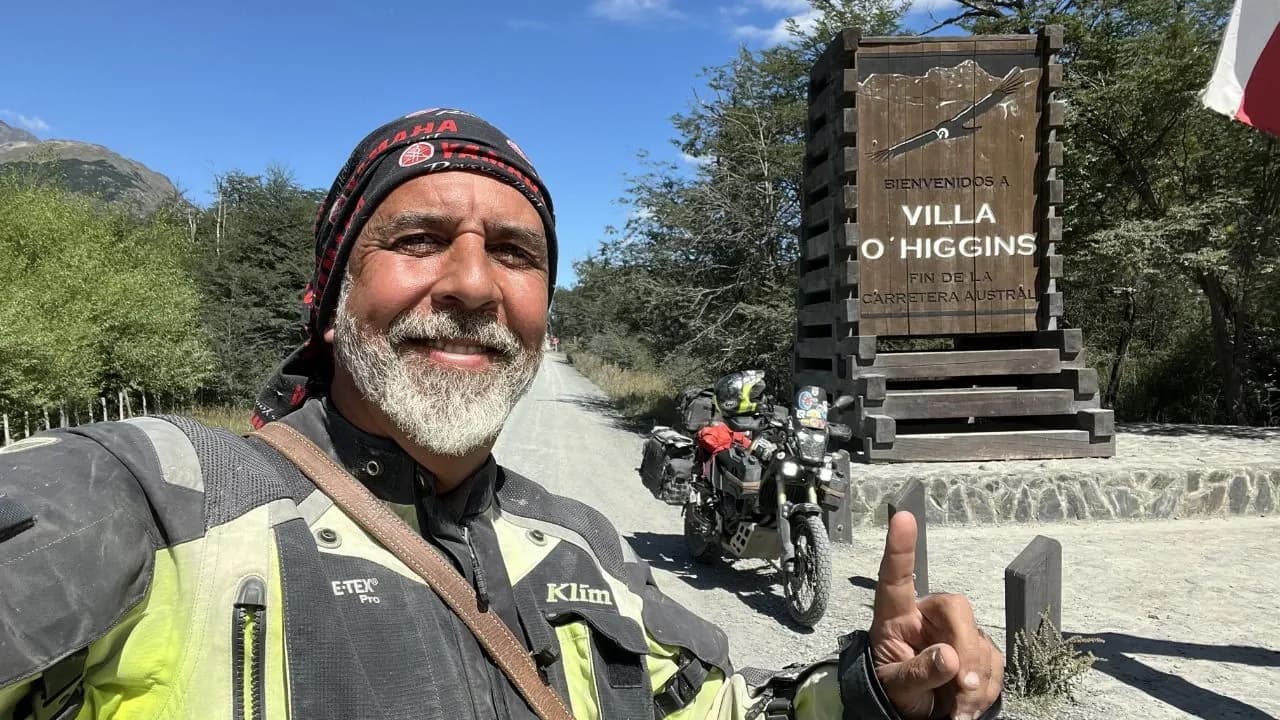
Puerto Montt to Villa O'Higgins, Los Lagos to Aysén RegionRiding the Carretera Austral by motorcycle end to end means covering the whole of Ruta 7: 1,240 km between Puerto Montt and Villa O'Higgins that Chile's military government began building in 1976, tasking the Cuerpo Militar del Trabajo with the route, with thousands of conscripts working on it between 1975 and 1985.
It is one of the few highways in the world that still forces you to load the bike onto a ferry three times, because no bridge crosses the fjords that cut through the road in the southern stretch.
Specialized magazines like Adventure Motorcycle Magazine rank it among the best roads on the planet for adventure riding: Valdivian rainforest, hanging glaciers, and fewer than one person per square kilometer along most of the way.
WARNINGS FOR THIS ROUTE
This is what you need to sort out before riding this route.
- 01Fuel range
Limited in the southern stretch. Official stations up to 300 km apart; small towns sell fuel by the jerry can. Always carry an extra margin.
- 02Ferries with limited capacity
The three ferry crossings (Hornopirén, Puerto Cisnes, and the final stretch to Villa O'Higgins) have limited capacity and a reduced schedule outside high season — showing up without a booking can mean days of forced waiting.
Paso Los Libertadores:the Cuesta de los Caracoles
Los Andes to the Argentine border, Valparaíso RegionClimbing the Cuesta de los Caracoles by motorcycle is the mandatory rite of passage for anyone crossing between Santiago and Mendoza: 29 consecutive hairpin turns that climb the Chilean side of Paso Los Libertadores, the busiest land border between the two countries.
The Cristo Redentor tunnel that crowns the pass opened on May 23, 1980, at 3,185 meters of altitude, and runs parallel to the ruins of the Trasandino railway, the train that connected Los Andes with Mendoza from 1910 to 1984 and now sits abandoned beside the road.
It is pure zigzag on pavement, without a single curve where your wrist can relax — the section's own name comes from the fact that even trucks climb it at a snail's pace.
WARNINGS FOR THIS ROUTE
This is what you need to sort out before riding this route.
- 01Fuel range
Excellent. Full-service stations in Los Andes; none between there and the pass, so fill the tank before climbing.
- 02Blind hairpins with sheer drops
According to Argentine press reports, a motorcyclist lost control on curve 29 and fell 20 meters, dying at the scene — the road adds fatal accidents every year, especially with ice in winter.
San Pedro de Atacama:Valle de la Luna and Salar de Atacama
San Pedro de Atacama, Antofagasta RegionRiding through Valle de la Luna by motorcycle means crossing the most arid desert on the planet: salt and clay dunes carved by erosion over millions of years into a landscape so Mars-like that NASA uses it to test rovers before sending them to the red planet.
A few kilometers away, the Salar de Atacama is the third-largest salt flat in the world, and to the north the El Tatio geothermal field, at 4,320 meters of altitude, holds more than 80 active geysers — the highest geothermal field on the planet.
It is the mandatory gateway for any motorcycle traveler crossing the Andes via Jama or San Francisco: almost every motorcycle travel guide to Chile, like the one from Mad or Nomad, flags it as an unmissable stop before or after the border.
WARNINGS FOR THIS ROUTE
This is what you need to sort out before riding this route.
- 01Fuel range
Good in San Pedro de Atacama; no stations inside the valley or the salt flat — leave with a full tank.
Paso San Francisco:at the foot of Ojos del Salado
Copiapó to the Argentine border, Atacama RegionCrossing Paso San Francisco by motorcycle means riding at the foot of Ojos del Salado, the highest active volcano in the world at 6,893 meters, with a crater lake at 6,390 meters that is the highest body of water on the planet.
The pass itself crests at 4,726 meters above sea level, one of the highest land borders in South America — motorcycle travelers who documented the crossing on forums like Horizons Unlimited describe the lack of oxygen as the real challenge, more than the terrain itself.
Along the way, Laguna Verde shifts color with the light of day because of its high mineral concentration, and the silence of the altiplano is broken only by the wind — there are no towns between Copiapó and the border.
WARNINGS FOR THIS ROUTE
This is what you need to sort out before riding this route.
- 01Fuel range
Critical. Last fill-up in Copiapó; no stations until Fiambalá, on the Argentine side, over 200 km past the pass.
Torres del Paine:the park's inner circuit
Magallanes RegionRiding into Torres del Paine by motorcycle means covering 200 km of well-maintained gravel inside one of the most photographed national parks in the world, declared a UNESCO Biosphere Reserve in 1978.
The three granite towers that give the park its name are barely 12 million years old, formed when a magma intrusion pushed up beneath a marine formation 60 million years older, gradually exposing it through glacial erosion.
The real challenge is not the gravel — easy-grade according to specialized blogs like Ride True ADV — but the Patagonian wind: motorcycle travelers who crossed the park describe gusts strong enough to lift sand and loose rock, with the constant fear of being knocked over while riding.
WARNINGS FOR THIS ROUTE
This is what you need to sort out before riding this route.
- 01Fuel range
Limited. Last full tank in Puerto Natales; no service stations inside the park.
- 02Patagonian wind strong enough to knock the bike over
A motorcyclist who rode through the park described winds strong enough to lift sand and loose rock, with a constant fear that a gust would knock the bike over while riding.
Chiloé Island:churches, stilt houses and the end of the Pan-American
Los Lagos RegionCrossing into Chiloé by motorcycle via the Chacao Channel — a 30-minute ferry ride from Pargua — means entering an archipelago with its own mythology and a religious architecture tradition found nowhere else in the world.
Sixteen of its wooden churches, built by local shipwrights using techniques Jesuit missionaries brought over starting in the 17th century, have been UNESCO World Heritage sites since 2000.
In Quellón, at the southern tip of the island, the Pan-American Highway officially ends: the same pavement that starts in Alaska closes out its continental run in this fishing port, a fact long-distance motorcycle travelers specifically seek out to check off their list.
WARNINGS FOR THIS ROUTE
This is what you need to sort out before riding this route.
- 01Fuel range
Good in Ancud, Castro and Quellón; fair in small towns — not a critical-range area.
Ruta Interlagos:the Seven Lakes from Panguipulli to Pucón
Los Ríos and La Araucanía RegionsRiding the Ruta Interlagos by motorcycle means linking seven bodies of water — Calafquén, Panguipulli, Riñihue, Pullinque, Neltume, Pellaifa and Villarrica — with the Villarrica volcano as a backdrop for almost the entire ride.
Villarrica, at 2,847 meters, is one of the most active volcanoes in South America: its crater holds a permanent lava lake at 1,250 degrees under a 40 km2 glacier, visible from several stretches of the route on clear days.
Local motorcycle tour operators, like Moto Patagonia, build tours specifically around this circuit because it mixes lakeside pavement with light gravel between towns — a good fit for both a big adventure bike and someone just starting out off-road.
WARNINGS FOR THIS ROUTE
This is what you need to sort out before riding this route.
- 01Fuel range
Good. Stations in Panguipulli, Coñaripe, Licán Ray and Pucón — never more than 40 km apart.
Cuesta La Dormida:the technical pass near Santiago
Til Til to Limache, Metropolitan and Valparaíso RegionsClimbing Cuesta La Dormida by motorcycle is the classic test for any Santiago rider who has already grown bored of pavement: 45 km of mountain gravel along route F-100-G, between Til Til and Limache, with chained hairpins and a steady climb from the first kilometer.
Guides specializing in rides near Santiago describe it as one of the most demanding in the Metropolitan Region, reserved for riders with off-road experience because the road's condition varies with the season.
It is the half-day escape any Santiago adventure rider keeps in their back pocket for when Cajón del Maipo starts to feel too easy.
WARNINGS FOR THIS ROUTE
This is what you need to sort out before riding this route.
- 01Fuel range
Good. Stations at both ends, in Til Til and Limache; none along the climb itself.
Valle del Elqui:the Route of the Stars
La Serena to Pisco Elqui, Coquimbo RegionRiding the Route of the Stars by motorcycle from La Serena up to Pisco Elqui means entering one of the few places on the planet with more than 300 clear nights a year, officially protected as the world's first Dark Sky Sanctuary around the Cerro Tololo and Cerro Pachón observatories.
The region holds roughly 40% of the world's astronomical infrastructure: observatories like Mamalluca or Cerro Tololo run night tours just minutes from the road, with the Milky Way visible to the naked eye on almost any night of the year.
Between curves, Route 41 — also called Ruta Antakari by local riders — cuts through vineyards and pisco distilleries that give the valley its color, an unusual contrast between farmland and desert that starts just a few kilometers further north.
WARNINGS FOR THIS ROUTE
This is what you need to sort out before riding this route.
- 01Fuel range
Excellent. Stations in La Serena, Vicuña and Pisco Elqui — no critical-range stretches.
Cajón del Maipo:the Embalse El Yeso
San Gabriel to Embalse El Yeso, Metropolitan RegionRiding out to the Embalse El Yeso by motorcycle is the most classic escape for any Santiago rider: a turquoise-water reservoir formed by a dam at the foot of Volcán San José, barely two and a half hours from the capital via Cajón del Maipo.
The road changes character at San Gabriel, where the pavement ends and 30 km of narrow gravel begin, with tight curves and grade changes that gain altitude fast on the way to the mountains.
It is the route local Santiago motorcycling guides, like Galgo's, recommend first to anyone just working up the nerve to take their bike off pavement, before raising the stakes with something like La Dormida.
WARNINGS FOR THIS ROUTE
This is what you need to sort out before riding this route.
- 01Fuel range
Good as far as San Gabriel; no stations on the final 30 km of gravel to the reservoir.
NEIGHBORING COUNTRIES
Crossing the border next? Click a country to see its 10 best motorcycle routes.


FREQUENTLY ASKED QUESTIONS
01What is SOAPEX and where do I buy it?
+
What is SOAPEX and where do I buy it?
It's the mandatory insurance for foreign-plated vehicles riding in Chile. You can buy it online before your trip or directly at the border crossing when you enter.
02Does my motorcycle need a technical inspection to enter Chile?
+
Does my motorcycle need a technical inspection to enter Chile?
No. The Temporary Vehicle Import process (TITV) does not require a mechanical inspection — only proof of ownership and a valid SOAPEX.
03How long can I stay in Chile with my foreign motorcycle?
+
How long can I stay in Chile with my foreign motorcycle?
The TITV is granted for a maximum of 90 days. If you need more time, check with the border crossing or Customs about extension options.
04Are there gas stations along the whole Carretera Austral?
+
Are there gas stations along the whole Carretera Austral?
Not continuously. There are long stretches with no stations where fuel is only available in jerry cans from local stores — always carry an extra safety margin of range.
05Can I cross into Chile with my motorcycle through any border crossing?
+
Can I cross into Chile with my motorcycle through any border crossing?
It's not advisable. Remote, low-traffic crossings (like Pircas Negras) often lack a PDI (border police) office, so you need to arrange a salvoconducto in advance. Check the crossing's status on iOverlander before picking it, since it shifts with the season.
Want to ride the Carretera Austral on your own?
Everything on this page is free and will help you plan the trip. If you want the route loaded on your GPS and fully mapped out ahead of time, the paid guide bundles the GPX track, checklist, lodging and mechanics into a single PDF.
SEE THE ROUTE GUIDE WITH GPX TRACK →
Gustavo Correa
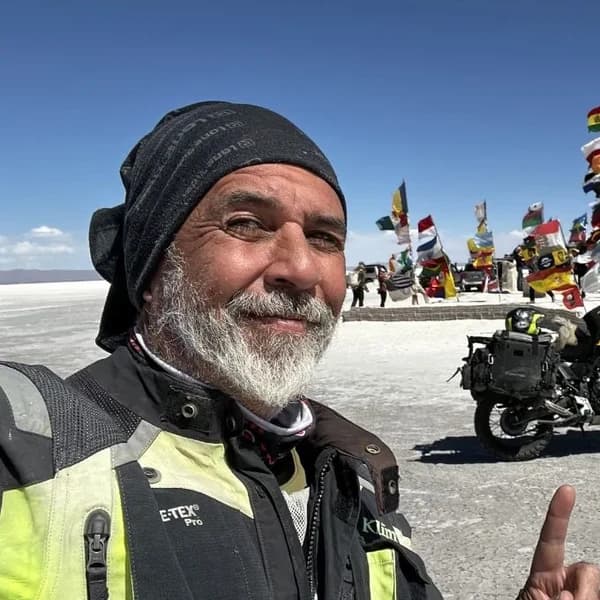
Moto traveler, author and motorcycle travel consultant. 110,000+ km across 4 continents with Gloria, my motorcycle. Everything you read here has been tested on the road, not in an office.
Read my story →Last verified: 2026-08-27
A GIFT FOR BEING HERETHE ADVENTURE OF LIVING FREE
Do fear or doubt paralyze you before starting any project? You're not alone — every one of us has been there.
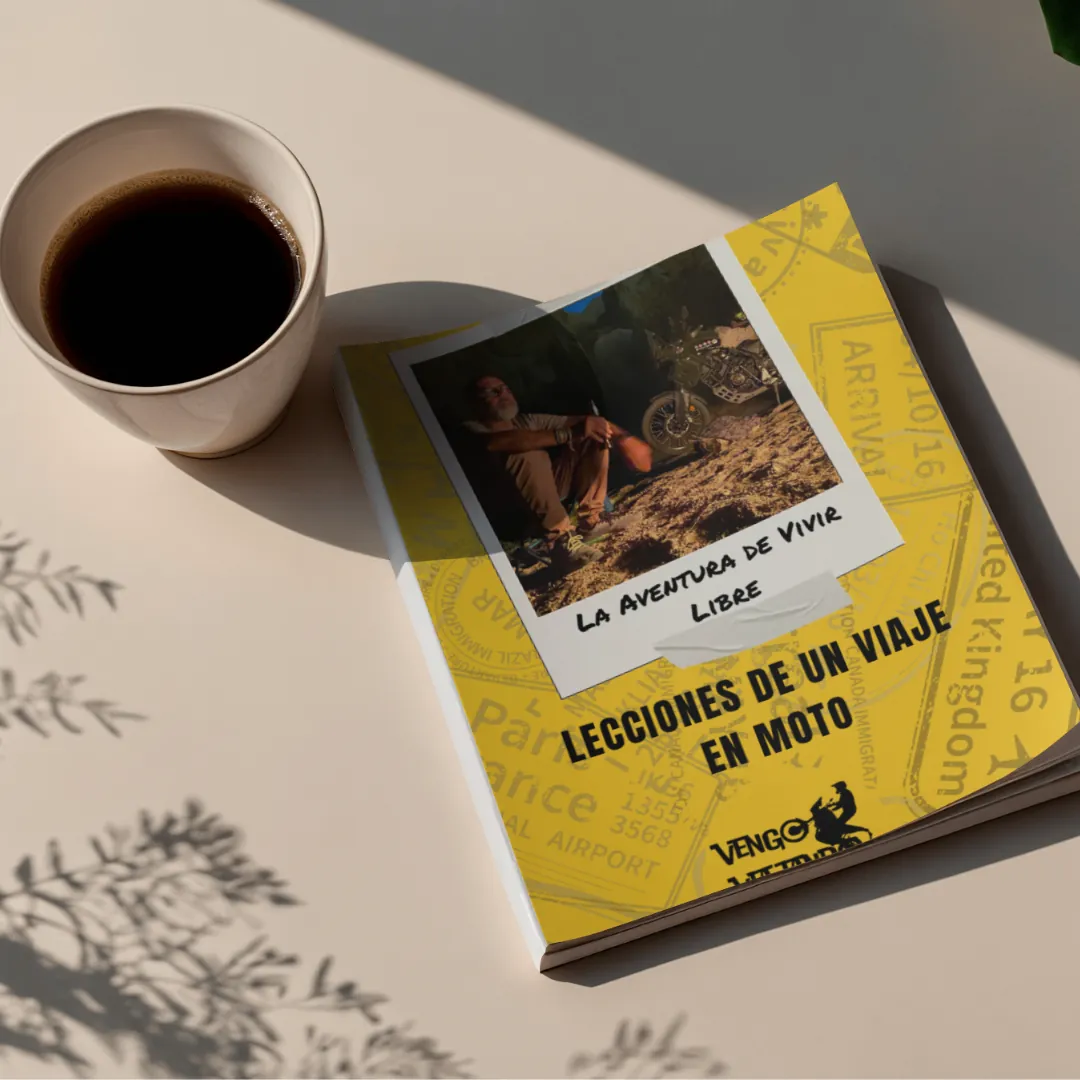
As a thank-you for visiting my site, I'm giving you my book "The Adventure of Living Free". A manual built to bring some light through the shadows and show you the philosophy that has let me ride the world for years.
* PDF STRAIGHT TO YOUR INBOX. NO SPAM.